












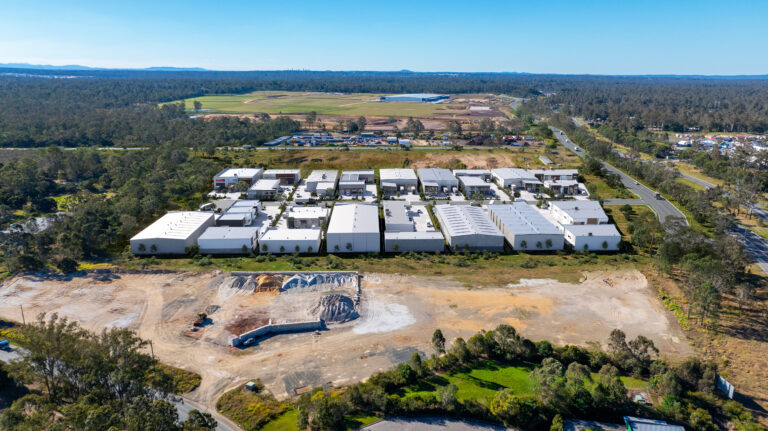


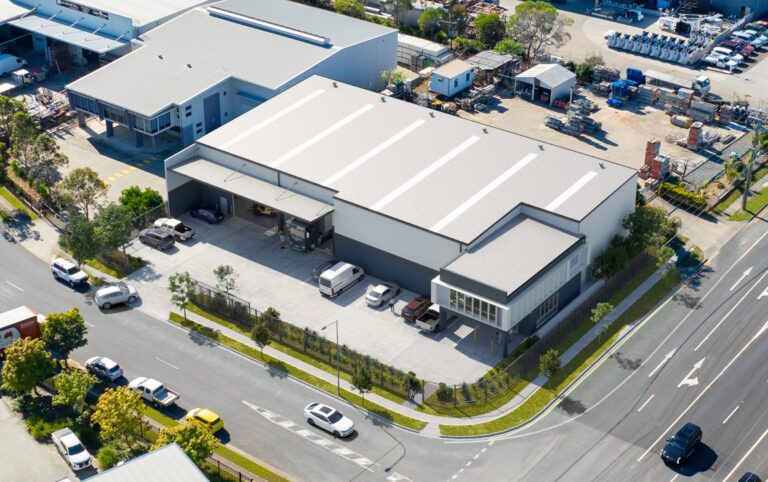

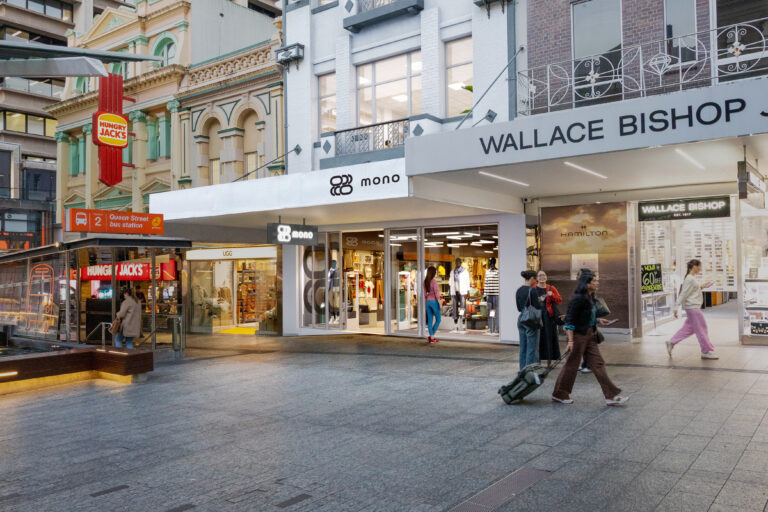
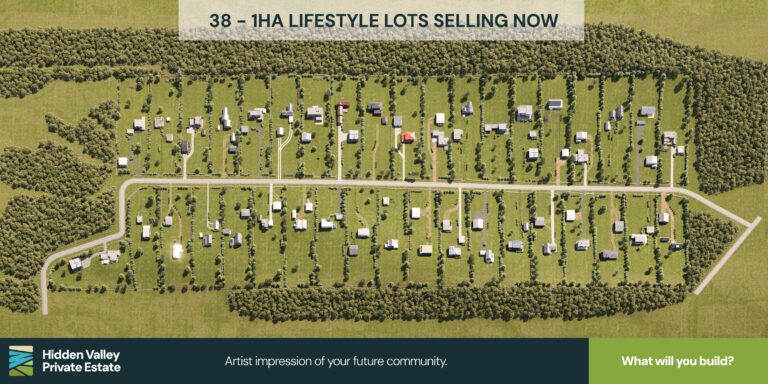




























Marketing an industrial development usually requires more than appointing an agency and sending them a folder of consultant drawings. The sales or leasing agent is one part of the process; the project still needs positioning, visualisation, digital presentation, campaign material and an information system that agents can actually use.
For developers, the more useful question is not simply who can advertise the project. It is who can take the development from technical information to a coherent market-ready proposition without fragmenting the job across five disconnected suppliers.
Separate the selling role from the project-marketing role
Commercial agents bring market relationships, buyer and tenant databases, negotiation capability and transaction experience. They should not be expected to become the production department for an unbuilt project.
A specialist project-marketing team translates the development into the assets the agency needs: positioning, renders, masterplans, website, information memorandum, campaign copy, signage and launch material. The two roles work best together rather than competing.
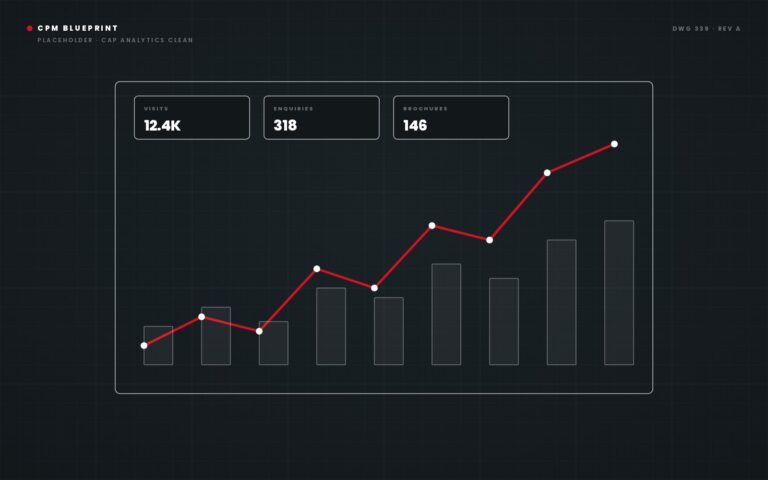
Market response should be separated into awareness, qualification and conversion. High website traffic with weak enquiries suggests a different problem from strong enquiries that do not progress past pricing. Likewise, repeated interest in one unit size can reveal product demand that raw enquiry totals hide. Looking at the funnel properly prevents the development team from treating every slow period as a media problem.
Conversion should be considered separately from lead generation. If qualified prospects are requesting plans and speaking with agents but not progressing, the campaign may already have done its job. At that point the development team needs to inspect price, deal structure, timing, specification or product-market fit instead of assuming the answer is a larger advertising budget.
Look for people who understand industrial property, not just branding
The visual standard matters, but commercial literacy matters more. A team should understand why access, hardstand, warehouse clearance, power, office ratio, parking, loading, title structure and delivery timing affect demand.
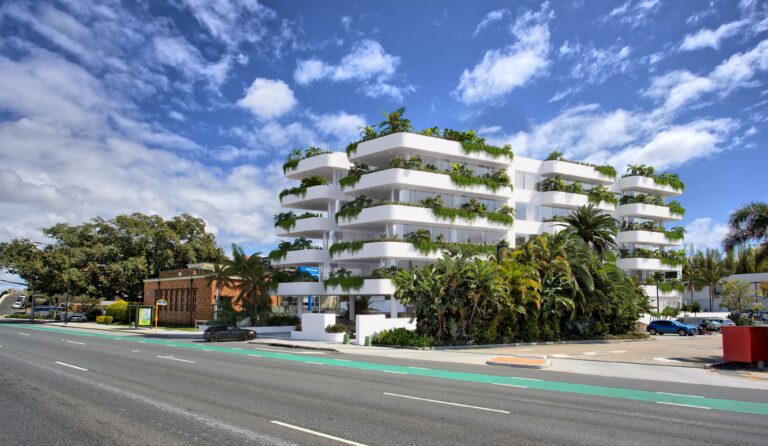
Without that knowledge, the campaign can look excellent while emphasising the wrong things. Experienced buyers notice immediately when marketing treats an industrial project like a residential apartment launch.
The brand should never become more memorable than the property proposition itself. If a buyer remembers the name but cannot explain what the development offers, the campaign has not done enough commercial work.
Developers should also decide which questions are best answered publicly and which are better handled by the appointed agent. Publishing everything can remove useful sales conversations, while publishing too little creates low-quality enquiries. The right balance depends on the complexity of the project, the sophistication of the target market and how much flexibility remains in the deal.
The team should be able to work directly from consultant material
Developers should not have to convert every document into a marketing brief before work can start.
A capable team should be comfortable reviewing architectural plans, civil drawings, surveys, landscape information, elevations, schedules, DA material and agent notes, then identifying what can be used, what needs clarification and what should never be presented publicly.
This should be treated as a project-control issue as much as a marketing issue. Decisions need an owner, a current source document and a process for communicating changes. Once the campaign is public, even a small inconsistency can spread through portals, PDFs, agent emails and saved buyer documents, making later corrections much harder than getting the source information right in the first place.
There is also a sequencing issue. The information most useful at first contact is not always the information needed at contract or lease stage. The public campaign should establish the commercial case quickly, while the deeper project pack supports the next step. Mixing those layers can make the first interaction unnecessarily dense and still leave serious prospects without the detail they need later.
Ask who owns consistency across the campaign
When renders, brochures, websites and signage are produced independently, errors multiply. One supplier may use an older plan revision, another may show the wrong unit number and a third may publish a superseded area.
There needs to be a clear owner of campaign consistency. That does not mean one company must physically produce every asset, but somebody should control the source information and manage revisions across the marketing system.
The commercial test is whether the information helps a qualified prospect make a better decision. If it does not improve understanding, comparison, confidence or the next step in the transaction, it probably does not deserve much space in the campaign.
Developers should also decide which questions are best answered publicly and which are better handled by the appointed agent. Publishing everything can remove useful sales conversations, while publishing too little creates low-quality enquiries. The right balance depends on the complexity of the project, the sophistication of the target market and how much flexibility remains in the deal.
Do not confuse design capability with development understanding
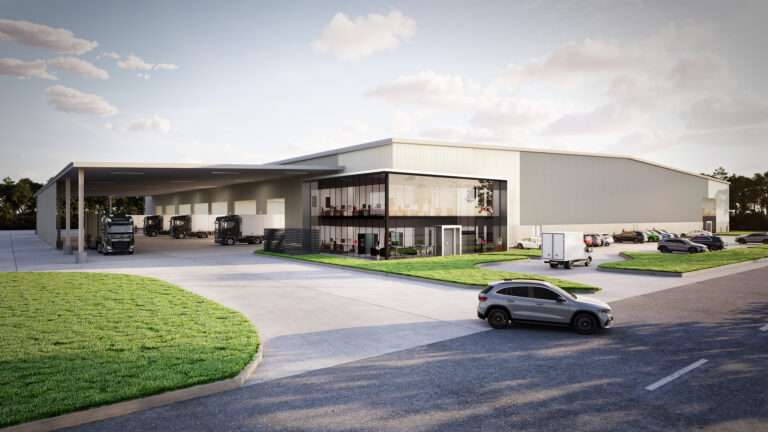
A general design studio may be strong at identity and layout but unfamiliar with how a multi-stage industrial estate actually sells. A pure visualisation studio may produce outstanding CGI but have no responsibility for the buyer journey after the image is delivered.
The strongest arrangement connects the creative work to the commercial objective. Every asset should exist because it helps explain, qualify or convert the opportunity.
This should be treated as a project-control issue as much as a marketing issue. Decisions need an owner, a current source document and a process for communicating changes. Once the campaign is public, even a small inconsistency can spread through portals, PDFs, agent emails and saved buyer documents, making later corrections much harder than getting the source information right in the first place.
There is also a sequencing issue. The information most useful at first contact is not always the information needed at contract or lease stage. The public campaign should establish the commercial case quickly, while the deeper project pack supports the next step. Mixing those layers can make the first interaction unnecessarily dense and still leave serious prospects without the detail they need later.
Understand what the agent needs at launch
Agents need more than campaign graphics. They need confidence that the information behind the campaign is organised.
Before launch they should have current plans, schedules, specifications, location material, renders, website links, downloadable collateral, pricing or guidance strategy where applicable, and a defined path for obtaining detailed project documents.
Once the campaign is live, agent feedback should be structured. A repeated objection from several experienced prospects is far more valuable than a general comment that the market is quiet. Record the specific issue, the buyer type, the unit they considered and why they stopped. That information can guide both campaign changes and broader project decisions.
Developers should also decide which questions are best answered publicly and which are better handled by the appointed agent. Publishing everything can remove useful sales conversations, while publishing too little creates low-quality enquiries. The right balance depends on the complexity of the project, the sophistication of the target market and how much flexibility remains in the deal.
Choose a team that can handle change without rebuilding the campaign
Industrial projects move. If every plan revision triggers a complete redesign, the campaign becomes slow and expensive.
Ask how the team manages model updates, masterplan revisions, website changes and availability changes. A project system built for revision is much more valuable than a set of disconnected final files.
This should be treated as a project-control issue as much as a marketing issue. Decisions need an owner, a current source document and a process for communicating changes. Once the campaign is public, even a small inconsistency can spread through portals, PDFs, agent emails and saved buyer documents, making later corrections much harder than getting the source information right in the first place.
There is also a sequencing issue. The information most useful at first contact is not always the information needed at contract or lease stage. The public campaign should establish the commercial case quickly, while the deeper project pack supports the next step. Mixing those layers can make the first interaction unnecessarily dense and still leave serious prospects without the detail they need later.
Make sure the marketing team understands staging
Staged projects need disciplined communication. The campaign has to explain the long-term estate while making the current release obvious.
That affects masterplans, CGI, website structure, unit schedules, signage and even the language used by agents. Staging should be designed into the campaign rather than patched in later.
The value of marketing data is in the decisions it informs. If buyers consistently ask for more yard, fewer offices or a different unit size, that feedback may influence later stages. If prospects understand the product but reject the commercial terms, the development team can stop wasting money trying to solve the wrong problem with more promotion.
Conversely, if enquiries are consistently unqualified, the issue may be the campaign itself. Vague messaging often attracts everyone while helping nobody self-select. Clearer product definition can reduce enquiry volume while improving the commercial value of every lead that remains.
The marketer should challenge weak positioning
A useful team should not simply execute instructions if the market proposition is muddy.
If the project is trying to sell five different messages at once, the marketer should push for hierarchy. If the product looks interchangeable with three competing estates, the campaign needs a stronger reason to choose it. That may require better evidence, not just sharper copy.
Positioning should be tested against real competing choices, including existing buildings, other new estates, design-and-construct alternatives and even the option of a tenant remaining where they are. That comparison often exposes which claims are genuinely useful and which are just marketing language. If every competing estate can say it is connected, premium and strategically located, those words are not doing any commercial work.
Conversion should be considered separately from lead generation. If qualified prospects are requesting plans and speaking with agents but not progressing, the campaign may already have done its job. At that point the development team needs to inspect price, deal structure, timing, specification or product-market fit instead of assuming the answer is a larger advertising budget.
They should know when not to market around a problem
Marketing cannot permanently solve an over-priced unit, poor access arrangement or product mix the market does not want.
A commercially aware partner should be able to distinguish between a communication problem and a product problem. That honesty is more valuable than promising that another campaign refresh will fix everything.
The commercial consequence of getting the timing wrong is usually not a design problem; it is lost market momentum. Launch too early and serious prospects cannot progress. Launch too late and months of potential pre-sales or pre-leasing disappear. The useful threshold is therefore not perfect documentation. It is the point where the project can answer enough questions for a qualified prospect to move into a meaningful commercial discussion.
Conversely, if enquiries are consistently unqualified, the issue may be the campaign itself. Vague messaging often attracts everyone while helping nobody self-select. Clearer product definition can reduce enquiry volume while improving the commercial value of every lead that remains.
Ask how leads and objections will be fed back
The marketing function should not disappear after launch. Repeated buyer questions reveal what the campaign is failing to explain or what the product needs to address.
The development team, agents and marketing team should have a simple feedback loop so the website, plans, FAQs and messaging improve as the campaign runs.
Market response should be separated into awareness, qualification and conversion. High website traffic with weak enquiries suggests a different problem from strong enquiries that do not progress past pricing. Likewise, repeated interest in one unit size can reveal product demand that raw enquiry totals hide. Looking at the funnel properly prevents the development team from treating every slow period as a media problem.
Conversion should be considered separately from lead generation. If qualified prospects are requesting plans and speaking with agents but not progressing, the campaign may already have done its job. At that point the development team needs to inspect price, deal structure, timing, specification or product-market fit instead of assuming the answer is a larger advertising budget.
Assess whether they can support pre-sales or pre-leasing
Unbuilt industrial property requires a different approach from marketing existing stock.
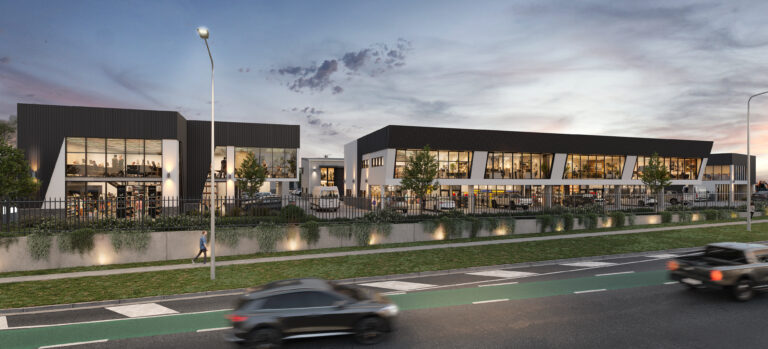
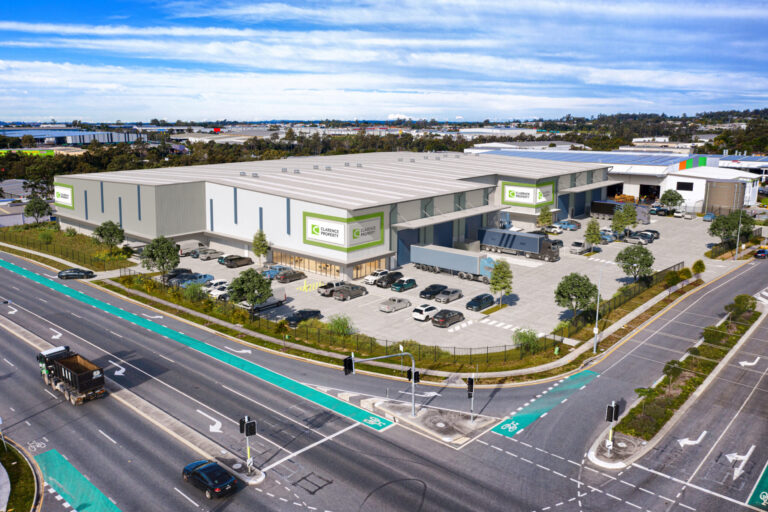
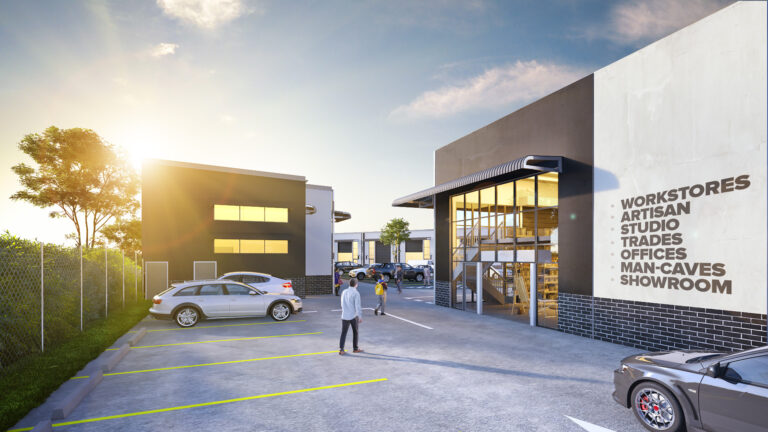
The team needs to be comfortable with indicative material, future conditions, incomplete design information and the challenge of selling a product that cannot yet be inspected. CGI, masterplans and clear specification communication become central rather than optional.
The commercial test is whether the information helps a qualified prospect make a better decision. If it does not improve understanding, comparison, confidence or the next step in the transaction, it probably does not deserve much space in the campaign.
Developers should also decide which questions are best answered publicly and which are better handled by the appointed agent. Publishing everything can remove useful sales conversations, while publishing too little creates low-quality enquiries. The right balance depends on the complexity of the project, the sophistication of the target market and how much flexibility remains in the deal.
Look at whether the portfolio proves relevance
A provider may be technically capable of creating every required asset, but previous industrial, commercial, medical, retail or land-development work is still useful evidence.
The question is not whether every past project looks identical to yours. It is whether the team has repeatedly taken technical development information and turned it into something commercial audiences can understand.
This should be treated as a project-control issue as much as a marketing issue. Decisions need an owner, a current source document and a process for communicating changes. Once the campaign is public, even a small inconsistency can spread through portals, PDFs, agent emails and saved buyer documents, making later corrections much harder than getting the source information right in the first place.
There is also a sequencing issue. The information most useful at first contact is not always the information needed at contract or lease stage. The public campaign should establish the commercial case quickly, while the deeper project pack supports the next step. Mixing those layers can make the first interaction unnecessarily dense and still leave serious prospects without the detail they need later.
Decide whether you need a supplier or an embedded project partner
For a simple completed warehouse, a supplier may be enough. For a multi-stage estate running over several years, the marketing function usually becomes part of the project team.
The longer the campaign, the more important continuity becomes. Somebody needs to remember why the original decisions were made, what has changed and how the market has responded.
The commercial test is whether the information helps a qualified prospect make a better decision. If it does not improve understanding, comparison, confidence or the next step in the transaction, it probably does not deserve much space in the campaign.
Developers should also decide which questions are best answered publicly and which are better handled by the appointed agent. Publishing everything can remove useful sales conversations, while publishing too little creates low-quality enquiries. The right balance depends on the complexity of the project, the sophistication of the target market and how much flexibility remains in the deal.
What developers should expect from the relationship
A good project-marketing partner should reduce workload for the developer, not create another stream of micro-management.
They should be able to gather information, identify gaps, manage revisions, coordinate with the appointed agents and keep the campaign current while still seeking approval on the decisions that materially affect the project.
This should be treated as a project-control issue as much as a marketing issue. Decisions need an owner, a current source document and a process for communicating changes. Once the campaign is public, even a small inconsistency can spread through portals, PDFs, agent emails and saved buyer documents, making later corrections much harder than getting the source information right in the first place.
There is also a sequencing issue. The information most useful at first contact is not always the information needed at contract or lease stage. The public campaign should establish the commercial case quickly, while the deeper project pack supports the next step. Mixing those layers can make the first interaction unnecessarily dense and still leave serious prospects without the detail they need later.
Commercial Property Marketing is built around that integrated role: working with developers and appointed agents to create the visual, digital and sales systems needed to take industrial projects to market.