




















































Selling industrial units before construction is a confidence exercise. The purchaser is committing capital to a future asset, so the campaign has to support both the operational case and the risk assessment.
The strongest pre-sales campaigns do not rely on hype. They make the project sufficiently clear that a serious buyer can move from interest into finance, legal review and due diligence before completion.
Identify the buyers most likely to commit early
Not every buyer values early commitment equally.
Owner-occupiers facing lease expiry, businesses needing a future relocation, investors seeking new stock and buyers wanting a specific configuration may all have stronger reasons to transact before completion.
This should be treated as a project-control issue as much as a marketing issue. Decisions need an owner, a current source document and a process for communicating changes. Once the campaign is public, even a small inconsistency can spread through portals, PDFs, agent emails and saved buyer documents, making later corrections much harder than getting the source information right in the first place.
The buyer or tenant is rarely making the decision alone. Commercial property often involves directors, finance teams, lenders, solicitors, accountants, operations managers and sometimes investors. Marketing becomes more effective when the material can survive being forwarded to people who were not part of the original sales conversation and still make sense without a verbal explanation.
Make the future asset easy to underwrite
Purchasers need clean information they can take to lenders and advisers.
Plans, areas, specifications, project timing, price, contract process and title structure should be presented consistently enough that the buyer is not reconstructing the asset from fragments.
The material also needs to be internally consistent. A lender, solicitor or adviser will often notice discrepancies that a first-time viewer overlooks. Clean documentation therefore supports not only marketing quality but the buyer's ability to obtain approval and proceed.
Developers should also decide which questions are best answered publicly and which are better handled by the appointed agent. Publishing everything can remove useful sales conversations, while publishing too little creates low-quality enquiries. The right balance depends on the complexity of the project, the sophistication of the target market and how much flexibility remains in the deal.
Use the right level of visual realism
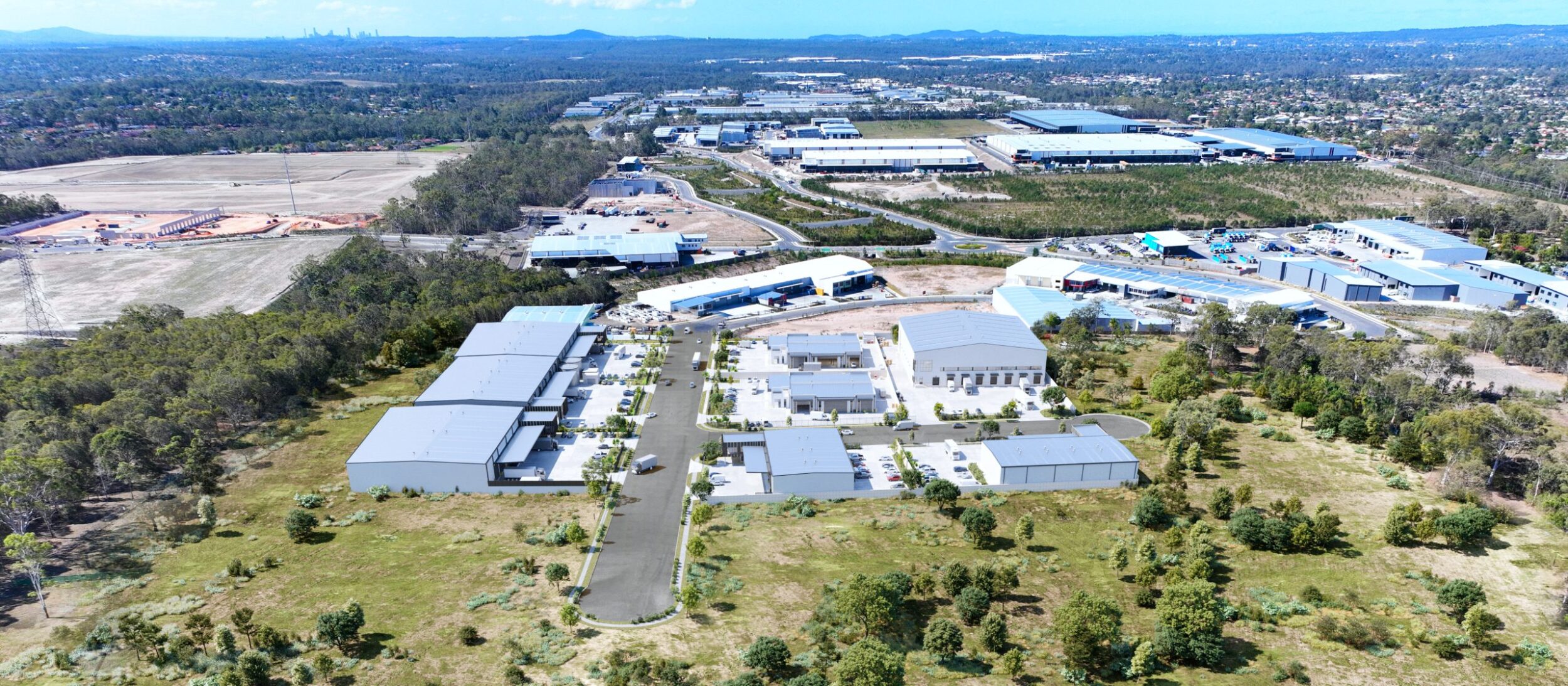
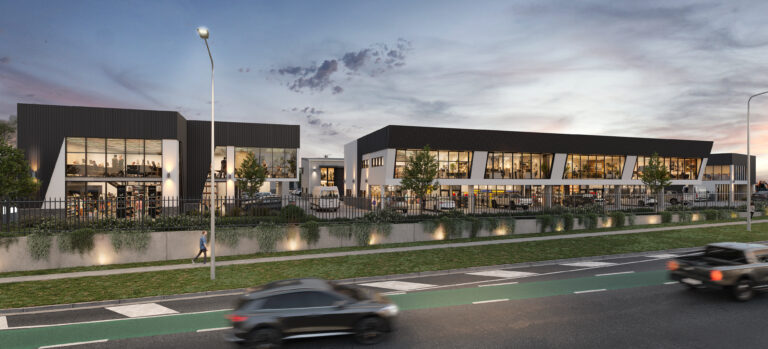
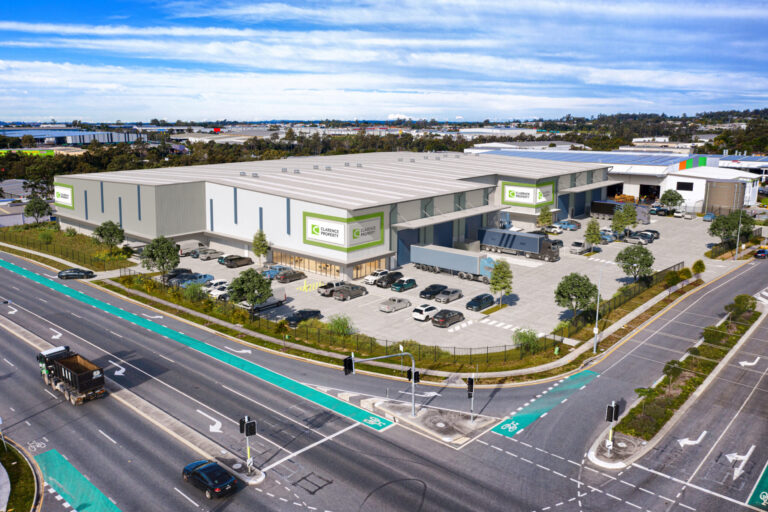
CGI should make the finished product understandable without implying certainty that does not exist.
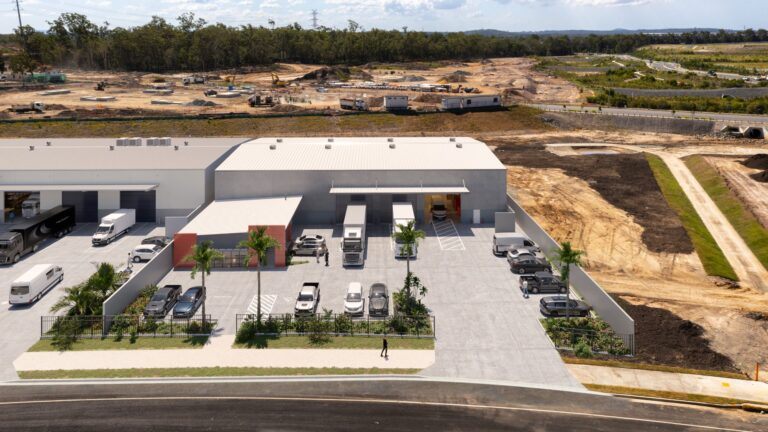
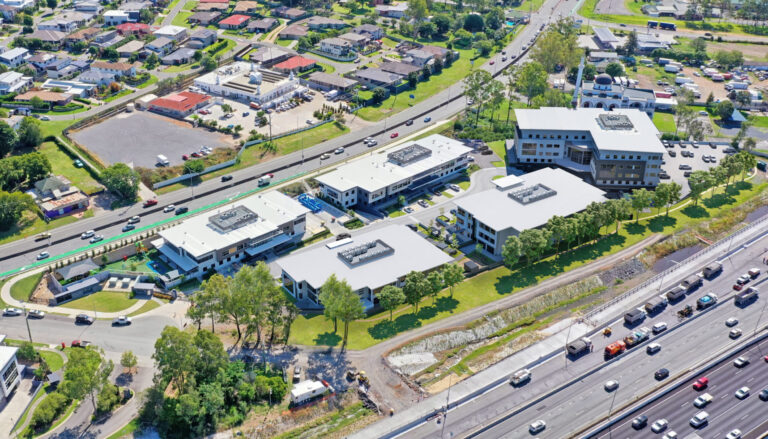
The most useful images show scale, access, façade, entry, parking, landscaping and the relationship between units. Decorative detail matters less than commercial credibility.
The render brief should identify what must be technically accurate and what is being used to communicate atmosphere. Building massing, access, roller doors, parking, office entries and major landscape relationships should normally track the current design. Decorative vehicles, people and planting can be more interpretive. Making that distinction at the start protects the project from producing attractive images that later contradict the sale documents.
There is also a sequencing issue. The information most useful at first contact is not always the information needed at contract or lease stage. The public campaign should establish the commercial case quickly, while the deeper project pack supports the next step. Mixing those layers can make the first interaction unnecessarily dense and still leave serious prospects without the detail they need later.
Explain access before buyers ask
Industrial buyers care deeply about how the property functions.
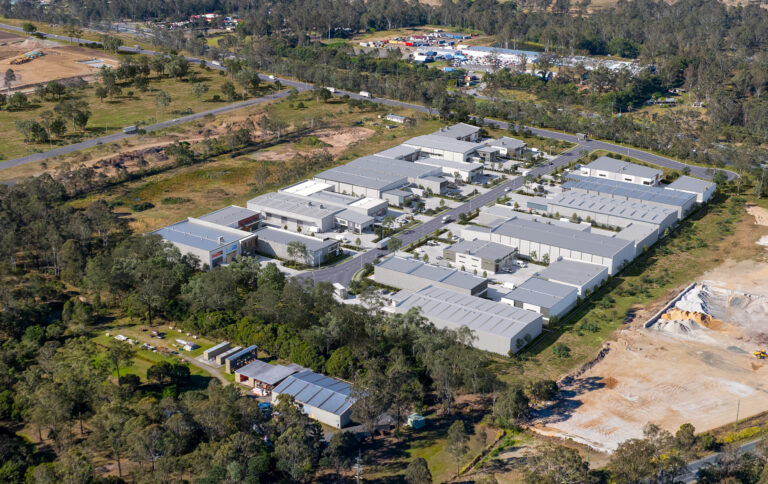
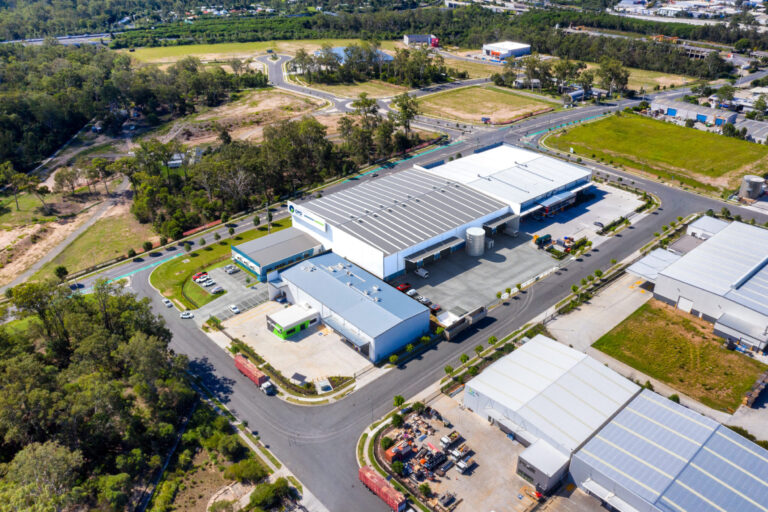
Truck approach, shared driveways, roller-door positioning, loading conflicts and customer entry should be legible in the plans and imagery.
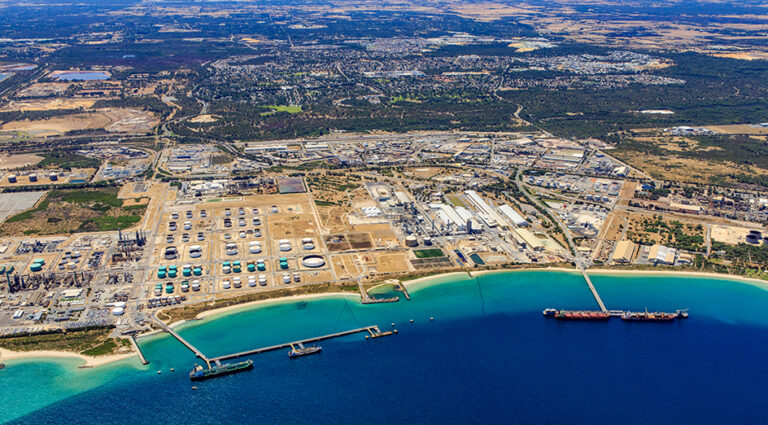
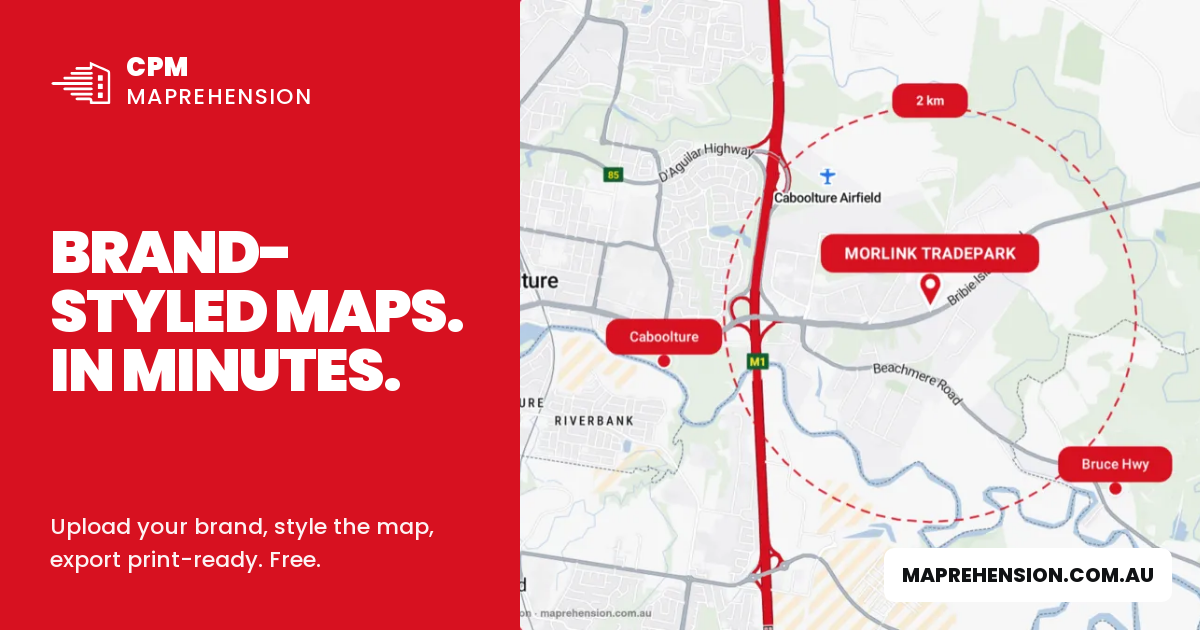
This is also where location marketing becomes operational rather than decorative. A project may be ten kilometres from a motorway interchange but still have a poor route for heavy vehicles. Good marketing does not reduce access to a distance number; it shows the road hierarchy and lets the buyer understand how the site connects to the network.
That is why clarity is more valuable than cleverness in this category. A sophisticated audience will forgive a campaign for being restrained; it will not forgive inconsistent areas, vague delivery timing or imagery that conflicts with the plans. The material has to work as a decision-support system, not only as advertising.
Treat area schedules as controlled project data
Areas change during design, and even small changes can affect price or buyer perception.
Maintain one current schedule and make sure the masterplan, website, IM and agent documents are updated from it.
The marketing plan should be checked against how an experienced buyer will interrogate it. Can they understand the entry, circulation, orientation and adjoining lots without opening the civil set? Can they reconcile unit numbers with the price schedule? Can an agent describe a specific opportunity while looking at the same document as the buyer? Those are practical tests of whether the plan is working as a sales instrument.
Small factual errors become disproportionately damaging in commercial property because the same information is repeated in many places. An incorrect area can appear in a render label, brochure, listing, EDM and price schedule before anybody notices. For that reason, source data should be treated almost like project documentation: controlled, dated and updated deliberately rather than copied casually between files.
Create confidence around timing
Buyers need to align finance, lease expiry, relocation, fitout and operational planning.
The project should communicate expected milestones without making guarantees the construction program cannot support.
The commercial consequence of getting the timing wrong is usually not a design problem; it is lost market momentum. Launch too early and serious prospects cannot progress. Launch too late and months of potential pre-sales or pre-leasing disappear. The useful threshold is therefore not perfect documentation. It is the point where the project can answer enough questions for a qualified prospect to move into a meaningful commercial discussion.
Developers should also decide which questions are best answered publicly and which are better handled by the appointed agent. Publishing everything can remove useful sales conversations, while publishing too little creates low-quality enquiries. The right balance depends on the complexity of the project, the sophistication of the target market and how much flexibility remains in the deal.
Use early sales as market evidence
Genuine contracts can validate the project and reduce perceived risk for later buyers.
But avoid overstating expressions of interest or verbal reservations. Commercial markets are small enough that credibility travels quickly.
Market response should be separated into awareness, qualification and conversion. High website traffic with weak enquiries suggests a different problem from strong enquiries that do not progress past pricing. Likewise, repeated interest in one unit size can reveal product demand that raw enquiry totals hide. Looking at the funnel properly prevents the development team from treating every slow period as a media problem.
Conversion should be considered separately from lead generation. If qualified prospects are requesting plans and speaking with agents but not progressing, the campaign may already have done its job. At that point the development team needs to inspect price, deal structure, timing, specification or product-market fit instead of assuming the answer is a larger advertising budget.
Keep the buyer moving through the process
After the initial enquiry, the campaign should make it obvious what comes next.
That may be receiving the full plan pack, speaking with the agent, reviewing contract documentation, meeting the developer or discussing unit combinations.
The commercial test is whether the information helps a qualified prospect make a better decision. If it does not improve understanding, comparison, confidence or the next step in the transaction, it probably does not deserve much space in the campaign.
That is why clarity is more valuable than cleverness in this category. A sophisticated audience will forgive a campaign for being restrained; it will not forgive inconsistent areas, vague delivery timing or imagery that conflicts with the plans. The material has to work as a decision-support system, not only as advertising.
Help buyers compare the project fairly
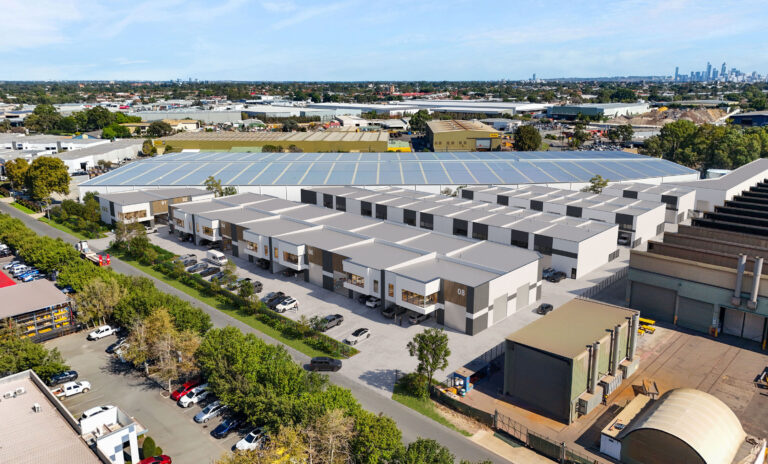
An off-the-plan unit may appear more expensive than older stock until the buyer accounts for building age, fitout, power, maintenance, presentation and future adaptability.
The campaign should provide the facts that make that comparison possible without making unprovable claims about future value.
This should be treated as a project-control issue as much as a marketing issue. Decisions need an owner, a current source document and a process for communicating changes. Once the campaign is public, even a small inconsistency can spread through portals, PDFs, agent emails and saved buyer documents, making later corrections much harder than getting the source information right in the first place.
The buyer or tenant is rarely making the decision alone. Commercial property often involves directors, finance teams, lenders, solicitors, accountants, operations managers and sometimes investors. Marketing becomes more effective when the material can survive being forwarded to people who were not part of the original sales conversation and still make sense without a verbal explanation.
Do not rely on artificial urgency
Real scarcity, construction pricing or limited unit types can legitimately create urgency.
Invented deadlines or vague 'selling fast' language can undermine confidence, especially when the project is still obviously early in the sales cycle.
The commercial test is whether the information helps a qualified prospect make a better decision. If it does not improve understanding, comparison, confidence or the next step in the transaction, it probably does not deserve much space in the campaign.
Developers should also decide which questions are best answered publicly and which are better handled by the appointed agent. Publishing everything can remove useful sales conversations, while publishing too little creates low-quality enquiries. The right balance depends on the complexity of the project, the sophistication of the target market and how much flexibility remains in the deal.
Use the construction program as a marketing calendar
Every meaningful milestone creates a reason to re-engage the market.
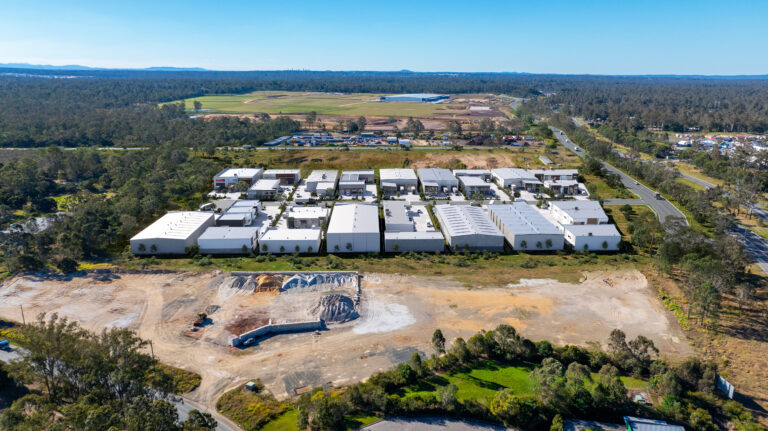
Civil works, slabs, structural steel, roofing, road completion and nearing practical completion can each shift buyer perception of risk and immediacy.
Market response should be separated into awareness, qualification and conversion. High website traffic with weak enquiries suggests a different problem from strong enquiries that do not progress past pricing. Likewise, repeated interest in one unit size can reveal product demand that raw enquiry totals hide. Looking at the funnel properly prevents the development team from treating every slow period as a media problem.
The campaign should also be built with the likely life of the project in mind. A staged industrial development may remain active for years, through planning changes, construction cost movements, agent changes and new competing supply. Assets that are difficult to revise become expensive very quickly. Modularity and updateability are therefore strategic considerations, not just production preferences.
Recognise when price is the problem
If the campaign is generating informed enquiries but no serious offers, marketing may already be doing its job.
The remaining issue may be price, deposit structure, product mix, timing or competition. More impressions do not automatically solve a commercial mismatch.
The commercial consequence of getting the timing wrong is usually not a design problem; it is lost market momentum. Launch too early and serious prospects cannot progress. Launch too late and months of potential pre-sales or pre-leasing disappear. The useful threshold is therefore not perfect documentation. It is the point where the project can answer enough questions for a qualified prospect to move into a meaningful commercial discussion.
Conversely, if enquiries are consistently unqualified, the issue may be the campaign itself. Vague messaging often attracts everyone while helping nobody self-select. Clearer product definition can reduce enquiry volume while improving the commercial value of every lead that remains.
Maintain version discipline through the contract period
A buyer may hold campaign material for weeks while advisers review the deal.
Changes need to be communicated carefully so that the marketing record does not conflict with updated project documentation.
This should be treated as a project-control issue as much as a marketing issue. Decisions need an owner, a current source document and a process for communicating changes. Once the campaign is public, even a small inconsistency can spread through portals, PDFs, agent emails and saved buyer documents, making later corrections much harder than getting the source information right in the first place.
Small factual errors become disproportionately damaging in commercial property because the same information is repeated in many places. An incorrect area can appear in a render label, brochure, listing, EDM and price schedule before anybody notices. For that reason, source data should be treated almost like project documentation: controlled, dated and updated deliberately rather than copied casually between files.
Support the remaining stock after the first sales
As particular unit types sell out, the campaign should shift attention toward what remains.
Do not leave the hero message focused on product that is no longer available.
The commercial test is whether the information helps a qualified prospect make a better decision. If it does not improve understanding, comparison, confidence or the next step in the transaction, it probably does not deserve much space in the campaign.
Developers should also decide which questions are best answered publicly and which are better handled by the appointed agent. Publishing everything can remove useful sales conversations, while publishing too little creates low-quality enquiries. The right balance depends on the complexity of the project, the sophistication of the target market and how much flexibility remains in the deal.
What successful pre-sales actually prove
Strong pre-sales demonstrate that the project can be understood and valued before it exists physically.
That requires credible product information, a disciplined sales process and marketing that reduces uncertainty instead of simply increasing exposure.
This should be treated as a project-control issue as much as a marketing issue. Decisions need an owner, a current source document and a process for communicating changes. Once the campaign is public, even a small inconsistency can spread through portals, PDFs, agent emails and saved buyer documents, making later corrections much harder than getting the source information right in the first place.
There is also a sequencing issue. The information most useful at first contact is not always the information needed at contract or lease stage. The public campaign should establish the commercial case quickly, while the deeper project pack supports the next step. Mixing those layers can make the first interaction unnecessarily dense and still leave serious prospects without the detail they need later.
Pre-sales can influence later product decisions
Early buyer response can provide useful evidence for later stages of the project. Strong demand for a particular unit size, frontage condition, yard configuration or office ratio may justify changes to future releases, while repeated resistance can reveal where the product is missing the market.
That feedback is most valuable when it is captured systematically rather than remembered anecdotally. The development team should know not just what sold, but who bought, why they bought and which alternatives they rejected.
For the developer, that discipline also makes forecasting more useful. When the team can distinguish genuine buyer resistance from incomplete marketing information, decisions around pricing, release strategy and later-stage product can be made with far greater confidence.
Commercial Property Marketing supports industrial pre-sales by turning the future asset into a clear, commercially structured opportunity for buyers and their advisers.