













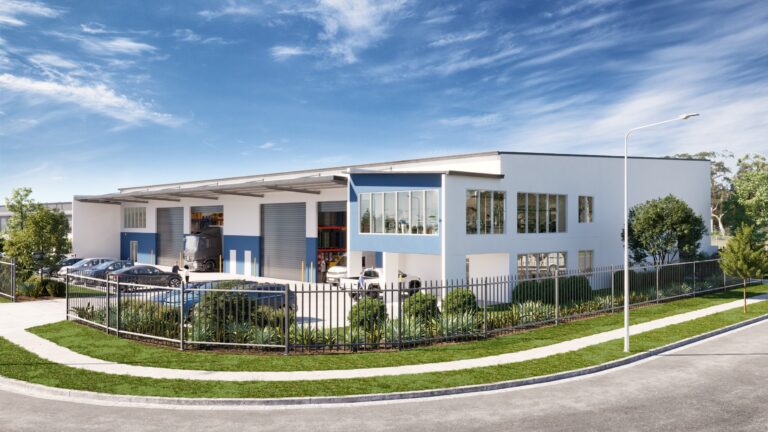
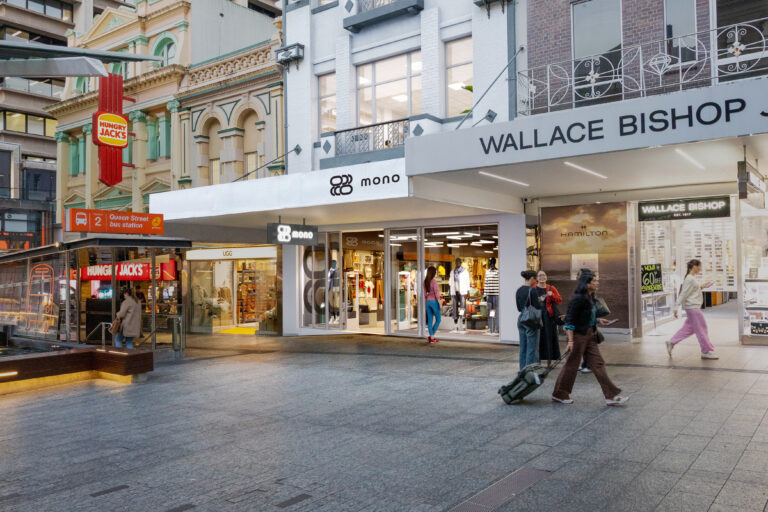
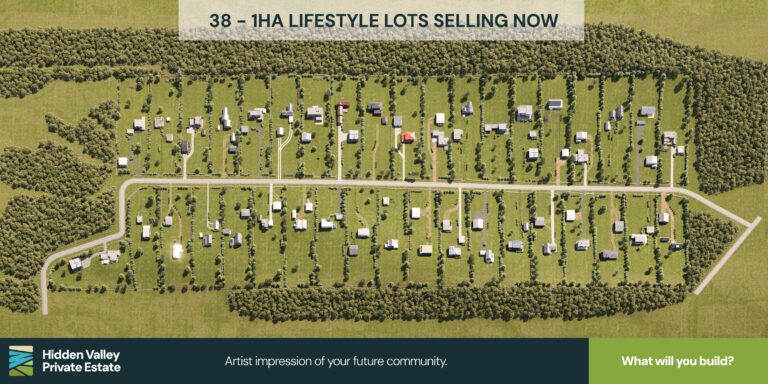

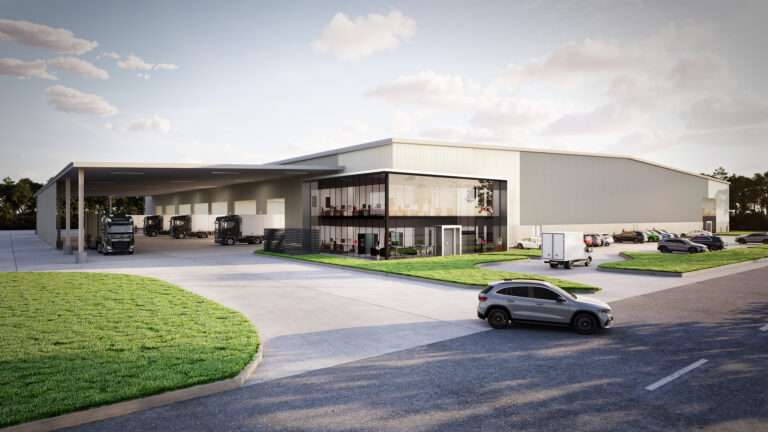














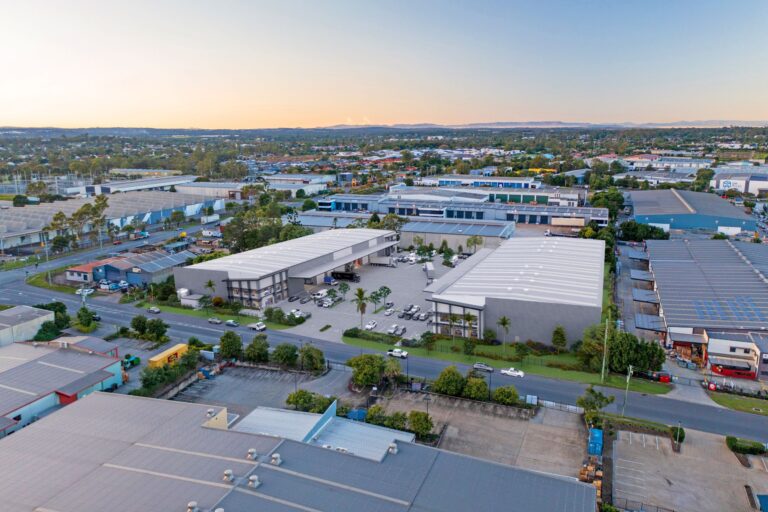

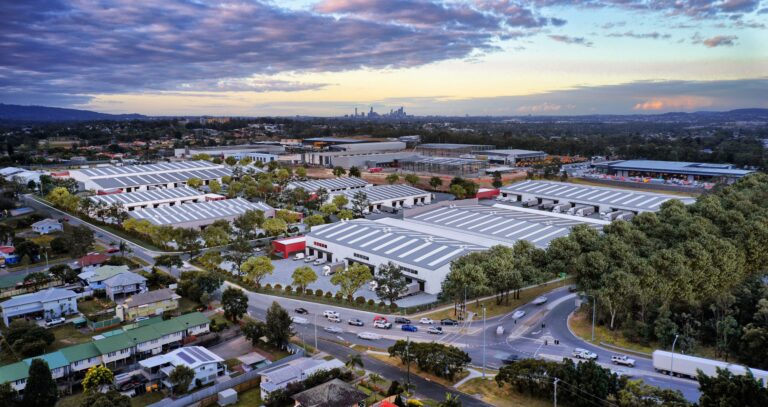
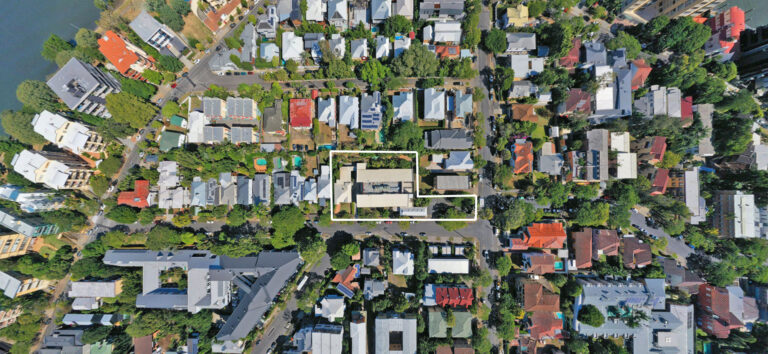

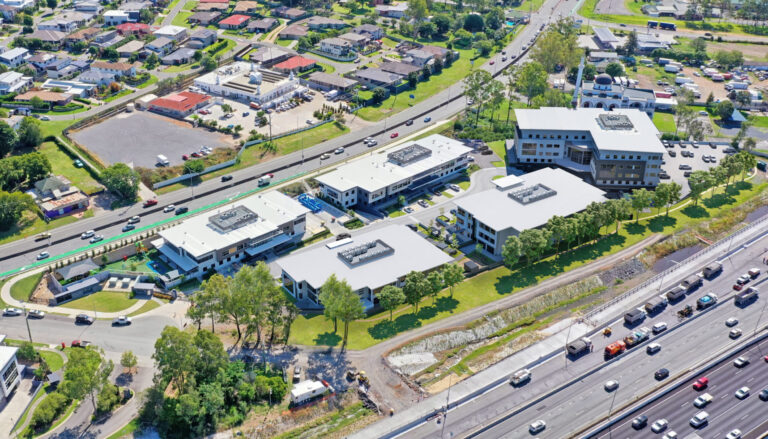







Pre-leasing an industrial estate is more operational than promotional. A tenant is not simply deciding whether the development looks good; they are deciding whether a future premises can support their business at the point they need to occupy it.
That means the campaign has to communicate function, timing and flexibility with enough confidence for the tenant to begin internal approvals well before practical completion.
Start with occupier requirements, not generic features
Warehouse area, clearance, loading, hardstand, power, office content, parking and truck circulation can all be deal-critical.
The campaign should lead with information that helps tenants assess operational suitability rather than burying it inside a long brochure.
At project level, timing should be documented rather than left as an informal assumption between the developer, agent and consultants. If the campaign is being prepared while design is still moving, nominate the current issue set, record the decisions that are considered commercially fixed and identify the next consultant milestone that could materially change the offer. That gives the marketing team a controlled point of reference and avoids expensive rework every time a drawing is reissued.
The buyer or tenant is rarely making the decision alone. Commercial property often involves directors, finance teams, lenders, solicitors, accountants, operations managers and sometimes investors. Marketing becomes more effective when the material can survive being forwarded to people who were not part of the original sales conversation and still make sense without a verbal explanation.
Map the tenant decision timeline
Large occupiers may need months of internal approval, legal review, design work, fitout planning and relocation preparation.
The marketing timetable should therefore work backwards from likely occupancy rather than waiting until the building is nearly complete.
Large occupiers may also need several internal stakeholders to agree. Operations may care about access and loading, finance about occupancy cost, leadership about timing and staff about amenity. The marketing pack should make it easy for the property contact to carry the opportunity through that internal process.
That is why clarity is more valuable than cleverness in this category. A sophisticated audience will forgive a campaign for being restrained; it will not forgive inconsistent areas, vague delivery timing or imagery that conflicts with the plans. The material has to work as a decision-support system, not only as advertising.
Explain what can still be customised
Pre-leasing can be strongest when the tenant can influence parts of the final product.
Office fitout, power, loading, signage or unit combinations may be negotiable, but flexibility should be explained honestly so the tenant understands what can still change and by when.
This should be treated as a project-control issue as much as a marketing issue. Decisions need an owner, a current source document and a process for communicating changes. Once the campaign is public, even a small inconsistency can spread through portals, PDFs, agent emails and saved buyer documents, making later corrections much harder than getting the source information right in the first place.
There is also a sequencing issue. The information most useful at first contact is not always the information needed at contract or lease stage. The public campaign should establish the commercial case quickly, while the deeper project pack supports the next step. Mixing those layers can make the first interaction unnecessarily dense and still leave serious prospects without the detail they need later.
Use plans to prove operational fit
A clean tenancy plan should show more than walls.
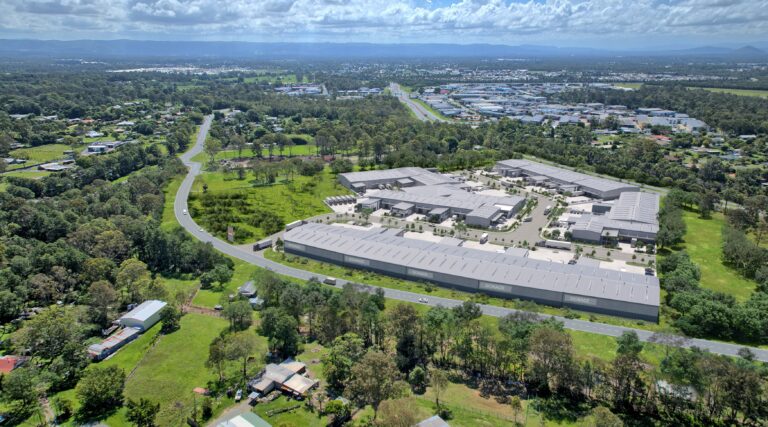
Where relevant, it should help explain vehicle access, loading, staff and visitor entry, parking, yard relationship and connections to the wider estate.
Where design information is still fluid, the masterplan also becomes a version-control problem. Keep one current marketing issue and retire superseded PDFs deliberately. Once an old plan has been emailed to agents, uploaded to portals and saved by buyers, it can keep circulating for months. Clear revision discipline is therefore part of marketing, not merely a consultant administration task.
Where the project has several consultants, it is worth nominating which discipline owns each marketing fact. Architects may own areas, civil engineers access geometry, the developer pricing, and the agent availability. The marketing team can then coordinate the public version without becoming the authority for facts it does not control.
Use CGI to support internal stakeholder approval
The person making the property enquiry may not be the final decision-maker.
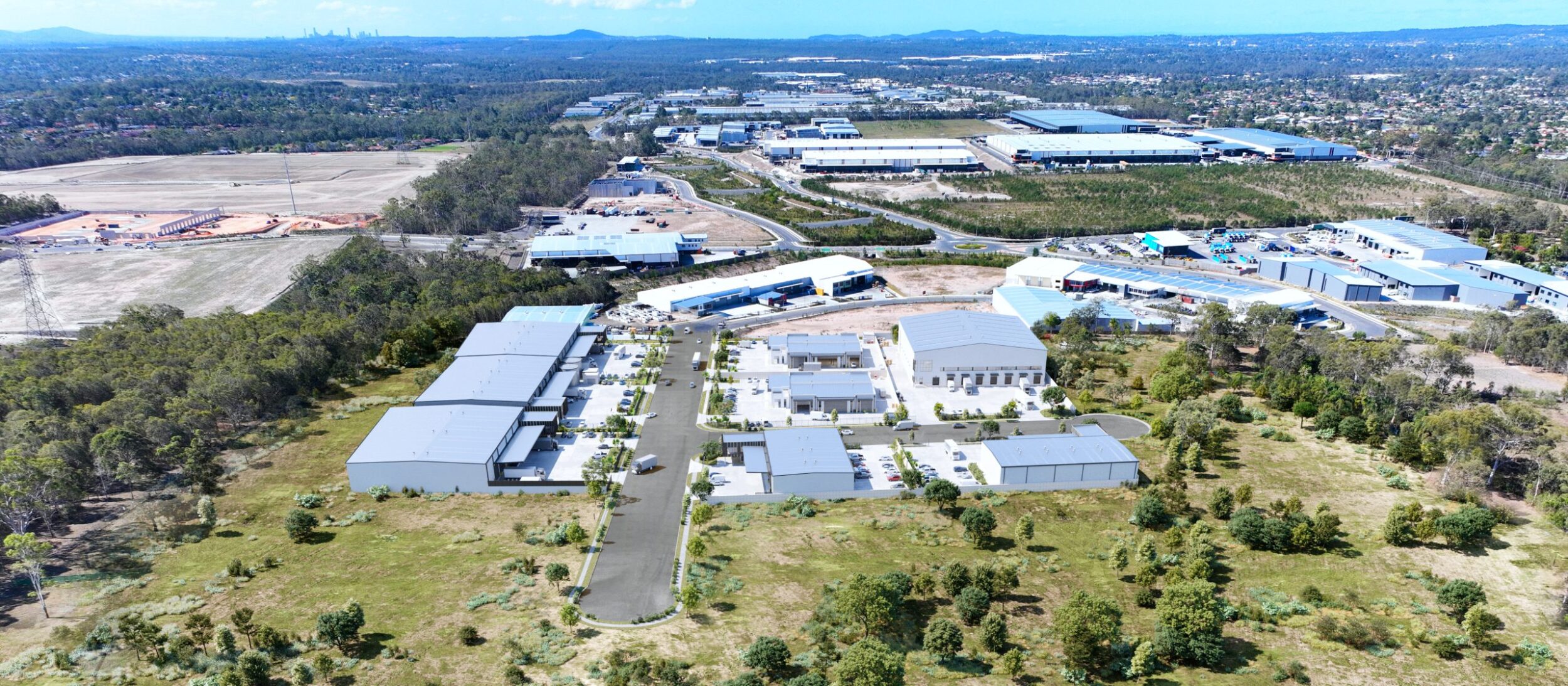
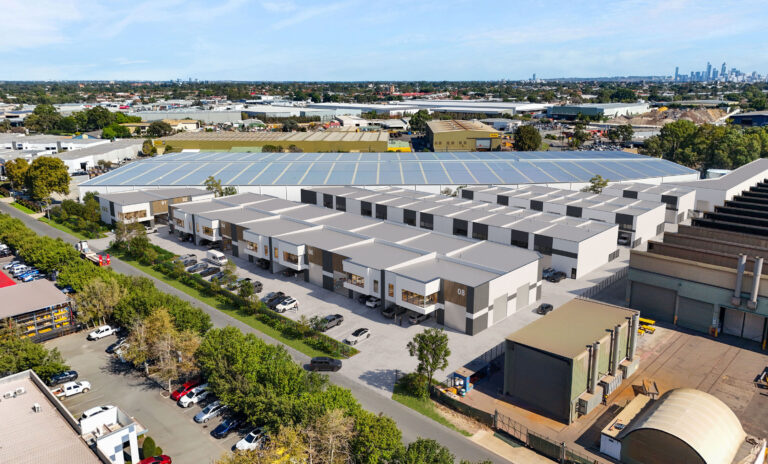
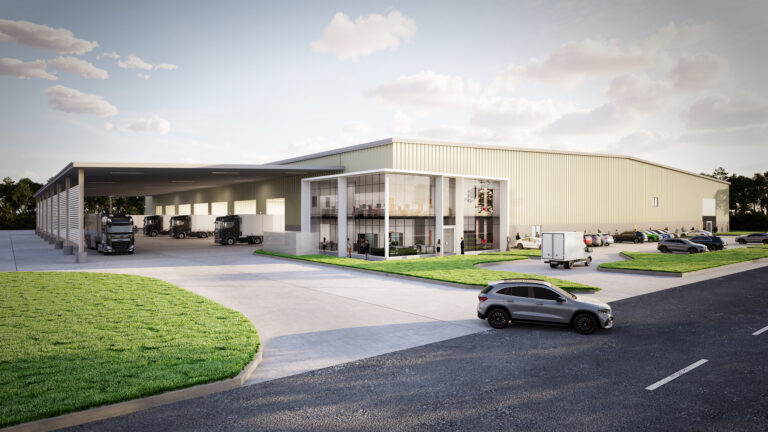
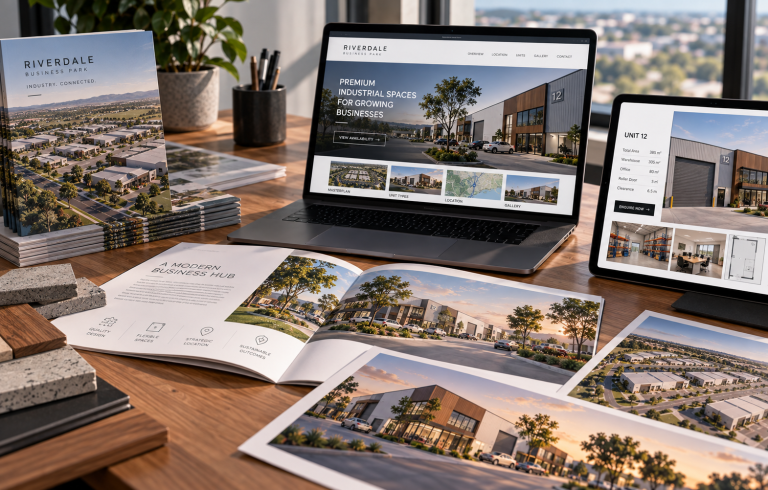
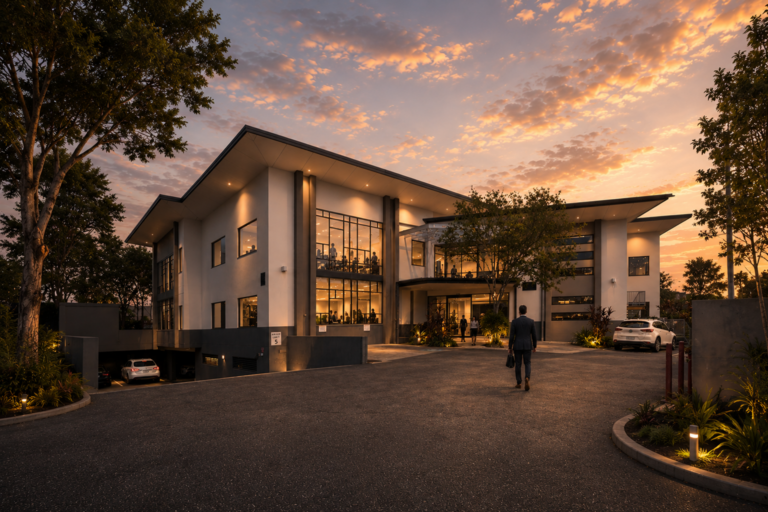
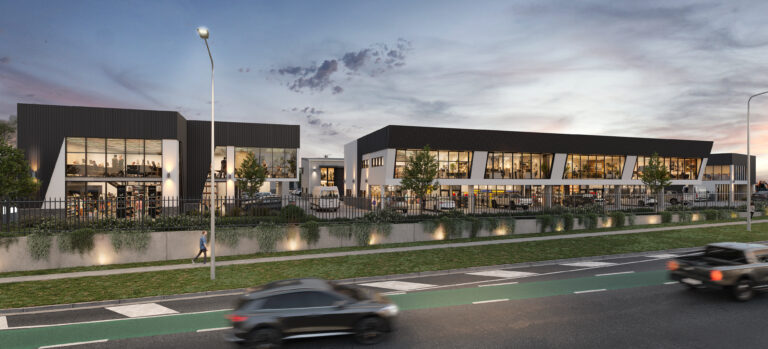
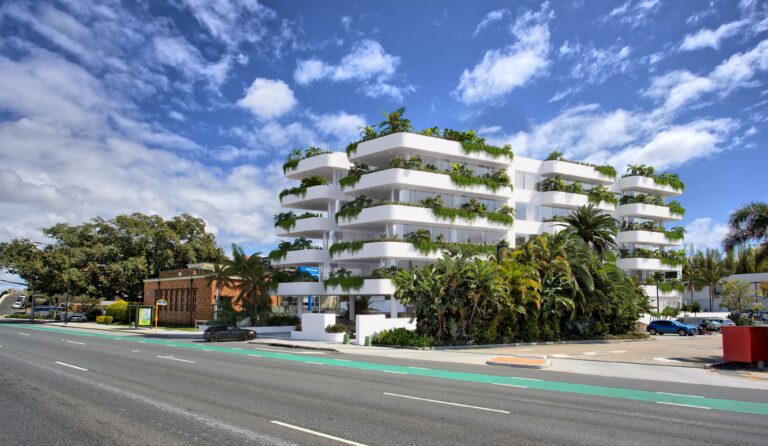
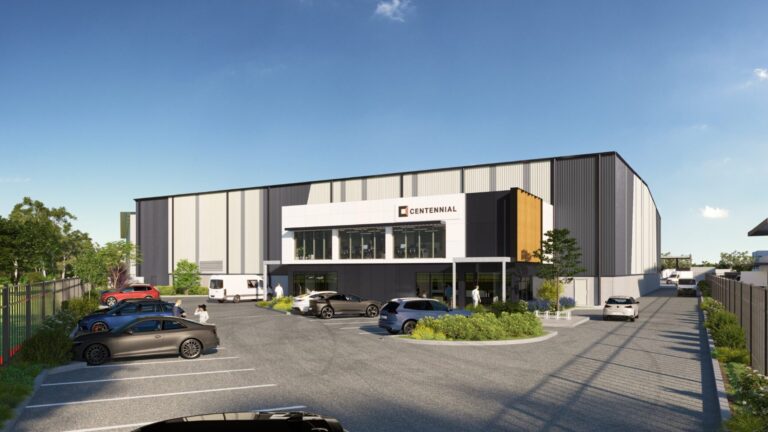
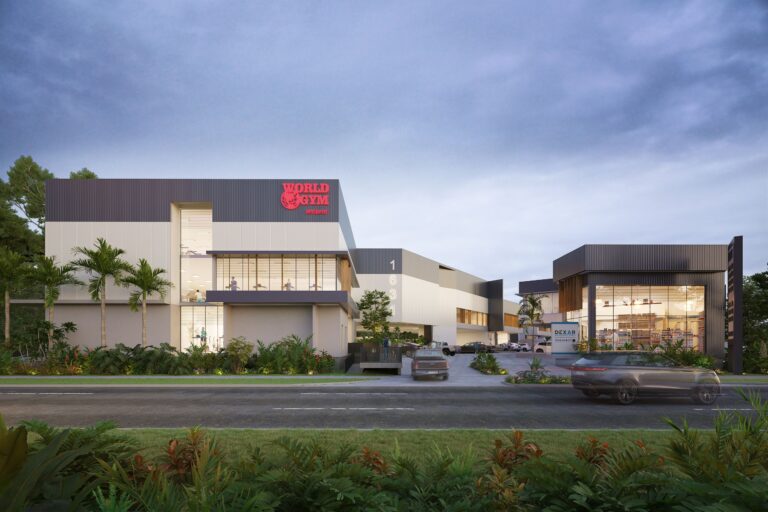
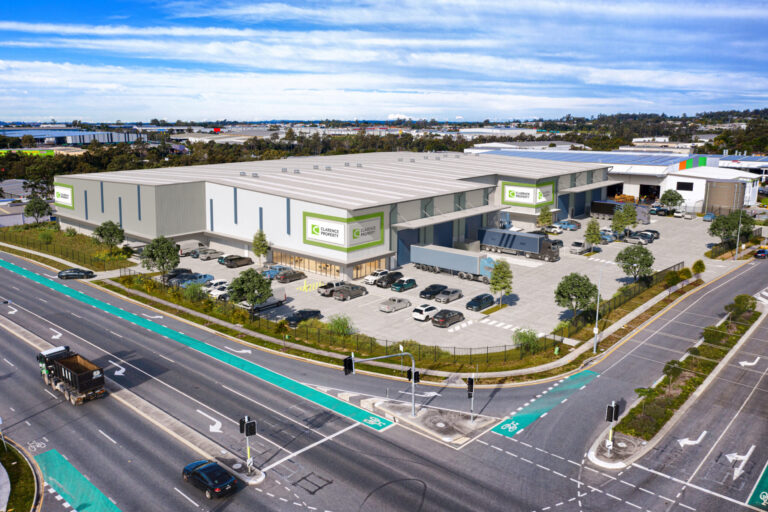
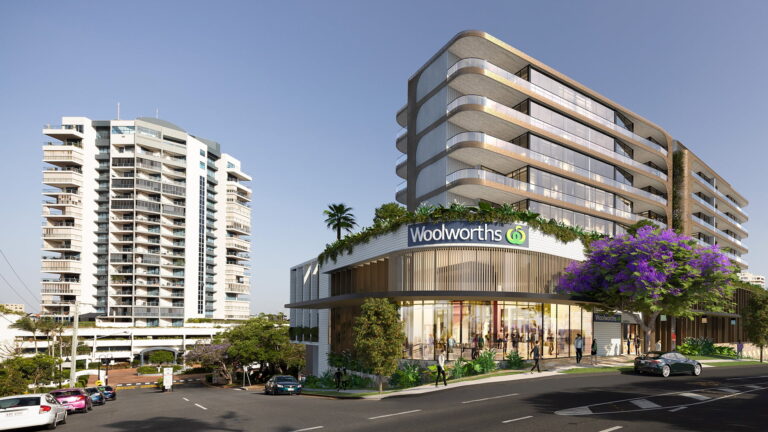
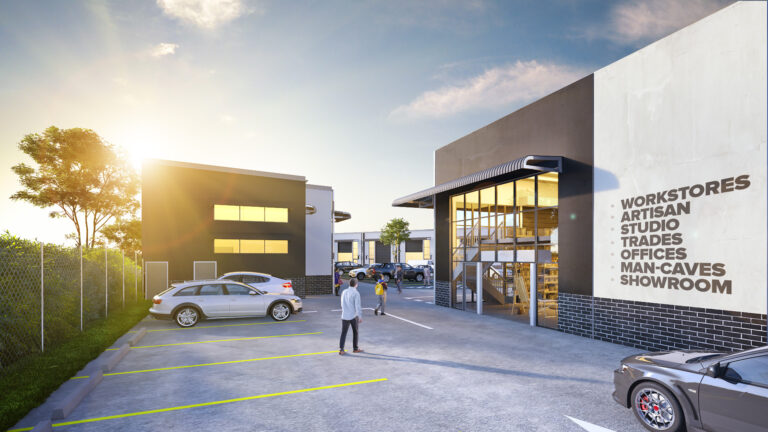
Renders can help operations teams, directors and staff understand a future premises that they cannot yet inspect. This is especially useful when the project needs approval from people who will never visit the construction site.
The render brief should identify what must be technically accurate and what is being used to communicate atmosphere. Building massing, access, roller doors, parking, office entries and major landscape relationships should normally track the current design. Decorative vehicles, people and planting can be more interpretive. Making that distinction at the start protects the project from producing attractive images that later contradict the sale documents.
There is also a sequencing issue. The information most useful at first contact is not always the information needed at contract or lease stage. The public campaign should establish the commercial case quickly, while the deeper project pack supports the next step. Mixing those layers can make the first interaction unnecessarily dense and still leave serious prospects without the detail they need later.
Be disciplined about delivery dates
Tenant relocation planning depends on timing.
The campaign should communicate expected delivery windows carefully and update material when the program changes. Optimistic dates that repeatedly move damage trust more than realistic ranges.
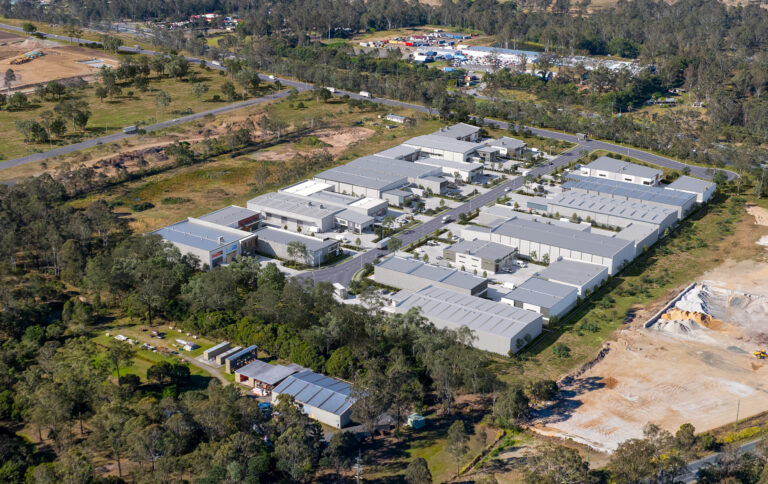
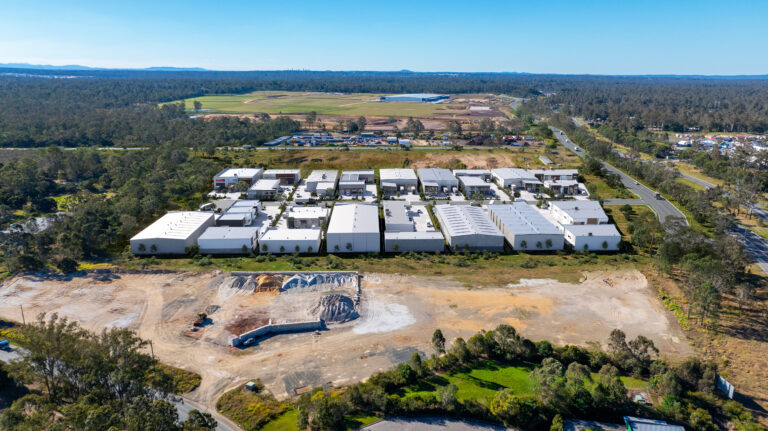
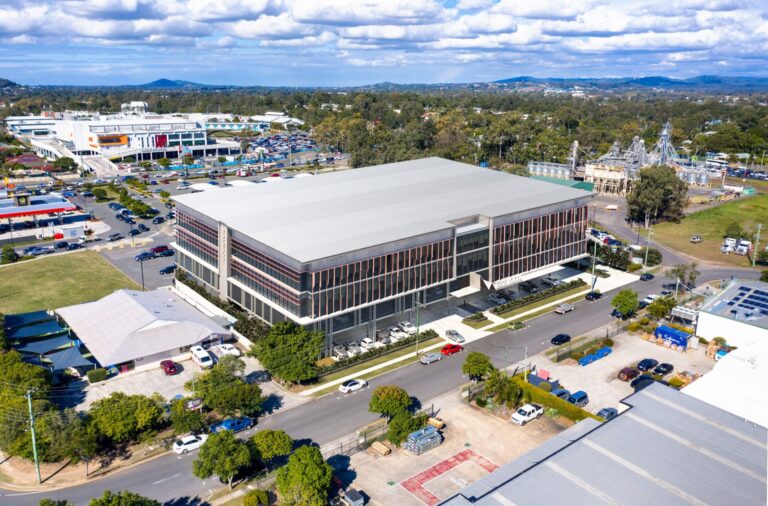
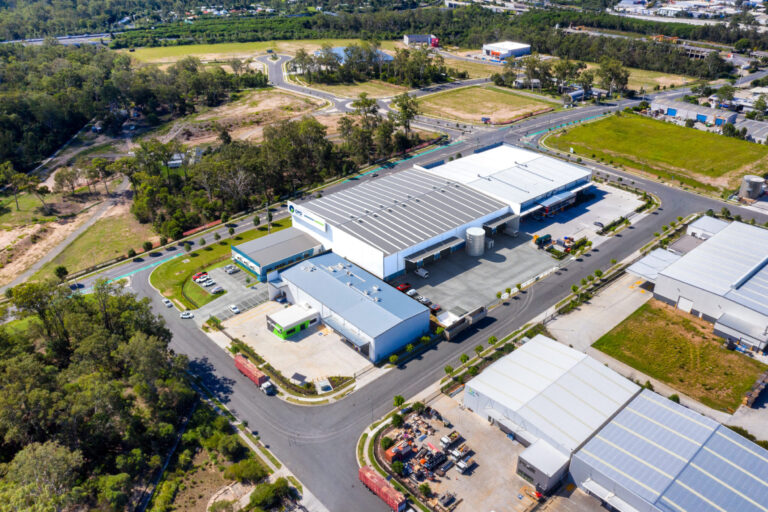
As the project becomes tangible, the balance between CGI and photography should change. Early renders explain the future; later photography proves delivery. Keeping both allows buyers to compare current progress with the intended finished outcome, which is particularly useful when a project still has months to run.
Developers should also decide which questions are best answered publicly and which are better handled by the appointed agent. Publishing everything can remove useful sales conversations, while publishing too little creates low-quality enquiries. The right balance depends on the complexity of the project, the sophistication of the target market and how much flexibility remains in the deal.
Give leasing agents the information to qualify quickly
Agents need to know which requirements are hard limits and which are negotiable.
Clear schedules, plans and specification summaries help them avoid spending time on occupiers the property cannot accommodate.
The agent handover should be treated as an operational step, not simply an email containing finished artwork. Walk the agents through the current plans, product hierarchy, known design assumptions, availability process and where to find the latest files. That reduces the chance of different agents describing the same project differently and gives the marketing team early feedback on questions the campaign has not yet answered.
There is also a sequencing issue. The information most useful at first contact is not always the information needed at contract or lease stage. The public campaign should establish the commercial case quickly, while the deeper project pack supports the next step. Mixing those layers can make the first interaction unnecessarily dense and still leave serious prospects without the detail they need later.
Position the estate against the occupier's alternatives
A tenant may be comparing new construction with renewing an existing lease, taking older stock or moving to another precinct.
The campaign should explain the operational and strategic differences rather than relying only on architectural quality.
A strong proposition also needs hierarchy. A project can have excellent access, attractive pricing, good presentation and flexible units, but the campaign should still decide what leads. Experienced buyers will discover the secondary advantages during due diligence. The first job is to give them a clear reason to investigate this project rather than treating every feature as equally important.
That is why clarity is more valuable than cleverness in this category. A sophisticated audience will forgive a campaign for being restrained; it will not forgive inconsistent areas, vague delivery timing or imagery that conflicts with the plans. The material has to work as a decision-support system, not only as advertising.
Use location in operational terms
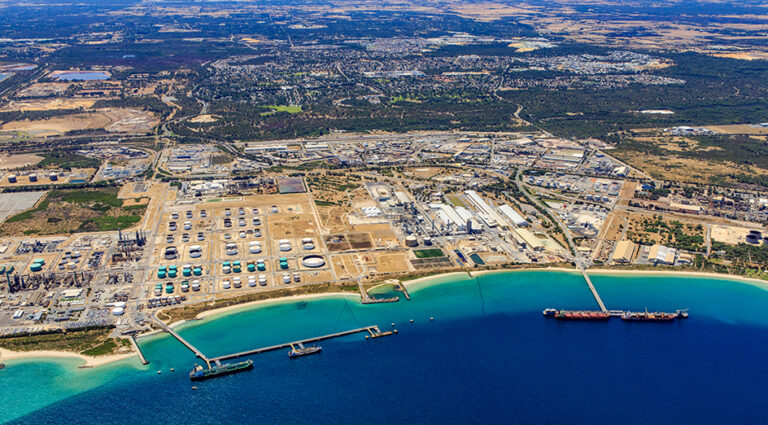
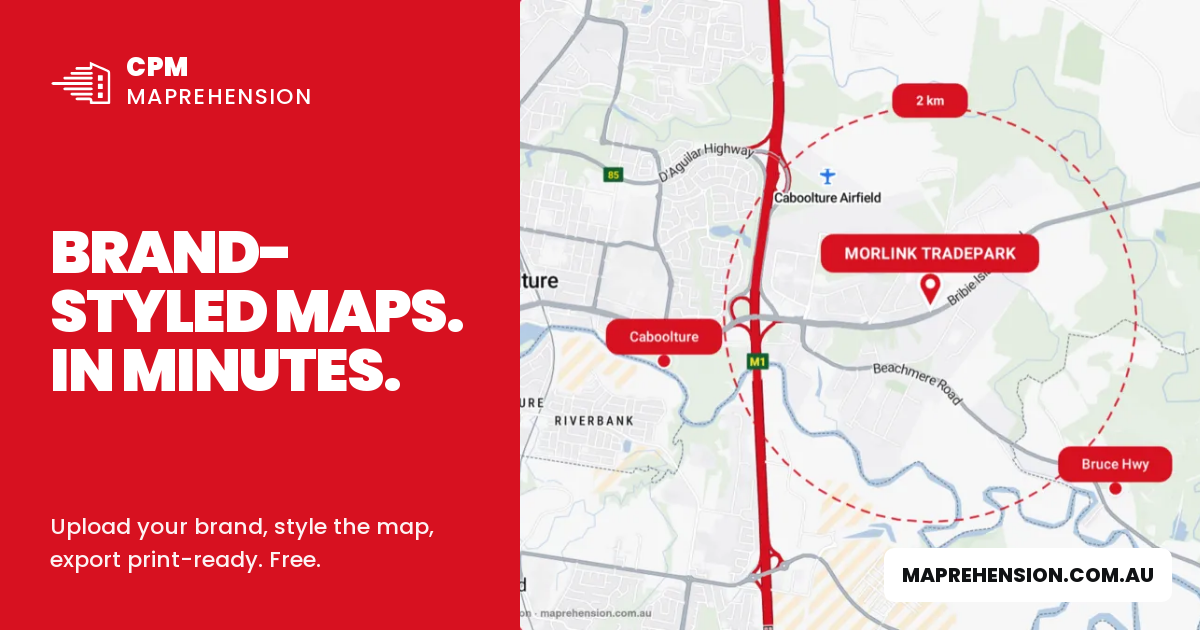
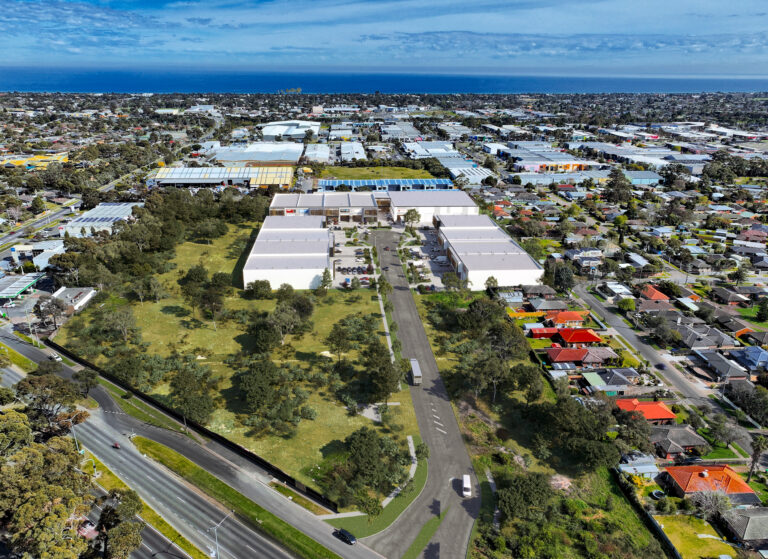
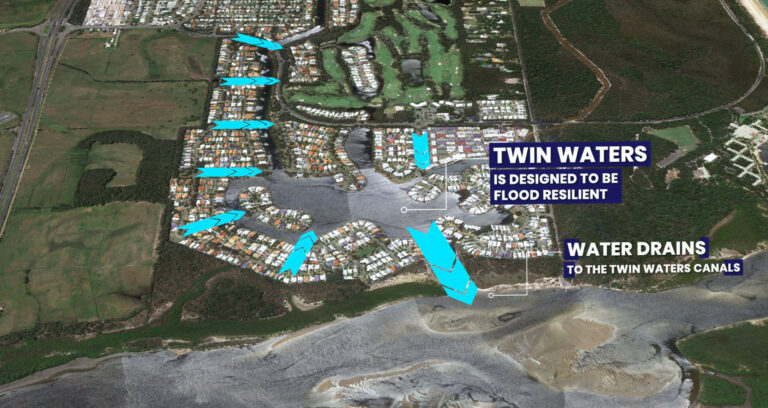
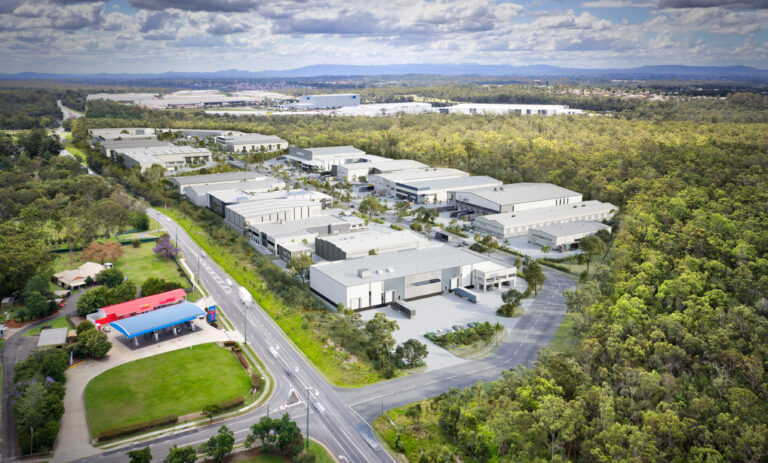
For industrial tenants, location often means travel time, workforce access, freight routes, customers and suppliers.
Maps should support those decisions and avoid irrelevant amenity clutter.
This should be treated as a project-control issue as much as a marketing issue. Decisions need an owner, a current source document and a process for communicating changes. Once the campaign is public, even a small inconsistency can spread through portals, PDFs, agent emails and saved buyer documents, making later corrections much harder than getting the source information right in the first place.
There is also a sequencing issue. The information most useful at first contact is not always the information needed at contract or lease stage. The public campaign should establish the commercial case quickly, while the deeper project pack supports the next step. Mixing those layers can make the first interaction unnecessarily dense and still leave serious prospects without the detail they need later.
Handle make-good and fitout assumptions carefully
Tenants may compare total occupancy cost, not just face rent.
Where the campaign discusses warm shell, office fitout, power or other inclusions, the language needs enough precision that the leasing negotiation is not forced to unwind marketing assumptions later.
The commercial test is whether the information helps a qualified prospect make a better decision. If it does not improve understanding, comparison, confidence or the next step in the transaction, it probably does not deserve much space in the campaign.
Developers should also decide which questions are best answered publicly and which are better handled by the appointed agent. Publishing everything can remove useful sales conversations, while publishing too little creates low-quality enquiries. The right balance depends on the complexity of the project, the sophistication of the target market and how much flexibility remains in the deal.
Create material for the tenant's internal business case
Property decisions often need approval from finance, operations and leadership.
A concise project summary, plans, timing and specifications can help the property contact build the internal case for relocation.
For a tenant, property is part of a wider operational change. Lease expiry, make-good, fitout, staff communication, relocation downtime and customer continuity may all sit behind the enquiry. Pre-leasing material that recognises those constraints is more useful than a campaign focused only on the building façade.
The buyer or tenant is rarely making the decision alone. Commercial property often involves directors, finance teams, lenders, solicitors, accountants, operations managers and sometimes investors. Marketing becomes more effective when the material can survive being forwarded to people who were not part of the original sales conversation and still make sense without a verbal explanation.
Use construction progress to reduce perceived delivery risk
Visible progress can materially change a tenant's willingness to commit.
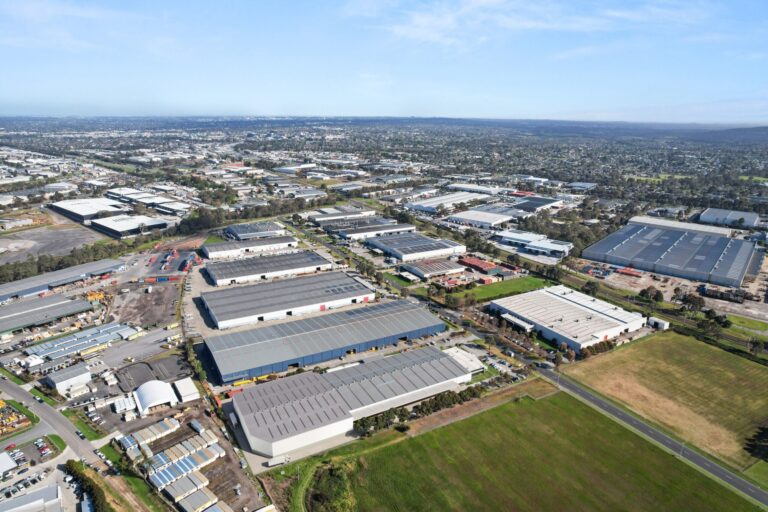
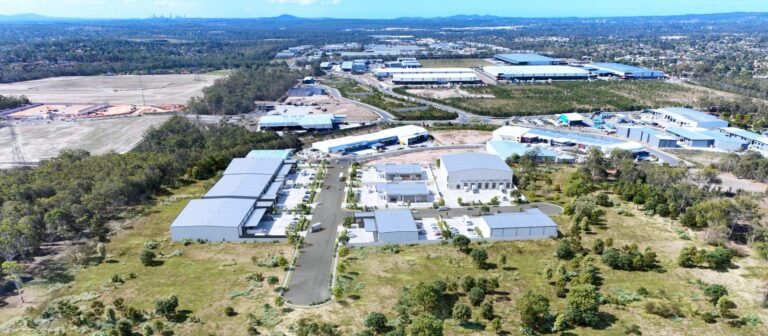
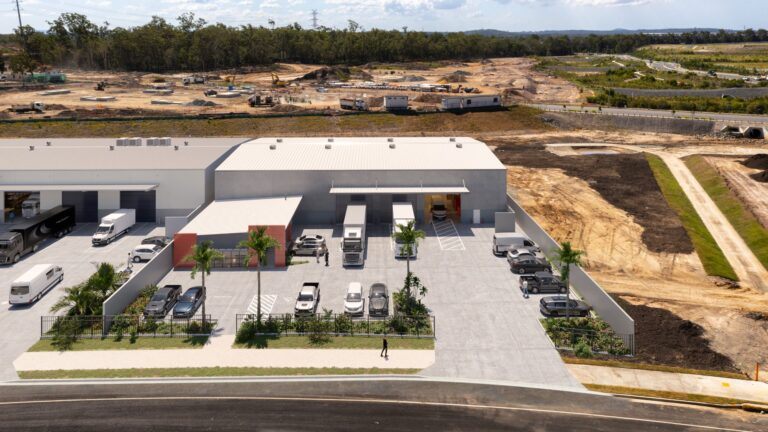
As the estate moves through structural milestones, integrate real site content with the original CGI so the future promise becomes progressively more tangible.
As the project becomes tangible, the balance between CGI and photography should change. Early renders explain the future; later photography proves delivery. Keeping both allows buyers to compare current progress with the intended finished outcome, which is particularly useful when a project still has months to run.
A long-running campaign also accumulates market history. Enquiry patterns, sold stock, leasing discussions and objections from earlier stages should inform the next release. The project should get smarter as it progresses rather than resetting its marketing logic every time a new stage is launched.
Recognise when the lease structure is the issue
If suitable occupiers are engaging but not progressing, the obstacle may sit in rent, incentives, term, security, timing or fitout responsibility.
The answer is not always more marketing. Strong enquiry feedback should feed directly into the leasing strategy.
At project level, timing should be documented rather than left as an informal assumption between the developer, agent and consultants. If the campaign is being prepared while design is still moving, nominate the current issue set, record the decisions that are considered commercially fixed and identify the next consultant milestone that could materially change the offer. That gives the marketing team a controlled point of reference and avoids expensive rework every time a drawing is reissued.
There is also a sequencing issue. The information most useful at first contact is not always the information needed at contract or lease stage. The public campaign should establish the commercial case quickly, while the deeper project pack supports the next step. Mixing those layers can make the first interaction unnecessarily dense and still leave serious prospects without the detail they need later.
Keep remaining space commercially relevant
Once anchor occupiers or major units are committed, the campaign should use that momentum carefully.
Existing commitments can validate the estate, but the remaining opportunities still need their own clear proposition.
The commercial test is whether the information helps a qualified prospect make a better decision. If it does not improve understanding, comparison, confidence or the next step in the transaction, it probably does not deserve much space in the campaign.
Developers should also decide which questions are best answered publicly and which are better handled by the appointed agent. Publishing everything can remove useful sales conversations, while publishing too little creates low-quality enquiries. The right balance depends on the complexity of the project, the sophistication of the target market and how much flexibility remains in the deal.
What pre-leasing marketing should achieve
The objective is to give tenants enough information to make an operational decision early.
When plans, specifications, timing and visualisation are aligned, the leasing agent can move the conversation from curiosity to genuine occupancy planning.
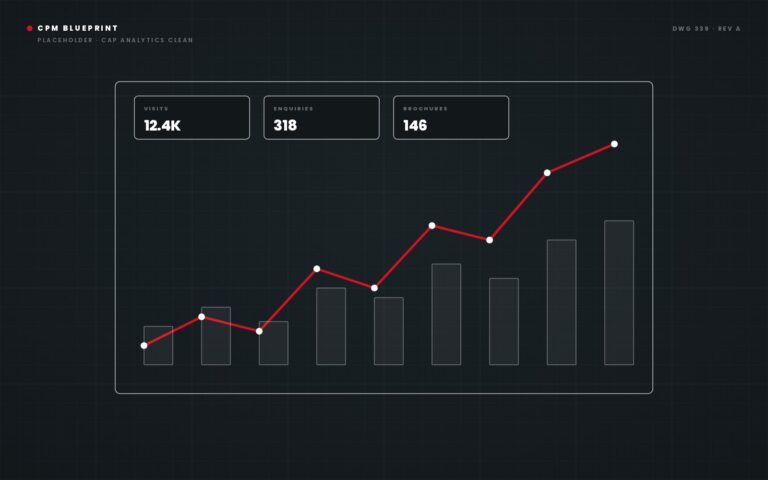
Market response should be separated into awareness, qualification and conversion. High website traffic with weak enquiries suggests a different problem from strong enquiries that do not progress past pricing. Likewise, repeated interest in one unit size can reveal product demand that raw enquiry totals hide. Looking at the funnel properly prevents the development team from treating every slow period as a media problem.
Conversion should be considered separately from lead generation. If qualified prospects are requesting plans and speaking with agents but not progressing, the campaign may already have done its job. At that point the development team needs to inspect price, deal structure, timing, specification or product-market fit instead of assuming the answer is a larger advertising budget.
Pre-leasing evidence can strengthen the wider estate
A credible tenant commitment can materially change how the rest of an estate is perceived. It demonstrates that an occupier has tested the location, timing and specification and was prepared to make a forward decision.
That does not mean every tenant should be turned into a publicity exercise. Where appropriate, however, genuine commitments can provide useful market proof and help the campaign move from a purely future proposition toward an emerging employment precinct with real occupier demand.
For larger occupiers, the same discipline improves internal confidence. A tenant that can circulate consistent plans, timing and specification information through its own organisation is far more capable of progressing a pre-commitment before the building is physically available.
Commercial Property Marketing builds pre-leasing campaigns around the operational decisions industrial tenants and their advisers actually need to make.