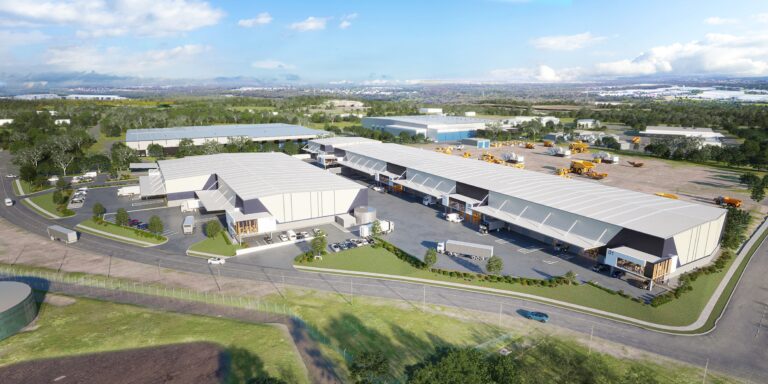

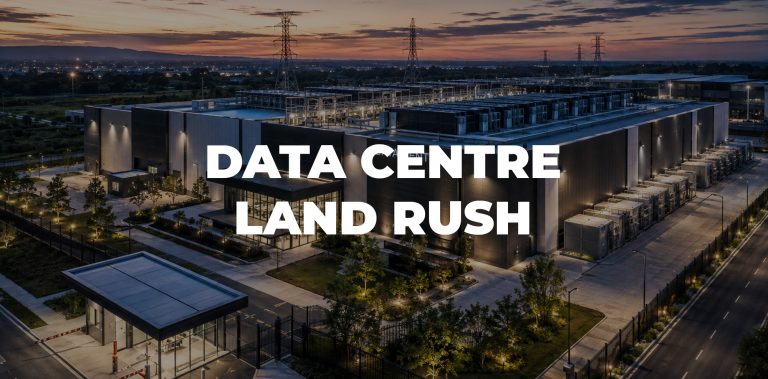
Data centres in Australia have become the biggest single force in industrial property. JLL puts the national data centre investment pipeline at more than $155 billion, with about 16 GW under construction or planned against roughly 1.2 GW operating today. That is more than 13 times the current footprint, with New South Wales and Victoria accounting for over 90 per cent of the planned capacity.
This guide rounds up the major data centre projects in Australia for 2026, city by city: who is building, where, how big and how far along each campus is. It then looks at what the boom means for industrial land values, zoning and power, plus what owners near the growth corridors should know.
Data centres Australia 2026 at a glance
- Operating capacity: about 1.2 GW nationally, up from 451 MW in 2015 (JLL)
- Pipeline: about 16 GW under construction or planned, backed by more than $155 billion of investment
- Where: NSW and Victoria hold 91.3 per cent of future capacity, with Queensland, WA, the ACT, SA and the NT rising fast
- Biggest single proposal: Zerra DC's Western Downs Digital Park near Dalby, a project of about $32 billion with Anthropic signed as the first tenant
- Largest approved campus: CDC's 504 MW Marsden Park campus in Sydney's north-west, approved in November 2025
- Land impact: JLL found data centre developers paid premiums of about 20 to 63 per cent over typical industrial land values in outer suburban areas. In South Sydney the premium reached up to 182 per cent
The major operators
A handful of names are behind most of the capacity being built. AirTrunk, now owned by a Blackstone-led consortium, runs five Australian campuses totalling more than 1.2 GW of planned capacity. NextDC is the ASX-listed operator with the widest national spread, from Sydney and Melbourne to Darwin, Port Hedland and the Sunshine Coast. CDC Data Centres grew out of Canberra's government market and now builds hyperscale campuses in Sydney, Melbourne, Perth and regional NSW.
The global cloud giants are the main customers. Amazon has committed AU$20 billion between 2025 and 2029 to expand its Australian data centre infrastructure, mainly in Sydney and Melbourne. Microsoft announced A$5 billion in late 2023 to grow from 20 to 29 data centre sites across Sydney, Melbourne and Canberra. Google has strengthened its links through subsea cable work connecting Darwin, Melbourne and Perth to Christmas Island.
Property players are moving in too. Goodman Group has turned its industrial land bank into a data centre business, with a $4 billion capital raising and an Australian power bank of about 1.3 GW. Equinix, Digital Realty, STACK Infrastructure, Macquarie Data Centres and DigiCo round out the field, mostly with interconnection and colocation campuses in the capitals.
Sydney data centres
Sydney is still the centre of gravity, with the bulk of hyperscale activity running through Western Sydney's industrial corridors around Eastern Creek, Kemps Creek, Marsden Park and Horsley Park.
- CDC Marsden Park: a $3.1 billion campus on about 20 hectares with six four-storey buildings, up to 24 data halls and 504 MW of planned capacity. The NSW Government approved it in November 2025 as State Significant Development.
- NextDC S7, Eastern Creek: NextDC bought the site in October 2024 for about $353 million. Its own figures point to 550+ MW, while planning documents describe up to 612 MW across nine buildings. OpenAI signed a memorandum of understanding with NextDC in December 2025 to use part of the capacity. It is still in planning.
- NextDC S4, Horsley Park: listed by NextDC at 365 MW and in planning and development.
- AirTrunk SYD1, SYD2 and SYD3: AirTrunk lists SYD1 at 121+ MW, SYD2 at 158+ MW and SYD3 at 330+ MW in Sydney's west.
- AirTrunk, Mamre Road, Kemps Creek: AirTrunk is the conditional buyer of ISPT's 52-hectare site at 706-752 Mamre Road, where plans describe a campus of up to 1 GW. The sale depends on planning approval.
- Goodman Project Atlas, Eastern Creek: plans lodged in January 2026 for a 500 MW campus on the former Coles distribution site at 10 Roberts Road. It is at environmental assessment stage.
- Goodman SYD01, Artarmon: construction has started on a 90 MW facility (about 61 MW of IT load) on the lower North Shore, with the first phase due in 2028. Goodman also has approval for a 135 MW data centre at 4-10 Talavera Road, Macquarie Park, with an end value of about $1.4 billion.
- Glendenning Road, Glendenning: a three-building campus at 2 Glendenning Road, reported to be an AWS project, was approved in September 2026. Reported figures put IT capacity at close to 200 MW and the cost at more than $2 billion.
Equinix, Digital Realty and STACK also run or plan sites across Sydney's west, while Macquarie Park and Artarmon remain the inner-ring hubs for lower-latency facilities. NextDC's operating Sydney sites include S1 and S2 at Macquarie Park and S3 at Artarmon.
Melbourne data centres
Melbourne is catching up fast, with land in the city's west and north-west in demand. JLL found two- to five-hectare industrial lots in Melbourne's west rose 16.5 per cent in value in the 12 months to June 2026.
- AirTrunk MEL2: announced in December 2025 in Melbourne's north-west, planned at 354+ MW with more than $5 billion of new investment. Alongside MEL1 (276+ MW) it lifts AirTrunk's Melbourne capacity past 630 MW.
- NextDC M4, Port Melbourne: about 150 MW, with development approval received. NextDC also operates M2 at Tullamarine and M3 at West Footscray (listed at 225 MW).
- CDC Laverton: ground broke in February 2025 on a 150 MW campus in Melbourne's south-west, a project CDC values at $2.7 billion. It adds to CDC's existing Brooklyn campus.
Amazon's $20 billion program and Microsoft's expansion both target Melbourne as well as Sydney, which is why the west of the city has become one of the most watched industrial land markets in the country.
Brisbane and Queensland data centres
Brisbane itself has a modest footprint. NextDC runs B1 in the CBD (2.25 MW) and B2 at Fortitude Valley (12 MW), with GC1 on the Gold Coast in planning. The headline Queensland project sits about 250 km west.
- Western Downs Digital Park, near Dalby: Singapore-based Zerra DC lodged plans with Western Downs Regional Council in August 2026 for a campus of about $32 billion on roughly 725 hectares. The ABC reports a peak draw of up to 2.16 GW. Anthropic has signed to take the first data hall, subject to Foreign Investment Review Board approval. It aims to start using the site in 2027.
- Sunshine Coast: NextDC operates SC1 at Maroochydore (1 MW) and has SC2 at Maroochydore (6 MW) in planning and development.
Queensland is also changing the rules. In October 2026 the state government said it would move data centre assessment from councils to a state-level system, a shift that could speed up approvals for large projects.
Perth data centres
Perth is a growing market, helped by its role as a gateway to Asia via subsea cables.
- CDC Maddington: under construction in the industrial area off Bickley Road, part of a Perth program CDC says will deliver more than 200 MW when complete. CDC is also proposing a campus at Hazelmere.
- NextDC P1 and P2: P1 at Malaga (10+ MW) and P2 in the Perth CBD (20+ MW) are both operating.
- Equinix and STACK: Equinix runs Perth sites including PE1 on the CBD fringe, while STACK operates a Perth campus.
Canberra data centres
Canberra is CDC's home market. Its campuses sit in the Fyshwick and Hume precincts, with Beard emerging as a newer hub. In September 2026 CDC won conditional environmental clearance for its Beard 2 project.
Its much larger proposed Hume Campus 3, with preliminary plans of up to 576 MW across four buildings, hit a hurdle in October 2026 when the ACT Conservator of Flora and Fauna rejected an environmental assessment pathway. CDC says the project remains under development and the design will be refined. NextDC's C1 at Bruce (4.4 MW) serves the government market.
Adelaide and South Australia
Adelaide is still a smaller market. NextDC runs A1 in the CBD at 5 MW. The bigger story is policy and regional power: the Malinauskas Government has proposed a dedicated Data Centre and AI Infrastructure Act to streamline approvals. IREN has signed a transmission connection agreement for a planned 800 MW campus at Bundey, north-east of Adelaide, with energisation targeted from 2028, subject to approvals.
Darwin data centres
Darwin sits at the end of key subsea cable routes into Asia. NextDC operates D1 in the CBD (1 MW) and topped out D2, a 6 MW facility, in 2026. Much larger is a proposal from a Beetaloo Energy subsidiary for a gas-powered data centre precinct of about $40 billion on 185 hectares at Weddell in Darwin's rural area, with a 2 GW power demand. The company itself describes the project as being at day one, with major approvals and financing still needed.
Newcastle, the Hunter and regional NSW
Regional NSW is where the next wave of mega-campuses is heading, because the land is larger and closer to high-voltage transmission.
- AirTrunk, Loxford near Kurri Kurri: a 540 MW campus proposed on the former Hydro Aluminium smelter site on Hart Road, being assessed as State Significant Development. It is not yet approved.
- CDC Gregadoo, Wagga Wagga: a proposed campus of about $15 billion with up to 1.4 GW of power on grazing land about 11 km south of Wagga Wagga, near Transgrid's 330 kV network.
What it means for industrial land
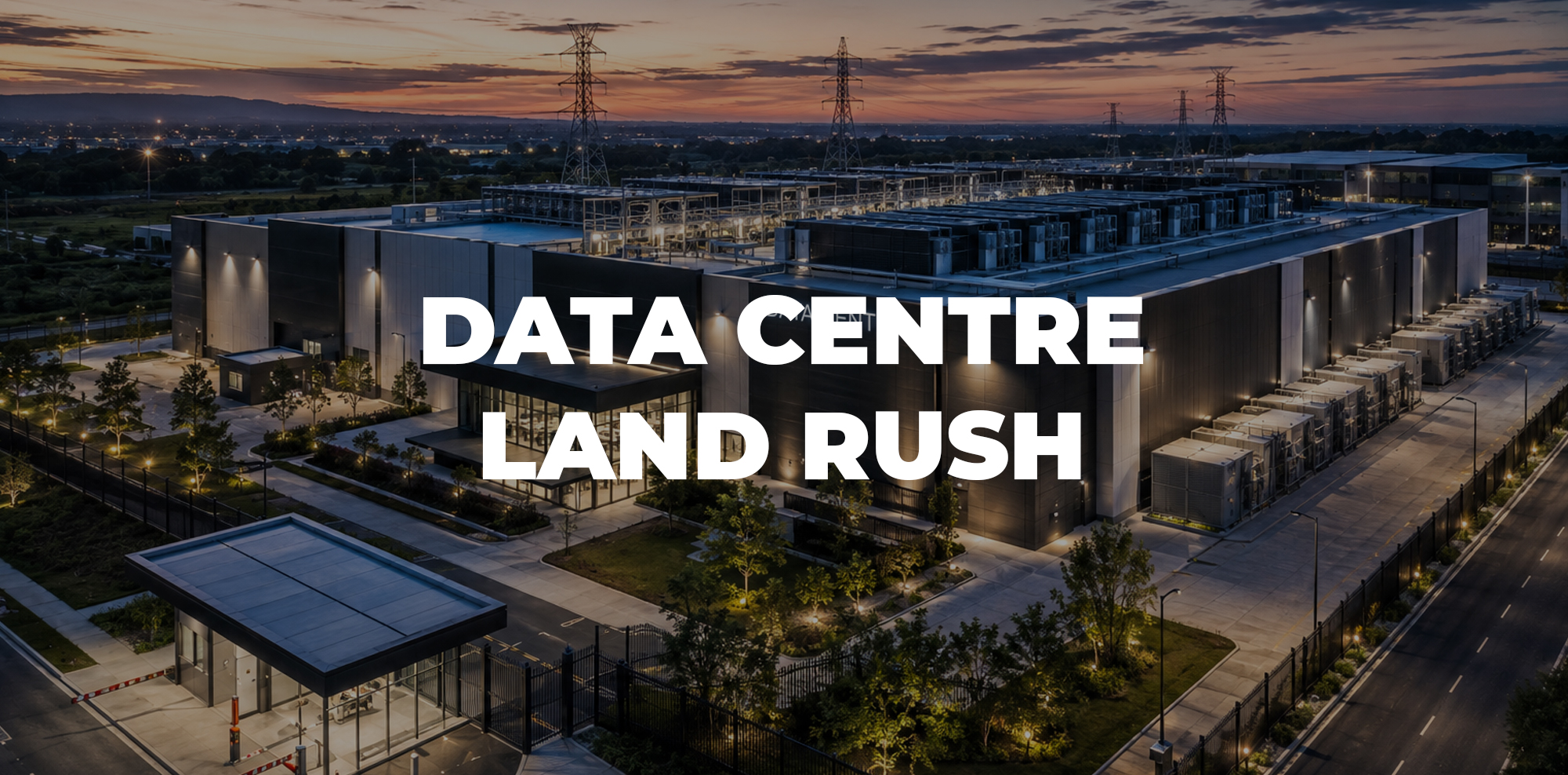
Data centres do not behave like ordinary industrial occupiers. A single large campus can absorb an entire estate, which is why our earlier look at the data centre land rush flagged the squeeze on logistics land. Here is how that is playing out in 2026.
Power is the new location. The deciding factor for a data centre site is no longer motorway access. It is a firm grid connection at scale, usually near a major substation or high-voltage line. JLL estimates a single 1 MW data centre uses as much electricity as 360 typical 20,000 sqm warehouses. Land with secured or near-term power is now priced in a different league to land without it.
Premiums are real. JLL's analysis of sales from 2012 to 2026 shows data centre developers paid about 20 to 63 per cent above average industrial land values in outer suburban areas. In South Sydney it was as high as 182 per cent. The competition is concentrated on two- to five-hectare sites, which is exactly the size range logistics developers also need.
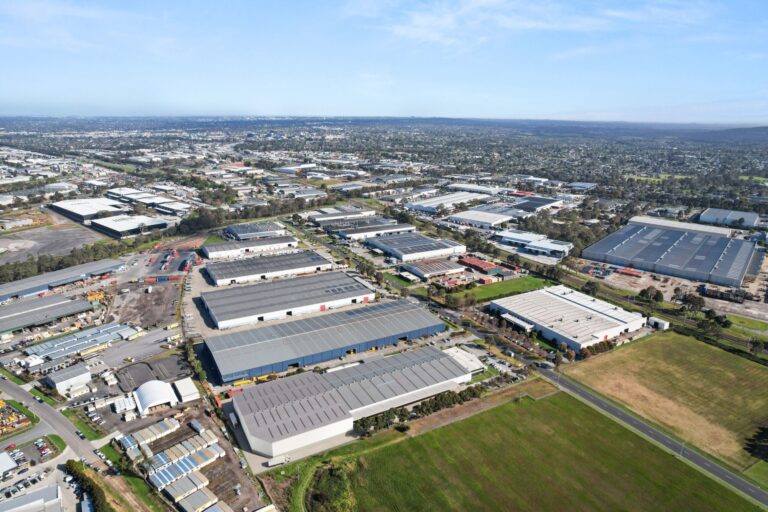
Where the land is being bought. The hotspots are Sydney's outer central west (Eastern Creek, Kemps Creek, Horsley Park and the Mamre Road precinct), Marsden Park in the north-west, Melbourne's west and north-west (Laverton, Tullamarine, West Footscray), Perth's eastern industrial suburbs (Maddington, Hazelmere) and Canberra's Hume and Beard precincts. Regional sites near transmission lines, from Wagga Wagga to Dalby, are the newest frontier.
Zoning and approvals are tightening and speeding up at once. Most large Sydney campuses go through the State Significant Development pathway. NSW's new data centre framework promises a decision within 75 days of state assessment for compliant projects, but requires developers to fund the extra water and energy supply their facilities need. Queensland is moving assessment to the state level and South Australia is legislating its own pathway.
The knock-on effect on rents. JLL's modelling suggests economic rents for modern warehouses in some markets could double by 2028 as data centres compete for the same land, with Melbourne's west and Sydney's outer central west most exposed.
What owners near data centre corridors should know
- Know your power position: distance to the nearest substation, available capacity and any network upgrade plans are now part of a site's value story. Find out before a buyer does.
- Size and shape matter: regular sites of two to five hectares or more attract the strongest interest. Neighbouring owners who combine parcels can create a far more valuable offering.
- Check the zoning fit: confirm whether a data centre is permissible on your land and whether State Significant Development or a state fast-track could apply.
- Expect conditional offers: many data centre deals are subject to planning approval or power, as with the Mamre Road sale. Understand the timeframes and sunset dates before signing.
- Present the site properly: buyers in this space are sophisticated and global. Clear site plans, power and infrastructure overlays and aerial context help a site stand out in a crowded pipeline.
- Do not overreach: premiums apply to land that genuinely suits a data centre. A site without realistic power access will still trade as standard industrial land.
What to watch next
Watch the NSW planning decisions on NextDC S7, Goodman's Project Atlas, AirTrunk's Mamre Road campus and Loxford, plus the Western Downs council assessment in Queensland. Grid connection rules for large loads and the first results of NSW's 75-day pathway will shape how quickly the 16 GW pipeline turns into buildings. Expect more land sales with power-linked conditions as operators race to lock in sites across the country.