Darwin’s commercial and industrial property market moved through August with something most Australian capitals would like more of: major infrastructure projects converting into actual industrial land, construction activity and business opportunity.
The Northern Territory industrial market is smaller than Sydney, Melbourne, Brisbane or Perth, but its economic drivers are unusually powerful.
Darwin sits at the intersection of:
- defence
- marine engineering
- logistics
- energy
- resources
- freight
- aviation
- government
- infrastructure investment
That gives the market a very different character from a conventional population-driven industrial economy.
August was particularly important because several major strategic projects moved forward at the same time.
Construction reached completion at the new Holtze Industrial Estate, the Northern Marine Complex reached a significant construction milestone at East Arm, permanent road access works commenced around Wishart Estate, and established industrial property in Winnellie continued to transact.
Together, these projects point to a broader transition.
Darwin is gradually developing the industrial infrastructure required to convert its strategic northern location into a much larger commercial advantage.
Darwin’s industrial market is increasingly being driven by strategic industries
Darwin industrial property cannot be analysed simply through conventional warehouse demand.
The city serves industries that often require specialised property.
That includes:
- defence contractors
- marine operators
- engineering
- freight
- mining services
- oil and gas support
- logistics
- construction
- heavy vehicle services
These occupiers frequently need more than a warehouse.
They need:
- hardstand
- secure compounds
- oversized access
- substantial power
- workshops
- laydown areas
- cranes
- heavy-duty construction
- proximity to port and defence infrastructure
That creates value in well-positioned freehold industrial sites that can accommodate operational uses rather than simply maximise building coverage.
Winnellie remains Darwin’s premier established industrial precinct
Winnellie remains one of the most important industrial locations in the Northern Territory.
Its major advantage is location.
The precinct sits approximately five kilometres from Darwin CBD and provides access to:
- Stuart Highway
- Tiger Brennan Drive
- Darwin Airport
- East Arm
- northern suburbs
- Palmerston
There is also a long-established ecosystem of trade, automotive, warehousing and industrial businesses already operating in the area.
August produced two significant Winnellie transactions.
60 Raphael Road sells for $1.875 million
60 Raphael Road, Winnellie sold and settled during August for $1.875 million.
The property occupies approximately 1,560 sqm of land and was marketed as a modern industrial facility offering both occupation and leasing potential.
The selling agent reported strong enquiry and described the transaction as reflecting demand for quality property within Darwin’s tightly held industrial precincts.
The sale is particularly useful because it provides a confirmed benchmark for a modern freehold Winnellie asset rather than relying solely on smaller strata transactions.
42 Winnellie Road sells for $1.33 million
Another important transaction occurred at 42 Winnellie Road, which sold on 26 August for $1.33 million.
The property occupies approximately 1,530 sqm of Light Industry zoned land and contains around 1,120 sqm of improvements.
Those improvements include approximately:
- 740 sqm high-clearance warehouse/workshop
- 130 sqm modern office accommodation
- 120 sqm rear storage annexe
- two-bedroom residence
- secure hardstand
- three warehouse access doors
The property was sold as a mortgagee-in-possession asset.
On a simple land-area basis, the sale equates to approximately $869 per sqm of site area, although the substantial improvements mean this should not be interpreted as a pure land-value benchmark.
Winnellie scarcity is becoming increasingly important
Winnellie is effectively an infill industrial precinct.
Unlike Holtze, Wishart or East Arm, it cannot easily expand outward.
That means existing sites carry scarcity value.
For many businesses, being close to Darwin CBD and established customer bases is commercially more important than securing cheaper land further away.
That is particularly relevant for:
- trades
- automotive
- local distribution
- construction supply
- service industries
- smaller logistics operators
As newer large-scale industrial precincts emerge further east, Winnellie is likely to retain its role as the central service-industrial market.
Berrimah remains a major middle-market industrial location
Berrimah sits between Darwin and Palmerston and provides access to both the Stuart Highway and Tiger Brennan Drive.
It has become one of Darwin’s key modern industrial locations.
A useful recent benchmark came at 7/3 Verrinder Road, Berrimah, which sold in July for $940,000.
The approximately 542 sqm industrial investment was sold with a new three-year lease to a local tenant.
While just outside the August period, it reinforces the depth of activity across Darwin’s established industrial corridor.
Holtze Industrial Estate reached a major milestone in August
One of the biggest Darwin industrial developments during August was the completion of construction at Holtze Industrial Estate.
The Land Development Corporation announced construction completion on 4 August 2026.
The estate comprises approximately 53 hectares of development-zoned industrial land within one of Darwin’s most strategically important logistics corridors.
It incorporates the Defence Support Hub and has been designed to accommodate larger industrial lots supporting:
- defence
- logistics
- strategic industries
- large-format industrial operators
The significance is considerable.
Darwin has historically suffered from a limited supply of modern, large, serviced industrial sites.
Holtze directly addresses that shortage.
Holtze is positioned directly around defence demand
The Defence Support Hub is what makes Holtze particularly interesting.
Darwin is one of Australia’s most strategically important defence locations.
The wider region includes:
- Robertson Barracks
- RAAF Base Darwin
- major US rotational force activity
- defence training
- naval operations
- logistics infrastructure
The Australian Army was conducting training activity at both Robertson Barracks and Holtze during August, reinforcing how closely the area is tied to defence activity.
Industrial property positioned around this infrastructure could increasingly attract contractors needing to service defence operations.
Defence creates an industrial multiplier effect
A military base itself does not account for the entire economic impact.
Supporting businesses require property as well.
That includes:
- vehicle maintenance
- engineering
- fabrication
- freight
- accommodation
- food supply
- warehousing
- communications
- construction
- specialist technology
- equipment storage
This creates an industrial multiplier effect.
For every major defence investment, a larger private-sector supplier ecosystem can develop around it.
Holtze is being positioned directly into that opportunity.
The Northern Marine Complex reached a key construction milestone
The Northern Marine Complex at East Arm was another major August story.
On 26 August, the Land Development Corporation confirmed that bulk earthworks had been completed for Precinct 1 and construction was progressing toward practical completion by Christmas 2026.
The overall Northern Marine Complex spans approximately 246 hectares of land and water.
It is anchored by a proposed 5,500-tonne-capacity ship lift and will co-locate:
- marine engineering
- fabrication
- logistics
- maintenance
- specialist marine services
This could become one of the most important industrial precincts in northern Australia.
Precinct 1 will deliver 11 serviced industrial lots
The next phase of the Northern Marine Complex will deliver 11 serviced industrial lots.
Supporting infrastructure includes:
- underground services
- road pavements
- intersection upgrades
- sewer headworks
- electrical headworks
The precinct will also provide access to shared marine infrastructure including:
- secure fabrication and storage hardstand
- laydown areas
- maintenance space
- an all-tide barge ramp
This is not conventional industrial land.
It is purpose-built marine industrial infrastructure.
The ship lift could change Darwin’s marine industrial economy
The proposed 5,500-tonne ship lift is the critical piece.
Large vessels currently have limited maintenance and servicing options across northern Australia.
A major common-user ship lift can support:
- naval vessels
- commercial vessels
- offshore energy
- border-force vessels
- marine tourism
- work boats
- regional shipping
The commercial impact extends well beyond the lift itself.
Businesses servicing vessels need nearby:
- workshops
- fabrication sheds
- storage
- offices
- hardstand
- logistics
That is why the 246-hectare Northern Marine Complex has the potential to become a genuine industrial cluster rather than a single infrastructure project.
East Arm is becoming Darwin’s major heavy industrial gateway
East Arm already has exceptional strategic infrastructure.
It includes or sits close to:
- Port of Darwin
- rail freight
- major industrial land
- marine infrastructure
- energy facilities
- road freight
The Northern Marine Complex adds another layer to that ecosystem.
For heavy industrial businesses, East Arm offers characteristics that are impossible to reproduce in Winnellie or conventional suburban industrial areas.
Wishart is emerging as another strategic industrial precinct
Wishart Estate is positioned between Darwin and Palmerston.
The project benefits from direct access to major freight routes and proximity to:
- rail
- Darwin Port
- Darwin Airport
- energy infrastructure
The Land Development Corporation describes Wishart as supporting industrial and technology-aligned uses, including businesses with high-energy requirements.
That energy infrastructure component is particularly important.
Wishart road works commenced during August
Permanent access works at Wishart were scheduled to commence during August 2026.
The project will provide upgraded access via Wishart Road.
Road infrastructure might appear less significant than the headline marine and defence projects.
But industrial land is only valuable if trucks and employees can access it efficiently.
These enabling works are what ultimately convert development-zoned land into functional industrial property.
Wishart could attract energy-intensive and data-related users
Wishart sits close to strategic electrical infrastructure, including the Hudson Creek Switching Station.
LDC specifically identifies opportunities associated with high-energy and data-enabled industrial activity.
That raises several potential future uses:
- data centres
- advanced manufacturing
- battery infrastructure
- cold storage
- processing
- energy-related industries
Power availability is becoming an increasingly important industrial-property differentiator nationally.
In Darwin, where suitable serviced land is already limited, the combination of land and power could be particularly valuable.
Darwin is developing three distinct industrial systems
The market can increasingly be understood as three broad industrial zones.
Winnellie and Berrimah
Established trade, warehouse, service and local distribution property.
Holtze and Wishart
Large-format logistics, defence support, energy and strategic industrial development.
East Arm
Port, marine, freight and heavy industrial activity.
These markets serve different users.
That diversification is healthy.
It gives Darwin the capacity to accommodate everything from a 150 sqm trade warehouse to large defence, logistics or marine facilities.
Bought & Sold
Darwin’s August transaction market was relatively thin compared with the larger capitals, but several important sales provide useful benchmarks.
60 Raphael Road, Winnellie
- Sold and settled: August 2026
- Price: $1.875 million
- Land: approximately 1,560 sqm
- Modern industrial facility
- High-exposure Winnellie position
- Strong reported enquiry
42 Winnellie Road, Winnellie
- Sold: 26 August 2026
- Price: $1.33 million
- Land: approximately 1,530 sqm
- Improvements: approximately 1,120 sqm
- Warehouse/workshop: approximately 740 sqm
- Office: approximately 130 sqm
- Secure hardstand
- Light Industry zoning
7/3 Verrinder Road, Berrimah
- Sold: 2 July 2026
- Price: $940,000
- Building: approximately 542 sqm
- New three-year lease
- Local industrial tenant
- Useful recent Berrimah investment benchmark
1/60 Marjorie Street, Pinelands
- Sold: 1 July 2026
- Price: $395,000
- Building: approximately 247 sqm
- Freestanding strata office/warehouse
- External storage area
40 Wallaby Road, Holtze
- Sold: 19 June 2026
- Building: approximately 716 sqm
- Land: approximately 2,930 sqm
- Light Industry zoning
- Warehouse and office facility
Although some of these transactions occurred immediately before August, together they provide a useful picture of pricing across Darwin’s main industrial precincts.
Darwin has a much thinner transaction market than the east-coast capitals
This matters when analysing local commercial property.
Sydney or Melbourne can record hundreds of comparable transactions.
Darwin cannot.
Individual deals therefore carry more influence when valuers and buyers assess the market.
That can produce:
- wider pricing ranges
- fewer direct comparables
- greater importance placed on replacement cost
- stronger influence from individual tenant covenants
- larger differences between specialised and generic industrial properties
For developers, detailed understanding of individual assets matters more than relying solely on broad market averages.
Large freehold industrial property remains particularly important
Many Darwin businesses require yard and hardstand.
That means traditional site coverage ratios used in metropolitan logistics markets may not always make sense.
A large yard can be valuable for:
- trucks
- machinery
- equipment storage
- containers
- fabrication
- materials
- defence-related vehicles
This makes older freehold sites with substantial external areas particularly useful.
The August Winnellie transactions demonstrate that operational flexibility remains a major property attribute.
Development Applications, Approvals & Projects Progressing Through Planning
August was particularly strong for strategic industrial development.
Holtze Industrial Estate
- Construction completion announced 4 August 2026
- Approximately 53 hectares
- Development-zoned industrial land
- Incorporates the Defence Support Hub
- Designed for larger industrial lots
- Strategic logistics position
Northern Marine Complex – Precinct 1
- Bulk earthworks complete
- Construction progressing toward practical completion by Christmas 2026
- 11 serviced industrial lots
- Part of a 246-hectare marine precinct
- 5,500-tonne ship lift
- Secure common-use hardstand
- All-tide barge ramp
Wishart Estate
- Permanent intersection/access works commencing August 2026
- Industrial land between Darwin and Palmerston
- Close to rail, port and airport
- Strong power infrastructure
- Future expansion being considered as demand emerges
Darwin is finally building more development-ready industrial land
This could be the most important structural change.
Darwin has always had strategic advantages.
What it has not always had is sufficient development-ready property in the right locations.
Projects such as Holtze, Wishart and the Northern Marine Complex create:
- serviced sites
- roads
- utilities
- power
- specialised infrastructure
That shortens the time required for businesses to establish operations.
For national and international occupiers, that can be decisive.
Defence remains perhaps the largest long-term property catalyst
Darwin’s defence role continues to expand.
Its geography makes northern Australia increasingly important to national security strategy.
For commercial property, defence investment can affect much more than military-owned land.
Private demand can flow into:
- warehouses
- workshops
- offices
- secure storage
- hotels
- accommodation
- logistics
- food supply
- engineering
Holtze’s Defence Support Hub is a direct attempt to capture this private-sector demand.
Marine industry could become equally important
The Northern Marine Complex gives Darwin another opportunity.
Marine maintenance is a high-value industrial activity.
Vessels can require:
- mechanical work
- fabrication
- painting
- electrical work
- electronics
- hydraulics
- storage
- specialist contractors
Once a substantial marine-services cluster develops, businesses benefit from locating near one another.
That network effect could ultimately make East Arm increasingly difficult for competing northern ports to replicate.
Resources and energy continue to underpin industrial demand
Darwin remains a service centre for major resource and energy activity across northern Australia.
That generates demand for:
- freight
- maintenance
- accommodation
- engineering
- warehousing
- construction
- transport
The development of newer energy-related industries could expand this further.
Locations with strong power infrastructure, such as Wishart, are particularly interesting in this context.
Darwin CBD remains a different commercial story
Darwin’s office market operates very differently from the industrial sector.
Government remains a major CBD occupier.
The relatively small private-sector office market means individual tenant movements can have a noticeable effect on vacancy.
The strongest CBD property generally benefits from:
- quality fitout
- government covenant
- secure parking
- modern building systems
- central location
Older secondary office buildings face a more difficult competitive position unless they can be repositioned.
Adaptive reuse and redevelopment remain opportunities
Darwin contains older commercial and industrial stock developed during previous economic cycles.
Some properties may no longer represent their highest and best use.
Potential redevelopment opportunities include:
- mixed-use
- accommodation
- modern offices
- industrial strata
- tourism
- medical
- service retail
The challenge is feasibility.
Construction costs in Darwin can be high, meaning redevelopment needs a sufficiently strong end value to justify replacement.
Industrial construction costs support existing asset values
Remote-market construction can be expensive.
Materials, labour and transport all influence development cost.
This creates an important floor under existing industrial assets.
A buyer comparing an established warehouse with a new development must consider:
- land acquisition
- civil works
- building construction
- servicing
- holding cost
- approvals
- escalation
Existing functional property can therefore offer considerable replacement-cost advantages.
Darwin’s strategic location is finally becoming a property story
Darwin has long been described as Australia’s gateway to Asia.
For commercial property, that phrase only matters when the infrastructure exists to make it useful.
The current investment cycle is beginning to provide more of that infrastructure.
The combination of:
- defence
- East Arm
- marine infrastructure
- rail
- port
- logistics land
- energy infrastructure
- airport access
creates the basis for a more substantial northern industrial economy.
What developers and landowners should watch
Several themes should remain important through the rest of 2026.
Holtze
The release and occupation of new industrial land could materially expand Darwin’s large-format industrial market.
Defence Support Hub
Private contractors servicing Defence may become an increasingly important occupier category.
Northern Marine Complex
The 11-lot Precinct 1 release and ship-lift infrastructure could create a major marine-industrial cluster.
Wishart
Road access and energy infrastructure strengthen the precinct’s future industrial potential.
Winnellie
Scarcity should continue supporting well-positioned established freeholds.
Berrimah
The precinct remains well positioned for newer industrial and logistics users.
East Arm
Port and marine infrastructure make it increasingly important for heavy industrial uses.
Power
Energy availability could become a significant land-value differentiator.
The bigger Darwin commercial property story
Darwin’s advantage is not its size.
It is its position.
Few Australian cities combine:
- a major defence presence
- international strategic importance
- port infrastructure
- rail freight
- marine industry
- energy
- proximity to Asian markets
within such a small metropolitan area.
For years, that potential has often run ahead of the industrial infrastructure available to support it.
That gap is narrowing.
Holtze, Wishart and the Northern Marine Complex represent physical infrastructure capable of supporting the industries repeatedly identified as Darwin’s future.
That makes August 2026 particularly significant.
The story is no longer simply about proposed industrial growth.
The land and infrastructure required to support it are increasingly being delivered.
What this means for Darwin property projects
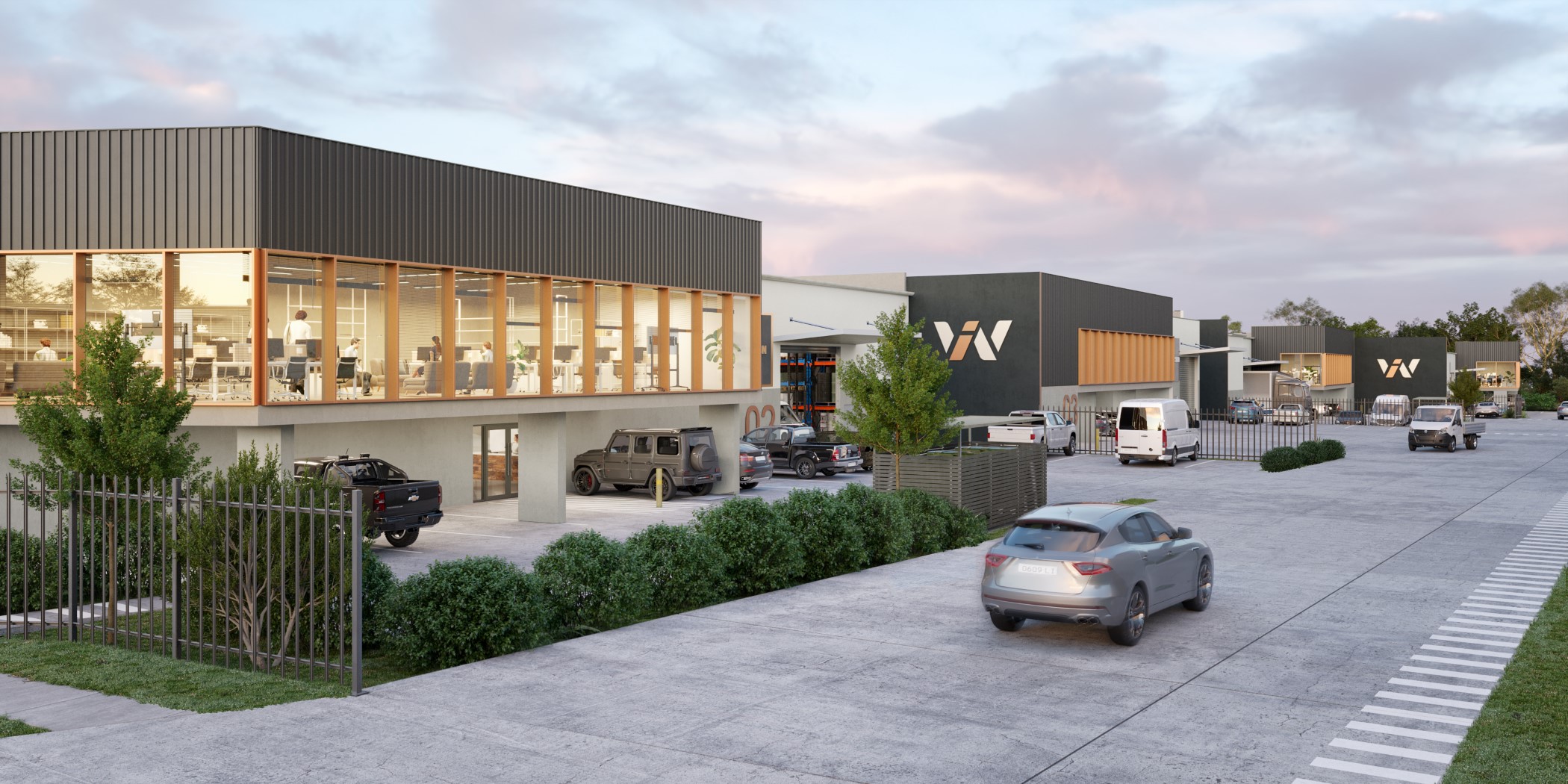
For Darwin developers and landowners, project positioning is especially important because many opportunities are complex and infrastructure-led.
Potential buyers and occupiers often need to understand:
- where a site sits in relation to Defence
- access to East Arm and Darwin Port
- highway connections
- hardstand capability
- marine access
- power availability
- future surrounding development
- lot configuration
- infrastructure delivery
Strong project positioning can help:
- demonstrate future industrial estates before construction
- increase perceived land value
- generate pre-leasing enquiries
- attract national industrial occupiers
- explain specialised defence or marine projects
- support land-release campaigns
- communicate infrastructure clearly
- demonstrate access and logistics advantages
- build investor confidence
- reduce uncertainty around undeveloped land
As Darwin invests in the infrastructure needed to become a larger defence, marine and logistics centre, the ability to clearly communicate what new industrial precincts will become is likely to be increasingly valuable.
Commercial Property Marketing works with commercial and industrial developers across Australia to turn land, plans and future developments into clear property opportunities for buyers, tenants and investors.


 EXPLORE THE WORK