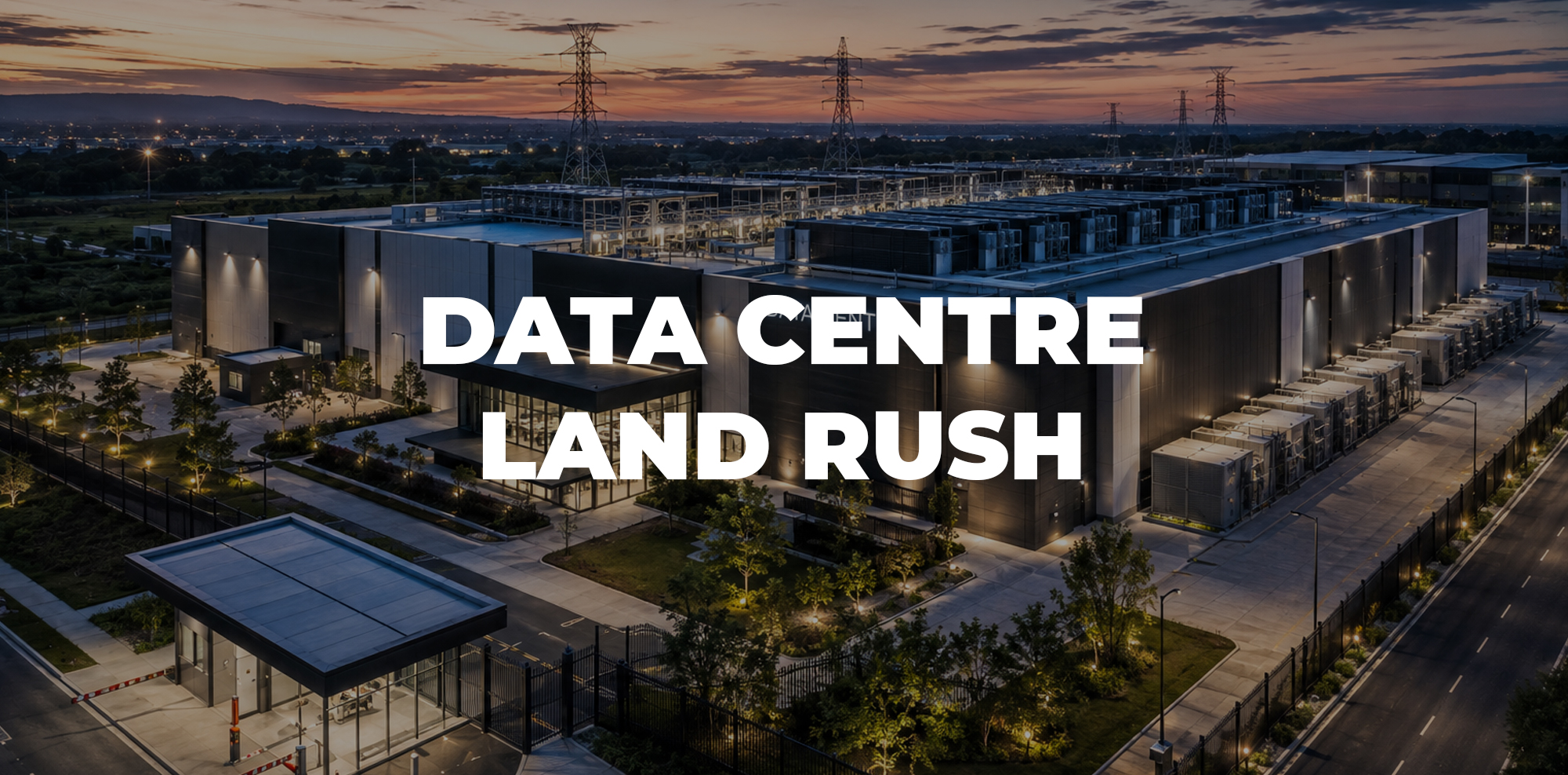
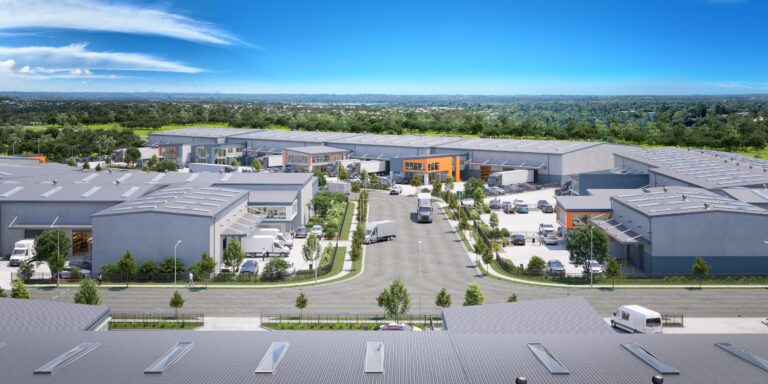
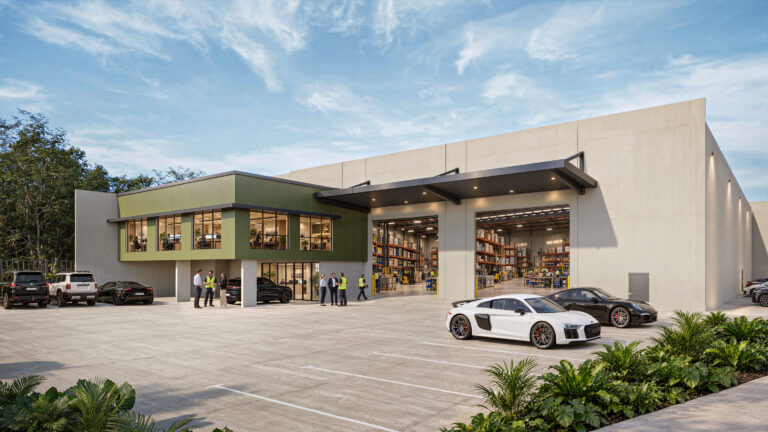

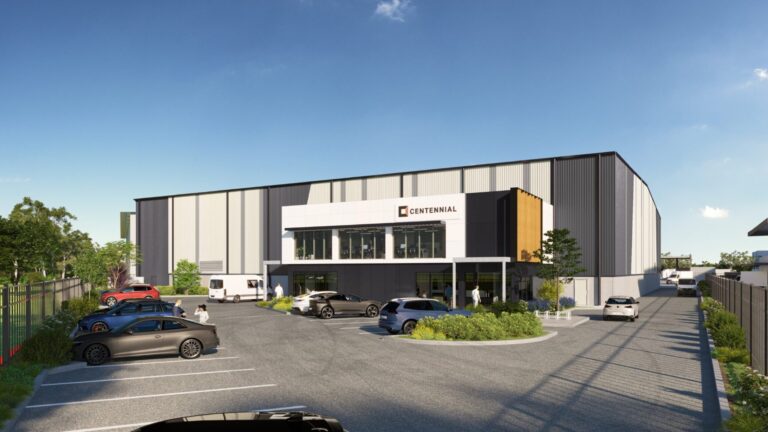
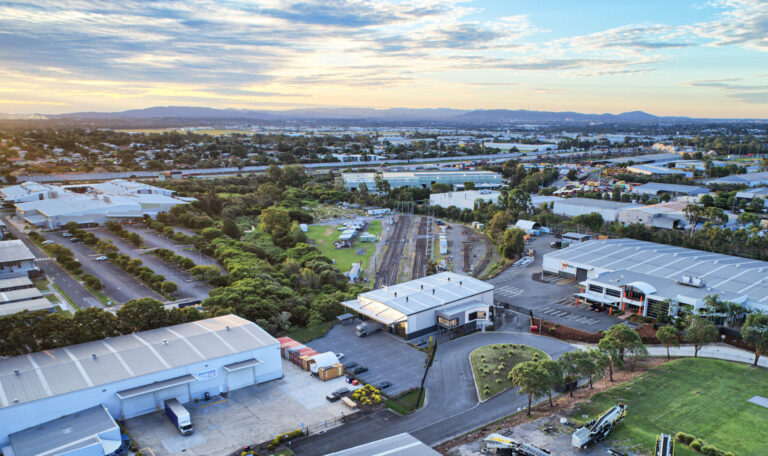
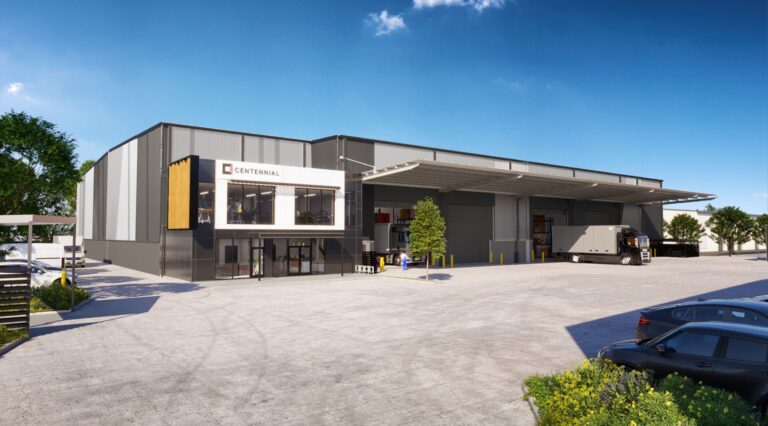
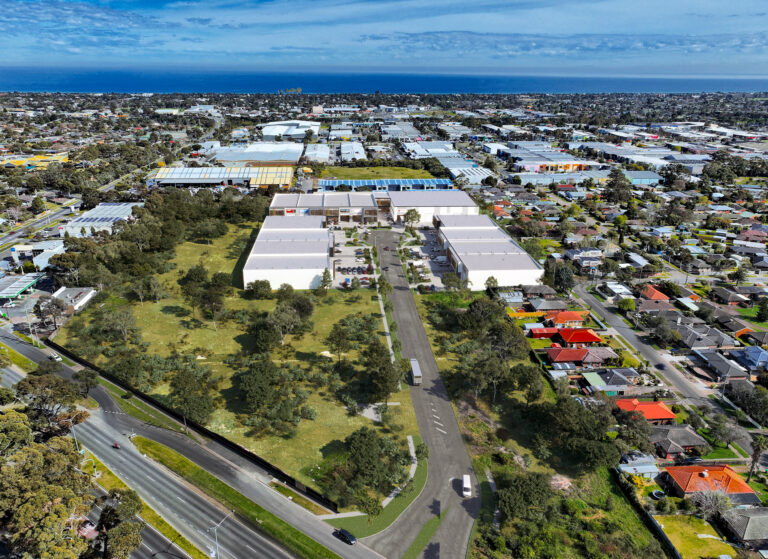

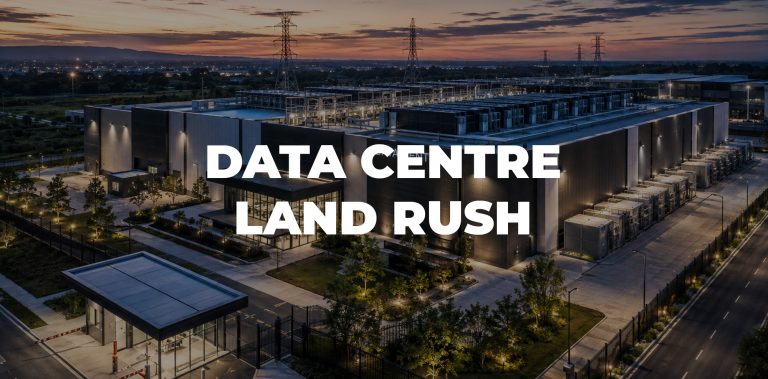

NextDC's M3 data centre in West Footscray has hit a costly wall: power. Jemena has suspended parts of the 66kV network upgrade that feeds the Melbourne campus after resident protests in Yarraville. NextDC has pulled the affected M3 contracts out of its forecasts and its shares lost roughly 40 per cent when they resumed trading on 21 October 2026.
For anyone who owns or leases industrial land in Melbourne's inner west, the M3 story is about more than one listed company. It shows that land, zoning and a planning permit are no longer enough. In 2026 the real constraint on a data centre site is the power connection and the community's tolerance for the wires that bring it in.
NextDC M3 West Footscray at a glance
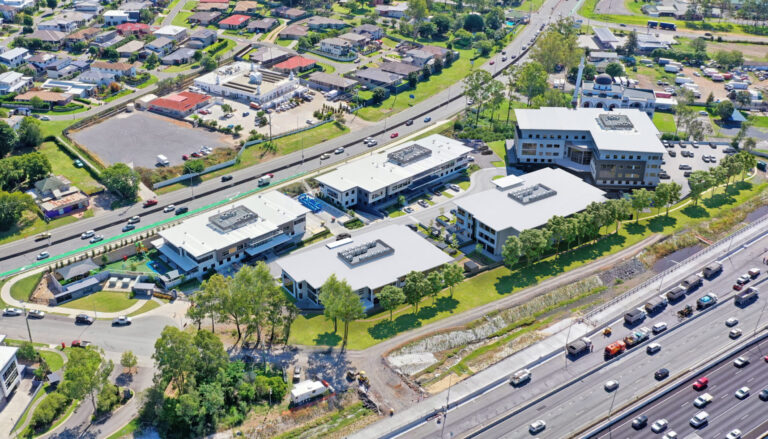
- Asset: NextDC M3, 25-27 Indwe Street, West Footscray, about 10km west of the Melbourne CBD
- Campus: roughly 10 hectares once the adjoining land is included
- Planned capacity: 225MW, up from an earlier 200MW plan and the original 150MW
- Built so far: 60MW at 30 June 2026, with 165MW in progress
- Customer: a single customer, reported to be an unnamed hyperscaler
- The problem: Jemena paused parts of its 66kV line works in September and does not expect to restart before February 2027
- Forecast hit: about $140 million of revenue and earnings removed from FY27 guidance
- Share price: closed at $5.35 on 21 October, down from $9.18 before the trading halt
- Expansion permit: Stages 6 and 7 lodged under the Development Facilitation Program, decision now expected in 2027
How the M3 site was assembled
M3 started as a 150MW hyperscale proposal on Indwe Street, a pocket of older industrial land close to a major electricity substation. That substation was the reason for the location. Proximity to high-voltage infrastructure is the single most valuable attribute a data centre site can have.
NextDC then grew the holding. It paid CostaFox $21.8 million for about six hectares next door in 2020. In 2021 it added 1 and 1-13 Paramount Road plus a further Indwe Street property, about 4.19 hectares in total, for $24 million in an off-market deal. Those two purchases worked out at roughly $3.6 million and $5.7 million a hectare.
Compare that with this year's Melbourne data centre land deals. PGIM paid about $165.6 million for 20.7 hectares at 1 Oroya Drive, Truganina, or about $8 million a hectare. A 67-hectare holding at 45 Donnybrook Road, Mickleham reportedly changed hands for about $350 million. Land with a credible power story has moved a long way in five years.
What went wrong at West Footscray
To lift M3 beyond its current supply, Jemena needs to upgrade its 66kV network through the inner west. The works involve replacing seven-metre wooden poles with 15-metre poles rated for 66,000 volts. Some of the new concrete poles have been reported at up to 22 metres.
Residents in Yarraville objected. Crews were blocked from installation sites with parked cars and wheelie bins. Jemena paused the pole works in early September, citing safety and site access. Maribyrnong Council confirmed at its September meeting that the work remained on hold while further consultation took place.
NextDC says it is looking at every option, including moving the poles or putting the cables underground. Undergrounding takes time. The next increase in grid supply to M3 has now slipped into FY28. Construction of new data halls continues, but halls without power cannot be billed.
The financial fallout for NextDC
NextDC called a trading halt on 19 October and released revised guidance on 21 October. FY27 net revenue guidance fell to $475 million to $500 million, from $615 million to $640 million. Underlying EBITDA guidance fell to $245 million to $265 million, from $385 million to $410 million. Capital expenditure guidance was cut by $750 million.
The company has also put all new development projects and land acquisitions on hold. Its board will consider selling selected development sites it does not need in the near term. It is reviewing whether force majeure provisions give customers any relief. An outcome of the capital review is expected around the AGM on 20 November.
That last point matters for the property market. A listed operator that was a reliable buyer of industrial land has stepped back. It may even become a seller of sites.
Why the M3 delay matters to inner west landowners
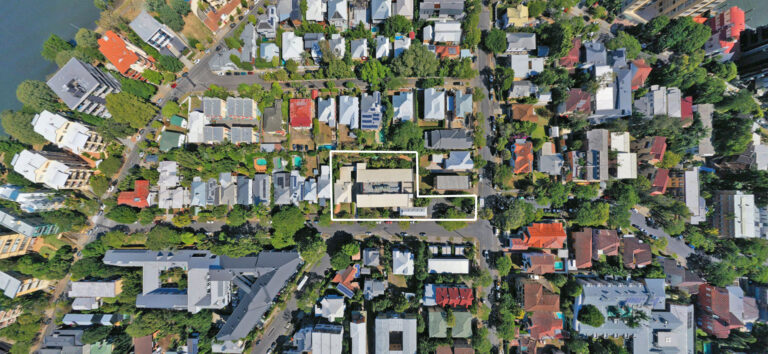
West Footscray, Tottenham, Yarraville, Brooklyn and Spotswood are where Melbourne's data centre boom is pressing hardest against housing. M3 sits about 15 metres from homes. A local residents group is now calling for remediation, compensation and voluntary buybacks.
The state government has also moved. Its Sustainable Data Centre Action Plan, released on 22 September 2026, introduces a 150-metre separation between data centre buildings and homes. Data centres are to be kept out of residential zones. Rural sites will only be allowed near critical infrastructure such as substations or transmission lines. The changes are not retrospective, so applications already lodged continue under the old rules.
For a landowner the result is a two-speed inner west. Large industrial lots well away from housing and close to a terminal station are scarcer and arguably more valuable than ever. Smaller lots that back onto homes have lost much of their data centre premium, because a 150-metre buffer can wipe out most of the developable footprint.
Other Melbourne data centre projects to watch
- PGIM, 1 Oroya Drive, Truganina: final approval in September for the first building of a campus valued at about $1.2 billion. It starts at 80MW across eight levels and 43,357 sqm, with a 220kV connection to the future Truganina Terminal Station.
- GreenSquareDC, 44-76 Simcock Avenue, Spotswood: a 240MW, three-storey proposal on a former petroleum depot, backed by Partners Group. It is still with the Department of Transport and Planning and has drawn strong local opposition.
- Centuria, 1816-1832 Dandenong Road, Clayton: Monash Council rejected a $137 million, 38MW replacement facility on 29 September despite officers recommending approval.
- 45 Donnybrook Road, Mickleham: a 67-hectare site reported to be AirTrunk's, lodged through the Development Facilitation Program.
- Goodman, 433 Mount Atkinson Road, Truganina: three two-storey data centre buildings lodged in July.
These sit alongside the national pipeline we have already covered, including CDC's $15 billion Gregadoo campus at Wagga Wagga.
What it means for the Melbourne industrial market
Data centre demand has been one of the strongest supports for industrial land values in Melbourne's west. M3 does not end that demand. Hyperscalers still need capacity. But it does change how buyers price risk.
Expect buyers to pay up for sites with a secured or clearly deliverable connection to transmission infrastructure, room for a generous buffer and a fast-track planning path. Expect them to discount sites that rely on new overhead lines through residential streets. The power route is now part of the due diligence, not an afterthought.
There is also a short-term supply effect. If NextDC does sell surplus development sites, the market will get a rare look at how much a stalled data centre site is worth. That could set a new benchmark either way.
Lessons for owners near data centre campuses
- Know your power position. Distance to a terminal station or zone substation, the available capacity and the likely line route are now the first questions a serious buyer will ask.
- Map the buffer. Measure 150 metres from the nearest homes and work out what developable area is left. That is the number that sets a data centre buyer's price.
- Check the planning path. Sites that qualify for the Development Facilitation Program move faster. Council refusals like Clayton show what the slower path can look like.
- Present the site properly. A clear site plan, power and buffer overlays plus an honest account of the community context will attract better buyers than a bare listing.
- Do not assume the premium is permanent. Political and community sentiment can turn quickly, especially in an election year.
What to watch next at NextDC M3
Victoria enters caretaker mode on 3 November ahead of the state election on 28 November. That means no decision on the M3 Stages 6 and 7 expansion before 2027. Watch for Jemena's revised route or undergrounding plan, the outcome of NextDC's capital review around 20 November and any sale of its surplus development land.
For inner west landowners, the M3 saga is a reminder that a data centre premium depends on power, planning and people all lining up. When one of the three falls over, values can move fast.