





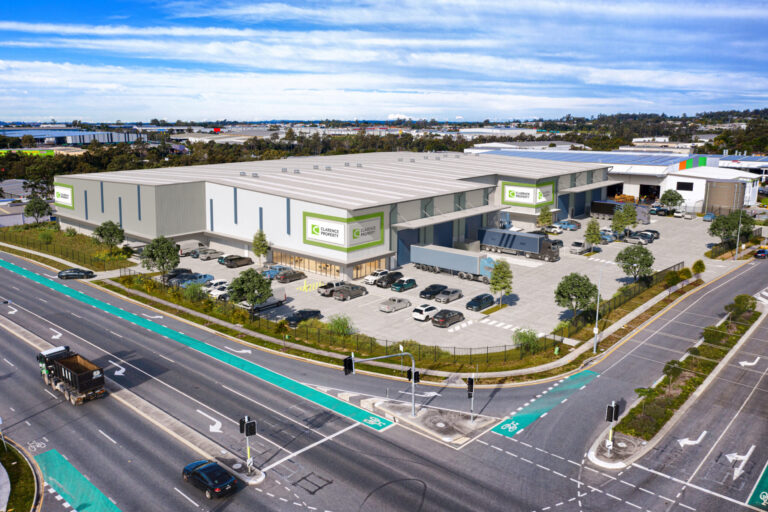
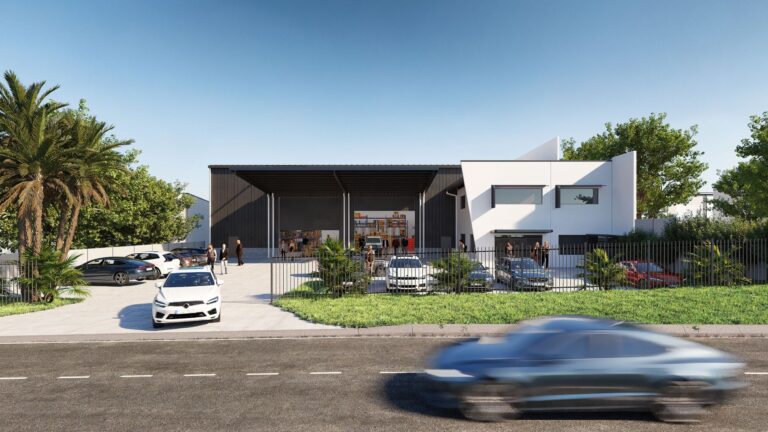
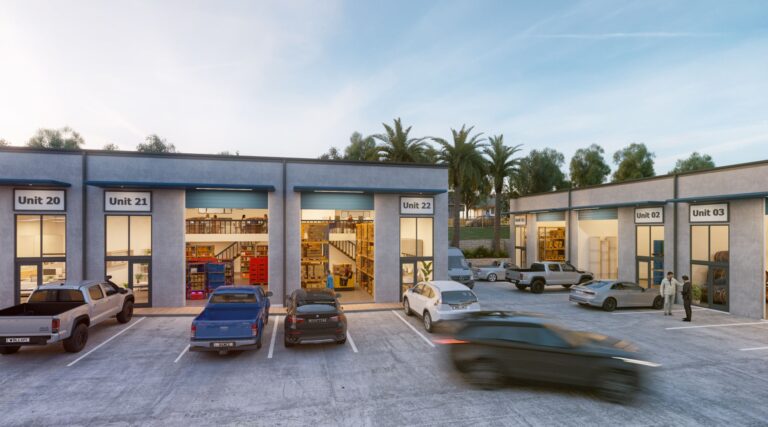
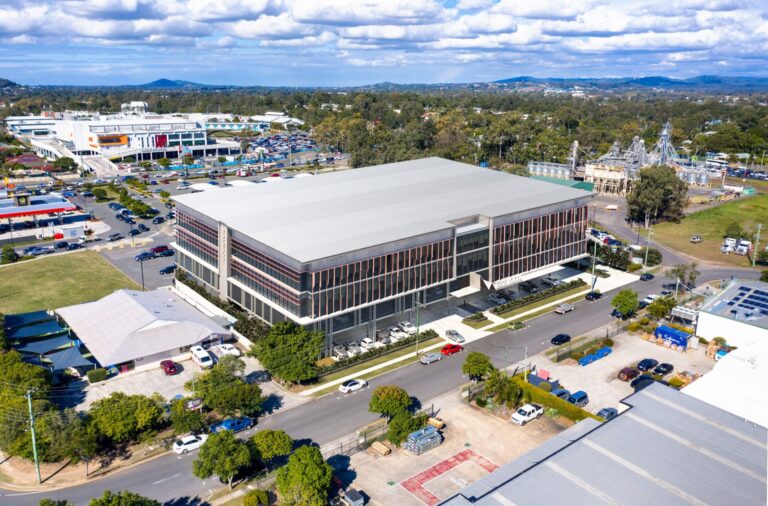



Canberra commercial property continues to evolve beyond its traditional government-office base as industrial, logistics, mixed-use and population-driven development become more important parts of the market. Employment areas across the ACT and surrounding region are increasingly influenced by infrastructure, population growth and constrained land supply.
This August 2026 update tracks Canberra commercial property, industrial development, transactions, office activity, development applications and major projects. Explore national coverage through our Commercial Property News Australia hub.
Canberra’s commercial and industrial property market moved through August with a very different set of drivers to Australia’s larger capitals.
Government remains the defining force in the office market, while industrial property continues to be shaped by land scarcity, owner-occupier demand, defence, data infrastructure, trades and public-sector support industries.
The office market is currently carrying the heavier adjustment.
JLL recorded Canberra office vacancy at 10.5% in Q2 2026, up from 10.4% at the end of 2025 and 8.0% at the end of 2024.
Year-to-date net absorption reached -55,200 sqm, largely because of occupier consolidation, while around 69,900 sqm of new office space had already completed by the middle of 2026 — almost double the 35,200 sqm delivered across all of 2025.
At the same time, Canberra still has a major office construction pipeline, strong government tenancy demand at the quality end of the market and a commercial economy increasingly influenced by defence, cybersecurity, data centres and technology.
Industrial property remains a much tighter and more straightforward story.
Fyshwick and Hume continue to dominate activity, smaller owner-occupier stock remains competitive, land in newer precincts such as Beard is scarce, and the ACT Government is now establishing a clearer framework around one of Canberra’s fastest-emerging commercial property sectors:
data centres.
Canberra’s commercial property market remains unlike any other capital
Canberra property does not behave exactly like Sydney, Melbourne or Brisbane.
Its largest employer is government.
That gives the city unusual commercial-property characteristics.
Office demand is heavily influenced by:
Commonwealth departments
ACT Government
defence
consulting
professional services
technology
cybersecurity
government contractors
Industrial demand is smaller, but often highly resilient.
Fyshwick, Hume, Mitchell and Beard support the physical businesses required to keep the city operating.
That includes:
trades
construction
automotive
warehousing
logistics
government contractors
waste and recycling
food distribution
storage
light manufacturing
This creates a commercial property market with two very distinct layers.
Canberra office vacancy increased to 10.5%
The headline office story during August came from JLL’s Q2 figures.
Canberra headline office vacancy rose to approximately 10.5%.
The increase followed a substantial contraction in occupied space, with year-to-date net absorption reaching approximately -55,200 sqm.
The main driver has been consolidation.
Large occupiers are becoming more efficient in how they use office space.
Government departments and professional organisations increasingly seek:
fewer buildings
better-quality buildings
modern workplace layouts
stronger sustainability credentials
better transport
higher security
That leaves some older secondary assets exposed.
Canberra delivered almost 70,000 sqm of new office space in the first half of 2026
Supply has also played a major role.
Approximately 69,900 sqm of new office stock completed during the first half of 2026.
That already exceeded the approximately 35,200 sqm delivered during all of 2025.
The timing is important.
New buildings are arriving just as occupiers are consolidating.
That combination naturally increases vacancy.
But it does not affect all property equally.
Prime office property is separating from secondary stock
Canberra is becoming increasingly polarised between modern prime-grade office buildings and ageing secondary assets.
Government and major corporate tenants increasingly prioritise:
NABERS ratings
energy efficiency
security
end-of-trip facilities
flexible floorplates
public transport
staff amenity
Older buildings that cannot meet these requirements may need substantial capital expenditure.
This is creating a classic flight-to-quality market.
Headline vacancy can therefore rise while premium property still performs relatively well.
Office effective rents are still growing
Despite higher vacancy, JLL recorded Canberra gross effective rents at approximately $374 per sqm per annum, representing annual growth of around 3.9%.
That is an important detail.
Canberra’s office market is not simply weakening across the board.
Instead, tenants are increasingly selective.
Good assets can still achieve stronger rents.
Poorer assets face longer vacancy and greater incentives.
Canberra still has a huge office pipeline under construction
JLL reported approximately 226,800 sqm of office space under construction across eight projects in Q2 2026.
That means the market is not yet through the current supply cycle.
Near-term vacancy could remain elevated.
For landlords, the next several years will increasingly be about:
repositioning
refurbishment
sustainability upgrades
improving tenant amenity
securing longer government leases
Secondary office buildings with no clear competitive advantage may become redevelopment opportunities.
Fyshwick remains Canberra’s dominant industrial precinct
Industrial property remains much easier to understand.
Fyshwick is still Canberra’s premier central industrial market.
Its location gives it access to:
Canberra CBD
Parliamentary Triangle
airport
Queanbeyan
Tuggeranong
inner south
major arterial roads
The precinct has also evolved well beyond conventional industrial uses.
It now contains a mix of:
warehouses
bulky goods
showrooms
trade retail
offices
automotive
food businesses
recreation
That diversity strengthens land values.
5/49 Townsville Street sells for $420,000
One of August’s confirmed industrial transactions occurred at 5/49 Townsville Street, Fyshwick.
The approximately 102 sqm industrial unit sold on 12 August 2026 for $420,000.
That equates to approximately:
$4,118 per sqm of building area.
As always with strata industrial property, that should not be treated as a direct underlying land-value benchmark.
But it demonstrates the strength of Canberra’s small owner-occupier market.
Small Fyshwick units have a deep buyer pool
Properties of roughly 100–300 sqm are attractive to:
builders
electricians
plumbers
automotive businesses
trades
investors
storage users
online retailers
service businesses
These buyers are often not purely yield-driven.
For many, the decision is whether to continue paying rent or own the premises their business operates from.
That keeps demand relatively deep.
Hume remains Canberra’s large-format industrial market
Hume plays a different role.
It accommodates heavier and larger industrial uses that cannot operate efficiently from central Fyshwick.
Typical occupiers include:
logistics
recycling
waste
heavy vehicle operations
construction
manufacturing
warehousing
government support services
Its location near the Monaro Highway gives it excellent access through Canberra and toward regional NSW.
27/61 Sheppard Street transacts during August
27/61 Sheppard Street, Hume sold on 25 August 2026.
The property comprises approximately 320 sqm within Hill Station Business Park.
The sale reinforces the continuing demand for modern strata industrial property in Hume.
A 320 sqm industrial property sits directly in the sweet spot for many owner-occupiers.
It is large enough for a meaningful operating business while still remaining affordable relative to a freestanding industrial facility.
Beard land sells for $1.05 million
One of August’s most useful industrial land transactions occurred at 59 Tantalum Street, Beard.
The approximately 893 sqm site sold for $1.05 million on 14 August 2026.
That equates to approximately:
$1,176 per sqm of land.
The site was marketed as Beard’s last remaining block available for sale and included approved development plans.
That scarcity is important.
It demonstrates how difficult it can be to create new industrial land close to established Canberra population centres.
Beard shows the scarcity value of small industrial land
Industrial land pricing in Canberra is heavily influenced by supply.
The ACT is geographically constrained by:
planning controls
government land ownership
environmental considerations
infrastructure sequencing
National Capital planning
That means industrial land cannot simply expand indefinitely.
When small development-ready sites become scarce, owner-occupiers can compete aggressively.
The Beard transaction is a strong example.
Belconnen Circus Stage 2 sells during August
One of the largest Canberra development-site transactions recorded during August involved the Belconnen Circus Precinct Stage 2.
The approximately 18,175 sqm development site sold on 21 August 2026.
This is particularly important because Belconnen is already one of Canberra’s largest town centres.
Large development sites close to:
established residential population
government employment
retail
transport
health
education
are increasingly difficult to secure.
The site therefore represents a substantial future urban-development opportunity.
Bought & Sold
August produced several useful Canberra commercial and industrial benchmarks.
5/49 Townsville Street, Fyshwick
Sold: 12 August 2026
Price: $420,000
Building: approximately 102 sqm
Approximate building rate: $4,118/sqm
Small industrial strata unit
Established Fyshwick location
27/61 Sheppard Street, Hume
Sold: 25 August 2026
Building: approximately 320 sqm
Hill Station Business Park
Modern Hume industrial property
59 Tantalum Street, Beard
Sold: 14 August 2026
Price: $1.05 million
Land: approximately 893 sqm
Approximate land rate: $1,176/sqm
DA-approved plans
Marketed as Beard’s last remaining available block
Belconnen Circus Precinct Stage 2
Sold: 21 August 2026
Site: approximately 18,175 sqm
Major Belconnen development holding
20 Isa Street, Fyshwick
Sold: 2 July 2026
Price: $1.635 million
Building: approximately 407 sqm
Office and warehouse accommodation
Secure yard
Useful recent freehold Fyshwick benchmark
72–74 Wollongong Street / 102 Gladstone Street, Fyshwick
Sold: 1 June 2026
Building: approximately 1,478 sqm
Five strata units
Approximately 56% leased to the Commonwealth of Australia
Dual street frontage
Commonwealth tenancy remains a powerful investment attribute
The Wollongong Street property demonstrates one of Canberra’s most important investment characteristics.
A Commonwealth lease can materially alter buyer perception.
Government covenants are typically viewed as:
secure
long-term
creditworthy
relatively predictable
That can make Canberra office and commercial investments behave differently from comparable assets in other markets.
Investors often place substantial value on lease security, particularly during periods of economic uncertainty.
Government consolidation is also creating pressure
The other side of the same story is consolidation.
Canberra office demand is heavily exposed to government property strategy.
When departments:
merge
relocate
reduce floor area
move into new buildings
the effect can be substantial.
This is one reason Canberra office vacancy can change quickly despite relatively stable employment.
One major department relocation can create tens of thousands of square metres of vacancy.
Defence remains one of Canberra’s most important commercial demand drivers
Canberra sits at the centre of Australia’s national defence administration.
That creates substantial private-sector property demand from:
defence contractors
engineering consultants
cybersecurity
software companies
intelligence services
technology
professional services
These businesses frequently want offices close to:
Department of Defence
Russell
Barton
Parliamentary Triangle
airport precinct
This helps support premium office demand even while broader vacancy increases.
Defence demand increasingly overlaps with industrial property
Defence is no longer purely an office story.
Modern defence supply chains require physical infrastructure.
That includes:
secure warehouses
electronics
technical workshops
logistics
vehicle support
data infrastructure
specialised storage
Fyshwick, Hume, Majura and the airport precinct are all potentially positioned to benefit from this broader demand.
Canberra Airport is becoming a major commercial precinct
Canberra Airport has evolved into a substantial employment hub in its own right.
The wider airport estate includes:
Brindabella Business Park
Majura Park
Fairbairn
Terminal precinct
Development applications and building activity continued through 2026.
Canberra Airport records current works across Majura, Brindabella, Fairbairn and Terminal precincts, including:
building construction
tenant fitouts
external building works
car park expansion
terminal upgrades
This reinforces the airport’s role as much more than transport infrastructure.
Majura Park continues growing
Majura combines commercial development with large-format retail and airport-related uses.
Its strengths include:
airport access
major road connectivity
parking
large sites
proximity to defence employment
Canberra Airport’s 2026 building records show continuing development activity in Majura, including early building works and later carpark and extension works.
As Canberra grows eastward, Majura should remain one of the city’s most strategically important commercial nodes.
Data centres have become one of Canberra’s biggest emerging property issues
One of August’s most significant commercial-property announcements came on 26 August.
The ACT Government announced it would develop a new ACT Data Centre Framework.
The framework will establish clearer rules around where future data centres can be developed and how proposals will be assessed.
Importantly, data centres will be restricted to areas already permitted under the planning system.
They will not be allowed in residential neighbourhoods.
Instead, they will be limited to appropriate:
commercial
industrial
transport and services
selected non-urban zones
This provides much greater certainty around future land demand.
Hume is already becoming a major data-centre location
Planning activity confirms that this is not theoretical.
The ACT planning system currently lists an Environmental Significance Opinion relating to the Hume Campus 3 Data Centre Development.
That is significant.
Data centres can create demand for:
large industrial landholdings
enormous electrical connections
fibre
secure infrastructure
backup power
cooling
substantial capital investment
They are therefore capable of changing industrial land values even though they employ relatively few people per square metre.
Data centres could compete with conventional industrial development
The issue for Canberra is land and power allocation.
A data centre may occupy land that could otherwise support:
logistics
manufacturing
warehousing
employment-intensive industrial uses
It can also consume significant electrical network capacity.
That means future planning decisions increasingly need to balance:
economic investment
energy reliability
water
employment
industrial land supply
The ACT Government’s new framework is designed specifically to provide greater certainty around these competing considerations.
Hume is becoming a strategic infrastructure precinct
Data centres are only one part of the Hume story.
The planning process for a major Emergency Services Maintenance and Training Facility at Hume also progressed during 2026.
The environmental impact process was completed in June, with the development application continuing through separate assessment.
The proposal includes land reserved for potential future development.
This strengthens Hume’s role as a location for large public-sector and industrial infrastructure that cannot be accommodated elsewhere.
Waste and recycling infrastructure is also expanding at Hume
Planning documentation also continues around the proposed ACT Materials Recovery Facility at Hume.
Again, these uses matter to industrial property.
Waste, recycling and infrastructure facilities require:
large sites
separation from residential uses
truck access
specialised servicing
There are relatively few Canberra locations capable of accommodating them.
Hume is therefore becoming increasingly difficult to replace.
Development Applications, Approvals & Projects Progressing Through Planning
Several projects are particularly important to Canberra’s commercial and industrial outlook.
Hume Campus 3 Data Centre
Data-centre development progressing through environmental planning processes
Hume industrial location
Major digital infrastructure proposal
ACT Data Centre Framework
Announced 26 August 2026
Establishes clearer planning framework
Data centres restricted to permitted commercial, industrial and services zones
Designed to balance investment with energy, water and community considerations
Emergency Services Maintenance and Training Facility – Hume
Environmental impact process completed June 2026
Development application remains under assessment
Strategic government infrastructure facility
Significant future development land incorporated into the proposal
ACT Materials Recovery Facility – Hume
Major recycling and waste infrastructure proposal
Environmental assessment process already progressed
Reinforces Hume’s strategic industrial function
Canberra Airport
Continued commercial and infrastructure works across Majura, Brindabella, Fairbairn and Terminal precincts
Carparking, building construction, fitouts and upgrades progressing throughout 2026
Canberra’s industrial land supply remains structurally constrained
Historical ACT planning work has long recognised the importance of maintaining industrial land supply.
Planning studies identified Fyshwick, Hume, Beard and Mitchell as key locations for short-term supply, with additional longer-term opportunities identified elsewhere.
The core issue remains valid today.
Canberra has relatively little industrial land compared with its population and economic importance.
That scarcity tends to support values.
Fyshwick cannot easily expand
Fyshwick is particularly constrained.
It is surrounded by:
established suburbs
major roads
Jerrabomberra wetlands
airport-related land
government planning controls
That means future growth will increasingly come through redevelopment and intensification.
Older low-density sites may eventually be replaced by:
multi-unit industrial
showrooms
bulky goods
higher-value commercial uses
Landowners with underutilised property could therefore hold significant redevelopment optionality.
Hume remains the logical location for heavier industry
Where Fyshwick is constrained by surrounding urban development, Hume offers greater flexibility.
It is better suited to:
heavy vehicle movements
waste
logistics
utilities
large compounds
data infrastructure
government service facilities
That functional distinction should continue to support demand for both precincts.
Mitchell remains strategically important to Canberra’s north
Mitchell serves much of northern Canberra.
The precinct supports:
construction
automotive
trade
warehousing
retail
services
As Gungahlin and northern Canberra continue to grow, Mitchell becomes increasingly valuable as a local employment and service hub.
A large proportion of its demand is population-driven rather than national-government-driven.
That gives it a somewhat different risk profile from the CBD office market.
Medical property continues to benefit from Canberra Hospital
Commercial property around Garran and Woden continues to benefit from health-sector demand.
A recent example was the July sale of Unit 11/5 Dann Close, Garran, a small medical/consulting property positioned immediately adjacent to Canberra Hospital and Centenary Hospital.
Health property is attractive because demand tends to be relatively resilient.
Population growth and ageing create continuing requirements for:
specialists
allied health
diagnostics
consulting
rehabilitation
Woden remains the natural centre of this market.
Woden continues its transformation
Woden is increasingly shifting from a traditional town centre toward a larger mixed-use employment and residential hub.
Its combination of:
Canberra Hospital
government offices
residential density
retail
public transport
supports a broad commercial economy.
As more residents move into Woden, commercial demand becomes less dependent on office workers alone.
That helps support:
retail
hospitality
medical
childcare
services
Belconnen remains another major redevelopment market
The August sale of the Belconnen Circus Stage 2 site reinforces the long-term opportunity.
Belconnen contains an enormous established population and substantial employment base.
Large sites can support:
residential
mixed-use
retail
commercial
health
subject to planning.
As Canberra becomes denser, major town-centre sites become progressively more valuable.
Canberra’s office market could eventually benefit from low future development feasibility
The near-term office pipeline is substantial.
But elevated construction costs and higher financing costs make new office development increasingly difficult without major pre-commitments.
This may ultimately benefit existing prime stock.
Once the current pipeline is absorbed, future supply could become much harder to justify.
The same pattern is already visible in several other Australian capitals.
Older office assets face the biggest challenge
Canberra’s problem is not necessarily too much office space in absolute terms.
It is too much office space that does not necessarily meet future tenant expectations.
Secondary assets increasingly compete against:
new government-grade offices
high sustainability buildings
better workplace environments
Owners may need to consider:
major refurbishment
repositioning
alternative uses
redevelopment
This could create some of Canberra’s most interesting development opportunities later in the decade.
What developers and landowners should watch
Several themes are particularly important through the remainder of 2026.
Government consolidation
Large tenancy movements can significantly affect CBD and Barton vacancy.
Prime versus secondary offices
The gap between high-quality and ageing stock is likely to widen.
Fyshwick industrial scarcity
Central industrial land remains extremely difficult to replace.
Hume
Data centres, emergency services and infrastructure development strengthen the precinct’s role.
Beard
Limited land availability is supporting strong owner-occupier pricing.
Canberra Airport
Majura and Brindabella continue developing as substantial commercial centres.
Data centres
The new planning framework could shape where billions of dollars of future digital infrastructure is located.
Defence
Canberra’s defence and cybersecurity economy should continue supporting high-value commercial property.
Town centres
Belconnen and Woden remain major mixed-use redevelopment opportunities.
The bigger Canberra commercial property story
Canberra is becoming more commercially diverse than its traditional government-town image suggests.
Government will remain dominant.
But around that core is a growing private economy involving:
defence
cybersecurity
technology
data centres
consulting
health
aviation
logistics
infrastructure
These sectors require different forms of property.
The result is a city where office demand may be consolidating while demand for specialised industrial and infrastructure land continues to expand.
That creates an interesting divergence.
The challenge is increasingly not simply supplying more property.
It is supplying the right property in the right location for increasingly specialised occupiers.
What this means for Canberra property projects
For Canberra commercial and industrial developers, strong project positioning increasingly needs to explain more than the building.
Buyers, tenants and government stakeholders want to understand:
precinct context
Commonwealth proximity
defence connections
access
security
power
infrastructure
permitted land uses
future surrounding development
sustainability
Strong project positioning can help:
establish higher perceived land value
explain future industrial projects
attract owner-occupiers before construction
support government and defence leasing campaigns
demonstrate complex infrastructure projects
communicate data-centre developments
position mixed-use town-centre sites
explain airport commercial precincts
support stakeholder presentations
reduce uncertainty before development
As Canberra’s commercial economy becomes more specialised, the projects that communicate their purpose, infrastructure and strategic location most clearly will be best positioned to capture demand early.
Commercial Property Marketing works with commercial and industrial developers across Australia to turn land, plans and future developments into clear property opportunities for buyers, tenants, investors and stakeholders.
More Canberra commercial property resources
For developers, landowners and agents bringing property to market in Canberra, explore Commercial Property Marketing Canberra, Industrial Land Marketing Canberra, 3D Renders Canberra.
For market updates across Australia, visit Commercial Property News Australia.