



Hobart property market archive — July 2026. This article records market activity from that period. For the latest Hobart commercial and industrial property coverage, see the latest Hobart market update, or browse Commercial Property News Australia.
Hobart enters FY27 with industrial property, development land and urban renewal firmly in focus
Hobart's commercial and industrial property market entered the new financial year with a relatively healthy level of activity, particularly across industrial assets, development sites and strategically located commercial property.
The market remains smaller and less liquid than Sydney, Melbourne or Brisbane, but that continues to be part of its appeal. Quality assets are tightly held, industrial land is difficult to replace and well-located properties can attract strong competition from owner-occupiers, private investors and developers.
Industrial property remains one of Tasmania's most active commercial sectors, while Greater Hobart's population growth is gradually increasing demand for warehousing, trade accommodation, healthcare, neighbourhood retail and service-commercial property.
July also delivered several noteworthy transactions and campaigns across Hobart and the surrounding southern market, including industrial activity in Derwent Park and development opportunities in Moonah, Chigwell, Kingston and the CBD.
Hobart market snapshot
Industrial property remains one of southern Tasmania's most active commercial sectors.
Owner-occupiers continue competing strongly for functional warehouses and workshops.
Derwent Park, Moonah, Glenorchy and Cambridge remain key industrial markets.
Development-ready employment land remains comparatively scarce.
Private investors continue favouring securely leased industrial assets.
Hobart CBD continues presenting repositioning and redevelopment opportunities.
Greater Hobart population growth is supporting demand for service-commercial property.
Cambridge continues expanding as a modern industrial and commercial precinct.
Infrastructure and residential growth across the eastern shore are creating longer-term commercial opportunities.
Asset quality and flexibility remain increasingly important to occupiers.
Bought & Sold: notable Hobart commercial property transactions
July provided several useful indicators of buyer activity across Hobart's commercial market.
One confirmed industrial transaction was 1/10 Lampton Avenue, Derwent Park, which sold on 22 July 2026.
The property comprises approximately 921m² of industrial warehouse accommodation, placing it firmly within one of Greater Hobart's most established industrial precincts.
Derwent Park remains particularly attractive because it combines proximity to Hobart CBD with excellent access to Glenorchy, Moonah and the broader northern suburbs.
Industrial assets of this scale are difficult to replicate in central employment locations, meaning both investors and owner-occupiers continue watching the precinct closely.
Another confirmed July transaction involved 119 Liverpool Street, Hobart, a CBD retail property that sold on 16 July 2026.
The asset comprises approximately 174m² of building area on 137m² of land, demonstrating continued demand for smaller freehold commercial assets within central Hobart.
While the disclosed sale price was not available in the public transaction record, its successful sale during July shows there remains buyer appetite for tightly held CBD property.
The broader southern Tasmanian market entered July following an unusually active June, when Tasmania recorded 33 commercial transactions across the state, the highest monthly total of 2026 to that point. Southern Tasmania recorded the greatest depth of activity across industrial, retail, office and development property.
Recent southern transactions leading into July included:
97 Charles Street, Moonah — light-industrial warehouse reportedly sold for approximately $1.2 million, leased at around $60,000 net per annum.
120 Glebe Road, New Norfolk — approximately $1.7 million for a substantial retail/garden-centre property on roughly 0.99ha.
18 Hull Street, Glenorchy — approximately 1,900m² of industrial accommodation on a 3,055m² site, acquired by an interstate investor.
1 & 3 Lockheed Place, Cambridge — 3,070m² of development land acquired by a local owner-occupier.
2/9 Abernant Way, Cambridge — approximately 609m² industrial warehouse acquired with vacant possession.
These deals reinforce a continuing theme in Hobart: industrial property remains highly attractive where assets offer functional buildings, strategic land and flexibility for either occupation or investment.
July sales campaigns show where buyers are looking
Several properties taken to market during July also provide useful insight into investor and developer appetite.
98 Gormanston Road, Moonah was offered through an expressions-of-interest campaign closing on 30 July.
The property comprises approximately 880m² of buildings on 1,046m² of land, offering a relatively substantial industrial holding within one of Hobart's most established employment precincts.
Also offered during July was 4 Spring Farm Road, Kingston, comprising approximately 1,388m², while 22–24 Arunta Crescent, Chigwell offered approximately 950m² of buildings on a substantial 3,989m² landholding.
These campaigns highlight the continued value of larger commercial landholdings in areas where future industrial or mixed-use opportunities may be increasingly difficult to replace.
Development applications, approvals & projects progressing through planning
Planning activity around Greater Hobart remains an important component of the market, particularly because new development supply is constrained by geography, infrastructure and planning complexity.
Not every proposal progressing during July had received final approval by the end of the month, so it is important to distinguish between approved projects, applications on exhibition and broader strategic planning processes.
Droughty Point moves closer to major eastern-shore development
One of the most significant planning stories affecting Greater Hobart is the evolving Droughty Point precinct on Clarence's eastern shore.
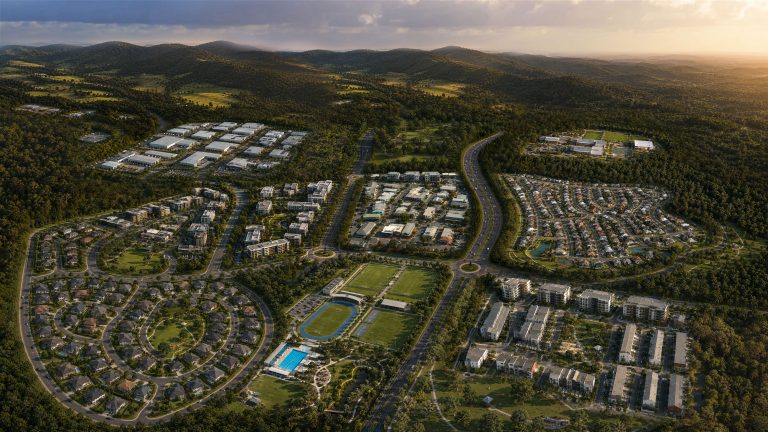
A new structure plan outlines a long-term community capable of accommodating more than 3,000 homes across approximately 394 hectares, together with commercial areas, public open space, transport infrastructure and community facilities.
The plan was released for public consultation in August following earlier rezoning progress through the Tasmanian Planning Commission.
Although predominantly residential, developments of this scale have major implications for commercial property.
Thousands of additional residents generate demand for:
Retail centres
Medical facilities
Childcare
Professional services
Local employment
Warehousing
Trade services
Hospitality
Community infrastructure
For developers, the commercial opportunity is often created by the residential population that arrives first.
Kangaroo Bay remains a major eastern-shore planning story
The Kangaroo Bay Hotel major project remained part of the broader Hobart planning landscape in 2026, with the Tasmanian Planning Commission noting public exhibition between June and 1 July.
The precinct is strategically important because it sits within the wider Bellerive and Rosny growth area, where residential, hospitality, commercial and transport investment are gradually reshaping the eastern shore.
Any major hotel, tourism or mixed-use project has the potential to increase surrounding retail and commercial activity.
Hobart CBD redevelopment opportunities remain active
While the City of Hobart's major-planning register did not list a new major application actively advertised at the time of review, the council continues to track significant projects including hotels, mixed-use developments, offices and larger urban redevelopment proposals.
One important July market campaign was 247 Elizabeth Street, Hobart, a substantial CBD development site.
The property offers approximately 1,389m² of land and 5,591m² of existing floor area, zoned Central Business, and was marketed through an expressions-of-interest campaign closing on 30 July.
Large CBD holdings such as this are relatively rare.
Their value increasingly lies not only in current improvements but in the ability to reposition existing buildings or redevelop sites as Hobart's CBD evolves.
Moonah remains one of Hobart's strongest industrial markets
Moonah continues to be one of Greater Hobart's most important commercial and industrial locations.
Its strengths include:
Proximity to Hobart CBD.
Access to the Brooker Highway.
Established trade and industrial businesses.
Retail and showroom activity.
Limited undeveloped land.
Strong surrounding population.
The July marketing of 98 Gormanston Road reinforces how tightly held larger industrial holdings have become within the precinct.
Moonah's evolution is particularly interesting because the area increasingly supports a mixture of traditional industry, bulky goods, creative businesses, hospitality and service-commercial uses.
That diversity creates redevelopment potential for older industrial assets where zoning and surrounding uses allow.
Derwent Park remains Hobart's industrial workhorse
The July sale at Lampton Avenue highlights continued activity in Derwent Park.
Derwent Park remains one of Hobart's most functional industrial locations, supporting:
Warehousing
Manufacturing
Automotive businesses
Construction suppliers
Distribution
Trade services
Equipment businesses
Large existing warehouses remain valuable because supply of equivalent new buildings in centrally located industrial precincts is limited.
The area's close relationship with Moonah and Glenorchy creates a substantial employment cluster immediately north of Hobart CBD.
Glenorchy offers scale and redevelopment potential
Glenorchy continues attracting industrial and commercial property investment due to its substantial population base and major road connections.
The municipality contains some of Hobart's largest established industrial landholdings.
Recent sales activity has included major assets such as 77–79 Chapel Street, a large industrial property occupying approximately 10,870m² of land, which sold off-market earlier in 2026 to a local owner-occupier.
Properties of this scale demonstrate why Glenorchy remains important.
Unlike smaller inner-Hobart precincts, selected sites can still provide substantial yards, manufacturing space and long-term redevelopment opportunities.
Cambridge continues emerging as Hobart's modern industrial precinct
Cambridge remains one of the strongest growth areas within southern Tasmania's commercial property market.
Its competitive advantages include:
Proximity to Hobart Airport.
Tasman Highway access.
Newer industrial stock.
Larger modern warehouses.
Available development land.
Access to the eastern shore and Sorell growth corridor.
Multiple recent transactions and current listings around Cambridge demonstrate continued owner-occupier demand. Recent sales included industrial assets at Abernant Way and development land at Lockheed Place.
The precinct is likely to become increasingly important as businesses seek modern accommodation that cannot easily be delivered in older industrial areas closer to Hobart CBD.
Brighton is another location developers should watch
Brighton continues to strengthen as a major logistics and industrial corridor north of Hobart.
The Brighton Transport Hub and surrounding industrial land give the area potential to accommodate businesses requiring:
Larger sites
Freight access
Heavy vehicles
Warehousing
Distribution
Manufacturing
Hardstand
A current development opportunity at Lot 8, 1 Dylan Street, Brighton comprises approximately 3,560m² of land with around 1,030m² of building area, illustrating the larger-scale property opportunities available outside Hobart's established inner industrial markets.
Over the longer term, Brighton is likely to become increasingly important as central industrial land becomes more expensive and difficult to secure.
Kingston and southern Hobart continue expanding
Population growth south of Hobart continues generating commercial opportunities around Kingston.
The area has evolved into a substantial employment and retail centre in its own right.
Demand is increasingly being created across:
Medical
Retail
Professional services
Light industry
Trade services
Warehousing
Hospitality
The July campaign at 4 Spring Farm Road demonstrates continuing commercial activity within the Kingston market.
As residential development continues throughout Kingborough, additional commercial property will be required simply to service the growing population.
Industrial supply remains constrained
Hobart's geography creates a structural constraint that affects commercial property more than in many mainland cities.
Mountainous terrain, the River Derwent and established residential development significantly limit where major new industrial estates can be developed.
That places additional value on established employment land.
It also means businesses are often forced to choose between:
Older centrally located industrial buildings.
Newer accommodation further from Hobart CBD.
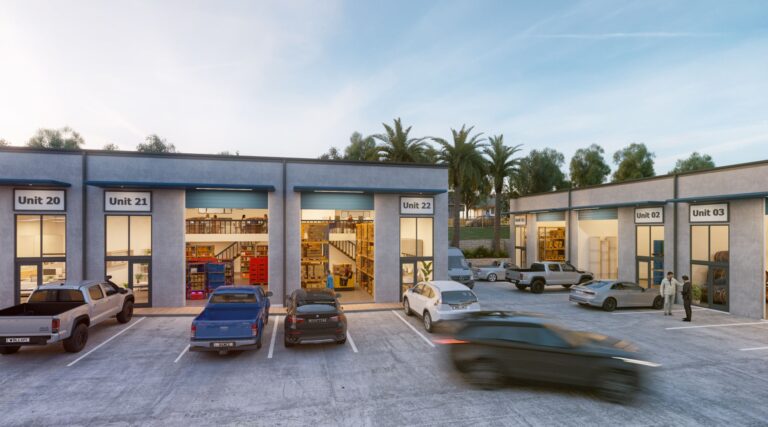
Smaller strata industrial units.
Building their own facility.
This constraint should continue supporting underlying industrial land values.
Industrial leasing remains driven by functionality
Occupiers continue prioritising practical buildings rather than simply premium presentation.
Key requirements include:
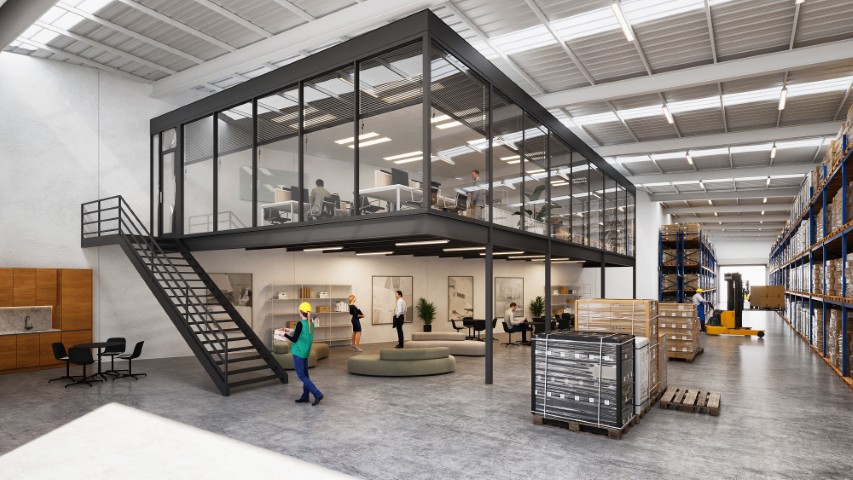
High-clearance warehousing.
Roller-door access.
Three-phase power.
Secure yards.
Hardstand.
Parking.
Truck access.
Flexible office accommodation.
Older industrial properties remain competitive if they offer these fundamentals.
Conversely, poorly configured properties can struggle even where vacancy is relatively tight.
Smaller industrial units remain particularly attractive
Hobart continues experiencing strong demand for smaller warehouses and industrial units.
These properties attract:
Trades
Small businesses
Investors
SMSF buyers
Owner-occupiers
Storage users
Cambridge, Moonah, Mornington and Derwent Park remain particularly active.
For developers, small-format industrial projects can offer an attractive risk profile because demand is spread across a much broader buyer pool than large speculative warehouses.
Construction costs continue influencing new supply
Tasmania continues facing relatively high construction and transport costs.
For industrial developers, this means new projects require sufficient sale prices or rents to justify construction.
That can restrict speculative development and indirectly protect existing quality stock.
Replacement cost therefore remains an increasingly important component of industrial asset values.
Hobart office market remains selective
Hobart's office market continues to display a clear preference for high-quality, well-located accommodation.
Government remains a major occupier, while professional services, healthcare and education provide additional demand.
Businesses increasingly prioritise:
Modern fit-outs
Energy efficiency
Natural light
Staff amenities
Parking
Accessibility
CBD proximity
Older secondary buildings may require significant refurbishment to compete effectively.
Tourism continues supporting commercial property
Tourism remains one of Tasmania's most important industries and a major source of commercial demand within Hobart.
Hotels, restaurants, tourism operators and retail businesses contribute substantially to CBD and waterfront activity.
Future hotel and visitor-accommodation projects therefore remain important components of Hobart's commercial development pipeline.
However, developers need to carefully balance tourism growth with construction costs, financing conditions and seasonal demand.
Investor confidence remains focused on income security
Private investors continue to dominate much of Hobart's commercial investment market.
Demand remains strongest for properties offering:
Secure leases.
Strong tenant covenants.
Strategic locations.
Manageable investment sizes.
Future redevelopment potential.
Limited competing supply.
Industrial property remains particularly attractive because of its relatively simple ownership structure and broad occupier demand.
Interstate investors can also be attracted where yields compare favourably with mainland capital cities.
What developers should watch during H2 2026
Several themes are likely to influence Hobart's commercial and industrial property market during the remainder of 2026.
Continued industrial transactions across Moonah and Derwent Park.
Expansion of modern industrial accommodation around Cambridge.
Further investment around Brighton's logistics corridor.
Population growth generating commercial demand in Kingston and the eastern shore.
Progression of Droughty Point and other large residential growth areas.
Continued CBD redevelopment opportunities.
Strong demand for smaller industrial units.
Tight supply of larger functional warehouses.
Increased redevelopment pressure on older employment sites.
Construction costs continuing to constrain new supply.
Investors continuing to prioritise securely leased assets.
The key theme remains scarcity.
Hobart cannot simply create unlimited new employment land close to the CBD.
That makes well-located existing commercial and industrial sites increasingly important.
Hobart commercial & industrial property outlook
Hobart enters the second half of 2026 with a relatively stable commercial property market supported by constrained supply and a diverse owner-occupier base.
Industrial remains one of the most compelling sectors.
Moonah, Derwent Park and Glenorchy provide established employment infrastructure, while Cambridge and Brighton offer greater opportunity for new development and larger facilities.
Population growth across Kingston and the eastern shore will generate another layer of commercial demand.
At the same time, Hobart CBD continues presenting opportunities for investors prepared to reposition older buildings or acquire strategic development sites.
For developers and landowners, the market increasingly rewards property that is difficult to replace.
That means location, landholding, access and flexibility are likely to remain just as important as the building itself.
Position your Hobart project ahead of the market
In a smaller market where buyers and tenants have fewer comparable projects to reference, communicating the future potential of a development is particularly important.
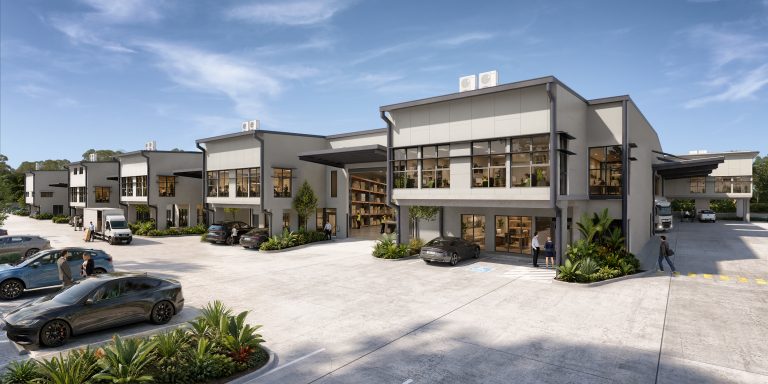
Commercial Property Marketing helps developers, landowners and agencies turn future commercial and industrial projects into opportunities the market can immediately understand.
The objective is to:
Increase the perceived and realised value of development land.
Accelerate industrial land sales and pre-leasing.
Give buyers confidence in projects before construction begins.
Generate stronger enquiry from investors and owner-occupiers.
Clearly communicate access, infrastructure and development potential.
Help agents explain future estates and buildings more effectively.
Differentiate new projects from older existing stock.
Improve stakeholder and investor understanding.
Reduce the time between project launch and commercial commitment.
Ultimately extract more value from commercial and industrial property.