
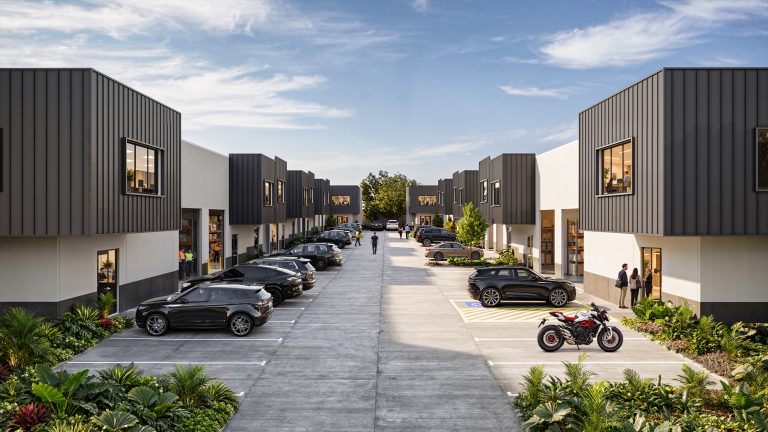
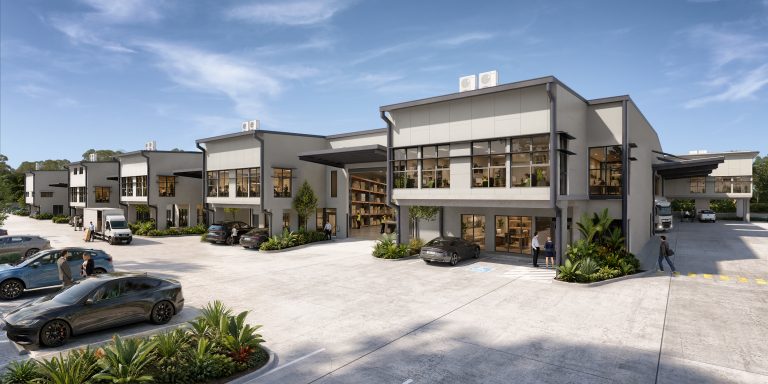
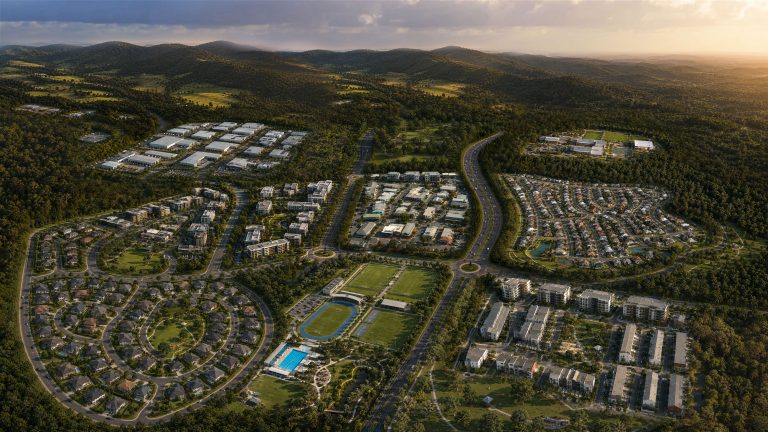
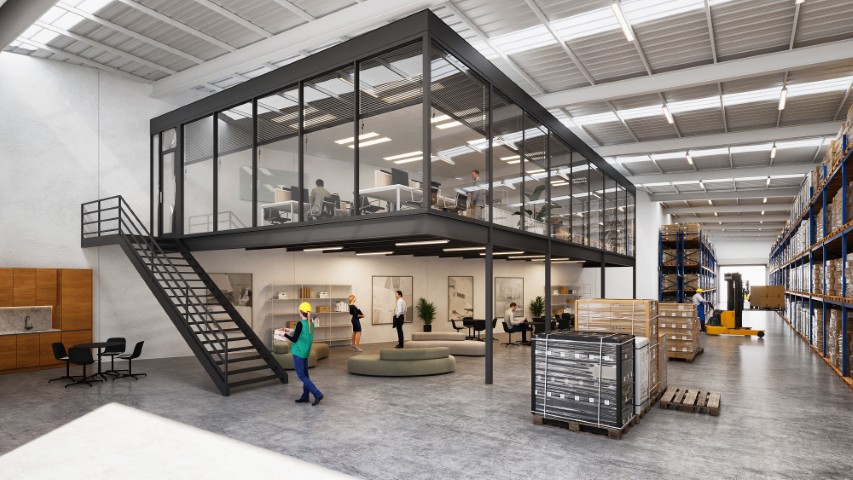
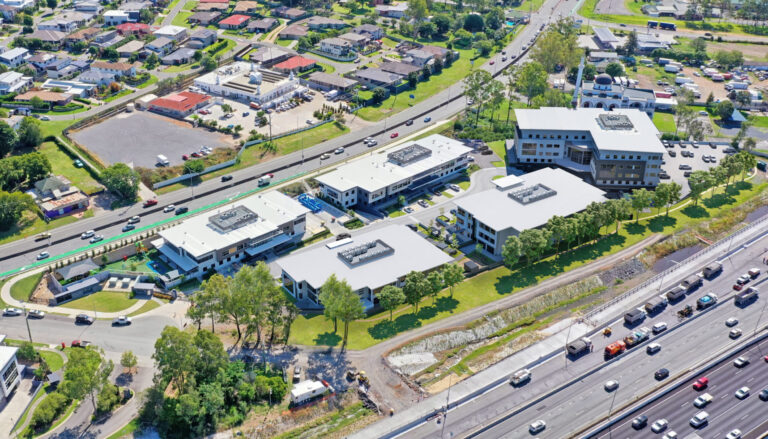
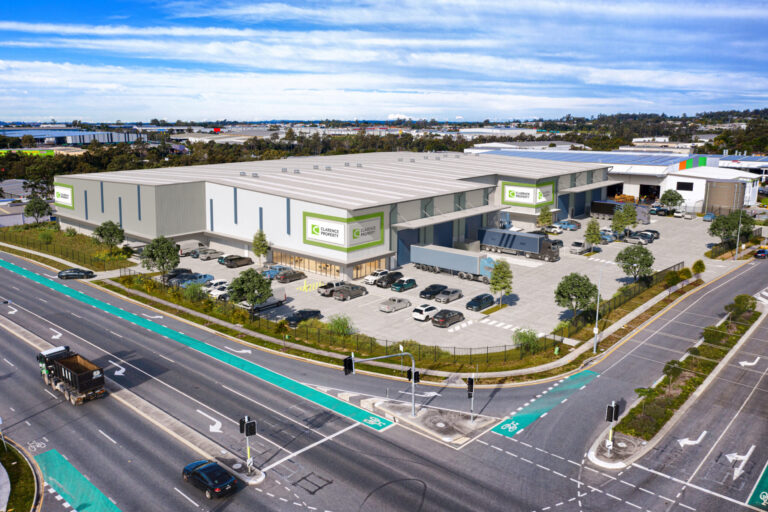
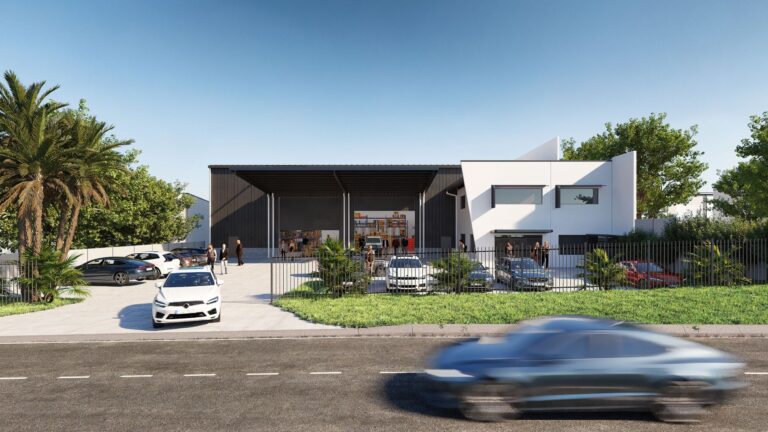
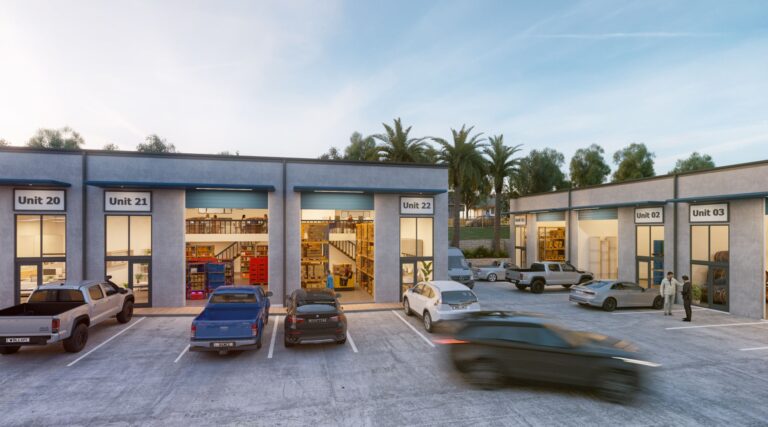
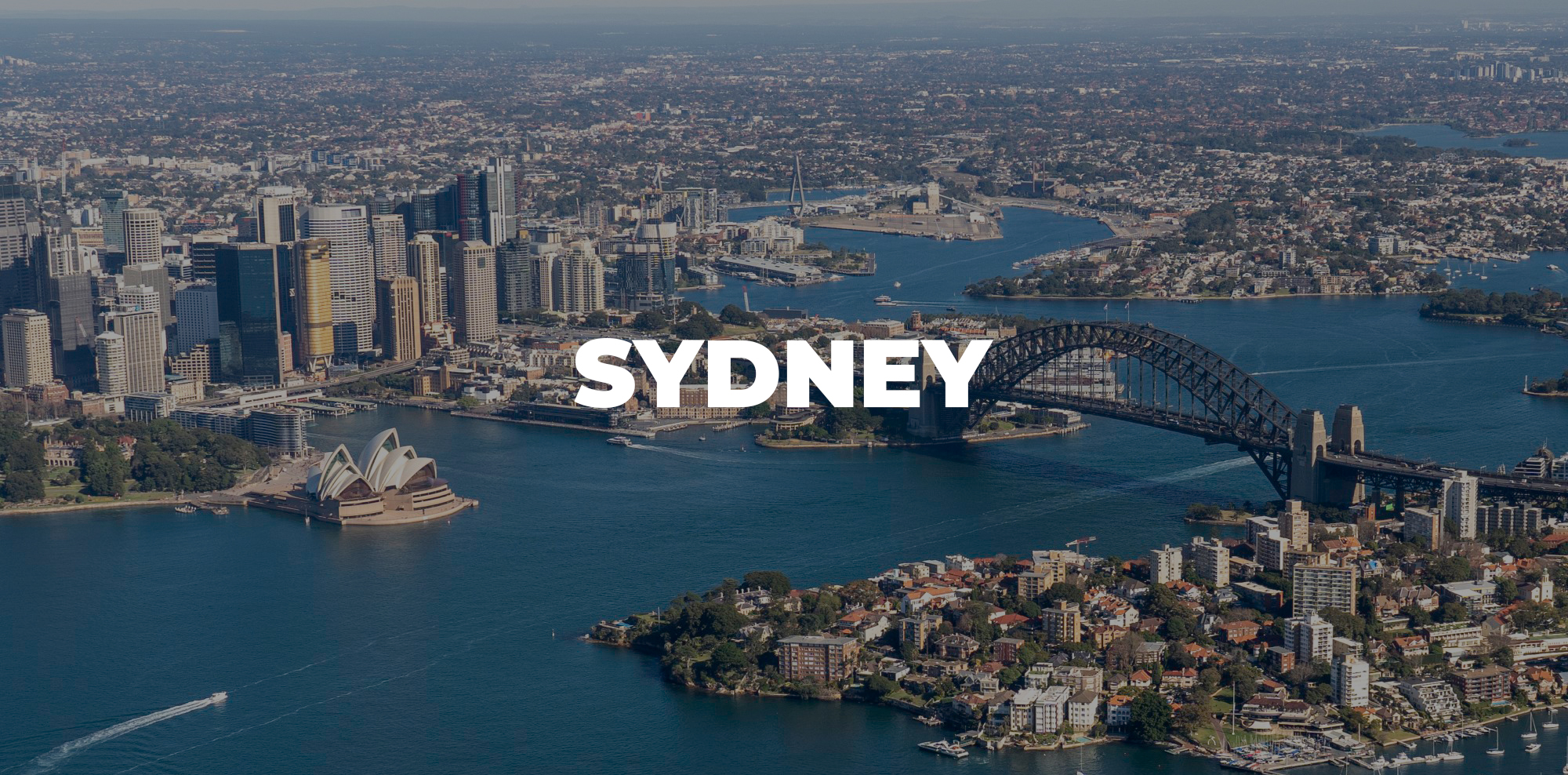
Sydney commercial and industrial property is moving into a more selective phase, but the structural shortage of serviced industrial land remains one of the market’s defining forces. Western Sydney, Kemps Creek, Mamre Road, the Aerotropolis and established infill precincts are developing into distinct but equally important industrial markets.
This August 2026 update tracks Sydney industrial property, logistics development, commercial transactions, vacancy, rents, Western Sydney infrastructure and major development projects. Explore national coverage through our Commercial Property News Australia hub.
Sydney’s commercial and industrial property market moved through August with a noticeable change in tone.
The extraordinary industrial rental growth of the previous cycle has moderated, vacancy has lifted from historic lows and occupiers have more choice than they did several years ago.
But underneath that adjustment, the structural Sydney industrial story remains extremely strong.
Serviced industrial land remains scarce, Western Sydney continues to absorb the overwhelming majority of new logistics development, investment capital is returning at scale and the opening of Western Sydney International Airport is bringing an entirely new employment and industrial economy closer to reality.
The numbers show a market normalising rather than weakening.
JLL recorded 323,300 sqm of Sydney industrial gross take-up during Q2 2026, a 56.5% increase from Q1 and almost 29% above the 10-year quarterly average.
Almost 68% of that activity occurred in the Outer Central West.
At the same time, only around 155,500 sqm of new industrial space was completed during the quarter — less than half the Q1 figure.
Investment volumes reached approximately $1.2 billion during Q2 alone.
August reinforced those themes.
Sydney industrial demand has rebounded sharply
Sydney entered 2026 with industrial occupiers taking longer to make decisions.
That changed during the second quarter.
Gross take-up rebounded to 323,300 sqm, with activity concentrated heavily through Western Sydney.
The distribution of demand is particularly telling:
- Outer Central West – approximately 67.9%
- Outer North West – approximately 20.2%
- Outer South West – approximately 7.9%
The largest reported transaction was Toll’s 30,600 sqm sublease at 10 Buda Way, Kemps Creek.
Sydney’s industrial centre of gravity is therefore continuing to move west.
Vacancy has risen — but the detail matters
Sydney is no longer operating at the exceptionally low vacancy rates seen during the pandemic-era industrial boom.
CBRE measured Sydney industrial and logistics vacancy at approximately 3.5% during the first half of 2026, up from previous levels.
JLL’s broader methodology produced a higher figure of 5.8% in Q2, illustrating how different datasets and building-size definitions can produce materially different headline numbers.
The more important point is where the vacancy sits.
CBRE reports that Sydney’s increase has been concentrated particularly in the Outer South West and older prime or secondary stock, while high-quality modern facilities continue to outperform.
That creates a market with two very different experiences.
Older warehouses can require longer leasing campaigns and higher incentives.
Modern logistics facilities with strong access, high clearance, efficient loading and good sustainability credentials remain considerably more competitive.
Industrial rental growth has slowed
After several years of extraordinary growth, Sydney industrial rents are entering a more balanced phase.
JLL reported that average rents were broadly unchanged across most Sydney precincts during Q2, with only the Outer North West recording a quarterly increase of approximately 0.6%.
Incentives have also increased marginally as landlords compete harder for tenants.
This is not necessarily a negative development.
For years, rental growth ran significantly ahead of occupiers’ ability to absorb additional property costs.
A period of consolidation allows businesses to regain confidence and provides developers with clearer evidence of sustainable demand.
Developers are becoming much more disciplined
The supply pipeline remains substantial, but the way projects are being delivered is changing.
Developers increasingly want major pre-commitments before starting construction.
CBRE notes that industrial development nationally is being affected by:
- tighter pre-commitment requirements
- construction cost pressure
- financing constraints
- delivery risk
At the same time, gross industrial take-up nationally reached approximately 1.8 million sqm during the first half of 2026.
For Sydney, this means speculative construction is unlikely to disappear, but developers are becoming increasingly selective about location, building configuration and tenant demand.
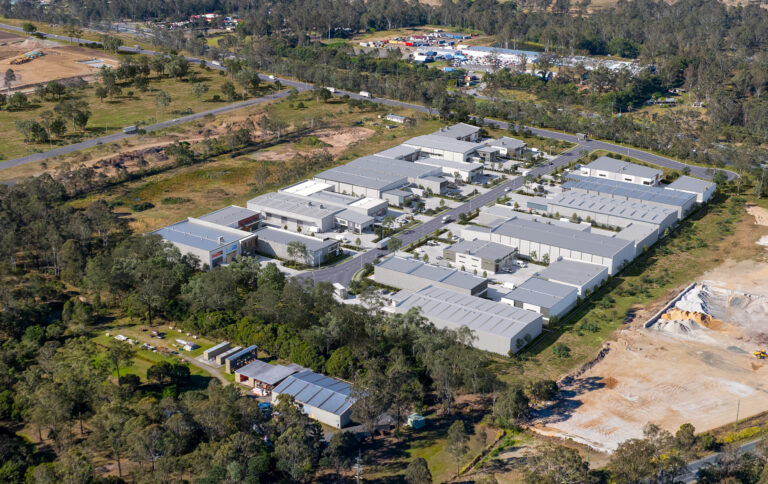
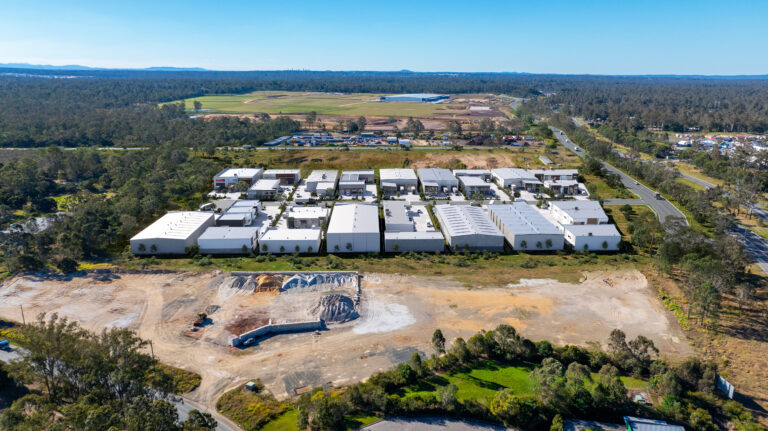
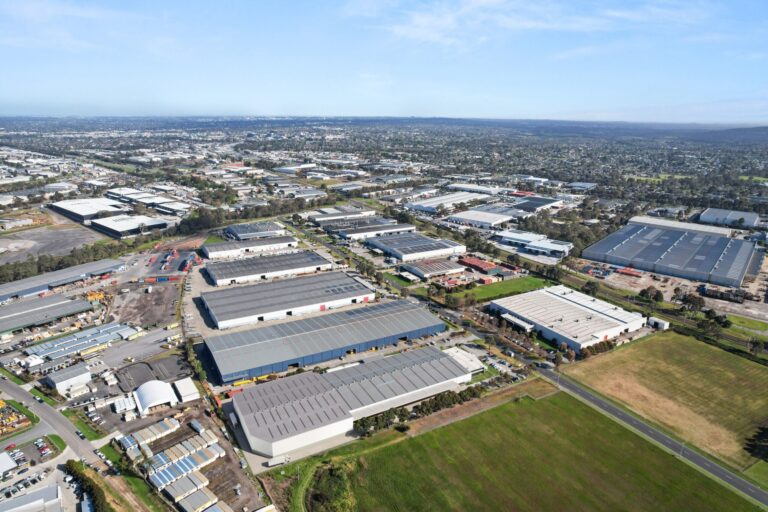
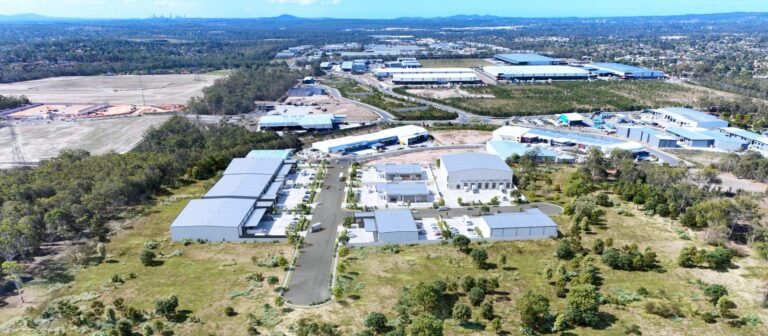
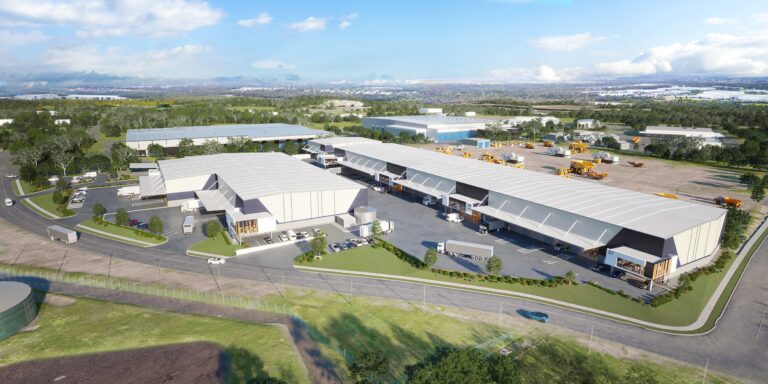
Kemps Creek is rapidly becoming one of Sydney’s defining logistics precincts
Kemps Creek remains at the centre of the Western Sydney industrial expansion.
The precinct sits between Sydney’s existing motorway network and the emerging Western Sydney Airport economy.
One of August’s significant leasing transactions occurred at The YARDS, Kemps Creek, where Allshelter committed to a new 3,296 sqm warehouse.
The company supplies shelter and storage solutions to the mining, defence, aviation and logistics sectors and signed a five-year lease.
The facility forms part of the industrial estate being developed by Frasers Property Industrial together with Aware Real Estate and Barings.
This follows the much larger Toll transaction at Buda Way and demonstrates the breadth of occupiers now targeting the precinct.
Western Sydney Airport is changing the industrial map before it even opens
The Western Sydney Aerotropolis is becoming much more than a future planning concept.
Major industrial and advanced manufacturing projects are now progressing around Bradfield and the airport.
In July the NSW Government announced construction had commenced on Bradfield City’s second major building.
The approximately 7,000 sqm facility will house Australia’s first commercial Semiconductor Advanced Packaging Facility and is designed to support advanced manufacturing, microelectronics and precision manufacturing.
At the same time, the NSW Government confirmed approval of a new $1 billion industrial estate within the Aerotropolis.
That is a significant property-market signal.
Western Sydney is increasingly being positioned not simply as a warehouse market, but as a centre for:
- advanced manufacturing
- defence
- aerospace
- logistics
- technology
- semiconductor industries
- freight
- research
- high-value manufacturing
The airport economy will create new commercial property categories
The airport will generate property demand that historically had little reason to locate in outer Western Sydney.
That includes:
- air freight
- cold storage
- airport logistics
- aviation maintenance
- defence suppliers
- hotels
- business parks
- offices
- food production
- pharmaceutical logistics
- data and technology facilities
- specialist manufacturing
The first wave of industrial development has understandably focused on warehousing.
The second wave is likely to be much more diverse.
StoreLocal spends $57 million in Western Sydney
One of August’s largest confirmed Western Sydney property transactions involved two newly developed self-storage facilities.
StoreLocal acquired the assets for a combined $57 million.
The transactions were:
3 Holbeche Road, Arndell Park – $34 million
and
5 Abel Street, Jamisontown – $23 million
The acquisitions demonstrate continuing institutional appetite for alternative industrial property sectors tied to population growth.
Self-storage has increasingly become an institutional investment category because of its fragmented customer base, relatively defensive revenue characteristics and exposure to population and residential density growth.
Arndell Park continues to attract major capital
The $34 million acquisition at Holbeche Road reinforces Arndell Park’s position as one of Western Sydney’s most established industrial locations.
Another nearby property entered the market during August.
2 Holbeche Road, Arndell Park comprises approximately:
- 9,765 sqm of land
- 4,969 sqm of building area
- recently renovated and extended accommodation
The property is leased to a national tenant until June 2027, creating both short-term income and potential future occupation or rental reversion.
The precinct benefits from established road infrastructure and proximity to the M4, M7 and broader Western Sydney motorway network.
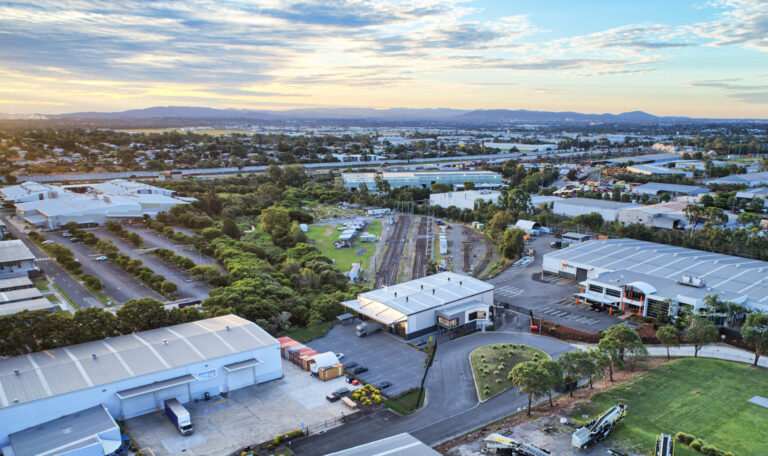
Auburn remains one of Sydney’s most strategically positioned infill industrial markets
A major industrial holding at 16–22 Raglan Road, Auburn sold on 10 August.
The property comprises approximately:
- 2.954 hectares of land
- 9,444 sqm of improvements
- approximately 161 metres of road frontage
It represents a particularly substantial holding within Sydney’s Central West industrial market.
Properties of this scale are becoming increasingly difficult to assemble inside Sydney’s established metropolitan industrial belt.
Auburn has the advantage of being significantly closer to the CBD than the large new logistics estates emerging further west.
That gives established industrial land a very different value proposition.
Infill industrial property remains incredibly difficult to replace
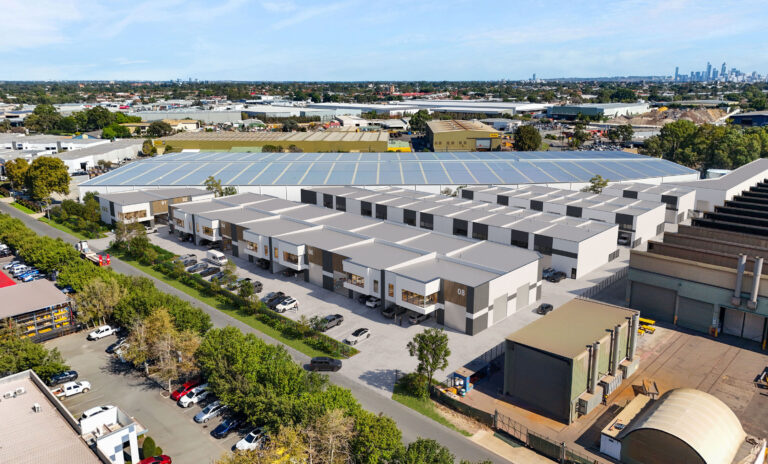
Sydney contains two broad industrial property markets.
There is the enormous new-build logistics market of Western Sydney.
Then there is the increasingly scarce infill industrial market.
Precincts such as:
- Alexandria
- Banksmeadow
- Botany
- Matraville
- Auburn
- Silverwater
- Homebush
- Chullora
- Lidcombe
- Marrickville
- Brookvale
serve existing businesses and populations that cannot simply move 40 or 50 kilometres west.
That makes well-positioned infill industrial land extremely difficult to replace.
Matraville demonstrates the scarcity of South Sydney industrial sites
A substantial industrial asset at 111–129 Beauchamp Road, Matraville sold during August.
The property was marketed as a freehold industrial opportunity within one of South-Eastern Sydney’s most tightly held industrial precincts and comprises approximately 912 sqm of improvements.
The surrounding South Sydney industrial market benefits from immediate proximity to:
- Port Botany
- Sydney Airport
- the CBD
- eastern suburbs population
- major freight routes
As residential values and redevelopment pressure increase elsewhere, remaining industrial land around Botany and Matraville becomes increasingly strategic.
Port Botany keeps South Sydney industrial land relevant
Western Sydney has the land.
South Sydney has location.
That distinction will remain critical.
Port-related businesses, freight operators, food logistics and last-mile businesses cannot always economically relocate to the outer west.
Every additional kilometre travelled by trucks creates additional:
- labour cost
- fuel cost
- congestion exposure
- delivery time
- fleet requirements
That gives strategically located industrial property around the port an inherent locational premium.
Bought & Sold
August produced several important Sydney commercial and industrial transactions.
3 Holbeche Road, Arndell Park
- Sold August 2026
- Price: $34 million
- Newly developed self-storage facility
- Acquired by StoreLocal
- Part of a $57 million two-property acquisition
5 Abel Street, Jamisontown
- Sold August 2026
- Price: $23 million
- Newly developed self-storage facility
- Acquired by StoreLocal
38/24 Garling Road, Kings Park
- Sold: 19 August 2026
- Price: $1.26 million
- Building: approximately 435 sqm
- Industrial strata property
25/87–91 Railway Road North, Mulgrave
- Sold: 12 August 2026
- Price: $935,000
- Building: approximately 175 sqm
- Indicative rate: approximately $5,343 per sqm of building area
16–22 Raglan Road, Auburn
- Sold: 10 August 2026
- Site: approximately 2.954 hectares
- Improvements: approximately 9,444 sqm
- Approximately 161 metres of frontage
- Significant Central West industrial holding
45 Planthurst Road, Carlton
- Sold: 12 August 2026
- Building: approximately 407 sqm
- Fully leased shop and warehouse investment
- Corner freehold within the South Sydney market
71 & 72/15 Jubilee Avenue, Warriewood
- Sold: 31 August 2026
- Four adjoining high-clearance storage units
- Approximately 21–84 sqm individual unit areas
4/23 Peachtree Road, Penrith
- Sold: 17 August 2026
- Building: approximately 290 sqm
- Industrial strata warehouse/showroom
- Truck and container access
Smaller industrial units continue to command strong rates
The Mulgrave and Kings Park transactions highlight the continuing depth of Sydney’s owner-occupier market.
A 175 sqm industrial unit selling for $935,000 equates to more than $5,300 per sqm of building area.
These rates can appear high relative to larger warehouse investments.
But the buyer is often evaluating something entirely different.
For a successful business owner, the choice may be:
continue paying rent indefinitely or own the premises from which the business operates.
That creates a large buyer pool for smaller strata industrial assets.
Smithfield industrial land illustrates the underlying land shortage
A particularly useful transaction occurred shortly before August.
Five industrial lots at Britton Street, Smithfield sold collectively for $12.5 million.
The lots total approximately 6,070 sqm.
CBRE reported strong interest from owner-occupiers, developers and investors and directly attributed that competition to the shortage of serviced industrial land across Western Sydney.
That is the structural issue that remains beneath Sydney’s short-term vacancy cycle.
Buildings can become vacant.
Serviced, appropriately zoned industrial land cannot easily be recreated.
Western Sydney’s land shortage is becoming more complicated
Sydney theoretically has large amounts of land on its western fringe.
But industrial development requires much more than vacant paddocks.
Land generally needs:
- correct zoning
- trunk infrastructure
- power
- sewer
- water
- road access
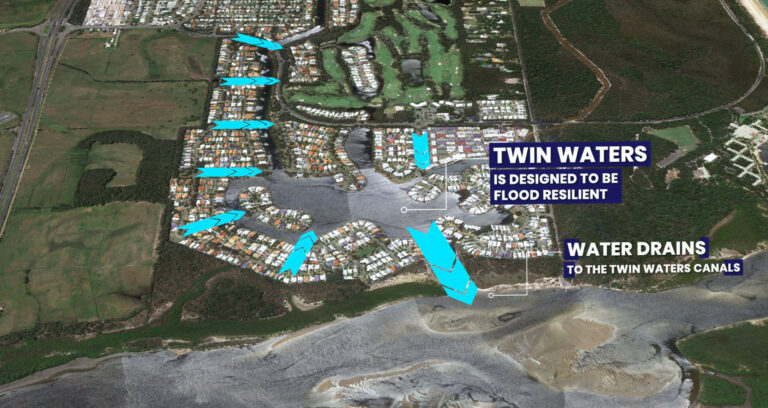
- flood mitigation
- planning approval
- suitable topography
- biodiversity resolution
- sufficient electricity capacity
The difference between theoretical industrial land and development-ready industrial land is enormous.
That is why serviced lots can command such significant premiums.
Power is becoming an industrial development issue
Power capacity is increasingly important for industrial development.
Traditional warehouses may have relatively modest energy requirements.
New-generation industrial users can be very different.
Potential high-demand occupiers include:
- cold storage
- automation-heavy logistics
- food processing
- manufacturing
- EV infrastructure
- data centres
- semiconductor manufacturing
- defence
- pharmaceutical facilities
Land with strong electrical infrastructure could therefore command an increasing premium.
Data centres remain part of Western Sydney’s land story
Western Sydney continues to attract data centre development because of its combination of industrial land, fibre infrastructure and connectivity.
But power availability is increasingly influencing site selection.
Large data centre campuses can consume substantial electricity capacity.
That means data centres may compete indirectly with traditional industrial development for:
- large landholdings
- power connections
- infrastructure
- appropriately zoned sites
For landowners, energy infrastructure is becoming part of property value.
The M12 will fundamentally improve airport-linked industrial access
The M12 Motorway will provide the major east-west motorway connection to Western Sydney International Airport.
Its connection into Sydney’s motorway network will significantly improve accessibility for industrial areas surrounding:
- Kemps Creek
- Badgerys Creek
- Luddenham
- Bradfield
- Erskine Park
- Mamre Road
Industrial development follows infrastructure.
The motorway-airport combination is therefore one of the most important property catalysts in Sydney.
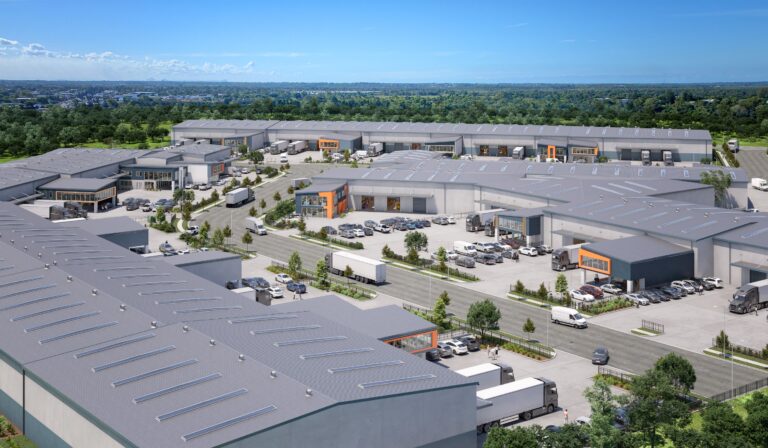
Mamre Road remains one of Australia’s biggest industrial development zones
The Mamre Road Precinct has become synonymous with Sydney’s next generation of industrial and logistics development.
Its attraction is based on:
- extremely large sites
- proximity to the M4 and M7
- future M12 connectivity
- Western Sydney Airport
- large workforce catchments
- ability to construct modern high-clearance warehouses
The challenge is infrastructure delivery.
As more estates progress simultaneously, road capacity, power and utility servicing become increasingly important.
Development Applications, Approvals & Projects Progressing Through Planning
Several major projects are shaping Sydney’s future commercial and industrial market.
Western Sydney Aerotropolis industrial estate
The NSW Government announced approval during July of a new $1 billion industrial estate within the Aerotropolis.
The project adds another major industrial component to the emerging airport economy.
Bradfield City Second Building
Construction commenced in July.
The approximately 7,000 sqm advanced manufacturing building is designed to accommodate Australia’s first commercial Semiconductor Advanced Packaging Facility.
The YARDS – Kemps Creek
Large-scale industrial estate continuing to attract tenants.
Allshelter committed to approximately 3,296 sqm during August.
Mamre Road Precinct
Large industrial estates continue progressing across one of Sydney’s most significant future logistics areas.
Western Sydney International Airport
The airport remains the dominant long-term catalyst for industrial development across the outer west.
Sydney CBD offices are also beginning to improve
Industrial property is not the only Sydney sector showing stronger fundamentals.
Sydney CBD office conditions continued improving through the first half of 2026.
JLL reported CBD vacancy declining from 14.6% at the end of 2025 to 13.9% during Q2 2026, with approximately 39,300 sqm of positive year-to-date net absorption.
CBRE recorded an even lower overall vacancy rate of approximately 13.3% at the end of H1 2026, reflecting methodology differences between research houses.
Importantly, no major new CBD office supply is expected to be completed during 2026.
Sydney CBD investment activity has returned
CBRE recorded approximately $1.9 billion of Sydney CBD office investment transactions during the first half of 2026.
Prime effective rents have also increased strongly in several precincts.
Over the previous 12 months CBRE recorded net effective rental growth of approximately:
- Western Corridor – 16.7%
- Midtown – 13.2%
- Walsh Bay – 11.0%
- Core – 10.3%
These numbers point to improving confidence in quality CBD office assets.
Quality is increasingly separating winners from losers
The same pattern is visible across both office and industrial markets.
Tenants have more choice.
As a result, they are using that choice to upgrade.
Industrial occupiers increasingly favour:
- modern warehouses
- efficient hardstand
- high clearance
- better loading
- sustainability
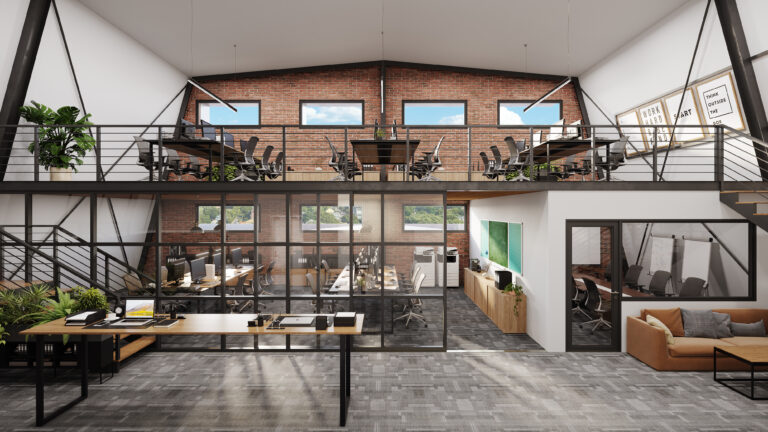
- modern office components
- lower operating costs
Office occupiers increasingly favour:
- premium locations
- high-quality fitouts
- end-of-trip facilities
- amenity
- modern building systems
- energy performance
Older assets therefore increasingly require either repositioning or price competitiveness.
Sydney’s industrial market is shifting from boom to selection
The 2021–2023 industrial market rewarded almost everything.
Extremely low vacancy meant occupiers had little choice.
The 2026 market is more selective.
That is healthy.
Projects now need to demonstrate genuine advantages.
Location alone may not be enough.
Successful industrial developments increasingly require the correct mix of:
- building size
- access
- warehouse clearance
- hardstand
- power
- sustainability
- truck circulation
- office content
- visibility
- timing
What developers and landowners should watch
Several major themes will shape the remainder of 2026.
Western Sydney Airport
The scale of development around the airport will continue increasing as opening approaches.
Bradfield
Advanced manufacturing could create an entirely new commercial property cluster.
Kemps Creek and Mamre Road
These remain among Sydney’s most important logistics development areas.
Industrial vacancy
Watch whether vacancy stabilises as new construction moderates.
Pre-commitments
Developers are increasingly reluctant to build large speculative warehouses without tenant commitment.
Serviced land
The real scarcity remains industrial land that can actually be developed immediately.
Power
Electricity capacity is becoming increasingly important in industrial site selection.
Infill industrial
Established central locations should remain valuable despite growth further west.
Office recovery
Sydney CBD fundamentals are gradually improving, particularly at the premium end.
Sydney is developing two industrial economies
Perhaps the clearest way to understand Sydney’s industrial market is to divide it into two systems.
The first is infill Sydney.
These properties serve the established city.
They depend on proximity.
Their major advantage is location.
The second is Western Sydney logistics.
These properties serve Sydney, New South Wales and often the entire east coast.
Their major advantage is scale.
Both markets are becoming more valuable for completely different reasons.
The bigger Sydney commercial property story
Sydney is entering one of the biggest changes to its economic geography in decades.
For generations, employment and infrastructure were concentrated heavily toward the eastern half of the metropolitan area.
Western Sydney International Airport, Bradfield City, the Aerotropolis, new motorways and enormous industrial development are beginning to rebalance that pattern.
The result will not simply be more warehouses.
It will create an entirely new commercial ecosystem around Western Sydney.
That ecosystem will require:
- manufacturing
- logistics
- offices
- retail
- medical
- hotels
- food production
- defence
- technology
- research
- data infrastructure
- services
- construction
- education
Industrial property is simply the first visible layer.
What this means for Sydney property projects
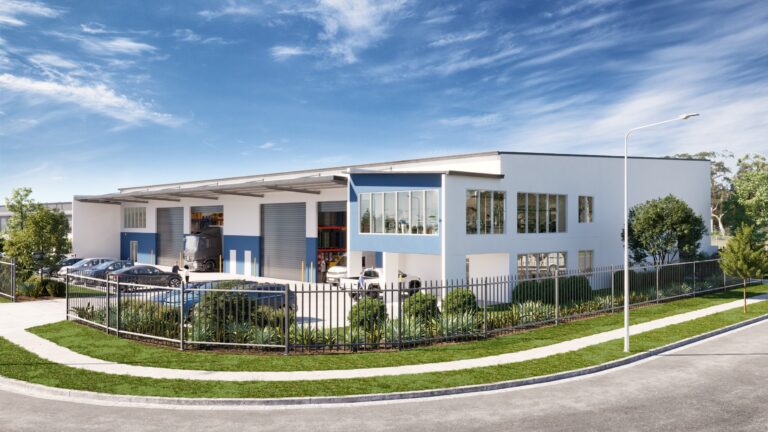
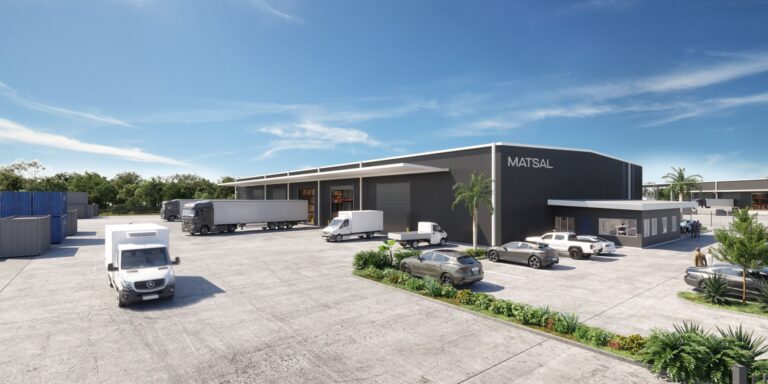
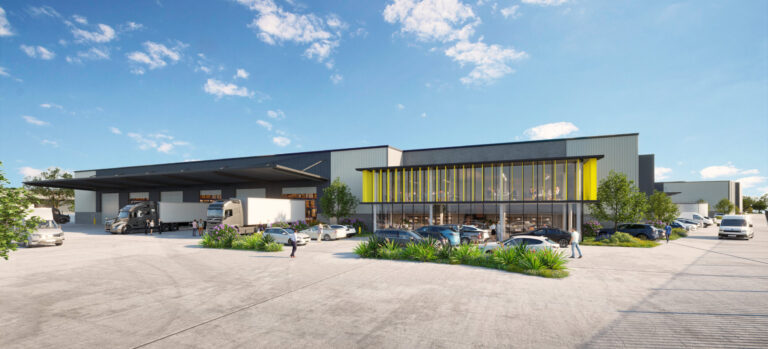
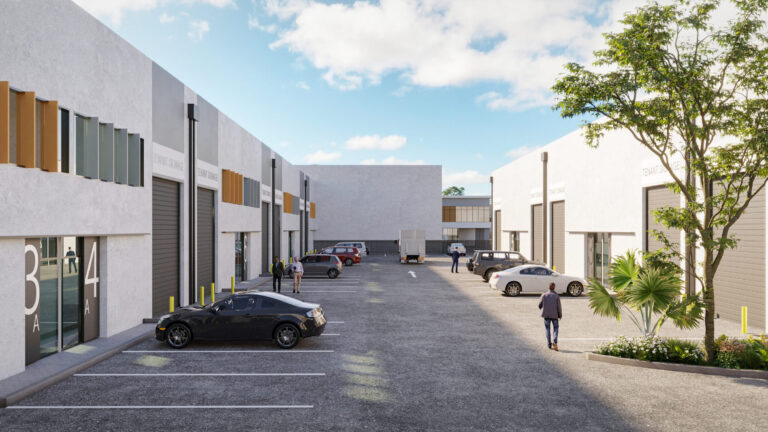
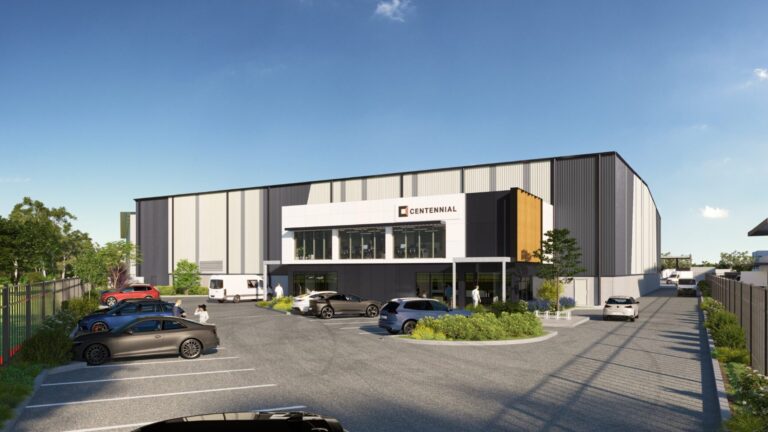
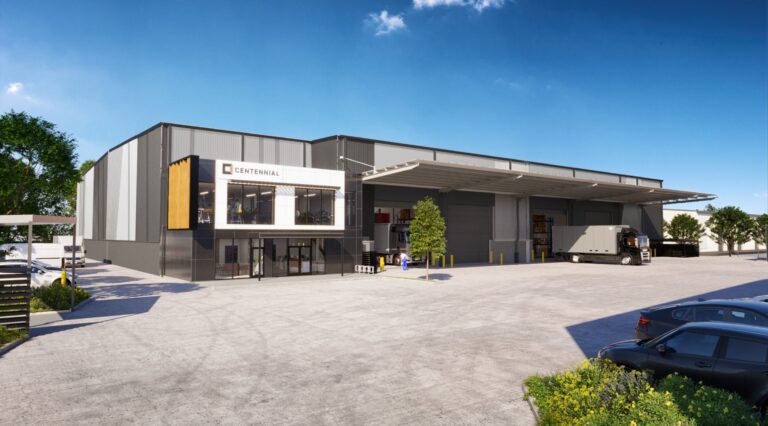
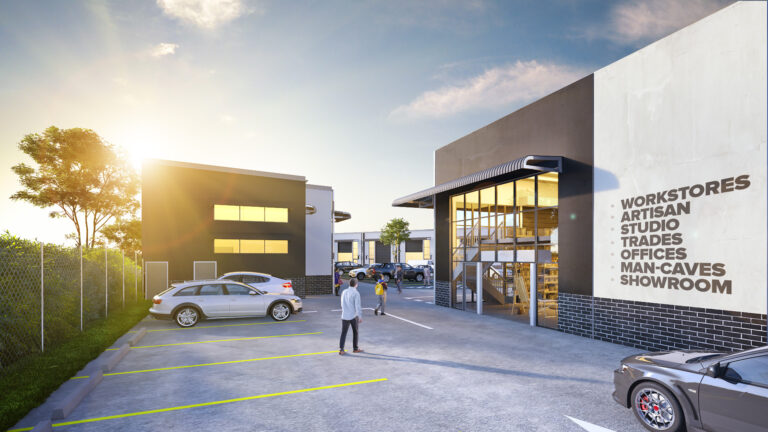
For Sydney industrial and commercial developers, a project increasingly needs to communicate more than the building itself.
Buyers and occupiers want to understand:
- access
- infrastructure
- future surrounding development
- motorway connections
- airport proximity
- hardstand
- truck movements
- building functionality
- neighbouring occupiers
- workforce catchments
- power capability
- future precinct scale
Strong property positioning can help:
- generate pre-lease enquiries before construction
- demonstrate future estate scale
- increase perceived land value
- support land sales
- accelerate industrial unit sales
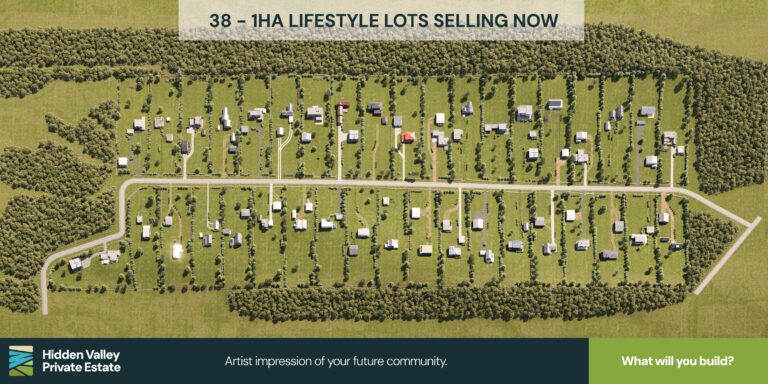
- explain large masterplanned precincts
- communicate infrastructure advantages
- attract investors
- reduce uncertainty before development
- differentiate projects competing for the same occupiers
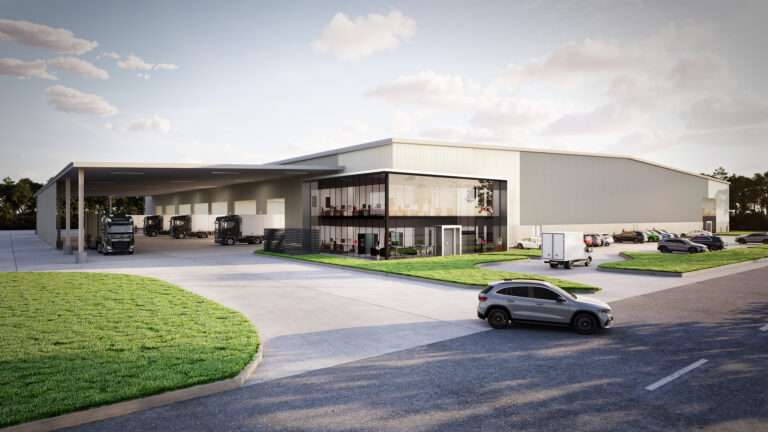
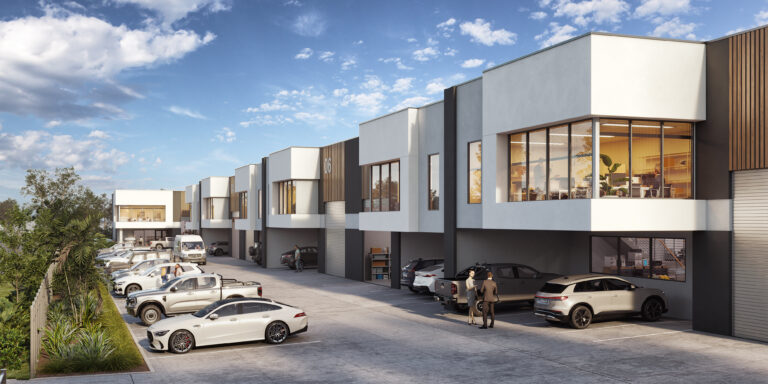
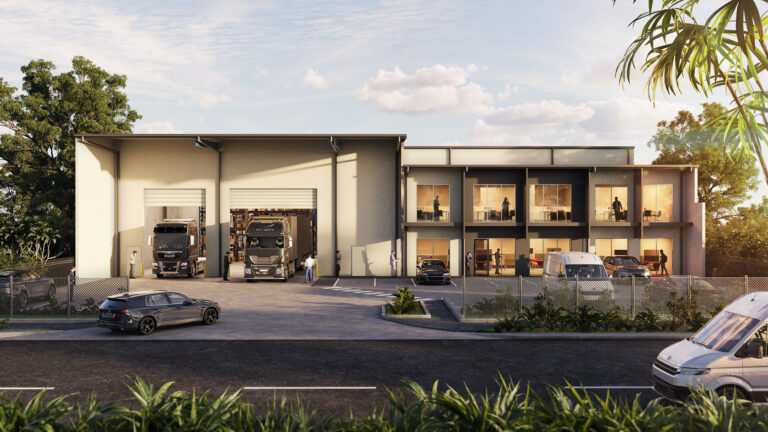
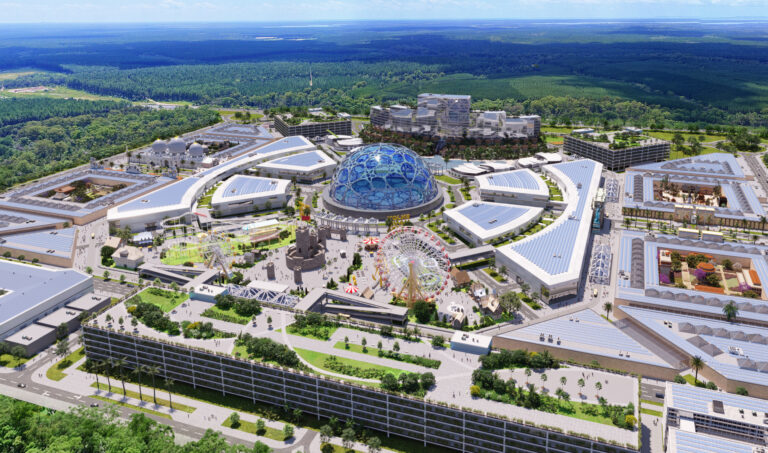
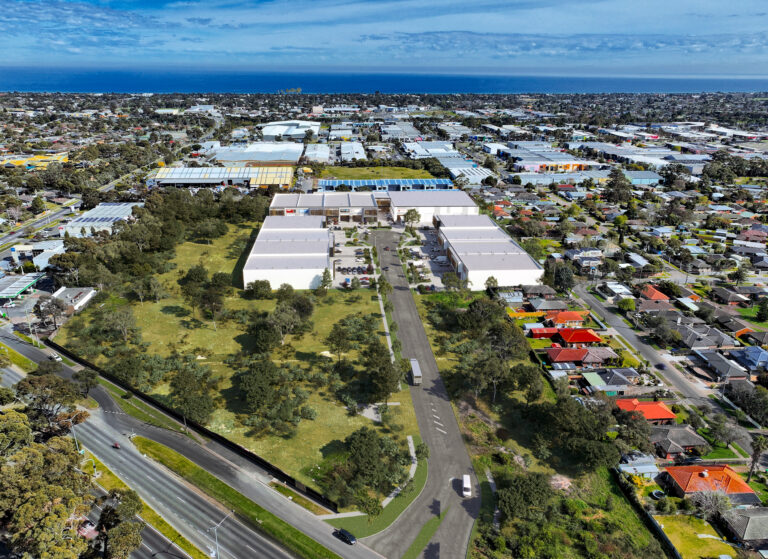
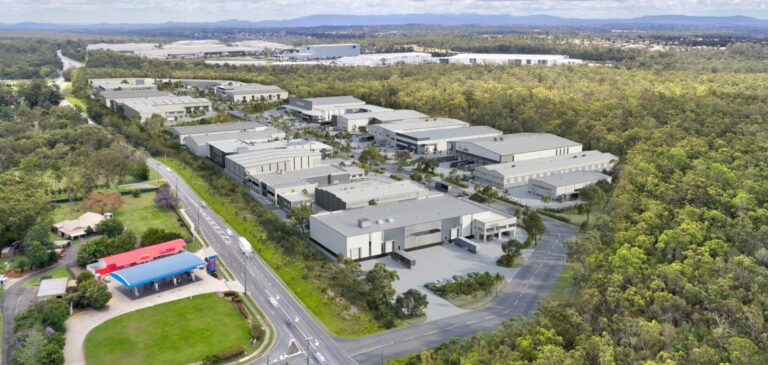
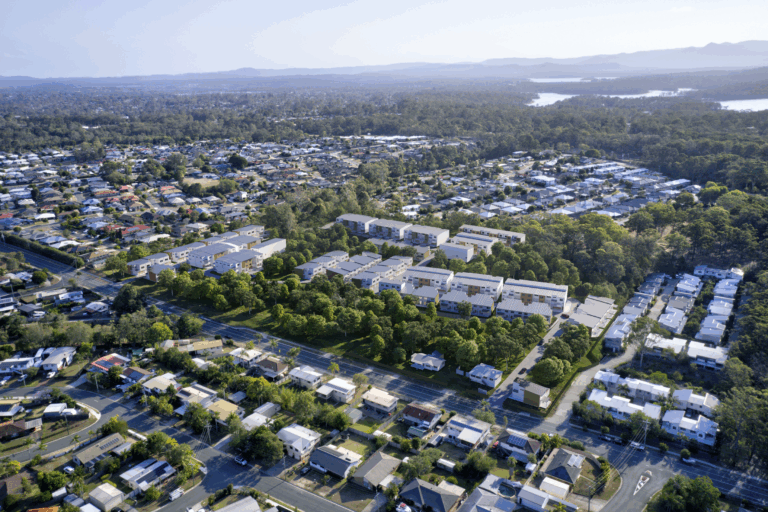
As Sydney’s industrial pipeline becomes larger and more competitive, the projects that are easiest to understand before they exist are often the projects best positioned to build demand early.
Commercial Property Marketing works with commercial and industrial developers across Australia to turn land, plans and future developments into clear property opportunities for buyers, tenants and investors.
More Sydney commercial property resources
For developers, landowners and agents bringing property to market in Sydney, explore Commercial Property Marketing Sydney, Industrial Land Marketing Sydney, 3D Renders Sydney.
For market updates across Australia, visit Commercial Property News Australia.