
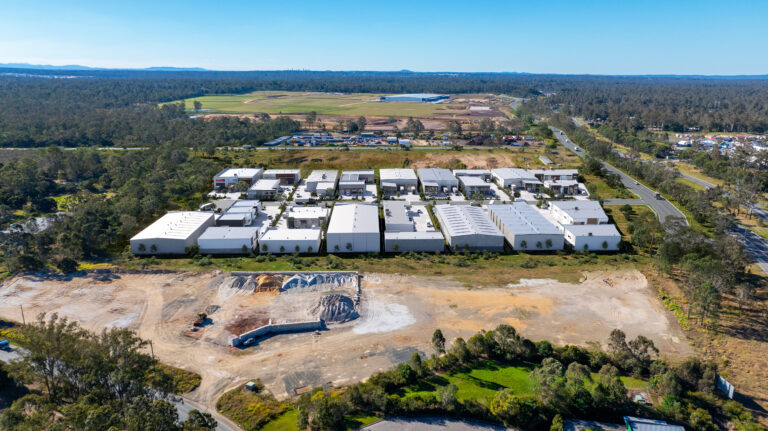
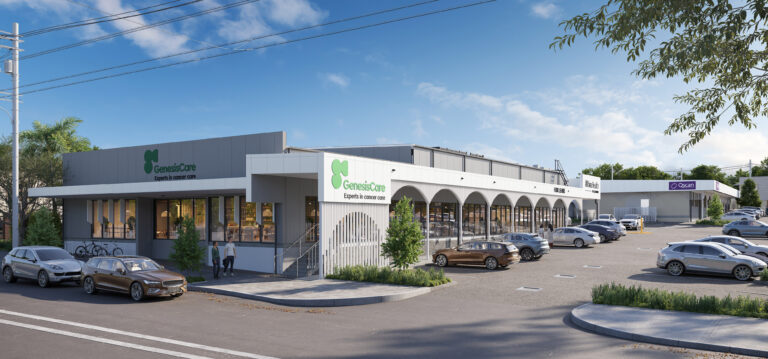
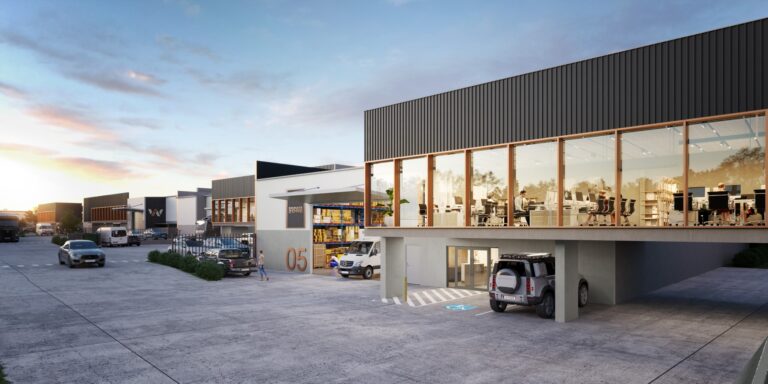
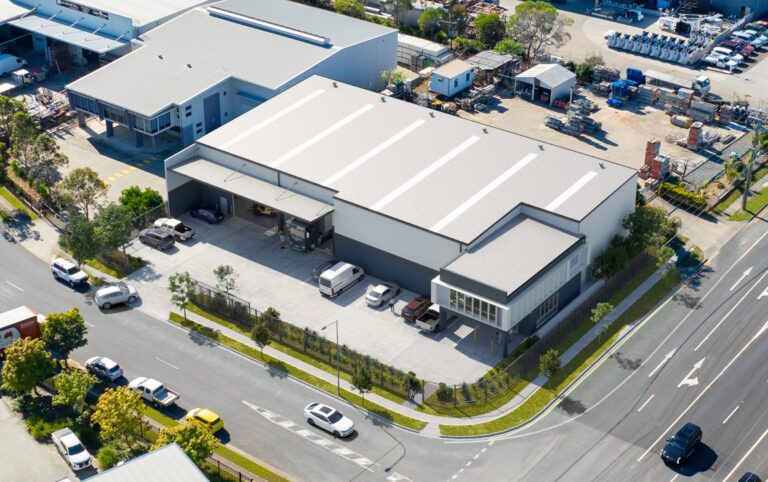
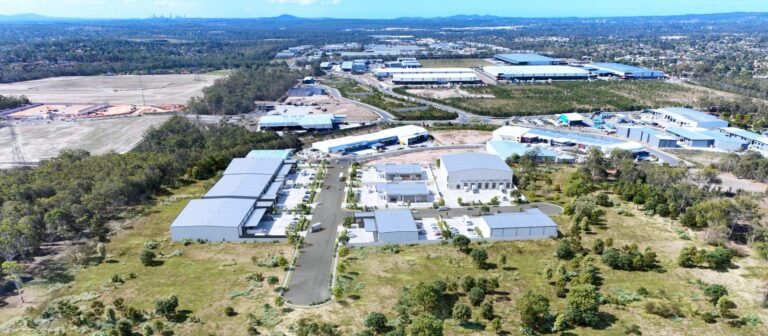
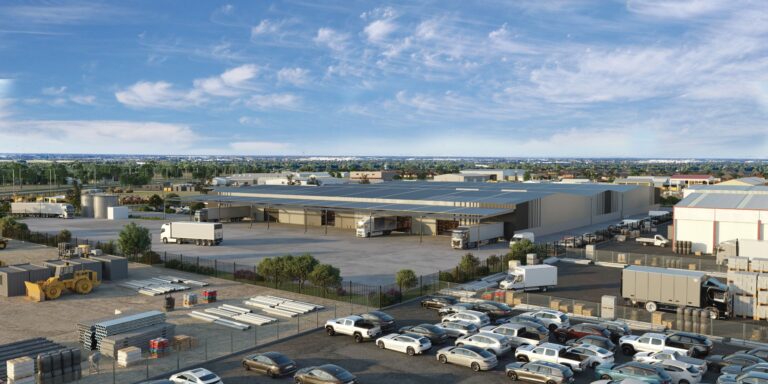
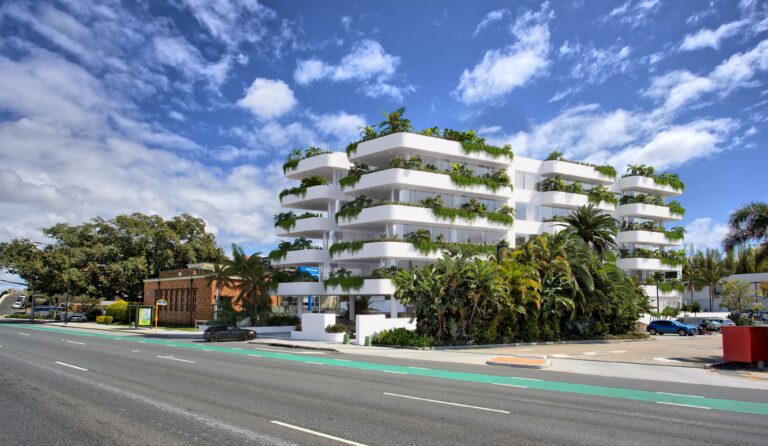
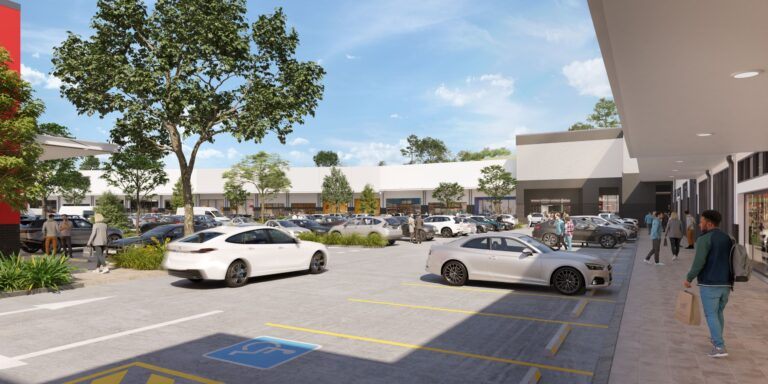


Adelaide commercial and industrial property continues to benefit from manufacturing, defence, logistics and infrastructure investment while serviced industrial land becomes increasingly strategic. Northern Adelaide, Port Adelaide and established metropolitan industrial precincts continue to attract development and occupier activity.
This August 2026 update covers Adelaide industrial property, commercial transactions, development activity, land supply, logistics and major employment precincts. National coverage is available through our Commercial Property News Australia hub.
Adelaide’s commercial and industrial property market moved through August with industrial property once again standing out as one of the strongest parts of the South Australian economy.
The underlying story remains compelling.
Industrial vacancy is low, occupier demand is running ahead of long-term averages, land values are rising, owner-occupiers remain highly active and enormous defence investment is beginning to reshape Adelaide’s northern and western employment corridors.
JLL recorded approximately 128,100 sqm of industrial gross take-up during Q2 2026, well above the recent quarterly average of approximately 94,500 sqm.
Sixteen major occupier moves above 3,000 sqm were recorded during the quarter, while owner-occupiers accounted for an unusually high 46.2% of the space transacted.
Vacancy also remains tight.
JLL measured Adelaide industrial vacancy at approximately 3.8% in Q2 2026, down 0.7 percentage points over the quarter and below the national industrial vacancy rate.
The result is a market where good industrial property remains difficult to replace.
Adelaide industrial demand is running ahead of supply
The Q2 leasing numbers highlight how strongly Adelaide’s industrial economy is performing.
Gross take-up reached approximately 128,100 sqm, compared with a recent quarterly average of around 94,500 sqm.
CBRE similarly described Adelaide leasing activity as strengthening during the second quarter, with annual take-up running well above long-term averages.
It also identified limited serviced land, owner-occupier competition and defence-related investment as major drivers of the market.
That demand is being generated by a broad range of businesses including:
- defence
- advanced manufacturing
- food production
- logistics
- transport
- engineering
- construction supply
- automotive
- trade services
- warehousing
This diversity is one of Adelaide industrial property’s biggest strengths.
Adelaide industrial vacancy fell to around 3.8%
Industrial vacancy tightened across most Adelaide precincts during Q2.
JLL’s national industrial analysis placed Adelaide at approximately 3.8% vacancy, compared with:
- Sydney – 5.8%
- Melbourne – 4.9%
- Brisbane – 4.5%
- Adelaide – 3.8%
- Perth – 2.2%
That places Adelaide among Australia’s tighter major industrial markets.
Importantly, the vacancy figure is not simply being driven by a lack of construction.
A substantial amount of development is occurring.
The issue is that new stock is being absorbed quickly.
Adelaide delivered 88,000 sqm of new industrial space during Q2
Approximately 88,000 sqm of new industrial supply completed during Q2 2026.
Another:
- 104,000 sqm was under construction
- 91,200 sqm had approved plans
- 8,200 sqm had plans submitted
at the end of the quarter.
The under-construction pipeline was approximately 47.7% pre-committed.
This is important.
Adelaide is not simply experiencing scarcity because nothing is being built.
New development is occurring at meaningful scale, but occupier demand continues to absorb much of that supply.
Industrial rents are still rising
Rental growth remained positive through the second quarter.
JLL reported average prime net face rents increasing approximately:
- 3.9% quarter-on-quarter in the Outer North
- 4.7% quarter-on-quarter in the Outer South
CBRE also reported that tight vacancy continues to underpin rental growth, particularly for super-prime and prime industrial assets.
This indicates that while Adelaide is considerably smaller than Sydney or Melbourne, the same flight-to-quality trend is occurring.
Occupiers are willing to pay premiums for modern property offering:
- high clearance
- good truck circulation
- substantial power
- quality offices
- efficient loading
- hardstand
- good arterial access
Industrial land values continue climbing
Land is becoming the more important part of the Adelaide industrial story.
JLL reported that values for approximately 2,000 sqm industrial lots increased across every major Adelaide precinct during Q2.
Annual increases ranged between approximately 5.3% and 12.5%.
CBRE’s earlier Q1 data showed even stronger growth in some lot categories.
Approximately 0.25-hectare industrial lots averaged around $1,056 per sqm, an increase of approximately 17.4% year-on-year.
Larger 1.6-hectare sites averaged around $728 per sqm, up approximately 22.6% annually.
For developers, these figures matter enormously.
Rising industrial land values increase replacement costs and ultimately feed through into higher rents and sale prices for newly completed property.
Edinburgh records the largest major occupier commitment
The largest industrial occupier deal recorded by JLL during Q2 was a major commitment at 2–32 Essington Drive, Edinburgh.
Safcol Australia committed to a new approximately 24,000 sqm design-and-construct facility.
The scale of the project demonstrates the increasing importance of Adelaide’s Outer North.
Edinburgh and surrounding areas benefit from proximity to:
- RAAF Base Edinburgh
- Edinburgh Defence Precinct
- Northern Connector
- Port Wakefield Road
- major residential growth
- established manufacturing
- defence industries
This corridor is increasingly one of Adelaide’s defining employment areas.
Adelaide’s northern industrial corridor is becoming a defence economy
Industrial property in Adelaide’s north can no longer be viewed purely through conventional warehouse fundamentals.
The region is becoming one of Australia’s most important defence and advanced manufacturing clusters.
Important locations include:
- Edinburgh
- Elizabeth
- Salisbury
- Direk
- Burton
- Pooraka
- Wingfield
The expansion of defence spending creates demand not only from prime contractors but from entire supply chains.
That includes:
- fabrication
- electronics
- precision manufacturing
- robotics
- engineering
- testing
- logistics
- specialist maintenance
- secure storage
The property requirements of these users can be highly specialised.
Wingfield remains one of Adelaide’s key established industrial precincts
August produced a significant transaction at 18–20 Production Road, Wingfield.
The property sold on 20 August 2026.
It comprises approximately:
- 1,139 sqm of building
- 3,082 sqm of land
- dual-street access
- vacant possession
This is the type of asset increasingly difficult to recreate within an established industrial location.
The large land component and dual access provide flexibility for:
- manufacturing
- transport
- storage
- redevelopment
- owner-occupation
Wingfield’s proximity to the Port Adelaide industrial area and major north-south transport routes continues to support demand.
Larger landholdings remain particularly valuable
The Wingfield transaction illustrates an important Adelaide trend.
Industrial buyers increasingly value land efficiency and flexibility.
Modern industrial properties often push toward high site coverage.
Older sites can provide considerably more:
- hardstand
- vehicle movement
- yard space
- outdoor storage
That can make them extremely valuable to industries that cannot operate efficiently from a conventional high-coverage warehouse.
Lonsdale records a $2.15 million industrial sale
One of the clearest confirmed-price August transactions occurred at 3A Aldershot Road, Lonsdale.
The property sold on 21 August 2026 for $2.15 million.
It comprises approximately:
- 865 sqm of building
- 2,030 sqm of land
- three-phase power
- hardstand
The property was leased until October 2026 at the time of sale.
On a simple building-area basis, the transaction equates to approximately $2,486 per sqm.
As always, that rate should not be interpreted independently of the substantial land component and underlying site value.
Lonsdale remains strategically important to Adelaide’s south
Lonsdale plays a very different role from Edinburgh or Wingfield.
It serves Adelaide’s southern metropolitan economy and provides industrial property close to:
- Noarlunga
- Hallett Cove
- Morphett Vale
- southern residential growth
- major transport corridors
The Outer South also recorded Adelaide’s strongest quarterly industrial rental growth during Q2, at approximately 4.7%.
That suggests businesses in southern Adelaide are competing for a relatively limited industrial supply.
Edwardstown remains a valuable infill industrial market
August also produced transactions in Edwardstown.
1 Gumbowie Avenue, Edwardstown sold on 20 August 2026.
The property comprises approximately 1,105 sqm.
Another property at 8 Erudina Avenue, Edwardstown, comprising approximately 190 sqm, sold on 27 August.
Edwardstown has an entirely different appeal to Adelaide’s large outer industrial estates.
Its advantage is proximity.
Businesses operating here gain access to established inner and middle-ring residential catchments.
For trades, service businesses and local distribution, that can be more important than access to cheaper outer-metropolitan land.
Infill industrial land is becoming increasingly difficult to replace
Adelaide has relatively large outer industrial areas.
But central industrial land is much more constrained.
Precincts such as:
- Edwardstown
- Mile End
- Thebarton
- Richmond
- Brompton
- Hindmarsh
- Beverley
are increasingly influenced by competing land uses.
Residential and mixed-use redevelopment can gradually remove older industrial stock.
Once that happens, the land rarely returns to industrial use.
This creates a long-term scarcity premium for well-located infill industrial property.
Brompton demonstrates the value of CBD-fringe industrial property
93 Torrens Road, Brompton sold during August.
The property comprises approximately:
- 544 sqm of land
- 234 sqm of net lettable area
- additional shed and carport improvements
It was marketed as a fully leased investment close to the Adelaide CBD.
Brompton is particularly interesting because the area is transitioning.
Industrial and commercial property sits increasingly close to residential redevelopment.
That creates both commercial demand and future redevelopment potential.
Medindie records another substantial August sale
19 Main North Road, Medindie sold on 19 August 2026.
The property comprises approximately 864 sqm and sits in a high-exposure position on Main North Road.
Main North Road remains a critical commercial corridor connecting Adelaide CBD with the northern metropolitan area.
Properties along major arterial roads can attract a broader range of users because of their combination of:
- exposure
- access
- commercial zoning
- redevelopment potential
Bought & Sold
August produced a broad mix of industrial and commercial transactions.
18–20 Production Road, Wingfield
- Sold: 20 August 2026
- Building: approximately 1,139 sqm
- Land: approximately 3,082 sqm
- Vacant possession
- Dual street access via Production Road and Assembly Road
3A Aldershot Road, Lonsdale
- Sold: 21 August 2026
- Price: $2.15 million
- Building: approximately 865 sqm
- Land: approximately 2,030 sqm
- Three-phase power
- Hardstand
- Leased until October 2026
1 Gumbowie Avenue, Edwardstown
- Sold: 20 August 2026
- Building: approximately 1,105 sqm
- Established inner-southern industrial location
8 Erudina Avenue, Edwardstown
- Sold: 27 August 2026
- Building: approximately 190 sqm
- Smaller infill industrial property
19 Main North Road, Medindie
- Sold: 19 August 2026
- Building: approximately 864 sqm
- High-profile Main North Road position
93 Torrens Road, Brompton
- Sold: August 2026
- Building/NLA: approximately 234 sqm
- Land: approximately 544 sqm
- Fully leased city-fringe investment
13A Seaforth Avenue, Somerton Park
- Sold: 21 August 2026
- Building: approximately 434 sqm
- Established southern infill industrial location
52–56 Fullarton Road, Norwood
- Sold: 7 August 2026
- Building: approximately 419 sqm
- Dual-income character office investment
- Premium city-fringe location
204–208 Main North Road, Prospect
- Sold: 25 August 2026
- Land: approximately 2,992 sqm
- Former service station site
- Commercial zoning
- Significant redevelopment opportunity
90–100 Grenfell Street, Adelaide CBD
- Sold: 26 August 2026
- Approximately 500 parking bays
- Seven-level car park
- Approximately 2,416 sqm site
- Future CBD development potential
Prospect redevelopment land highlights arterial-road opportunity
The sale of 204–208 Main North Road, Prospect is particularly interesting.
The former service-station property comprises approximately 2,992 sqm and was marketed as a blank-canvas commercial redevelopment opportunity.
Large commercial sites close to established population catchments are becoming increasingly difficult to assemble.
Main North Road exposure expands the potential tenant and buyer pool.
Possible future uses could include, subject to planning:
- commercial
- showroom
- medical
- retail
- mixed-use development
This type of site increasingly derives value from flexibility rather than its existing improvements.
The Outer North is recording meaningful rental growth
Prime industrial rents in Adelaide’s Outer North increased approximately 3.9% during Q2 alone.
That is particularly important given the scale of future supply expected across northern Adelaide.
It suggests demand is not simply absorbing older stock.
Occupiers are actively competing for higher-quality modern facilities.
The defence and manufacturing economy is likely contributing directly to that trend.
Defence HQ adds another major commercial property catalyst
At the end of August, construction commenced on a major new Defence HQ at Lot Fourteen.
The project is expected to help double the workforce at the precinct to more than 3,000 people.
BAE Systems Australia will establish its new South Australian headquarters within the development.
This strengthens the connection between Adelaide CBD’s innovation economy and the major defence manufacturing clusters at:
- Osborne
- Edinburgh
- Tonsley
The significance goes beyond one office building.
Defence HQ is effectively creating a central commercial interface for South Australia’s wider defence industry.
Lot Fourteen is increasingly becoming Adelaide’s defence and technology headquarters
Lot Fourteen already functions as a major innovation precinct.
The addition of Defence HQ strengthens its role in:
- defence technology
- research
- cyber
- advanced manufacturing
- commercialisation
- space
- education
This creates high-value commercial property demand rather than conventional office demand.
Businesses in these sectors often seek proximity to:
- government
- research institutions
- universities
- major contractors
- skilled labour
That clustering can become self-reinforcing.
Defence supply chains create unusually sticky industrial tenants
Industrial property linked to defence can have characteristics that are particularly attractive to investors.
Once businesses invest in:
- specialised machinery
- secure infrastructure
- cranes
- power
- clean manufacturing
- certifications
relocation becomes expensive.
That can encourage long-term occupancy.
It also means buildings specifically designed around advanced manufacturing can develop substantial embedded value.
Wingfield, Gillman and Regency Park could benefit significantly
These established industrial precincts sit between Adelaide CBD, Port Adelaide and the northern defence corridor.
That geography is strategically useful.
They already contain:
- manufacturers
- freight operators
- engineering businesses
- logistics facilities
- heavy industry
As defence and advanced manufacturing expand, these locations could experience spillover demand.
Industrial land scarcity remains Adelaide’s key development constraint
CBRE has identified limited serviced land as one of the factors continuing to push Adelaide industrial values higher.
This distinction matters.
There may be land physically available around Adelaide.
But development-ready industrial land requires:
- correct zoning
- subdivision
- roads
- sewer
- power
- stormwater
- planning
- servicing
The time required to create that supply means the market cannot respond instantly when demand increases.
Owner-occupiers are competing directly with developers and investors
Almost 46.2% of Q2 major industrial take-up was attributable to owner-occupiers.
That is unusually significant.
Owner-occupiers create a different market dynamic.
They often evaluate property based on:
- operational security
- rent savings
- business growth
- long-term ownership
- superannuation structures
- asset appreciation
rather than purely on property yield.
This helps explain why Adelaide industrial land values can continue rising strongly even when investment yields are relatively stable.
Adelaide’s industrial development pipeline remains healthy
Twelve major industrial projects totalling approximately 104,000 sqm were under construction at the end of Q2.
Eight additional approved projects represented approximately 91,200 sqm.
That creates a reasonable supply pipeline.
But the combination of strong take-up and meaningful pre-commitments suggests Adelaide is unlikely to experience the type of oversupply appearing in some larger east-coast precincts.
Development Applications, Approvals & Projects Progressing Through Planning
Several major developments are worth watching.
Safcol Australia – Edinburgh
- Approximately 24,000 sqm
- Design-and-construct industrial facility
- 2–32 Essington Drive
- Largest major Adelaide occupier commitment recorded by JLL in Q2 2026
Defence HQ – Lot Fourteen
- Construction commenced by 31 August 2026
- New defence and technology headquarters
- BAE Systems Australia to establish its SA headquarters
- Precinct workforce expected to grow beyond 3,000
Adelaide industrial development pipeline
- 104,000 sqm under construction
- 91,200 sqm with plans approved
- 8,200 sqm plans submitted
- Under-construction pipeline approximately 47.7% pre-committed
204–208 Main North Road, Prospect
- Approximately 2,992 sqm redevelopment site
- Commercial zoning
- Sold during August
- Significant future redevelopment potential
Adelaide CBD office vacancy has fallen to its lowest level since 2020
The Adelaide CBD office market is also showing signs of improvement.
JLL recorded headline vacancy falling to approximately 14.5% during Q2 2026.
That was the lowest level recorded since Q1 2020.
Net absorption during Q2 was modest at approximately 500 sqm, following approximately 4,500 sqm in Q1.
The more important issue is future supply.
Adelaide’s office development pipeline is slowing
A slower CBD office construction pipeline should help existing vacancy gradually rebalance.
This is particularly important because Adelaide’s office market remains highly segmented.
Quality prime space can perform much better than older secondary buildings.
Tenants increasingly prioritise:
- sustainability
- building amenity
- modern services
- premium locations
- employee experience
That means improving headline vacancy will not benefit every building equally.
The Defence HQ project strengthens prime office demand
The Lot Fourteen project is also important for Adelaide’s CBD office market.
BAE Systems Australia establishing its South Australian headquarters there demonstrates the type of high-value tenant Adelaide increasingly wants to attract.
Defence, technology and engineering companies often require sophisticated workplaces capable of supporting:
- secure systems
- collaboration
- research
- specialist staff
This can support demand for premium-grade commercial space.
Adelaide’s population and employment growth are increasingly moving north
Northern Adelaide represents one of the city’s largest long-term growth opportunities.
Population growth and major employment investment increasingly reinforce each other.
The corridor contains:
- RAAF Base Edinburgh
- defence manufacturing
- industrial estates
- Elizabeth
- Salisbury
- residential growth
- major transport infrastructure
That creates a much more balanced urban economy than purely residential expansion.
Elizabeth is gradually becoming a larger commercial centre
The broader northern growth story is already influencing commercial development.
Construction recently commenced on an 87-room Quest apartment hotel at Elizabeth, designed partly to service the nearby Edinburgh Defence Precinct and RAAF Base Edinburgh.
The project is expected to open in 2028.
This is exactly how major employment investment translates into wider commercial property demand.
Industrial jobs create demand for:
- accommodation
- retail
- hospitality
- offices
- medical
- services
Adelaide’s industrial market remains considerably more affordable than Sydney
Affordability remains an important competitive advantage.
A manufacturing company can often secure substantially more:
- land
- hardstand
- power
- workshop space
in Adelaide than in Sydney or Melbourne.
When a business does not require an east-coast metropolitan location, this can materially alter operating economics.
Combined with defence investment and Adelaide’s established manufacturing skills, that creates a strong proposition for future industrial growth.
Advanced manufacturing could become the defining Adelaide industrial sector
South Australia has spent decades building capability in:
- defence
- automotive engineering
- electronics
- aerospace
- precision manufacturing
- research
The decline of traditional automotive manufacturing did not erase that knowledge base.
Instead, much of it is being redirected toward higher-value sectors.
The commercial property implications could be significant.
Advanced manufacturing facilities tend to require more specialised buildings and longer occupancy periods than generic logistics warehouses.
Power capacity will increasingly influence property value
Industrial development is becoming more electricity intensive.
Potential growth sectors include:
- defence
- automation
- food processing
- advanced manufacturing
- robotics
- data
- electrified transport
For Adelaide developers, providing sufficient power could become as important as warehouse clearance or truck access.
Sites without appropriate electrical infrastructure may struggle to capture higher-value occupiers.
What developers and landowners should watch
Several themes look particularly important through the remainder of 2026.
Defence
AUKUS, Osborne, Edinburgh and Defence HQ are creating a multi-decade industrial growth story.
Industrial vacancy
At around 3.8%, the market remains relatively tight.
Industrial rents
The Outer North and Outer South continue recording meaningful growth.
Industrial land values
Limited serviced land and owner-occupier competition continue pushing prices higher.
Wingfield and Regency Park
Established northern industrial property remains difficult to replace.
Edinburgh
Large new facilities and defence investment continue strengthening the precinct.
Infill industrial
Edwardstown, Brompton and other inner locations retain scarcity value.
Advanced manufacturing
Increasingly important to Adelaide’s industrial economy.
Adelaide CBD
Office vacancy is gradually improving while new supply slows.
The bigger Adelaide commercial property story
Adelaide is increasingly becoming one of Australia’s most interesting industrial markets because its economic structure is changing.
For decades the city was associated with traditional manufacturing.
The new industrial economy is increasingly based around:
- defence
- advanced manufacturing
- aerospace
- engineering
- logistics
- technology
- research
That does not reduce demand for industrial property.
It increases the requirement for better industrial property.
Future occupiers need more than four walls and a roller door.
They increasingly require:
- power
- security
- specialised manufacturing areas
- sophisticated offices
- heavy-duty infrastructure
- logistics access
- proximity to skilled workers
The developers who understand that transition are likely to capture the strongest opportunities.
What this means for Adelaide property projects
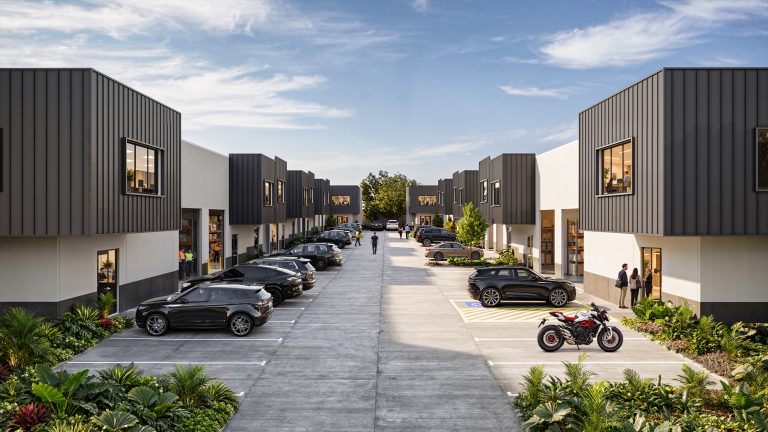
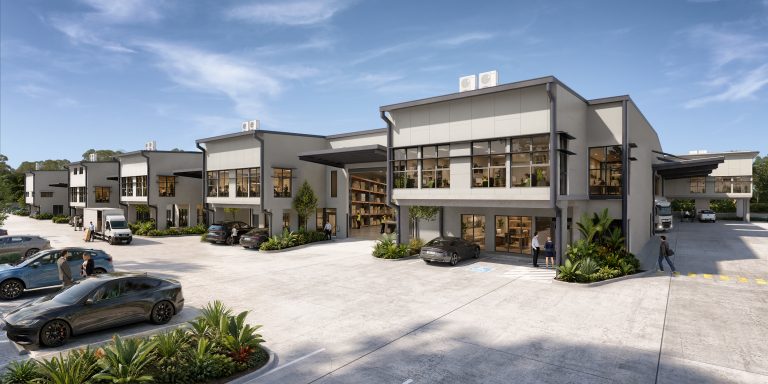
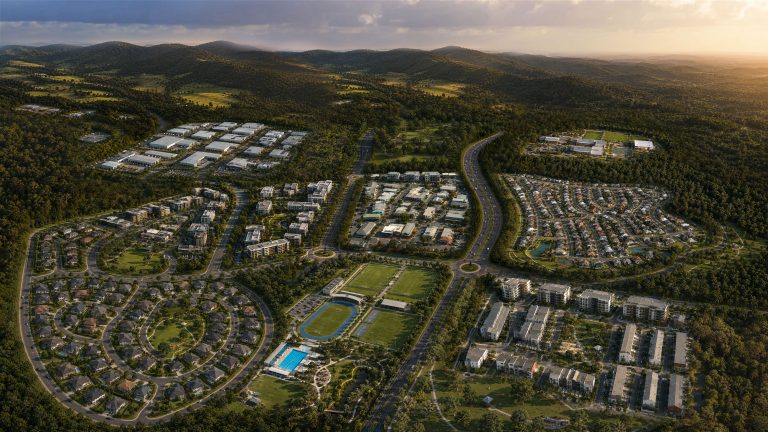
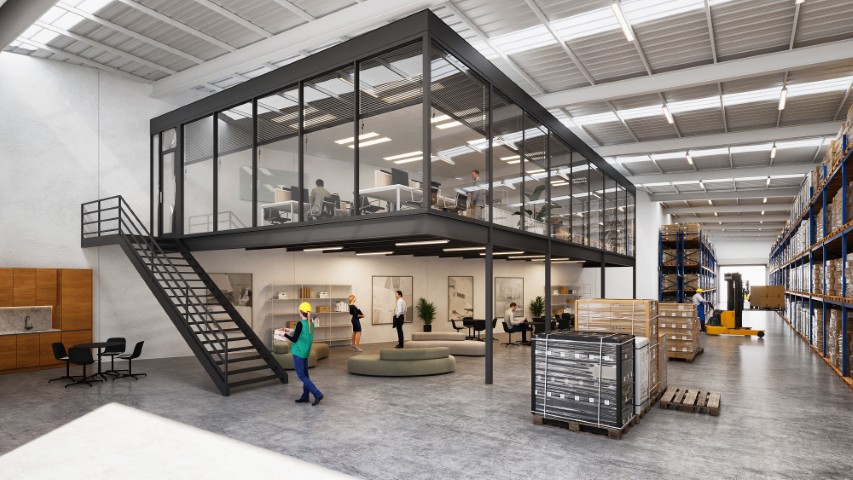
For Adelaide industrial and commercial developers, the opportunity increasingly lies in communicating how a project fits into the city’s new economic structure.
Strong project positioning can help:
- increase perceived land value
- demonstrate future industrial estates
- explain large employment precincts
- attract defence and manufacturing occupiers
- generate pre-leasing demand
- secure owner-occupier sales
- highlight power and specialised infrastructure
- communicate truck access and hardstand
- show proximity to defence assets
- support investor presentations
- simplify complex masterplans
- reduce uncertainty before construction
As billions of dollars of defence and industrial investment flow into South Australia, property projects able to clearly show where they fit within that growth story will have a significant advantage.
Commercial Property Marketing works with commercial and industrial developers across Australia to turn land, plans and future developments into clear property opportunities for buyers, tenants and investors.
More Adelaide commercial property resources
For developers, landowners and agents bringing property to market in Adelaide, explore Commercial Property Marketing Adelaide, Industrial Land Marketing Adelaide, 3D Renders Adelaide.
For market updates across Australia, visit Commercial Property News Australia.