
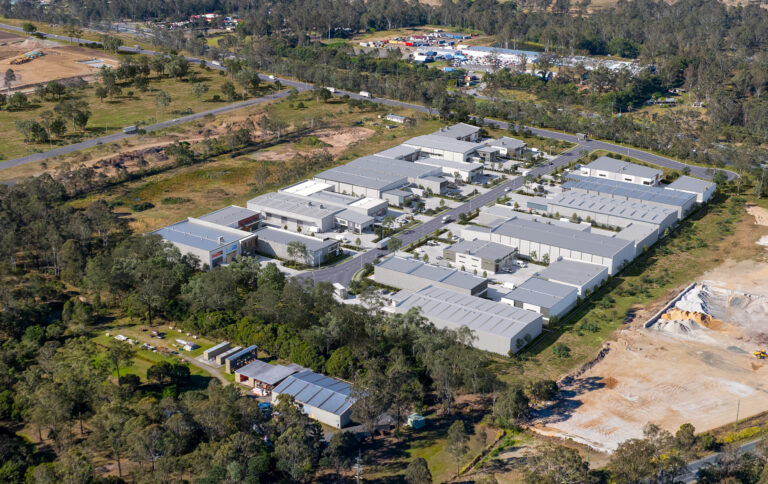
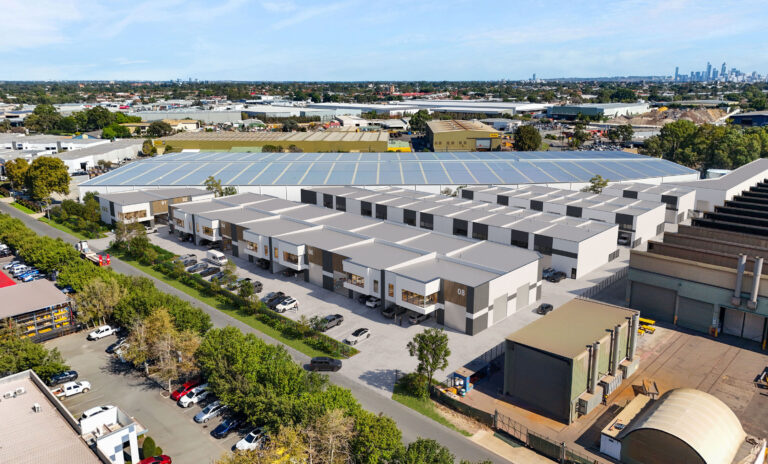
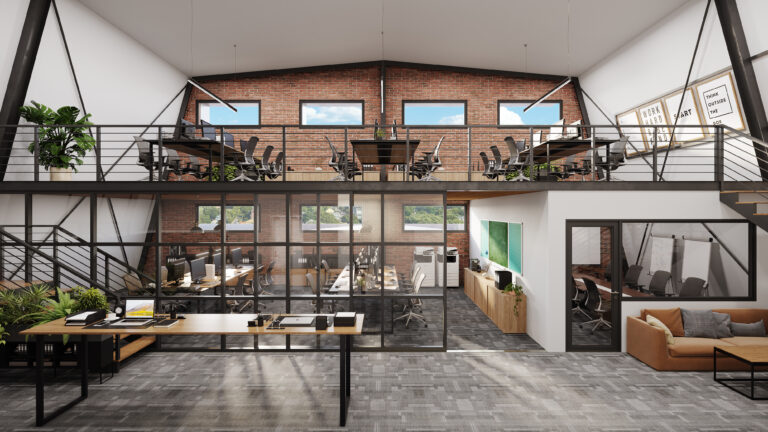
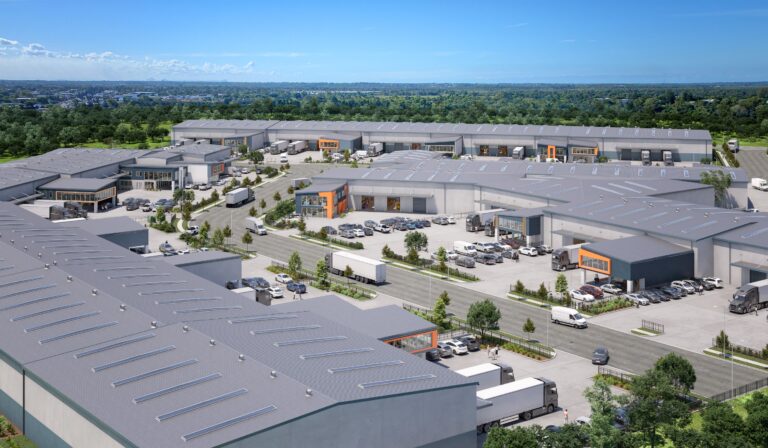



Melbourne commercial and industrial property continues to adjust to a more balanced leasing environment while strategically located industrial land remains difficult to replace. Major logistics corridors in Melbourne’s west, north and south-east continue to attract occupiers, developers and institutional capital.
This August 2026 update tracks Melbourne industrial property, commercial transactions, logistics development, vacancy, rents, land supply and major development activity. Explore broader national coverage through our Commercial Property News Australia hub.
Melbourne’s commercial and industrial property market moved through August with a clear split developing between sectors.
Industrial and logistics property remains one of the strongest parts of the market, supported by elevated occupier demand, manufacturing activity, population growth and Melbourne’s enormous western and northern employment corridors.
The CBD office market, by comparison, remains challenging, with vacancy still sitting at historically high levels despite improving absorption in some datasets and a rapidly shrinking new-development pipeline.
For industrial property, however, the broader story is considerably stronger.
Melbourne recorded approximately 443,100 sqm of industrial gross take-up during Q2 2026, taking first-half leasing volumes to around 70.8% of the entire 2025 result.
Around half of that quarterly activity occurred in Melbourne’s west.
Manufacturing was the largest occupier category, followed by transport, postal and warehousing businesses and retail-related logistics.
At the same time, industrial vacancy has begun tightening again across many precincts as speculative development slows.
The result is a market moving away from the exceptional pandemic-era boom and into a more selective but fundamentally strong phase.
Melbourne remains Australia’s largest industrial property market
Melbourne now contains approximately 30.6 million sqm of industrial stock, making it the largest industrial market in Australia.
JLL measured Melbourne’s industrial vacancy rate at approximately 4.9% during Q2 2026, below Sydney but above the exceptionally tight Perth market.
Importantly, vacancy fell across most Melbourne precincts during the quarter.
That suggests the increase in vacancy seen through the earlier part of the cycle may be approaching its peak.
New industrial supply is also becoming more subdued as developers reduce speculative construction and require stronger tenant commitments before proceeding.
This combination could tighten the market again faster than some occupiers expect.
Melbourne industrial leasing demand is running well above historical averages
The most important number in the August market data may be the 443,100 sqm of gross industrial take-up recorded during Q2.
That is significantly above Melbourne’s long-term quarterly average.
Nationally, Melbourne accounted for approximately 37.6% of industrial leasing activity during the quarter.
That is a substantial share.
It reinforces Melbourne’s position as Australia’s largest and most diversified industrial market.
Demand is coming from far more than conventional logistics businesses.
Major occupier sectors include:
- manufacturing
- transport and logistics
- postal and freight
- retail distribution
- automotive
- food and beverage
- construction supply
- e-commerce
- storage
- advanced manufacturing
That diversification reduces reliance on any single part of the economy.
Melbourne’s west remains the engine room of industrial development
The western industrial corridor remains the dominant part of Melbourne’s logistics market.
Key precincts include:
- Truganina
- Derrimut
- Laverton North
- Ravenhall
- Altona
- Brooklyn
- Tarneit
- Wyndham
These areas benefit from a combination of:
- large industrial landholdings
- Western Ring Road access
- Princes Freeway
- Western Freeway
- proximity to the Port of Melbourne
- rapidly growing residential populations
- major distribution infrastructure
Around half of Melbourne’s Q2 industrial leasing activity occurred in the western precincts.
That concentration is unlikely to change significantly.
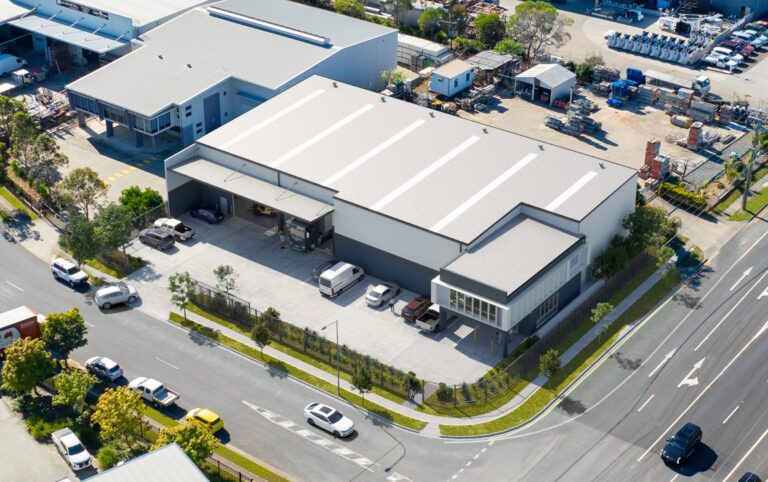
The west has the scale required to accommodate the increasingly large warehouses demanded by national retailers, manufacturers and logistics operators.
Truganina continues to attract national distribution operations
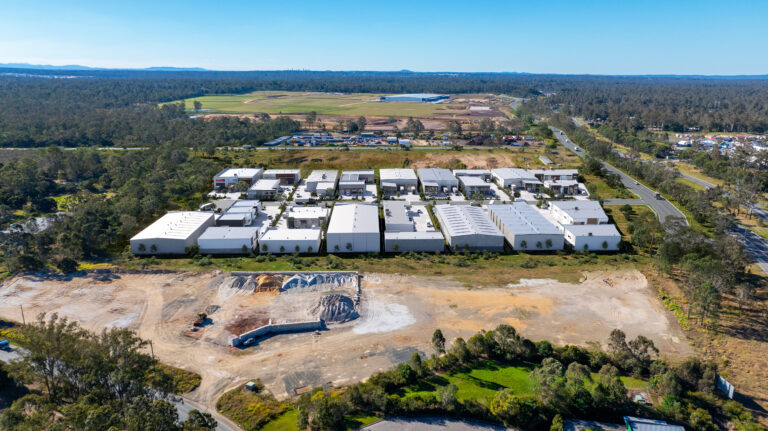
A recent example came at 12 Rosebride Place, Truganina, within Axiom Industrial Estate.
The House of Golf leased a newly completed 3,210 sqm warehouse and office facility for its national distribution operations.
The company is expanding its logistics footprint to support continued Australian growth.
This is a useful example of the type of occupier driving Melbourne’s west.
Not every tenant requires a 30,000 sqm distribution centre.
There remains strong demand for high-quality facilities in the 2,000–5,000 sqm range from growing national businesses.
Manufacturing remains surprisingly important to Melbourne industrial demand
One of the most interesting aspects of the 2026 leasing data is the strength of manufacturing.
Manufacturing was the largest industrial occupier sector in Melbourne during Q2.
That matters because manufacturing tends to create different property requirements from pure warehousing.
Manufacturers often require:
- substantial power
- gas
- cranes
- reinforced slabs
- multiple roller doors
- ventilation
- larger hardstand
- specialised loading
- secure yards
The strength of manufacturing demand therefore creates opportunities for developers capable of delivering more specialised industrial buildings.
Dandenong South remains Melbourne’s dominant south-east industrial market
While the west receives much of the attention, Dandenong South remains one of the most important industrial precincts in Victoria.
August continued to produce transaction activity.
2 Luisa Avenue, Dandenong South sold on 28 August.
The industrial facility comprises approximately 630 sqm.
Nearby, 22A and 22B Healey Road, Dandenong South sold on 17 August.
The combined industrial accommodation comprises approximately 468 sqm.
Dandenong South benefits from an enormous established ecosystem of:
- manufacturers
- logistics operators
- engineering businesses
- food production
- automotive suppliers
- construction businesses
- trade services
This clustering itself becomes a competitive advantage.
Businesses often need suppliers, workers and customers nearby.
Hallam continues to attract industrial investors
Another substantial August sale occurred at Warehouses 12 and 14, 12–14 Decor Drive, Hallam.
The combined property comprises approximately 1,092 sqm and sold on 21 August.
The asset consists of two industrial warehouses, providing flexibility for investment or future occupation.
Nearby, Units 1 and 2, 9 National Drive, Hallam sold on 18 August.
The two properties comprise approximately 1,081 sqm and were marketed as a multi-tenanted industrial investment returning around $179,165 per annum plus GST and outgoings.
This demonstrates continued demand for income-producing industrial investments beneath the institutional end of the market.
Carrum Downs remains an important south-east industrial growth area
A significant industrial property at 6 Frankston Gardens Drive, Carrum Downs sold on 6 August.
The property comprises approximately 1,216 sqm and sits close to Frankston-Dandenong Road and Peninsula Link.
Carrum Downs has become increasingly important as industrial development extends south.
It benefits from:
- Peninsula Link
- EastLink access
- Frankston
- Mornington Peninsula
- Dandenong
- substantial residential growth
The precinct supports a broad range of businesses including manufacturing, trade, logistics and local distribution.
Moorabbin demonstrates the continuing value of infill industrial land
A substantial industrial property at 130–140 Herald Street, Moorabbin sold on 13 August.
The property comprises approximately 1,052 sqm of industrial accommodation.
Moorabbin represents a very different industrial market to Truganina or Dandenong South.
Its major advantage is not scale.
It is proximity.
The precinct sits close to some of Melbourne’s most established and affluent residential catchments.
That makes industrial property extremely valuable to:
- trades
- last-mile logistics
- automotive operators
- wholesalers
- construction suppliers
- service businesses
There is virtually no ability to create significant new industrial land in these inner and middle-ring suburbs.
Infill industrial property is becoming increasingly irreplaceable
This is one of Melbourne’s biggest long-term industrial stories.
Melbourne can continue expanding outward.
But industrial land inside established suburbs cannot easily be replaced once it is redeveloped.
Areas including:
- Moorabbin
- Oakleigh
- Huntingdale
- Clayton
- Richmond
- Port Melbourne
- South Melbourne
- North Melbourne
- Brunswick
- Coburg
are experiencing increasing pressure from higher-value residential and mixed-use development.
Every industrial site converted to another use permanently reduces central industrial supply.
That creates a scarcity premium for the properties that remain.
Oakleigh industrial property remains tightly held
1/35A Connell Road, Oakleigh sold on 18 August.
The approximately 350 sqm industrial property occupies a corner position within one of Melbourne’s most established south-eastern industrial locations.
Oakleigh and nearby Huntingdale benefit from exceptional access to:
- Monash Freeway
- Princes Highway
- major residential catchments
- Clayton
- Monash University
- major employment areas
These infill markets often attract owner-occupiers prepared to pay a premium simply because relocating further east or west would materially affect their business.
North Melbourne warehouse sells for $990,000
A particularly interesting city-fringe sale occurred at 3–5 Wylies Lane, North Melbourne.
The 117 sqm high-clearance warehouse sold on 27 August for $990,000.
That equates to approximately $8,462 per sqm of building area, although direct building-rate comparisons need to be treated cautiously because underlying land value, redevelopment potential and city-fringe location can have a major influence.
The sale illustrates the scarcity premium attached to small freehold industrial properties close to Melbourne CBD.
City-fringe industrial property is becoming a different asset class
A North Melbourne warehouse cannot realistically be compared with a warehouse in outer Melbourne on a simple rate-per-square-metre basis.
The underlying land is performing multiple roles.
It may have value as:
- industrial property
- creative workspace
- showroom
- office
- studio
- redevelopment land
- future mixed-use property
That flexibility drives pricing.
As Arden and surrounding inner-north precincts continue to intensify, remaining industrial freeholds could become increasingly valuable.
Tullamarine remains strategically important
Another sizeable industrial sale occurred at 7 International Square, Tullamarine on 24 August.
The property comprises approximately 1,707 sqm.
Tullamarine remains one of Melbourne’s most strategic industrial and logistics locations because of its proximity to:
- Melbourne Airport
- Western Ring Road
- Calder Freeway
- major freight routes
- established logistics operators
Airport-linked industrial property has structural advantages that are difficult to reproduce elsewhere.
Williamstown industrial activity continues
4 Akuna Drive, Williamstown sold on 20 August.
The property comprises approximately:
- 1,293 sqm of land
- 1,028 sqm of building
- around 800 sqm of office/showroom
- approximately 228 sqm of high-clearance warehouse
The unusually high office component demonstrates the range of industrial product now being demanded by businesses.
Modern industrial premises increasingly function as corporate headquarters as well as warehouses.
Bought & Sold
August produced a broad range of commercial and industrial transactions across Melbourne.
3–5 Wylies Lane, North Melbourne
- Sold: 27 August 2026
- Price: $990,000
- Building: approximately 117 sqm
- Approximate building rate: $8,462/sqm
- Rare city-fringe freehold warehouse
Warehouses 12 & 14, 12–14 Decor Drive, Hallam
- Sold: 21 August 2026
- Combined building: approximately 1,092 sqm
- Two industrial warehouses
- Flexible investment/occupation configuration
Units 1 & 2, 9 National Drive, Hallam
- Sold: 18 August 2026
- Combined building: approximately 1,081 sqm
- Multi-tenanted industrial investment
- Reported income of approximately $179,165 p.a. plus GST and outgoings
2 Luisa Avenue, Dandenong South
- Sold: 28 August 2026
- Building: approximately 630 sqm
- Established Dandenong South industrial location
22A & 22B Healey Road, Dandenong South
- Sold: 17 August 2026
- Combined building: approximately 468 sqm
- Two industrial properties
6 Frankston Gardens Drive, Carrum Downs
- Sold: 6 August 2026
- Building: approximately 1,216 sqm
- Strategic position near Frankston-Dandenong Road and Peninsula Link
130–140 Herald Street, Moorabbin
- Sold: 13 August 2026
- Building: approximately 1,052 sqm
- Tightly held infill industrial location
1/35A Connell Road, Oakleigh
- Sold: 18 August 2026
- Building: approximately 350 sqm
- Corner industrial property
- Established south-eastern industrial market
7 International Square, Tullamarine
- Sold: 24 August 2026
- Building: approximately 1,707 sqm
- Airport-linked industrial location
4 Akuna Drive, Williamstown
- Sold: 20 August 2026
- Building: approximately 1,028 sqm
- Land: approximately 1,293 sqm
- Corporate office/showroom and warehouse facility
Industrial strata remains one of Melbourne’s deepest buyer markets
One of Melbourne’s strongest industrial submarkets continues to be smaller strata property.
The buyer pool includes:
- owner-occupiers
- private investors
- SMSF purchasers
- trades
- e-commerce businesses
- small manufacturers
- automotive operators
- wholesalers
This demand is particularly strong in established industrial locations where new freehold opportunities are limited.
For many owner-occupiers, property ownership is evaluated against the cost of continuing to lease rather than against conventional investment yields.
That can support surprisingly strong rates per square metre.
Melbourne’s industrial development pipeline is slowing
One of the most important 2026 changes is the pullback in speculative development.
JLL reports that new supply has become subdued as developers respond to:
- higher financing costs
- construction costs
- vacancy risk
- increased tenant incentives
- stricter pre-commitment requirements
This is potentially significant for the next phase of the cycle.
Industrial development pipelines can take years to restart.
If leasing demand remains elevated while construction falls, vacancy can tighten surprisingly quickly.
Developers are increasingly designing around confirmed occupier demand
The era of simply constructing large generic warehouses and assuming they will lease immediately has moderated.
Developers increasingly want a clearer understanding of the likely occupier.
That is encouraging more consideration of:
- warehouse size
- office ratio
- power
- hardstand
- truck circulation
- loading configuration
- sustainability
- automation
- employee amenity
This should ultimately produce better industrial buildings.
Melbourne’s northern industrial corridor continues expanding
The north remains another major growth area.
Important precincts include:
- Epping
- Craigieburn
- Campbellfield
- Somerton
- Broadmeadows
- Melbourne Airport
- Tullamarine
The northern corridor benefits from strong population growth and access to major roads.
It is also strategically positioned for businesses servicing northern Victoria.
As residential development continues through Melbourne’s northern growth areas, the need for employment land will increase.
Broadmeadows industrial and commercial property remains active
Unit 3, 36 King William Street, Broadmeadows sold on 3 August.
The property comprises approximately 189 sqm and sits within a Commercial 2 Zone.
Broadmeadows is particularly interesting because industrial, commercial and higher-density residential land uses increasingly overlap.
Major transport infrastructure and population growth provide long-term redevelopment potential across parts of the precinct.
Melbourne’s industrial vacancy is beginning to tighten
JLL’s August industrial vacancy analysis recorded Melbourne at approximately 4.9%.
Vacancy fell across most precincts during Q2.
The city fringe recorded the largest reduction, falling approximately 3.2 percentage points to 3.4%.
This is important because it suggests the earlier increase in available space is being absorbed.
Occupiers still have more choice than during the extreme shortage period, but conditions are gradually becoming more balanced.
The industrial rent story is changing
Industrial face rents remain relatively resilient nationally, although increased incentives have softened effective rents in some markets.
This creates a more competitive environment for landlords.
Instead of simply increasing asking rents, landlords may use:
- rent-free periods
- fitout contributions
- stepped rents
- flexible lease terms
to secure quality occupiers.
For tenants, this creates opportunities that were virtually nonexistent during the peak industrial shortage.
Melbourne’s office market remains the major weakness
The Melbourne CBD office market remains considerably more difficult.
JLL measured headline CBD vacancy at approximately 20.5% during Q2, representing roughly 1.1 million sqm of vacant stock.
CBRE uses a different methodology and recorded vacancy at approximately 18.9%.
Whichever dataset is used, the conclusion is similar:
Melbourne still has significantly more available CBD office space than most major Australian capitals.
There are signs beneath the office vacancy headline that are more encouraging
CBRE recorded approximately 54,808 sqm of Melbourne CBD net absorption over the 12 months to H1 2026, the strongest result nationally under its methodology.
JLL’s quarterly figures were weaker, with Q2 recording approximately 6,300 sqm of negative absorption.
The divergence reflects differences in measurement and timing, but both datasets point toward a market where individual precincts and asset quality matter enormously.
Premium space is generally performing better than poorer-quality secondary stock.
Melbourne’s office supply pipeline is about to collapse
This may ultimately become the biggest office-market turning point.
Two major CBD projects delivered during Q2:
- GPT’s 51 Flinders Lane – approximately 29,000 sqm
- the first stage of 435 Bourke Street – approximately 19,000 sqm
Following the second stage of 435 Bourke Street, JLL expects under-construction CBD stock to fall to its lowest level since 2001.
CBRE expects the next significant new supply wave to emerge from around 2032 at the earliest.
That is extremely significant.
Melbourne currently has high vacancy.
But if the city works through existing space while virtually no new offices are built, market conditions could look very different later this decade.
The flight to quality continues
Office tenants are still upgrading where they can.
Businesses increasingly want:
- better workplace amenity
- premium end-of-trip facilities
- high sustainability ratings
- natural light
- better locations
- modern building services
This creates a widening gap between modern prime buildings and obsolete secondary assets.
Older CBD buildings will increasingly require:
- refurbishment
- repositioning
- conversion
- aggressive pricing
Simply waiting for the market to improve may not be enough.
Retail is performing better than many expected
Melbourne retail conditions are also showing strength.
JLL reported vacancy tightening across all major Melbourne retail subsectors during Q2.
Large-format retail vacancy fell to approximately 1.1%, while neighbourhood-centre vacancy was approximately 2.4% — both among the tightest levels nationally.
Large-format retail is particularly relevant to industrial developers because it competes for similar arterial-road and employment-zone land.
Population growth continues to support demand for:
- furniture
- hardware
- home improvement
- automotive
- fitness
- recreation
- household goods
Melbourne’s enormous population base remains the key demand engine
Melbourne’s industrial market ultimately benefits from the scale of the metropolitan population.
Every additional household requires a commercial support network.
That network includes:
- warehouses
- food distribution
- parcel delivery
- construction supply
- automotive services
- furniture
- retail distribution
- cold storage
- maintenance
- waste management
Industrial property is therefore directly linked to population growth.
This is particularly visible in Melbourne’s outer west and north, where large residential growth fronts sit immediately beside major industrial corridors.
Development Applications, Approvals & Projects Progressing Through Planning
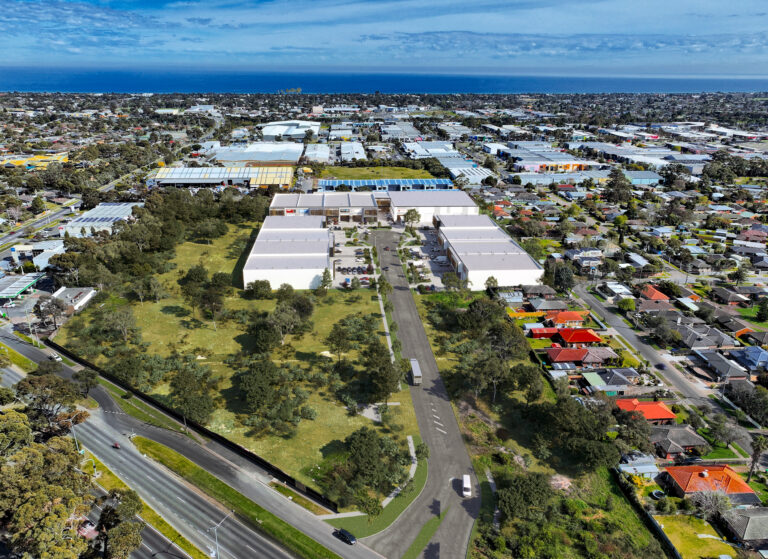
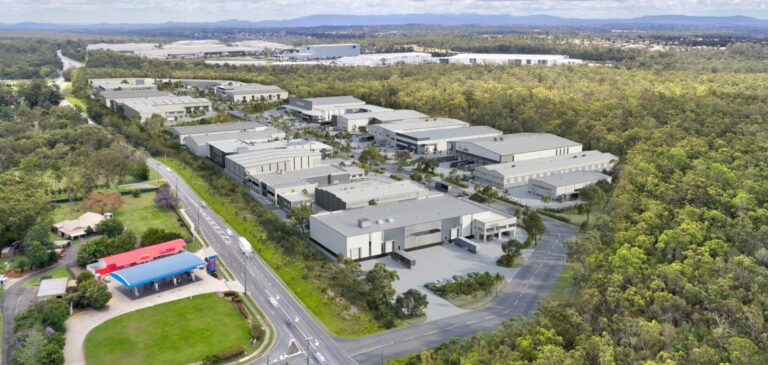
The most important Melbourne industrial development story is less about one individual DA and more about the enormous pipeline of estates progressing through the city’s growth corridors.
Truganina
Continued delivery of industrial estates and modern distribution facilities across Melbourne’s core western market.
The recently completed 3,210 sqm facility at Axiom Industrial Estate leased to House of Golf demonstrates continued occupier demand.
Dandenong South
Further intensification and redevelopment continues across Melbourne’s established south-eastern industrial heartland.
August sales at Luisa Avenue and Healey Road demonstrate continued property turnover within the precinct.
Melbourne North
Epping, Somerton, Craigieburn and surrounding employment areas remain important expansion zones as residential development pushes northward.
Melbourne CBD
The completion of major office projects at 51 Flinders Lane and 435 Bourke Street represents the end of the current large office construction cycle.
Power is becoming increasingly important to industrial land value
Industrial buildings are consuming more electricity.
Drivers include:
- automation
- robotics
- cold storage
- electric vehicle charging
- advanced manufacturing
- data centres
- food processing
For future developments, access to sufficient power can become a major competitive advantage.
A large industrial site without adequate power infrastructure may be significantly less valuable to certain occupiers than a smaller site with strong capacity.
Melbourne’s data-centre expansion could intensify competition for industrial land
Data centres increasingly compete for industrial-scale land.
They also require:
- enormous power connections
- fibre
- security
- suitable planning controls
- network redundancy
Melbourne is one of Australia’s primary data-centre markets.
As the sector expands, traditional industrial developers may increasingly find themselves competing with data-centre operators for strategically located land and power capacity.
What developers and landowners should watch
Several themes are likely to define Melbourne through the remainder of 2026.
Western industrial demand
Truganina, Derrimut, Ravenhall and surrounding precincts remain central to Melbourne’s logistics economy.
Manufacturing
Manufacturing is generating substantial leasing activity and may require more specialised facilities.
Falling speculative supply
A reduction in development could tighten vacancy again.
Dandenong South
The south-east remains one of Australia’s deepest industrial ecosystems.
Infill industrial scarcity
Moorabbin, Oakleigh and city-fringe locations should become increasingly difficult to replace.
Power infrastructure
Electrical capacity will become more important to site selection.
CBD office vacancy
The office market remains difficult, particularly for older secondary assets.
Office supply
The collapse in future CBD construction could ultimately help rebalance the market.
Large-format retail
Extremely low vacancy creates opportunities around major growth corridors.
The bigger Melbourne commercial property story
Melbourne currently has two very different property markets operating simultaneously.
Industrial property is being supported by genuine physical demand.
Businesses need warehouses, manufacturing space and distribution infrastructure.
The office market is still adjusting to structural changes in how businesses use workplaces.
That distinction matters.
Melbourne’s industrial economy is not simply a property investment cycle.
It is physical infrastructure supporting a city of millions of people.
Warehouses cannot operate remotely.
Freight cannot be delivered through Teams.
Manufacturing cannot be moved into an employee’s home.
That gives industrial property a structural resilience that other property sectors do not necessarily share.
What this means for Melbourne property projects
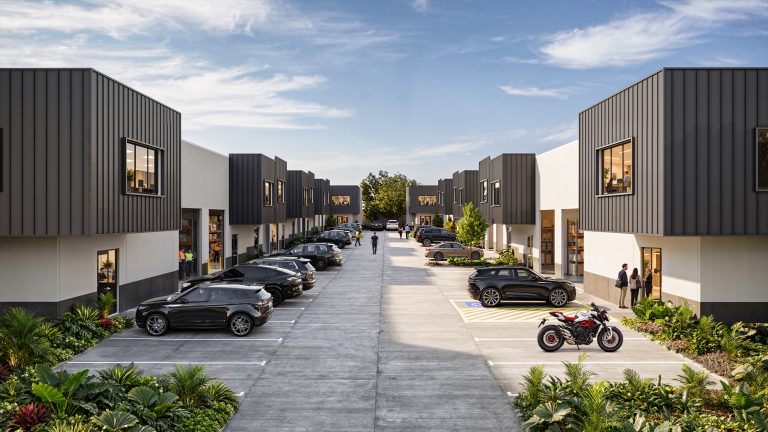
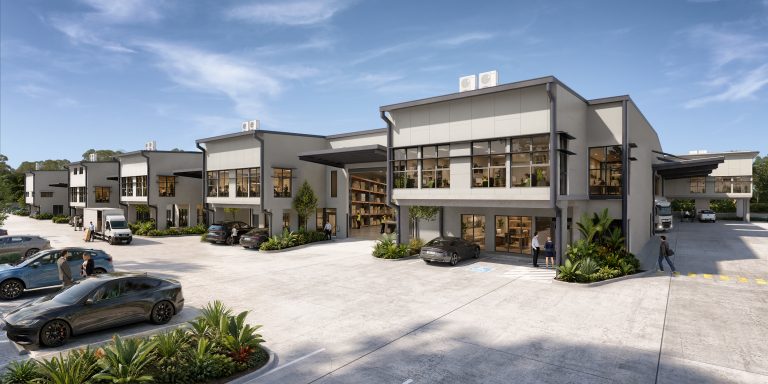
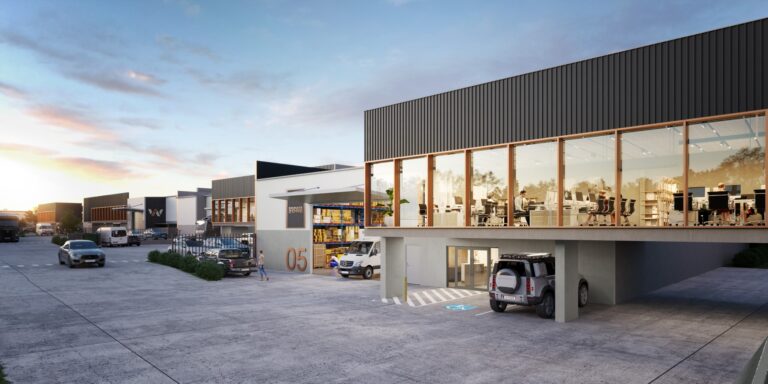
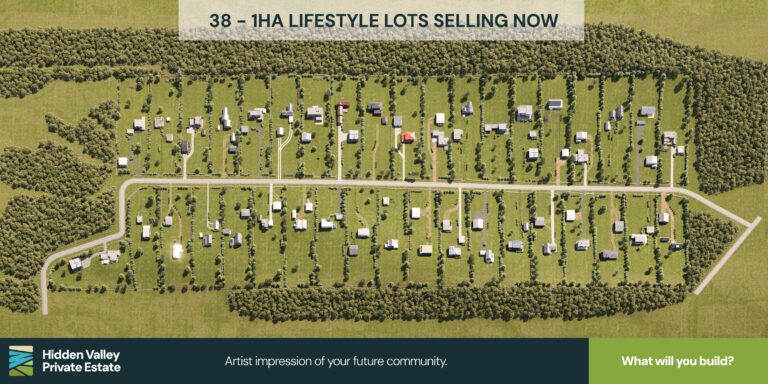
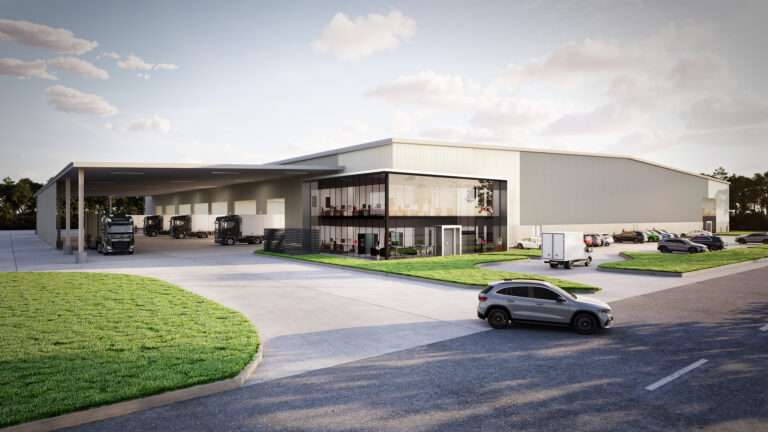
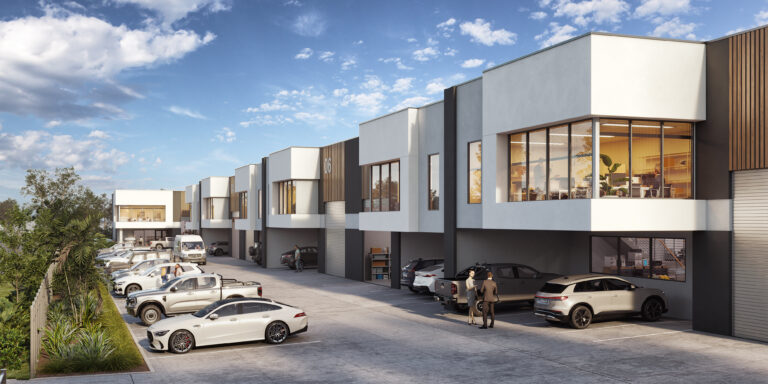
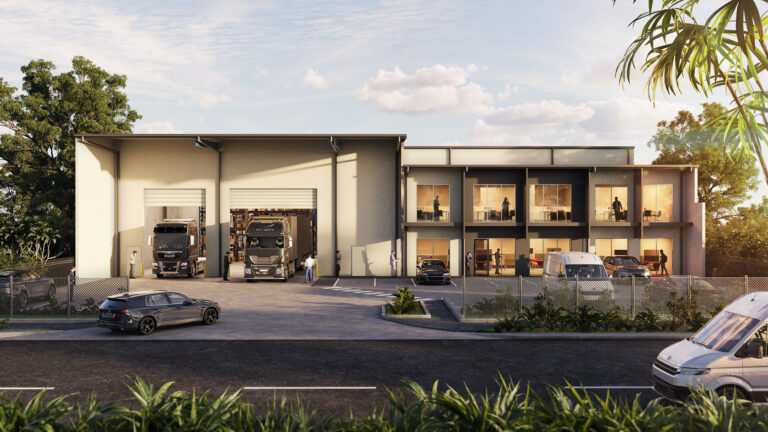
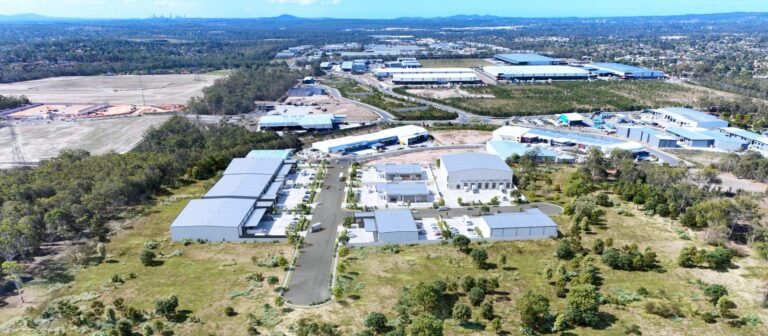
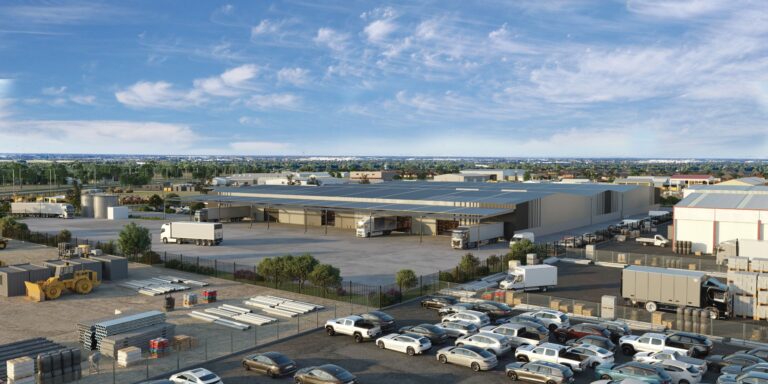
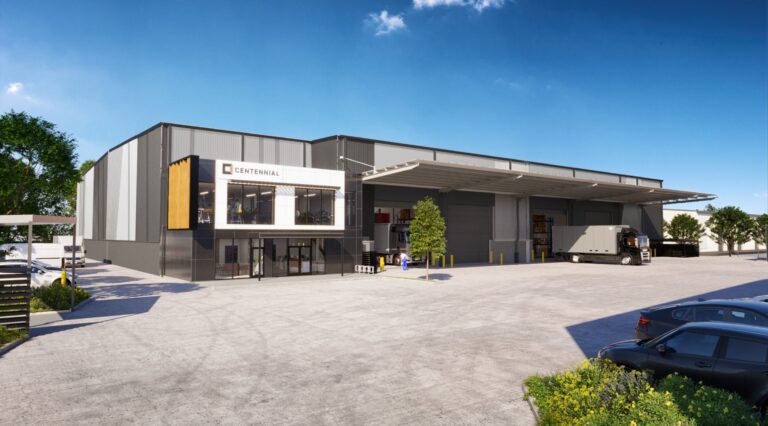
For developers and landowners, Melbourne’s increasingly competitive industrial market means a project must clearly demonstrate why it is better than alternative supply.
Strong project positioning can help:
- establish perceived land value
- demonstrate future industrial estates
- attract occupiers before construction
- support pre-leasing
- secure owner-occupier sales
- explain truck access and circulation
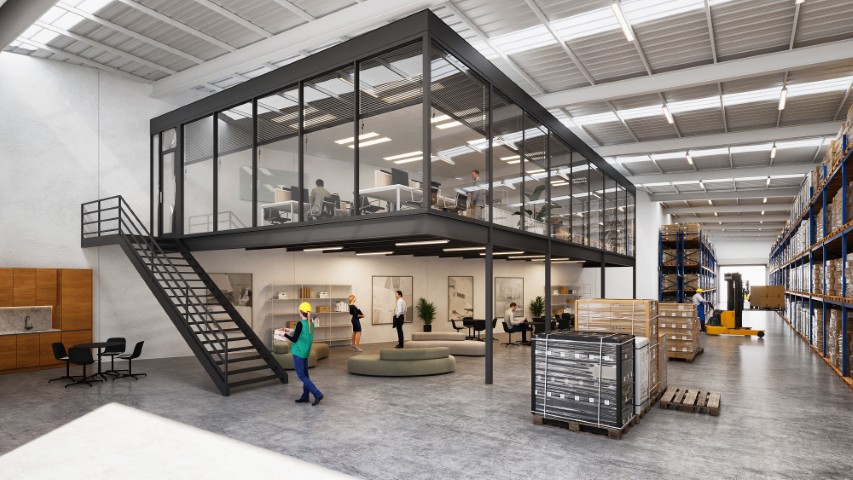
- demonstrate building functionality
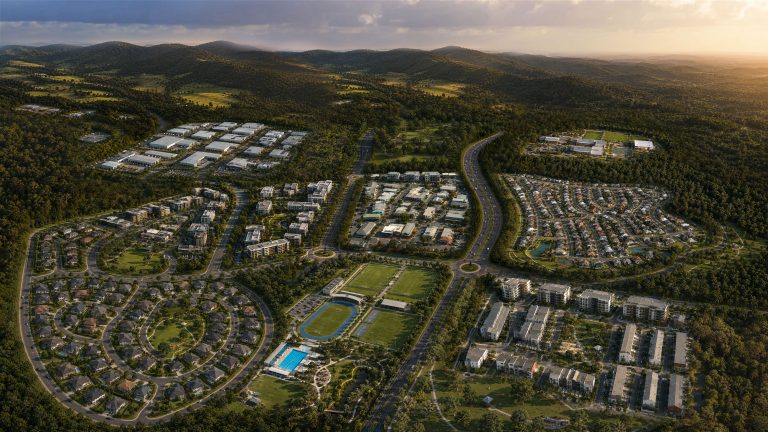
- highlight surrounding infrastructure
- communicate motorway and port connections
- position specialised manufacturing facilities
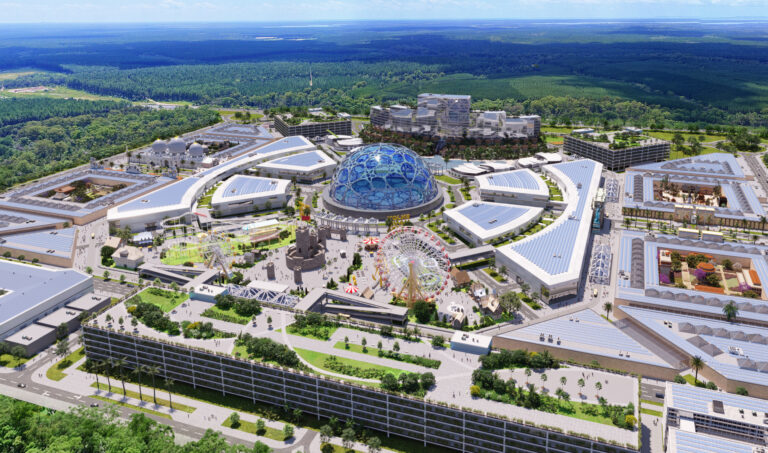
- simplify complex masterplans
- build investor confidence
With industrial occupiers becoming more selective, the ability to communicate a project’s functionality and future environment before construction is becoming increasingly valuable.
Commercial Property Marketing works with commercial and industrial developers across Australia to turn land, plans and future developments into clear property opportunities for buyers, tenants and investors.
More Melbourne commercial property resources
For developers, landowners and agents bringing property to market in Melbourne, explore Commercial Property Marketing Melbourne, Industrial Land Marketing Melbourne, 3D Renders Melbourne.
For market updates across Australia, visit Commercial Property News Australia.