


Australia's commercial property market enters FY27 with transaction activity accelerating
Australia's commercial and industrial property market entered FY2026/27 in considerably stronger shape than many expected twelve months ago.
July brought together several important trends: transaction volumes are recovering, industrial vacancy remains exceptionally low by global standards, institutional capital is returning to major acquisitions, data centres are emerging as one of the country's most important new property sectors and developers are continuing to position themselves around Australia's major infrastructure and population-growth corridors.
Preliminary CBRE figures show approximately $19 billion of Australian commercial property changed hands during the first half of 2026, representing a 16% increase compared with H1 2025.
That figure includes office, industrial and logistics, retail, hotels and living-sector transactions and provides one of the clearest signs yet that Australia's commercial investment market is moving into a new phase.
Industrial and logistics property remains particularly strong.
National industrial vacancy held at just 3.2% during H1 2026, while approximately 1.8 million square metres of industrial space was leased during the first six months of the year.
Perhaps even more significantly, industrial investment activity had already surpassed the transaction volume recorded during the entire 2025 calendar year by the end of Q2 2026.
The market is not without challenges.
Construction costs remain elevated, financing remains selective, tenants are increasingly demanding premium facilities and secondary assets face greater competition.
But the underlying picture entering the second half of 2026 is increasingly positive.
Australian commercial property market snapshot
Approximately $19 billion of Australian commercial property transacted during H1 2026.
Transaction volumes increased approximately 16% year-on-year.
National industrial and logistics vacancy remains approximately 3.2%.
Industrial leasing reached approximately 1.8 million m² during H1.
National industrial net absorption exceeded 1.4 million m².
Industrial investment volumes had already exceeded the entire 2025 total by Q2.
Perth currently has the tightest major-city industrial vacancy at approximately 1.0%.
Adelaide industrial vacancy sits around 2.0%.
Brisbane sits around 3.0%.
Sydney has increased to approximately 3.5%.
Melbourne remains the softest major industrial market at approximately 4.7%.
Super-prime logistics facilities continue outperforming older stock.
Data centres are becoming one of Australia's largest new sources of industrial land demand.
Domestic capital remains a major driver of investment activity.
Infrastructure, population growth, defence and energy investment continue reshaping employment corridors nationally.
Bought & Sold: major Australian commercial property transactions
The first half of 2026 and July produced several major transactions demonstrating the return of confidence to Australia's commercial investment market.
One of the most significant July announcements involved global investment manager M&G Real Estate, which acquired a 49.9% interest in two major Australian logistics assets from Stockland.
The transaction involved approximately 154,000m² of logistics accommodation across two major facilities:
Coopers Paddock in Sydney.
Willawong Distribution Centre in Brisbane.
The acquisition was announced at approximately US$315 million and substantially increases M&G's exposure to Australian logistics property.
The transaction is important beyond its headline value.
Large international investors continue targeting Australian logistics assets despite higher financing costs, demonstrating confidence in the long-term fundamentals of the sector.
Institutional capital is particularly focused on modern facilities offering scale, transport connectivity and strong tenant demand.
Brisbane's record office transaction sends another positive signal
Brisbane also delivered one of Australia's largest recent office transactions with the sale of 480 Queen Street for approximately $700 million.
The transaction represented a major vote of confidence in Brisbane's premium office sector and demonstrated that institutional investors remain prepared to deploy substantial capital into high-quality Australian office assets.
The office market remains highly selective, but transactions of this scale suggest pricing expectations between buyers and sellers are beginning to align.
Premium buildings with strong sustainability credentials, modern services and quality tenant profiles remain significantly better positioned than secondary assets.
Industrial investment moves back to centre stage
Industrial and logistics property continues attracting substantial institutional and private capital.
Investment appetite remains strongest for:
Modern logistics facilities.
Distribution centres.
Industrial estates.
Cold storage.
Last-mile logistics.
Manufacturing facilities.
Data-centre-related land.
Large development sites.
The fact that national industrial transaction activity had already exceeded the entire 2025 total by the end of the June quarter is particularly significant.
It suggests the market is not simply experiencing isolated large transactions.
Capital is genuinely returning to the sector.
Private investors and owner-occupiers remain highly active
Australia's industrial market is not being driven solely by institutional investors.
Owner-occupiers remain a major force, particularly for assets below approximately $10 million.
Established businesses continue purchasing their own premises to gain:
Long-term occupancy security.
Control over future property costs.
Expansion capability.
Exposure to underlying land appreciation.
Greater operational flexibility.
This is creating particularly strong competition for smaller warehouses, industrial units and freestanding facilities in established employment precincts.
Development Applications, Approvals & Major Projects Progressing Through Planning
July produced several major approvals and planning milestones that provide a useful indication of where Australia's next generation of commercial property investment is heading.
The strongest themes are unmistakable:
logistics, airports, data centres and industrial infrastructure.
Burrah Park Industrial Estate – Western Sydney Aerotropolis
One of July's most important industrial approvals was granted to Burrah Park, immediately adjacent to Western Sydney International Airport.
The NSW Government granted State Significant Development approval on 16 July 2026, allowing the major industrial and logistics precinct to proceed.
The project is jointly owned by UniSuper and IFM and spans approximately 280 hectares.
Its location is exceptional.
Burrah Park sits immediately adjacent to the entrance of Western Sydney International Airport and close to Bradfield City Centre, with access to:
Western Sydney International Airport.
The airport cargo precinct.
M12 Motorway.
Future rail infrastructure.
Western Sydney's expanding employment corridor.
The estate is expected to deliver large-scale, super-prime industrial and logistics accommodation over multiple stages.
Projects of this scale demonstrate how dramatically Western Sydney's industrial geography is changing.
The airport is no longer simply an infrastructure project.
It is becoming the anchor for an entirely new employment and logistics ecosystem.
Goodman Project Pluto – major Sydney data centre approval
Another major July planning milestone was the approval of Goodman's proposed Project Pluto data centre at Guildford West in Western Sydney.
The project has been reported at approximately $1.11 billion and proposes two multi-storey data-centre buildings on the former Castrol site at 132 McCredie Road.
The development highlights one of the biggest changes occurring within Australia's industrial property market.
Sites that may once have accommodated warehouses or conventional industrial facilities are increasingly being pursued for digital infrastructure.
Data centres require enormous capital investment and access to:
High-capacity electricity.
Fibre infrastructure.
Large landholdings.
Secure locations.
Water and cooling infrastructure.
Major population centres.
Western Sydney is rapidly becoming one of Australia's most important data-centre clusters.
Melbourne's next generation of data-centre development emerges
Melbourne is experiencing a similar transformation.
Major data-centre proposals continue emerging outside the city's traditional western industrial corridor.
A substantial proposal at 45 Donnybrook Road, Mickleham entered Victoria's planning system in July.
The proposed campus reportedly involves multiple multi-storey data-centre buildings across a large approximately 67-hectare site.
The project demonstrates the increasing competition for sites capable of supporting enormous power requirements.
Data-centre development is therefore beginning to influence industrial land markets far beyond traditional warehouse locations.
Brisbane industrial approvals continue progressing
Brisbane also recorded further industrial development approvals during July.
A warehouse and industry development at 297 Sherbrooke Road, Willawong received approval on 10 July 2026.
Willawong sits within Brisbane's strategically important southern industrial corridor, benefiting from access to major freight networks and surrounding employment precincts.
Additional mixed industrial and commercial applications are progressing elsewhere across Brisbane, reinforcing the continued development pressure being created by limited industrial supply.
Data centres become a national property story
Data centres deserve particular attention because the sector is moving from a specialist property category into a major national infrastructure market.
Artificial intelligence, cloud computing, streaming, enterprise data and digital services are generating extraordinary demand for computing capacity.
Australia's existing advantages include:
Political stability.
Strong financial system.
Large metropolitan markets.
International fibre connectivity.
Renewable energy potential.
Sophisticated institutional property sector.
But there is one enormous constraint:
power.
The next phase of Australia's data-centre boom will increasingly be determined by access to electricity rather than simply access to land.
This could reshape industrial property investment around major substations, transmission infrastructure and renewable energy projects.
Industrial & logistics vacancy remains exceptionally tight
Australia's national industrial and logistics vacancy rate remained approximately 3.2% during H1 2026.
This remains below the approximately 4% level generally considered a more balanced market.
Individual cities tell very different stories.
Perth – approximately 1.0%
Perth currently has Australia's tightest major industrial market.
Available stock consists largely of backfill space, limited speculative accommodation and selected sublease opportunities.
Gross take-up over the previous twelve months exceeded 400,000m², more than double Perth's ten-year average.
Adelaide – approximately 2.0%
Adelaide remains another extremely tight industrial market, supported by logistics, defence and manufacturing demand.
Brisbane – approximately 3.0%
Brisbane continues demonstrating strong resilience despite operating cost pressures affecting occupiers.
Limited speculative development could create another supply gap over the next 12–18 months.
Sydney – approximately 3.5%
Sydney vacancy has increased, providing tenants with slightly more choice, but modern super-prime facilities remain tightly held.
Melbourne – approximately 4.7%
Melbourne remains Australia's most tenant-friendly major industrial market.
However, vacancy is concentrated disproportionately within older prime and secondary facilities rather than the highest-quality logistics stock.
The quality gap is becoming one of 2026's biggest themes
National vacancy figures alone no longer tell the full story.
A clear distinction is emerging between modern super-prime facilities and older industrial buildings.
Occupiers increasingly want:
Greater internal clearance.
Efficient loading.
Large truck courts.
Multiple docks.
Heavy-duty floors.
Solar generation.
EV infrastructure.
Modern offices.
Improved energy efficiency.
Automation capability.
Older buildings that cannot deliver these requirements face greater competition.
That creates opportunities for both developers and owners prepared to refurbish existing assets.
Industrial leasing reaches approximately 1.8 million m²
Approximately 1.8 million m² of industrial and logistics space was leased nationally during H1 2026.
That represents slightly more than half of all leasing activity recorded during the entire 2025 calendar year.
National net absorption exceeded 1.4 million m², more than double the level recorded during the second half of 2025.
This is important because it demonstrates that the market is genuinely absorbing new supply.
Australia's industrial sector is not simply relying on low vacancy created by a lack of development.
Businesses are actively taking space.
Logistics demand is changing
Traditional third-party logistics operators remain important, but the composition of industrial demand is changing.
Growing occupier groups include:
Data-centre supply chains.
Food and beverage.
Advanced manufacturing.
Construction suppliers.
Defence.
E-commerce.
Technology infrastructure.
Healthcare logistics.
This diversification reduces the market's dependence on any single occupier sector.
Industrial rents remain resilient
Face rents across most Australian industrial markets remained broadly resilient during Q2.
However, incentives have increased slightly in selected markets as landlords compete for tenants.
This has created a modest difference between headline and effective rental growth.
The strongest rental conditions remain in markets where vacancy is exceptionally low.
Perth is the clearest example.
With vacancy around 1%, upward pressure on rents is likely to continue if occupier demand remains strong.
Brisbane could face a similar dynamic as speculative supply reduces.
Industrial land remains structurally constrained
One of the strongest long-term themes affecting Australian commercial property remains the shortage of serviced, appropriately zoned industrial land.
The problem is particularly pronounced around major metropolitan markets.
Industrial land competes with:
Residential development.
Infrastructure.
Environmental constraints.
Community opposition.
Data centres.
Utilities.
Transport corridors.
Once employment land is converted to another use, it is extremely difficult to replace.
This creates long-term value for strategically located industrial holdings.
Western Sydney remains Australia's biggest industrial transformation
No Australian market illustrates infrastructure-led commercial development better than Western Sydney.
Western Sydney International Airport, Bradfield City Centre, the M12 Motorway and surrounding transport investment are creating an entirely new economic corridor.
Commercial opportunities extend across:
Logistics.
Advanced manufacturing.
Aerospace.
Defence.
Data centres.
Research.
Technology.
Warehousing.
Retail.
Hotels.
The approval of the 280-hectare Burrah Park estate demonstrates the enormous scale of development now moving forward.
Western Sydney will remain one of Australia's most important commercial property stories throughout the remainder of the decade.
Brisbane and South East Queensland continue gaining momentum
South East Queensland remains another major growth market.
Brisbane benefits from:
Population growth.
Interstate migration.
Port infrastructure.
Brisbane Airport.
Australia TradeCoast.
Olympic infrastructure.
Logistics growth.
Limited industrial land.
The Gold Coast and Sunshine Coast add another layer to the regional growth story.
Rather than viewing Brisbane in isolation, developers increasingly need to consider the entire South East Queensland employment corridor.
Industrial demand now stretches from the Sunshine Coast through Brisbane and Logan to the Gold Coast.
Melbourne's western corridor remains an industrial giant
Despite higher vacancy than other capitals, Melbourne remains Australia's largest industrial market.
Truganina, Ravenhall, Derrimut, Laverton North and surrounding precincts continue accommodating enormous volumes of logistics and manufacturing activity.
Melbourne's strengths include:
Port of Melbourne.
Large population.
Extensive industrial land base.
Manufacturing capability.
National freight connectivity.
The current increase in vacancy could provide tenants with greater negotiating power in the short term.
But long-term population growth continues supporting the market.
Perth continues outperforming
Perth's approximately 1% industrial vacancy rate makes it one of Australia's most interesting commercial property markets entering H2 2026.
Demand is being supported by:
Resources.
Logistics.
E-commerce.
Defence.
Manufacturing.
Population growth.
Kwinana, Henderson, Welshpool, Canning Vale and Perth's eastern industrial corridor remain major areas to watch.
The proposed Westport development provides another major long-term catalyst.
Adelaide's defence economy changes the property equation
Adelaide continues benefiting from enormous long-term defence investment.
AUKUS and naval shipbuilding around Osborne are generating demand throughout a much wider supply chain.
Opportunities extend across:
Engineering.
Advanced manufacturing.
Logistics.
Technology.
Research.
Warehousing.
Specialist industrial facilities.
Edinburgh and northern Adelaide are also benefiting from aerospace and defence investment.
The commercial property impact of these programs will unfold over decades rather than individual financial years.
Newcastle and the Hunter continue diversifying
Newcastle remains one of Australia's strongest regional commercial property markets.
The region continues transitioning from traditional heavy industry toward a broader economic base involving:
Renewable energy.
Defence.
Advanced manufacturing.
Logistics.
Healthcare.
Education.
The Port of Newcastle remains a major strategic asset.
Industrial locations including Beresfield and Tomago continue benefiting from freight, manufacturing and infrastructure investment.
Darwin's strategic importance continues increasing
Darwin remains a small market with unusually large strategic importance.
Defence, energy, resources and Northern Australian logistics continue supporting commercial demand.
East Arm, Berrimah and Winnellie remain critical industrial precincts.
Major defence and resources projects can have an outsized impact on Darwin because of its relatively limited industrial stock.
Hobart remains constrained by industrial land supply
Hobart provides another example of how geography can influence commercial property values.
Established industrial areas including Moonah, Derwent Park and Glenorchy have limited capacity for expansion.
Cambridge and Brighton therefore become increasingly important for new supply.
The market remains dominated by private investors and owner-occupiers, with smaller industrial assets particularly tightly held.
Office markets continue their flight to quality
Australia's office recovery remains highly uneven.
The strongest demand continues to be concentrated within premium buildings.
Businesses increasingly want offices offering:
High sustainability ratings.
Excellent staff amenities.
Modern technology.
Flexible floorplates.
End-of-trip facilities.
Hospitality.
Public transport connectivity.
This creates an increasingly significant challenge for older secondary office buildings.
The next major wave of commercial redevelopment could therefore involve repositioning ageing office assets rather than simply constructing new towers.
Retail property remains resilient
Retail property has performed better than many expected.
Neighbourhood centres anchored by supermarkets and essential services continue attracting investor demand.
Investors particularly favour centres offering exposure to:
Food.
Medical.
Pharmacy.
Fitness.
Services.
Convenience retail.
Population-growth corridors remain particularly attractive.
New residential communities require commercial infrastructure, creating development opportunities for neighbourhood retail and mixed-use centres.
Healthcare continues expanding as a commercial asset class
Healthcare property continues benefiting from Australia's ageing population and population growth.
Demand continues across:
Medical centres.
Specialist suites.
Diagnostic facilities.
Day hospitals.
Allied health.
Aged care.
Health precincts.
Healthcare property is increasingly being treated as a mainstream institutional asset rather than a specialist niche.
Defence becomes a national commercial property driver
Defence spending is increasingly influencing property markets well beyond traditional military bases.
Adelaide, Darwin, Newcastle, Canberra and Perth are particularly exposed.
Major defence programs generate requirements for:
Manufacturing.
Engineering.
Warehousing.
Secure offices.
Technology.
Logistics.
Training.
Research.
The secondary supply-chain effect can be enormous.
For developers, identifying where defence contractors will cluster could create significant long-term opportunities.
Infrastructure continues determining where value is created
Australia is undertaking one of the largest infrastructure programs in its history.
Projects influencing commercial property include:
Western Sydney International Airport.
Inland Rail.
Brisbane 2032 infrastructure.
Sydney Metro.
Melbourne transport projects.
Westport in Western Australia.
Defence infrastructure.
Renewable energy transmission.
Port expansion.
Freight corridors.
Commercial property values rarely move independently of infrastructure.
New roads, ports, rail and airports change travel times, freight efficiency and employment accessibility.
Those changes can fundamentally alter land values.
Investor confidence continues returning
The $19 billion transacted during H1 2026 provides perhaps the clearest evidence that investment markets are reopening.
Domestic investors have been particularly active.
Private capital, superannuation funds and institutional investors are increasingly prepared to transact where pricing reflects current financing conditions.
International capital also remains attracted to Australian property because of:
Economic stability.
Population growth.
Transparent property markets.
Strong institutions.
Limited land supply.
Long-term infrastructure investment.
The result is increasing competition for genuinely high-quality assets.
What developers should watch during H2 2026
The second half of 2026 could become one of the most interesting periods for Australian commercial property since the interest-rate cycle began.
Key themes to watch include:
Further recovery in transaction volumes.
Industrial vacancy approaching its cyclical peak.
Reduced speculative warehouse construction.
Renewed rental pressure as supply moderates.
Continued data-centre expansion.
Increasing competition for power-enabled industrial land.
Western Sydney Airport-related development.
Defence supply-chain expansion.
Brisbane 2032 infrastructure investment.
Perth industrial supply constraints.
Adelaide defence investment.
Institutional capital returning to major transactions.
Redevelopment of ageing office buildings.
Population growth driving neighbourhood commercial development.
Continued scarcity of serviced industrial land.
One particularly important shift is becoming increasingly clear.
The value of industrial land is no longer determined simply by location and road access.
Future industrial sites will increasingly be valued according to their access to:
Electricity.
Fibre.
Water.
Freight infrastructure.
Skilled labour.
Renewable energy.
Planning certainty.
Data centres and advanced manufacturing are accelerating this change.
Australian commercial & industrial property outlook
Australia enters the second half of 2026 with commercial property fundamentals considerably stronger than the headlines of recent years might suggest.
Investment volumes are increasing.
Industrial leasing is strengthening.
Vacancy remains low.
Infrastructure spending remains enormous.
Population growth continues.
And new industries are creating entirely new forms of property demand.
There will still be winners and losers.
Older office buildings without a clear repositioning strategy face challenges.
Secondary industrial assets need to compete against increasingly sophisticated modern facilities.
Development feasibility remains difficult where construction costs are high.
But strategically located commercial and industrial land remains extraordinarily difficult to replace.
That is ultimately the strongest long-term theme.
Australia's population is growing while the supply of well-connected employment land around its major cities remains constrained.
For developers, landowners and investors capable of identifying the next employment corridors early, that imbalance continues creating opportunity.
Position your commercial property project ahead of the Australian market
The commercial property market is becoming increasingly sophisticated.
Buyers, tenants and investors want to understand not simply what exists today, but what a project can become.
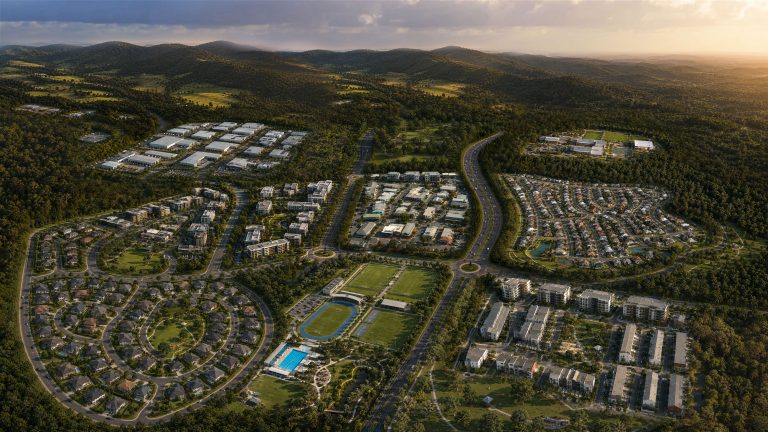
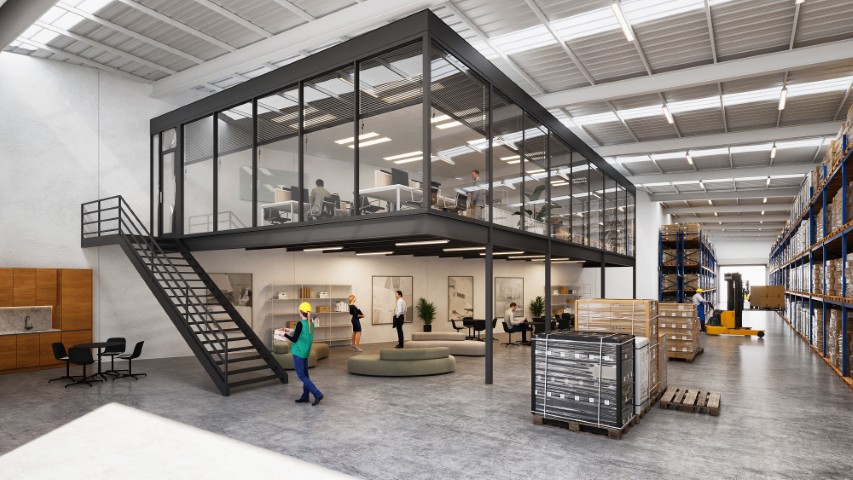
That means future industrial estates, logistics facilities, business parks and commercial developments need to communicate their potential long before construction is complete.
Commercial Property Marketing works with developers, landowners and commercial agencies across Australia to help:
Increase the perceived and realised value of commercial development land.
Accelerate industrial land sales.
Secure pre-lease commitments earlier.
Generate stronger buyer and investor enquiry.
Turn undeveloped land into an opportunity the market can immediately understand.
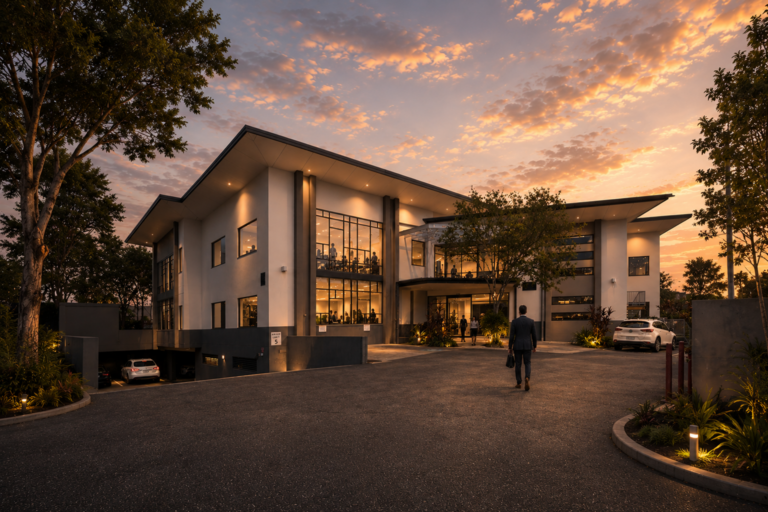
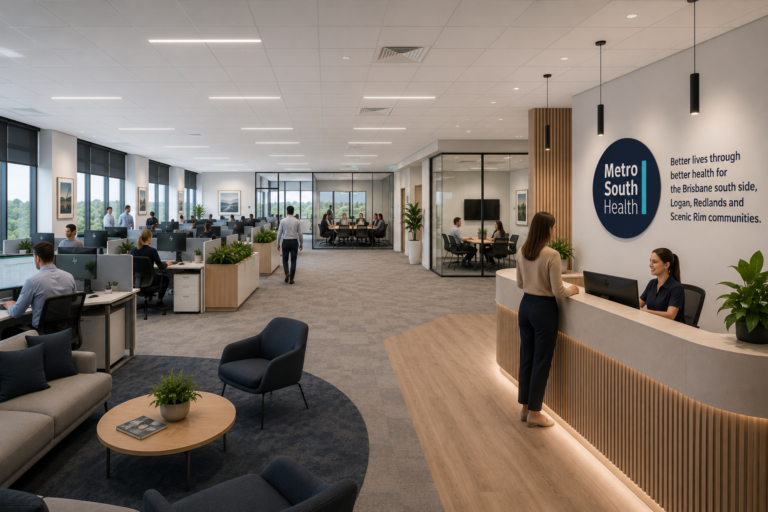
Demonstrate future buildings before construction begins.
Clearly communicate access to infrastructure, population and employment.
Give commercial agents stronger material to take directly to market.
Improve stakeholder and investor confidence.
Differentiate projects competing for the same tenants and buyers.
Reduce the time between project launch and commercial commitment.
Ultimately extract more value from commercial and industrial property.