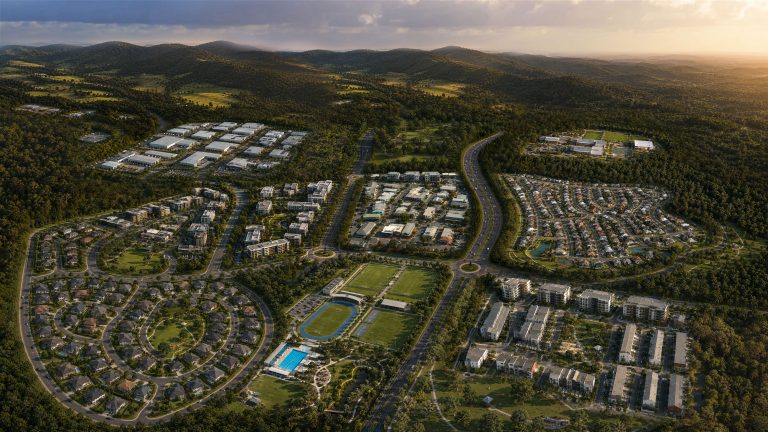
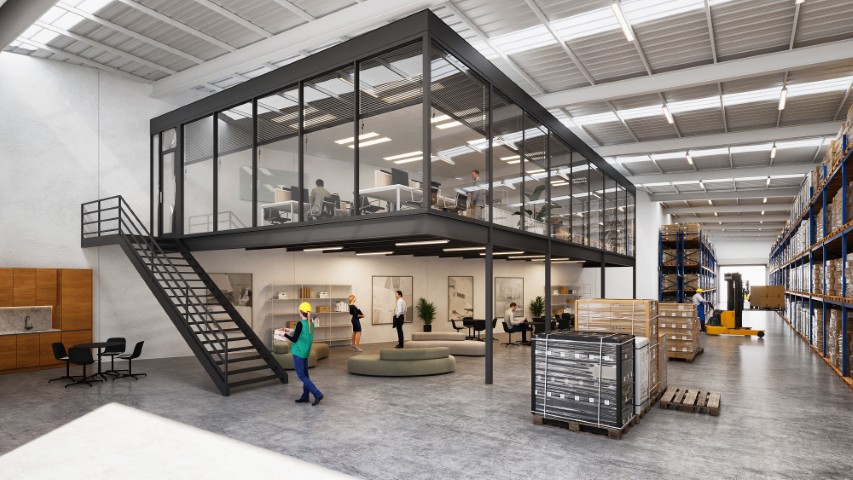
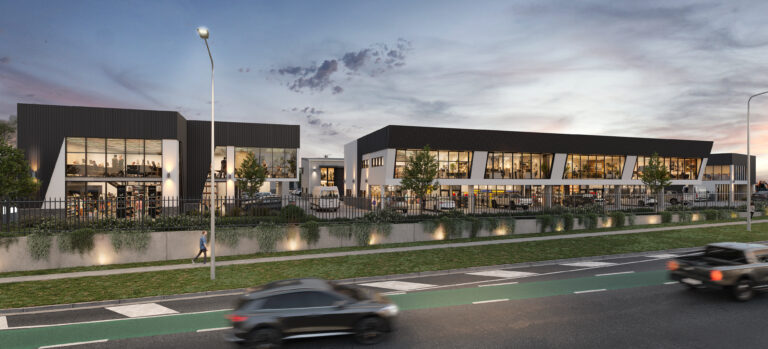
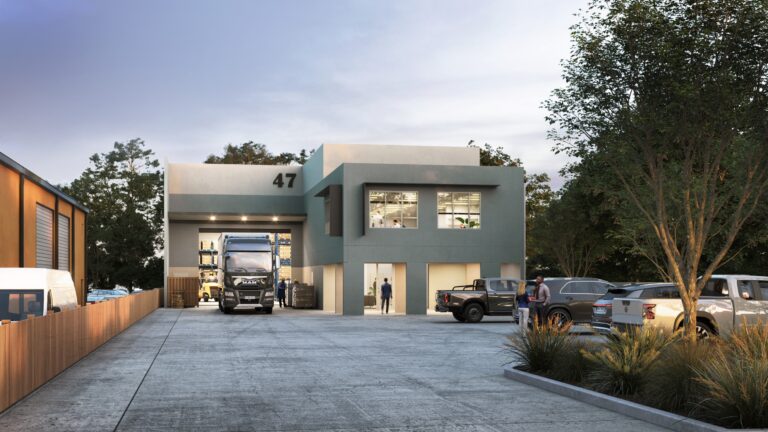
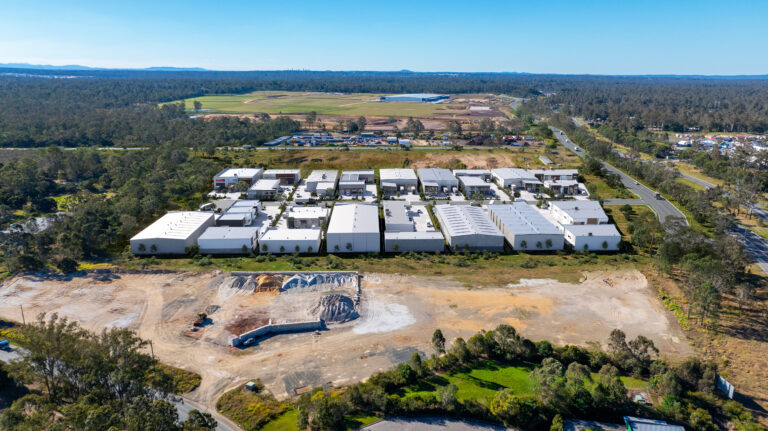
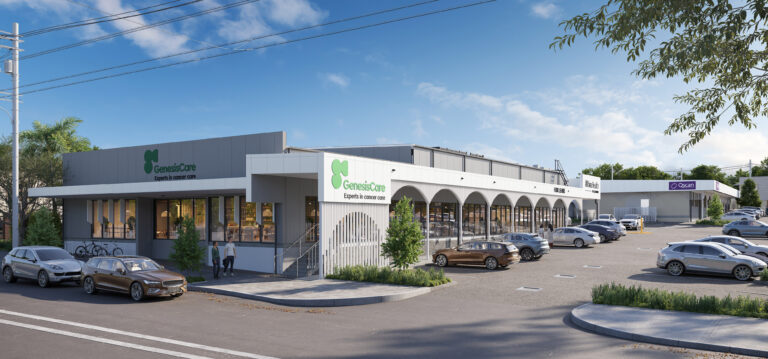
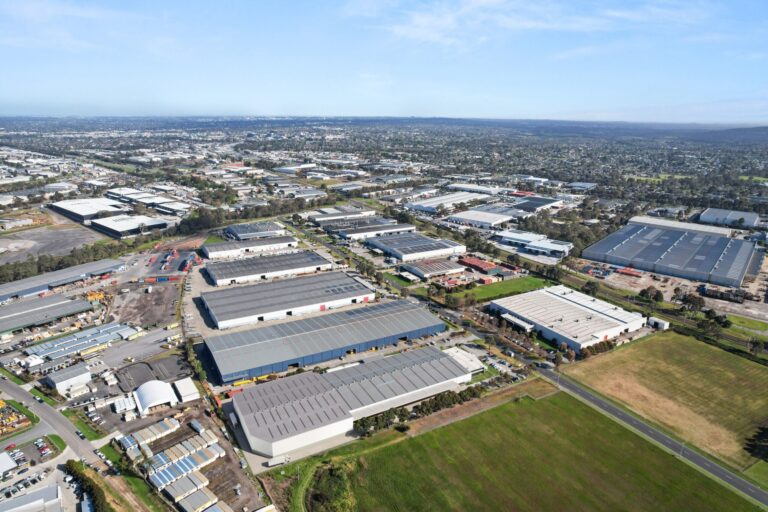
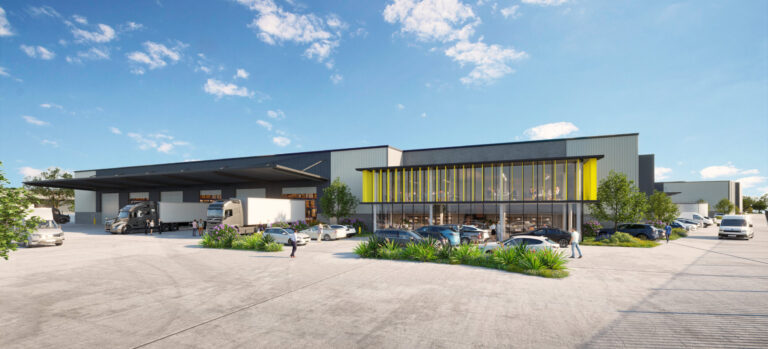
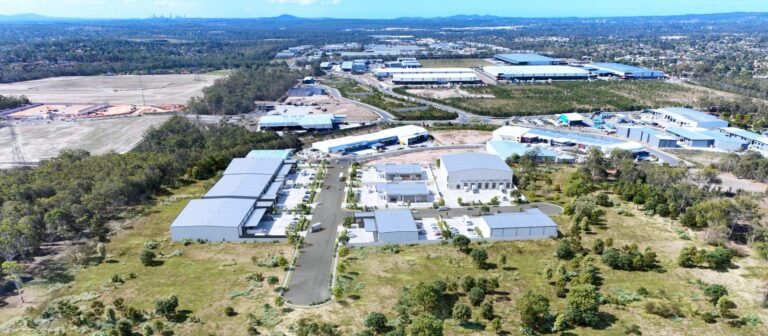
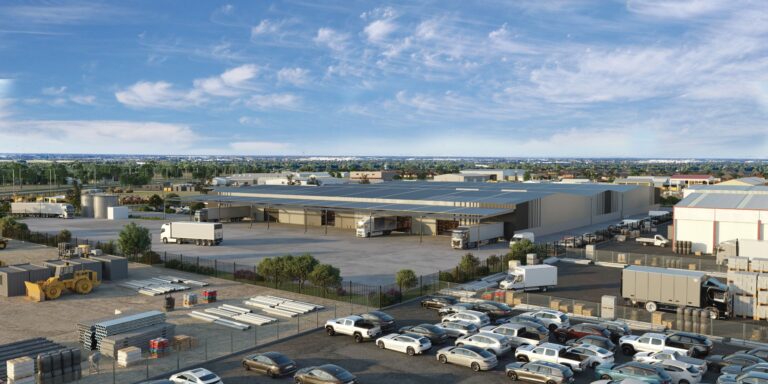
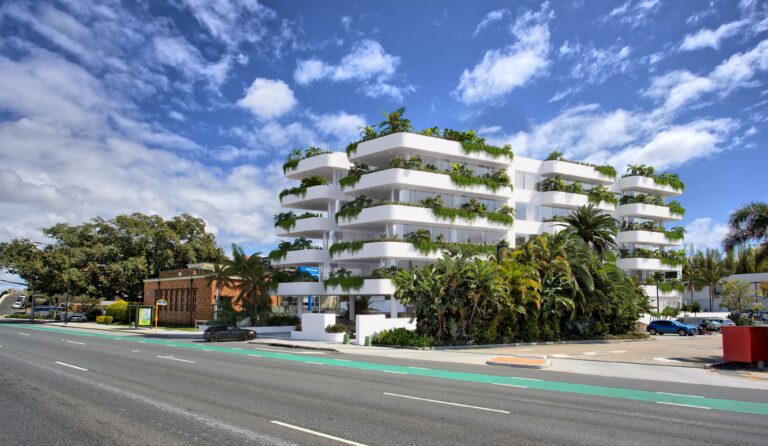
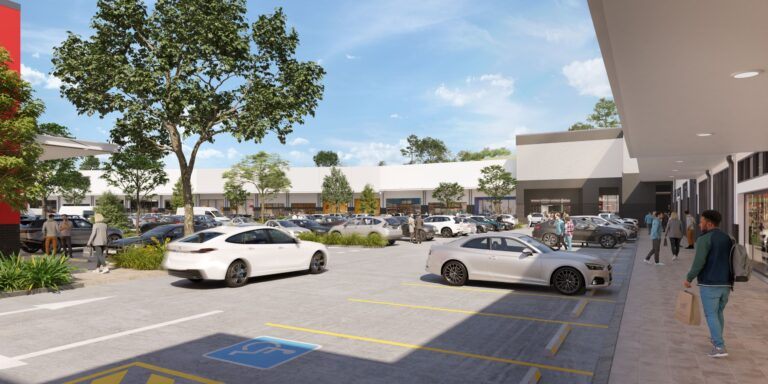
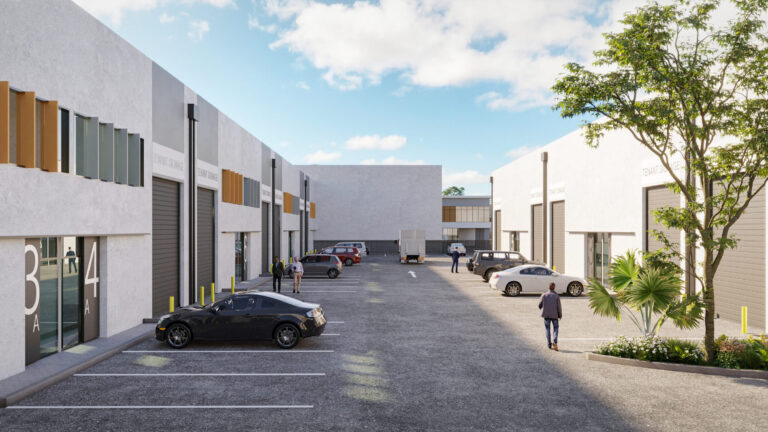
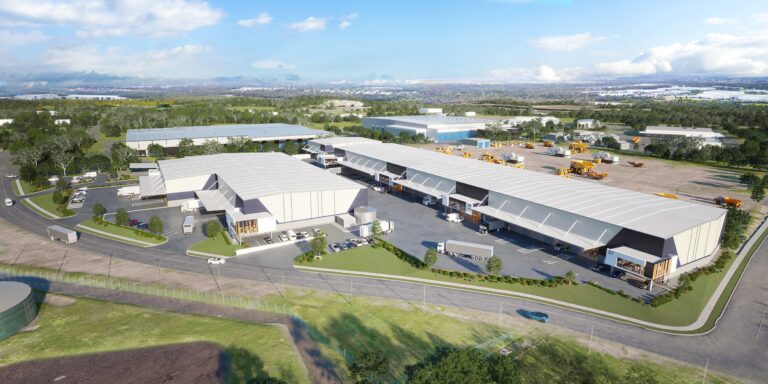
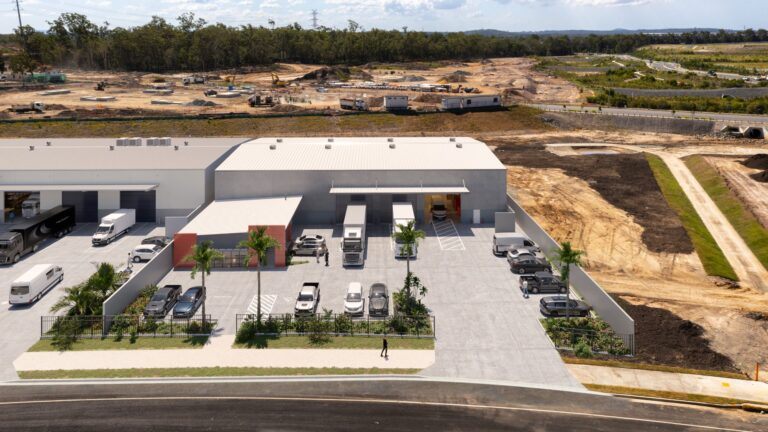
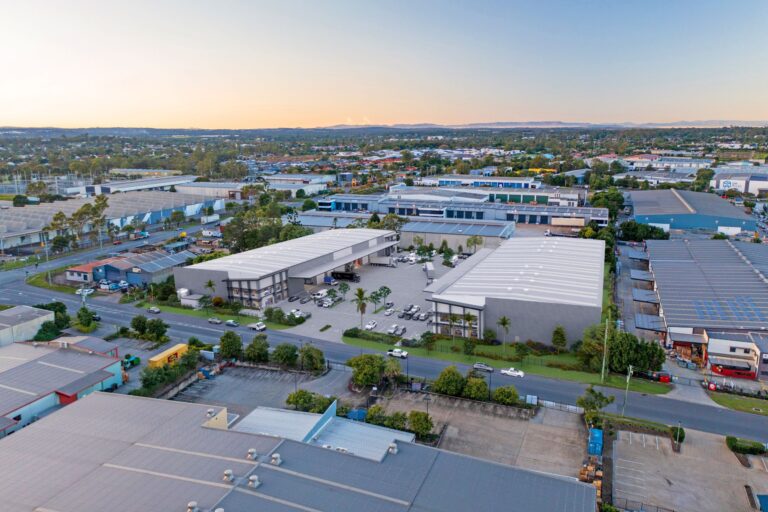
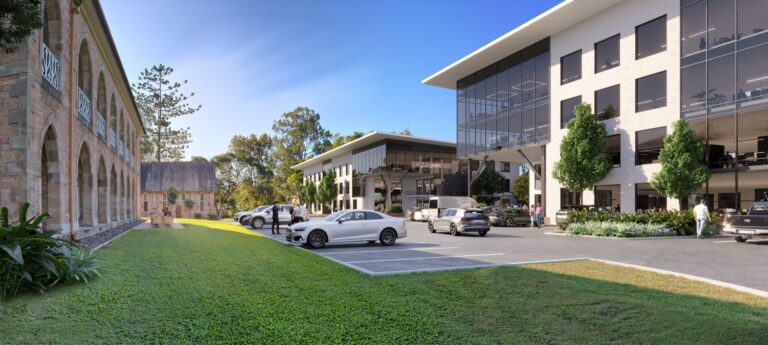
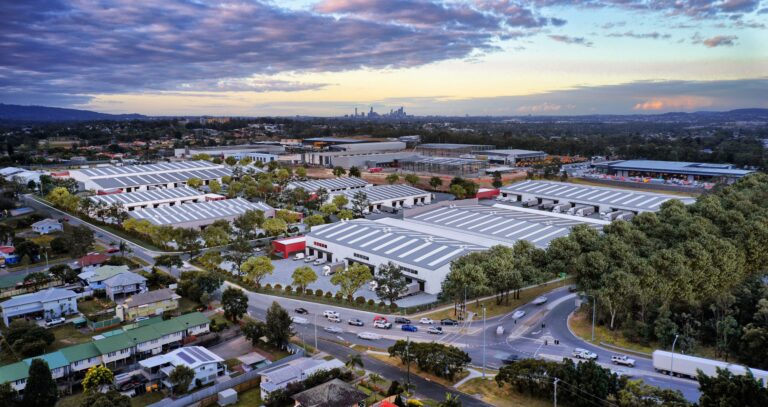

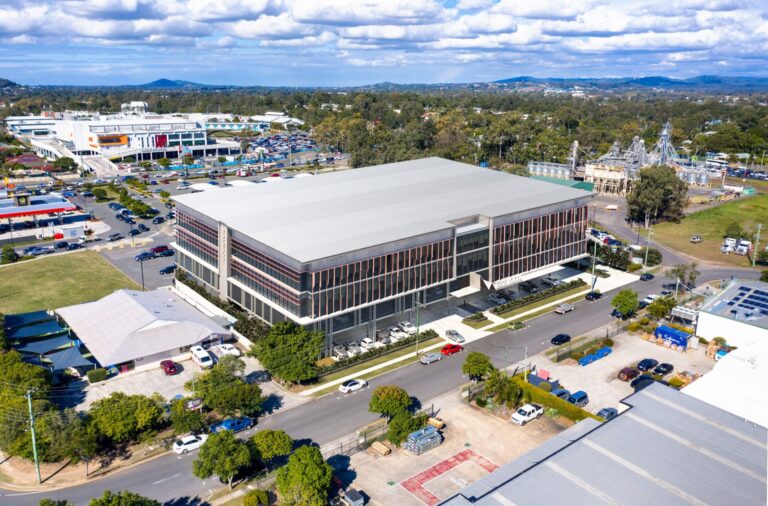
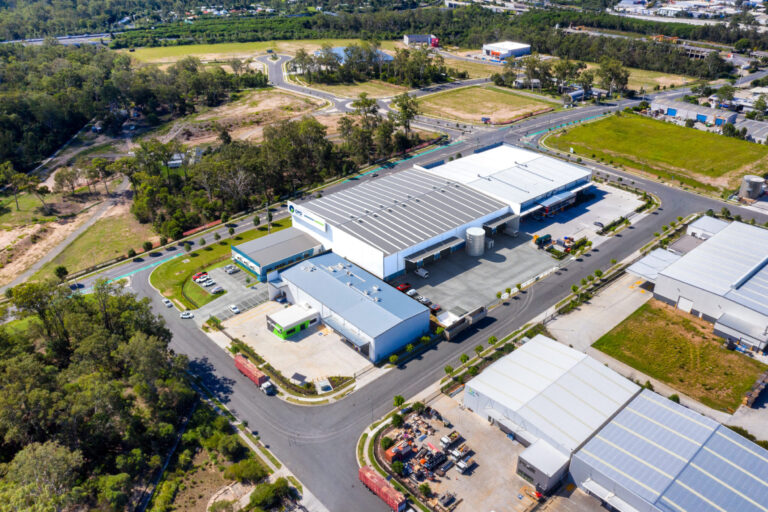
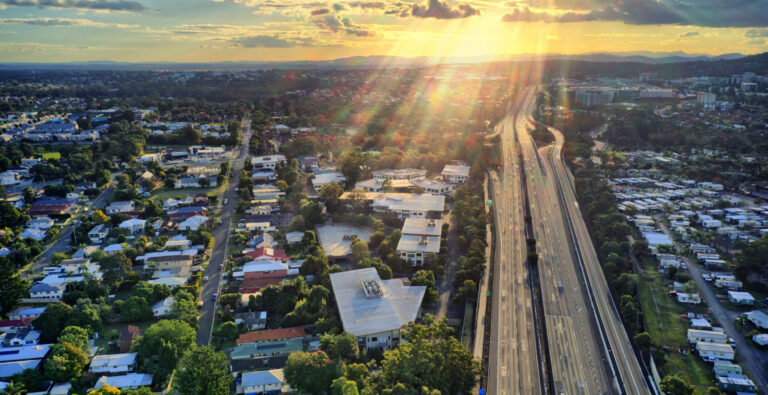
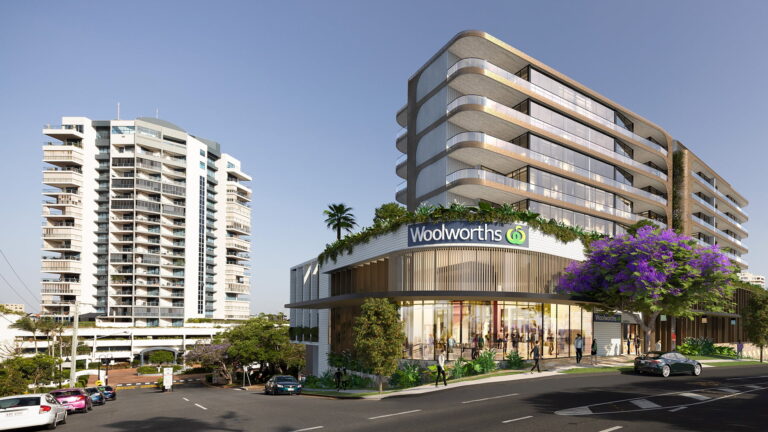
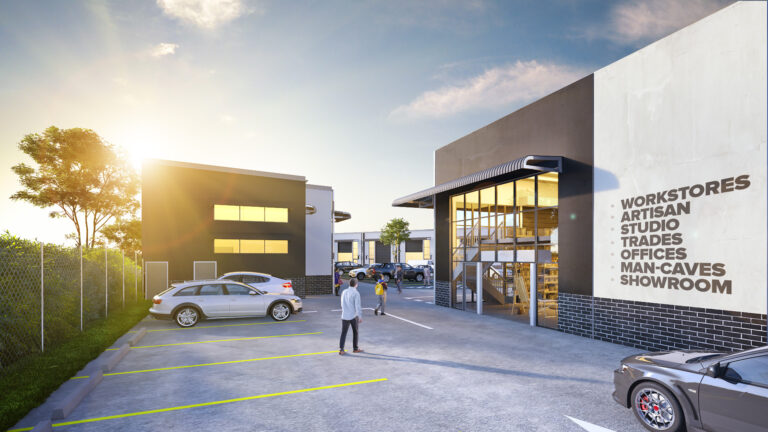
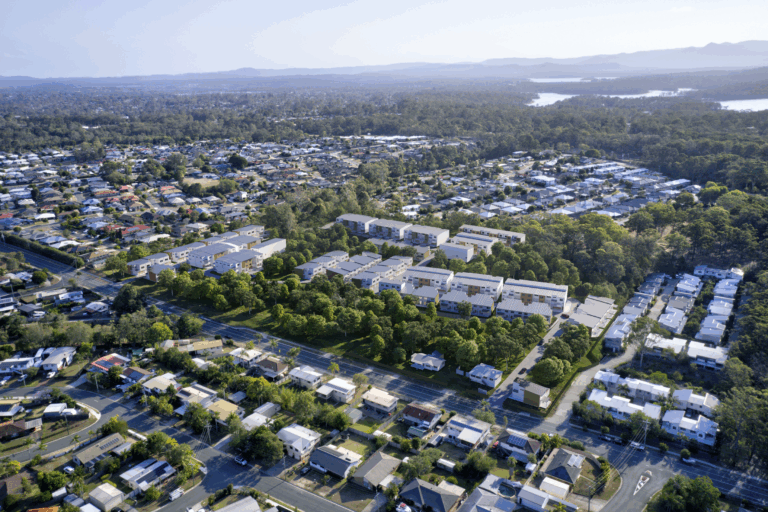

Brisbane commercial property and industrial property entered August 2026 with occupier demand still active, industrial land constrained and developers becoming more selective about new supply. The strongest activity continues to concentrate around the Trade Coast, southern industrial corridor, Wacol–Richlands, Heathwood and established inner industrial precincts.
This Brisbane market update tracks industrial property, commercial transactions, development applications, land supply, leasing, rents and major projects across South East Queensland. See our Commercial Property News Australia hub for national market intelligence.
Brisbane’s commercial and industrial property market entered the final month of winter with a slightly different tone to the frenetic conditions seen through parts of 2024 and 2025.
Demand has not disappeared. Far from it.
Occupiers are still active, quality industrial buildings remain difficult to replace and serviced industrial land remains one of the most strategically important commodities across South East Queensland.
What has changed is the balance of the market.
Higher financing costs are making investors more selective. Developers are increasingly reluctant to commence speculative projects without meaningful leasing support. At the same time, tenants are finding more opportunities to negotiate incentives where new supply has temporarily increased choice.
That combination is creating an increasingly divided Brisbane market: premium, well-located industrial property remains highly sought after, while secondary buildings and poorly located development sites are becoming much more price-sensitive.
Latest JLL research shows Brisbane industrial leasing activity remained above its long-term average during the first half of 2026. Around 198,000 sqm was leased during Q2 across 22 major transactions, taking first-half take-up to approximately 410,400 sqm.
That is a significant amount of space changing hands in a market where developers are simultaneously becoming more cautious about adding further speculative stock.
Brisbane industrial vacancy is tightening again
One of the more important developments during August was confirmation that Brisbane industrial vacancy had actually fallen during the second quarter.
JLL recorded Brisbane industrial vacancy at approximately 4.5%, with the largest quarterly decline of any major Australian industrial market.
The geographical breakdown is particularly revealing:
- Southern Brisbane vacancy fell approximately 1.4 percentage points to 4.2%
- Trade Coast vacancy fell approximately 1.0 percentage point to 4.1%
- Northern Brisbane moved in the opposite direction, increasing to approximately 6.4%.
CBRE uses a different property sample and methodology and placed Brisbane's first-half vacancy closer to 3.0%, but the underlying message is similar: Brisbane remains below what would traditionally be considered a comfortably supplied industrial market.
Importantly, vacancy is not evenly distributed.
Modern high-clearance warehouses with good truck access, strong hardstand components and proximity to motorway infrastructure remain much harder to secure than the headline vacancy number might imply.
New industrial supply is being absorbed remarkably quickly
Brisbane has delivered a substantial amount of new industrial space this year.
JLL recorded approximately 209,100 sqm of completions during Q2 2026, a 42.6% increase from the previous quarter.
But perhaps the more important figure is absorption.
Approximately 92.2% of those newly completed projects was absorbed, suggesting that most new development is still finding tenants relatively quickly.
That gives developers an interesting signal.
There is clearly still demand for new industrial stock, but the economics of delivering it have become harder.
Construction costs remain elevated.
Debt is expensive.
Industrial land values remain high.
And lenders increasingly want evidence of leasing commitment before supporting major speculative projects.
CBRE's latest Brisbane research similarly describes development activity as moderating towards more sustainable levels, while noting that much of Brisbane's near-term pipeline is already pre-committed.
The Trade Coast remains one of Brisbane's strongest industrial stories
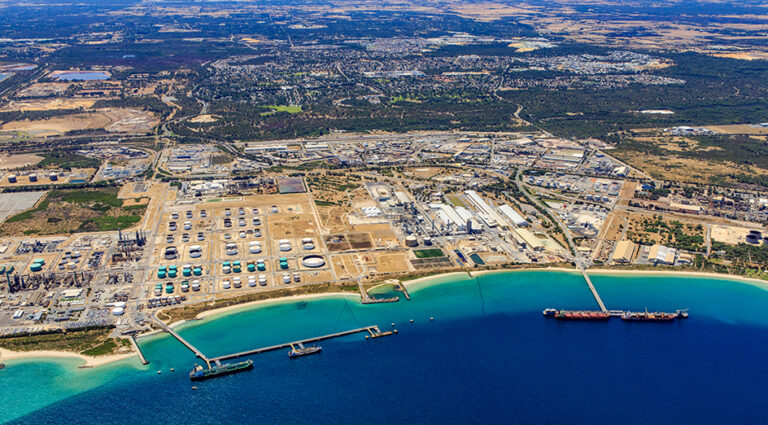
Eagle Farm, Pinkenba, Murarrie and surrounding Trade Coast precincts continue to benefit from something that cannot easily be replicated: infrastructure.
Brisbane Airport.
Port of Brisbane.
Gateway Motorway.
Kingsford Smith Drive.
Major freight routes.
Established heavy and general industry zoning.
Large existing corporate occupiers.
And extremely limited opportunities to create entirely new industrial estates.
The result is a precinct where older properties are increasingly being viewed not simply for their existing rental income, but for their underlying land position and eventual redevelopment potential.
An August transaction at 165 Lavarack Avenue, Eagle Farm illustrates the continuing demand for freestanding Trade Coast property.
The property sold on 28 August 2026 and comprises approximately 1,175 sqm of improvements on a 2,061 sqm General Industry B site. The asset was marketed as a tenanted investment with side-yard capacity and longer-term repositioning potential.
While the sale price was not publicly disclosed, transactions of this nature demonstrate the continuing appetite for relatively land-rich assets inside Brisbane's established industrial core.
Pinkenba continues to evolve
Pinkenba is becoming particularly interesting.
Historically dominated by port-related, fuel, bulk storage and heavy industrial activity, the suburb is gradually attracting a wider mix of logistics, recycling, advanced industrial and infrastructure-related uses.
During August, a 4,047 sqm secure hardstand site at 45 Main Beach Road, Pinkenba was leased, with the transaction recorded on 24 August.
Hardstand is becoming a surprisingly valuable industrial product in its own right.
Transport companies, civil contractors, equipment suppliers, recycling operators and infrastructure contractors frequently need land more than they need buildings.
Finding properly surfaced, secured and appropriately zoned land close to major freight infrastructure is increasingly difficult.
That scarcity is helping support values throughout Pinkenba.
Major Sims Metal application progresses at Pinkenba
One of the more substantial industrial planning matters progressing through Brisbane during August involves 69 Tingira Street, Pinkenba.
An application lodged by Sims Group Australia Holdings Limited covers a broad range of potential industrial uses including warehouse, transport depot, port services and medium-, high- and special-impact industry.
The application was submitted in June and remained under assessment during August, with Brisbane City Council issuing an information request dated 14 August 2026.
Projects of this nature underline the long-term strategic importance of Pinkenba.
Brisbane has relatively few areas where significant industrial operations can coexist with port, airport and motorway infrastructure.
As residential development continues expanding across South East Queensland, appropriately zoned heavy industrial land will likely become increasingly difficult to replace.
Wacol continues attracting major industrial users
Brisbane's western industrial corridor remains another major area to watch.
Wacol, Richlands, Darra and surrounding suburbs provide direct access to the Ipswich Motorway and connections towards the Logan Motorway, Centenary Motorway and major western growth corridors.
During August, Brisbane City Council approved an industrial application at 535 Progress Road, Wacol.
The application, lodged by Komatsu Marketing Support Australia Pty Ltd, involves commercial, medium-impact industry, office and warehouse uses and received approval on 6 August 2026.
The continued investment of major industrial occupiers in Wacol reinforces the area's role as one of Brisbane's most important heavy industrial and logistics locations.
Heathwood remains one of Brisbane's most active emerging industrial precincts
Further south, Heathwood continues transitioning from development frontier into established institutional-grade industrial precinct.
Its key advantage is connectivity.
The Logan Motorway provides direct access east towards the Gateway and west towards Ipswich, while the broader corridor connects rapidly growing populations across Logan, Ipswich and Brisbane's southern suburbs.
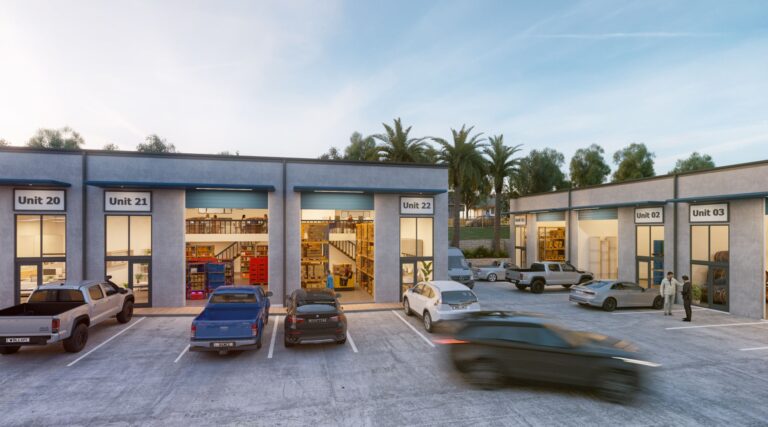
Smaller industrial strata stock is also continuing to transact.
A 290 sqm industrial unit at The Summit @ Heathwood, 109 Hub Crescent sold on 25 August. The unit comprised approximately 242 sqm of warehouse plus a 48 sqm mezzanine office.
Several units at nearby 42 Hub Crescent were also recorded as sold during the final week of August, including units of approximately 357–362 sqm.
This owner-occupier segment remains one of the most resilient parts of Brisbane's industrial market.
Many businesses would rather own a $1 million–$3 million industrial unit than continue paying increasingly high rents with annual escalation.
Northgate and Brisbane's inner north remain tightly held
Industrial property close to Brisbane's inner north continues to benefit from extreme land scarcity.
Northgate, Virginia, Geebung, Banyo and Eagle Farm sit inside an established industrial belt with access to the Gateway Motorway, Brisbane Airport and the CBD.
Yet there is very little opportunity to create meaningful new industrial land in these suburbs.
That is supporting both redevelopment and industrial strata projects.
At BIZ185, 185 Toombul Road, Northgate, several units were recorded as transacting during August.
The development provides units ranging from approximately 100 sqm to 494 sqm, with remaining completed stock being marketed from around $1.25 million for 188 sqm.
Projects like BIZ185 demonstrate why smaller infill industrial development is likely to remain viable even while larger speculative logistics construction becomes more selective.
Bought & Sold
August produced a steady stream of Brisbane industrial and commercial transactions rather than one single blockbuster sale.
Among the transactions recorded during the month were:
- 165 Lavarack Avenue, Eagle Farm — sold 28 August. Approximately 1,175 sqm building on 2,061 sqm of land. Price undisclosed.
- 42 Hub Crescent, Heathwood — multiple industrial units around 357–362 sqm recorded as sold during 26–28 August. Prices undisclosed.
- 16/109 Hub Crescent, Heathwood — approximately 290 sqm, comprising 242 sqm warehouse plus mezzanine office; sold 25 August. Price undisclosed.
- BIZ185 / 185 Toombul Road, Northgate — multiple completed industrial strata transactions recorded during August, with units across approximately 100–494 sqm.
- 4/1927 Ipswich Road, Rocklea — approximately 679 sqm office/warehouse investment, sold 21 August. The property benefits from Ipswich Road exposure and was promoted as flood-free through the 2011, 2022 and 2025 events. Price undisclosed.
- Unit 1 & Unit 11, 15 Aldinga Street, Brendale — industrial/showroom units approximately 197–242 sqm, with a reported transaction value of $1 million recorded on 14 August.
- 71 Cambridge Parade, Manly — a 458 sqm freehold development site sold for $1.255 million following an August auction campaign.
Not every Brisbane transaction is disclosing a price, but the activity demonstrates continued liquidity across the sub-$5 million owner-occupier and private-investor segment.
Industrial rents are no longer accelerating at the same pace
One of the most important changes for developers is the moderation of rental growth.
Brisbane industrial rents rose dramatically between 2021 and 2025.
That phase appears to be normalising.
JLL recorded average prime Southern Brisbane industrial rents of approximately $164 per sqm net per annum in Q2 2026, with no quarterly growth and only around 1% annual growth.
Increasing incentives actually pushed effective rents backwards during the quarter.
This does not mean rents are collapsing.
It means tenants finally have some negotiating leverage after several years in which landlords held almost all of it.
Incentives are becoming important again
Incentives are increasingly being used to bridge the gap between landlord expectations and tenant affordability.
That may include:
- rent-free periods
- fitout contributions
- reduced commencement rents
- staged rental increases
- landlord-funded upgrades
- longer lease structures
- contributions towards racking or specialised occupier requirements.
For developers trying to pre-lease projects, headline face rent is therefore becoming less useful by itself.
Effective rent — after incentives and capital contributions — is increasingly the number that determines whether a project genuinely stacks up.
Industrial land remains the long-term constraint
Buildings can be replaced.
Industrial land close to infrastructure cannot.
This remains one of the strongest underlying investment arguments for Brisbane industrial property.
CBRE continues to report upward pressure on Brisbane industrial land values, supported by limited serviced supply and increasing development costs.
This is particularly important across:
- Eagle Farm
- Pinkenba
- Murarrie
- Northgate
- Geebung
- Wacol
- Richlands
- Heathwood
- Acacia Ridge
- Larapinta
- Parkinson
- Berrinba
- Crestmead
- Yatala.
The outer corridors still have land.
The inner industrial market largely does not.
That distinction will become increasingly important as Brisbane grows.
Development Applications, Approvals & Projects Progressing Through Planning
Several planning and development trends deserve attention entering September.
69 Tingira Street, Pinkenba — Sims Group Australia's major industrial application remained under assessment during August. The application includes potential warehouse, transport depot, port service and higher-impact industrial uses. Council issued an information request on 14 August.
535 Progress Road, Wacol — Komatsu Marketing Support Australia's industrial application was approved on 6 August. Proposed uses include warehouse, office and medium-impact industry.
Heathwood — development continues progressing through the Hub Heathwood precinct and surrounding industrial land, while newly completed strata stock continues being absorbed by private businesses and investors.
Northgate — completed industrial strata developments such as BIZ185 demonstrate the continuing densification of older inner-northern industrial sites.
Pinkenba and Eagle Farm — leasing, redevelopment and planning activity continue demonstrating the long-term transition of the Trade Coast from traditional heavy industry towards a much broader mix of logistics, advanced manufacturing, recycling, infrastructure and specialised industrial uses.
Where Brisbane's next industrial opportunities are emerging
The strongest opportunities are becoming increasingly corridor-specific.
Trade Coast
Eagle Farm, Pinkenba and Murarrie remain premium locations for logistics, infrastructure and occupiers requiring airport or port connectivity.
Southern Brisbane
Acacia Ridge, Rocklea, Archerfield, Coopers Plains and Salisbury benefit from established infrastructure and proximity to population, but redevelopment rather than greenfield development will increasingly drive supply.
South-west
Wacol, Richlands and Darra remain critical logistics and manufacturing locations.
Heathwood / Larapinta
This corridor continues benefiting from Logan Motorway access and availability of modern institutional-quality industrial stock.
Logan / Yatala
Although technically outside Brisbane City, this corridor is increasingly inseparable from the wider Brisbane industrial market.
It provides the major north-south connection between Brisbane and the Gold Coast and remains one of SEQ's most important logistics and manufacturing corridors.
What developers should be watching
Brisbane industrial development is entering a more disciplined phase.
The days when almost any warehouse could be constructed and leased rapidly at a substantially higher rent are fading.
Future projects need stronger fundamentals.
That means:
- better locations
- functional truck circulation
- meaningful hardstand
- efficient warehouse-to-office ratios
- high clearance
- strong power availability
- flexible tenancy configurations
- sustainability credentials
- visibility
- motorway connectivity
- realistic rental assumptions.
Developers controlling strategically located industrial land are still in an enviable position.
But increasingly, the value will come from designing the right product for the specific occupier market, rather than simply putting more warehouse space into the pipeline.
Brisbane industrial property outlook
Brisbane remains one of Australia's strongest long-term industrial markets.
Population growth continues.
Infrastructure investment continues.
E-commerce and distribution requirements continue expanding.
Manufacturing is receiving renewed government attention.
Defence, aviation, recycling, food manufacturing, cold storage, data infrastructure and construction supply chains are all consuming industrial property.
Meanwhile, creating new industrial land near established population centres is becoming progressively more difficult.
That is the structural story.
The short-term market may move through periods of higher incentives, slower investment sales and more conservative development feasibility.
But well-located industrial land remains scarce.
And scarcity, more than anything else, continues to define Brisbane's commercial and industrial property market.
Turning industrial land and projects into stronger commercial outcomes
For landowners and developers, the opportunity increasingly starts well before construction.
Clearly communicating what a site could become can help establish its commercial potential long before the first warehouse is built.
Strong project positioning can help:
- increase the perceived value of industrial land
- secure occupier interest earlier
- support pre-leasing before construction
- build confidence around development applications
- demonstrate the scale and functionality of a future project
- give agents better material to take directly to the market
- create competition around new industrial opportunities
- accelerate sales and leasing campaigns
- turn undeveloped land into an understandable investment proposition.
Commercial Property Marketing works with industrial developers, landowners and agents across Australia to turn plans, development sites and future projects into clear, market-ready property campaigns.
More Brisbane commercial property resources
For developers, landowners and agents bringing property to market in Brisbane, explore Commercial Property Marketing Brisbane, Industrial Land Marketing Brisbane, 3D Renders Brisbane.
For market updates across Australia, visit Commercial Property News Australia.