









































Off-the-plan warehouse marketing has one central problem: the buyer is being asked to make a commercial property decision without being able to walk through the product.
The campaign therefore has to replace physical inspection with enough credible information that the buyer can judge operational suitability, value and delivery risk.
Make every unit easy to identify
Unit numbering, areas and positions must be consistent across the masterplan, individual plans, website, price schedule and agent material.
If a buyer receives Unit 12 from one agent and sees a different area on the website, confidence drops immediately.
This should be treated as a project-control issue as much as a marketing issue. Decisions need an owner, a current source document and a process for communicating changes. Once the campaign is public, even a small inconsistency can spread through portals, PDFs, agent emails and saved buyer documents, making later corrections much harder than getting the source information right in the first place.
There is also a sequencing issue. The information most useful at first contact is not always the information needed at contract or lease stage. The public campaign should establish the commercial case quickly, while the deeper project pack supports the next step. Mixing those layers can make the first interaction unnecessarily dense and still leave serious prospects without the detail they need later.
Show gross area and component areas clearly
Warehouse, office, mezzanine and external areas should be separated where relevant.
Experienced buyers want to understand what they are paying for and whether the office ratio suits their operation. Hiding a large mezzanine inside a single total area creates friction later.
The commercial test is whether the information helps a qualified prospect make a better decision. If it does not improve understanding, comparison, confidence or the next step in the transaction, it probably does not deserve much space in the campaign.
Where the project has several consultants, it is worth nominating which discipline owns each marketing fact. Architects may own areas, civil engineers access geometry, the developer pricing, and the agent availability. The marketing team can then coordinate the public version without becoming the authority for facts it does not control.
Explain access and loading properly
A floorplan alone does not answer every operational question.
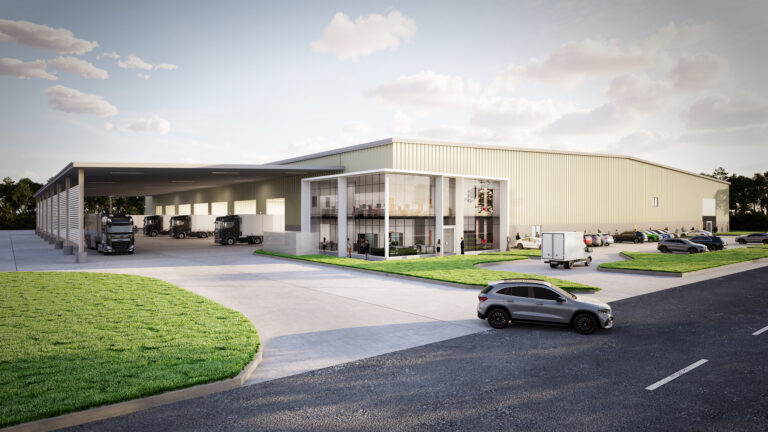
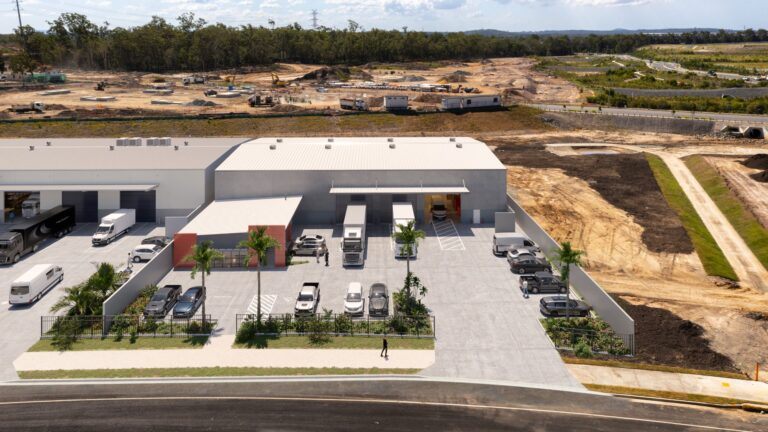
Buyers may need to understand truck approach, roller-door access, reversing room, shared circulation, driveway width and whether loading conflicts with parking or customer access.
Access should be considered at the scale of the actual user. A clean site plan may show a driveway, but an industrial occupier will think about approach direction, vehicle length, turning, shared circulation, loading conflicts and whether staff or customer vehicles interfere with freight movement. Where those issues matter, they should be explained visually rather than left to assumption.
There is also a sequencing issue. The information most useful at first contact is not always the information needed at contract or lease stage. The public campaign should establish the commercial case quickly, while the deeper project pack supports the next step. Mixing those layers can make the first interaction unnecessarily dense and still leave serious prospects without the detail they need later.
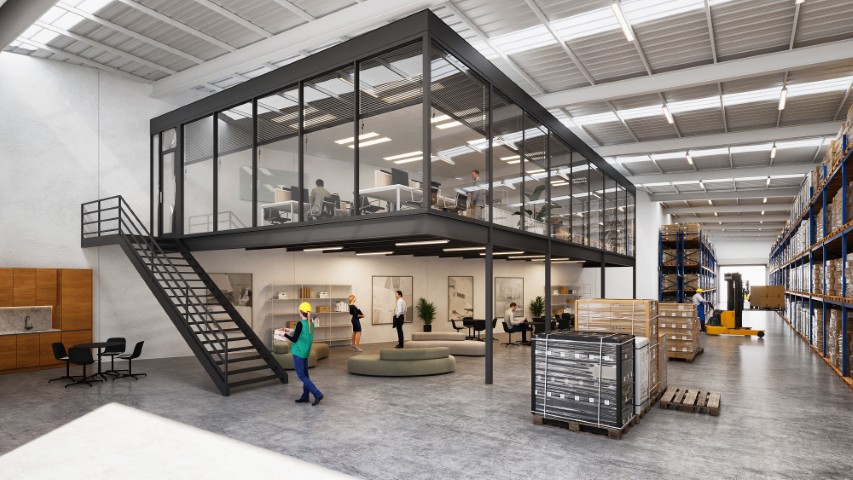
Use CGI to provide scale cues
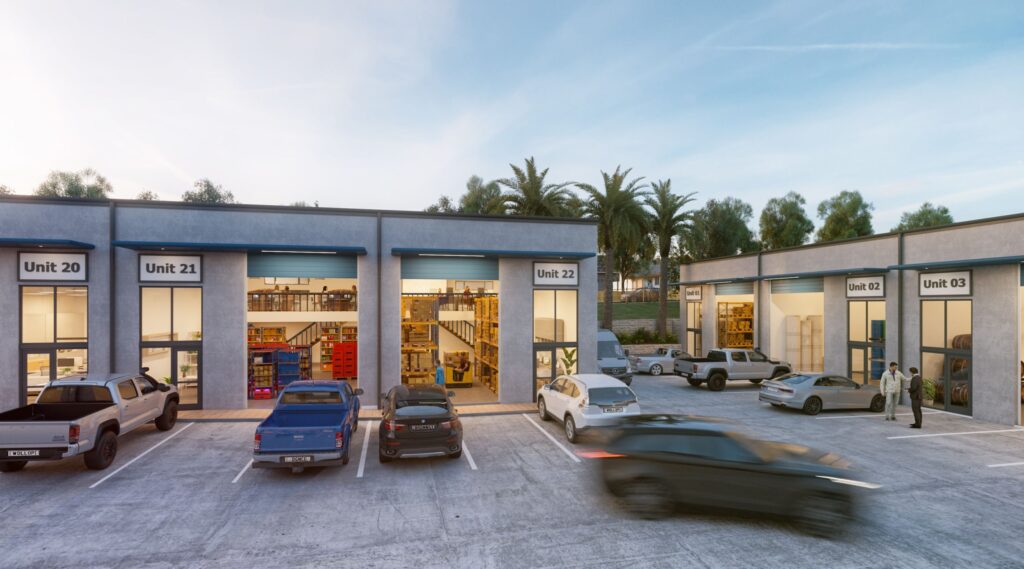
Warehouse interiors can be difficult to understand from dimensions alone.
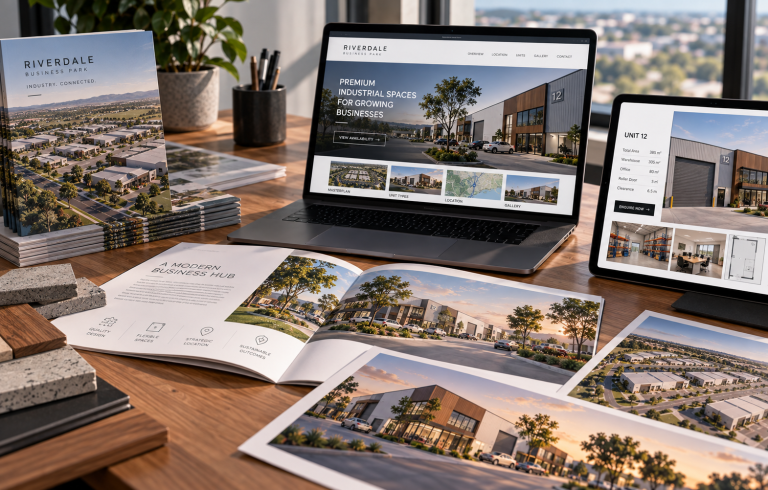
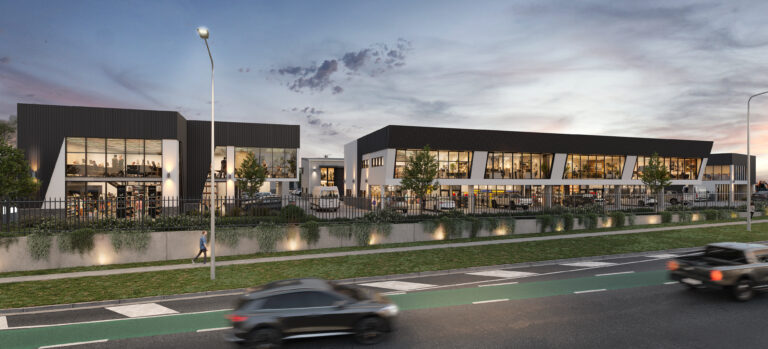
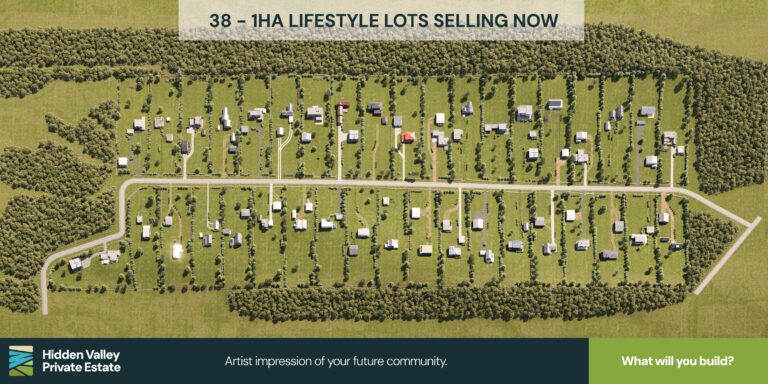
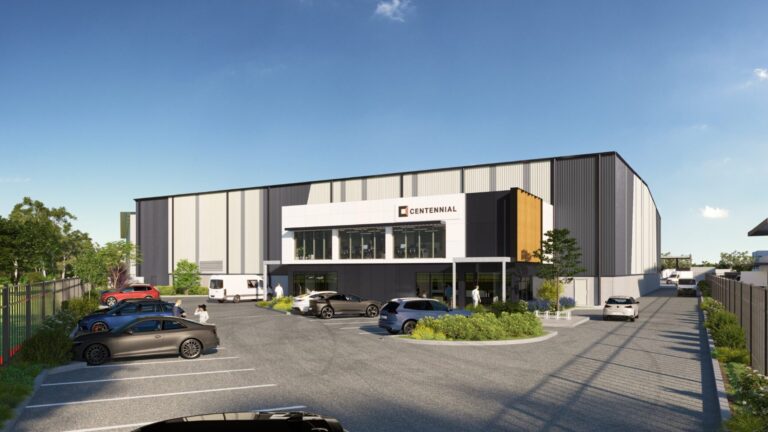
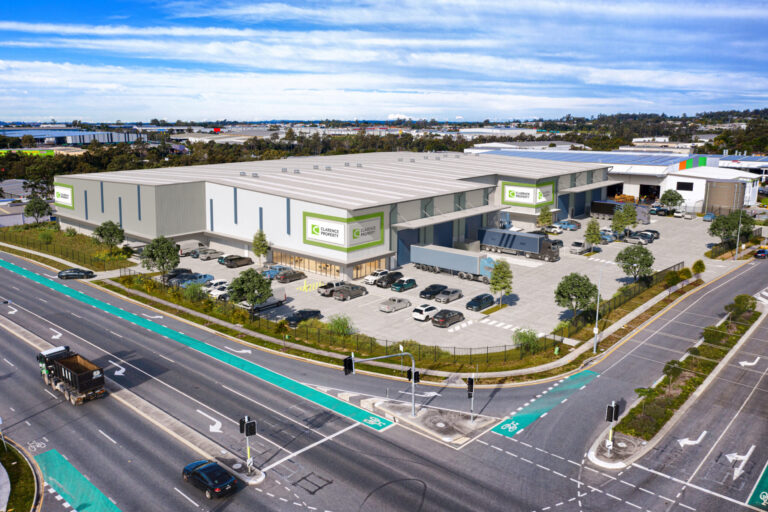
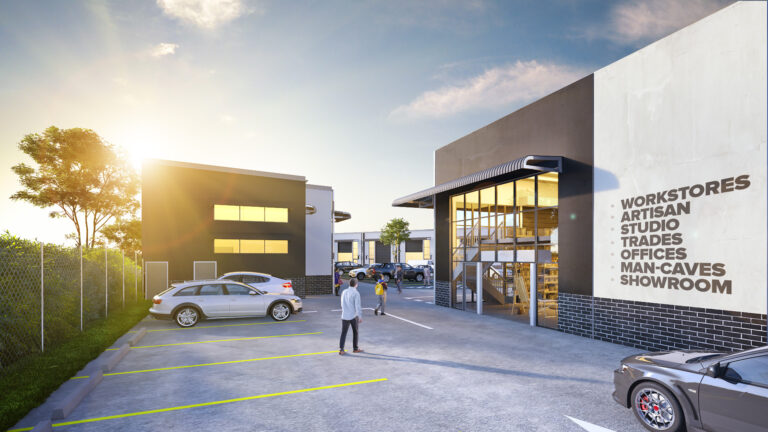
Visualisation can show clearance, door size, office relationship, natural light and the feel of the entry. Exterior views can explain presentation, visitor parking and the relationship between adjoining units.
It is also worth planning the CGI around future reuse. A model that can be updated as façades, stages or unit combinations change has more value than a single hero image built as a dead-end asset. On a long industrial campaign, the ability to revise one scene and produce new views can save considerable time as the project moves from pre-launch through construction.
Developers should also decide which questions are best answered publicly and which are better handled by the appointed agent. Publishing everything can remove useful sales conversations, while publishing too little creates low-quality enquiries. The right balance depends on the complexity of the project, the sophistication of the target market and how much flexibility remains in the deal.
Be precise about specifications
Buyers comparing off-the-plan projects often create their own mental scorecard.
Clearance, power, slab, roller doors, amenities, parking, security, NBN, air-conditioning and construction type should be summarised consistently, with care not to promise anything not included in the contract.
Specifications should be written so they can be compared. Avoid burying key operational details in paragraphs. Areas, clearance, doors, power, parking, amenities, office content and other project-critical items should use consistent terminology across every unit. Where a value is subject to final design, say so rather than filling the gap with false precision.
Small factual errors become disproportionately damaging in commercial property because the same information is repeated in many places. An incorrect area can appear in a render label, brochure, listing, EDM and price schedule before anybody notices. For that reason, source data should be treated almost like project documentation: controlled, dated and updated deliberately rather than copied casually between files.
Explain what is optional
Mezzanines, office fitouts, additional power, unit combinations and other upgrades may be available subject to design and approvals.
Optionality can be a selling point, but only if the process, timing and cost responsibility are clear enough that buyers do not mistake possibilities for inclusions.
The commercial test is whether the information helps a qualified prospect make a better decision. If it does not improve understanding, comparison, confidence or the next step in the transaction, it probably does not deserve much space in the campaign.
Developers should also decide which questions are best answered publicly and which are better handled by the appointed agent. Publishing everything can remove useful sales conversations, while publishing too little creates low-quality enquiries. The right balance depends on the complexity of the project, the sophistication of the target market and how much flexibility remains in the deal.
Use the overall development to strengthen the individual unit
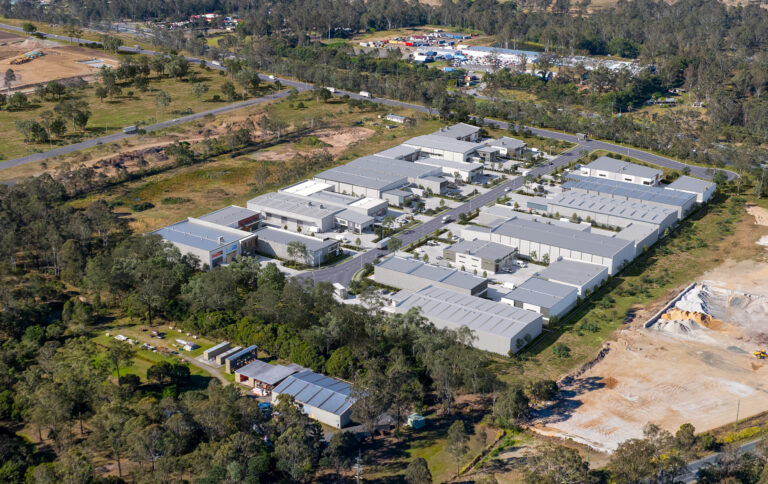
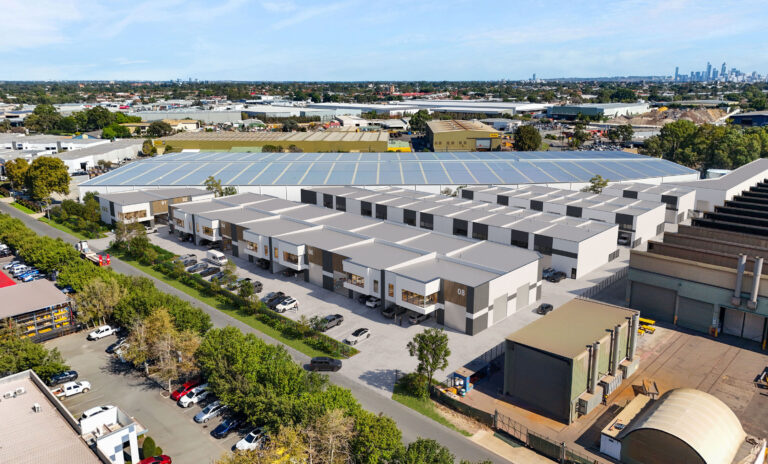
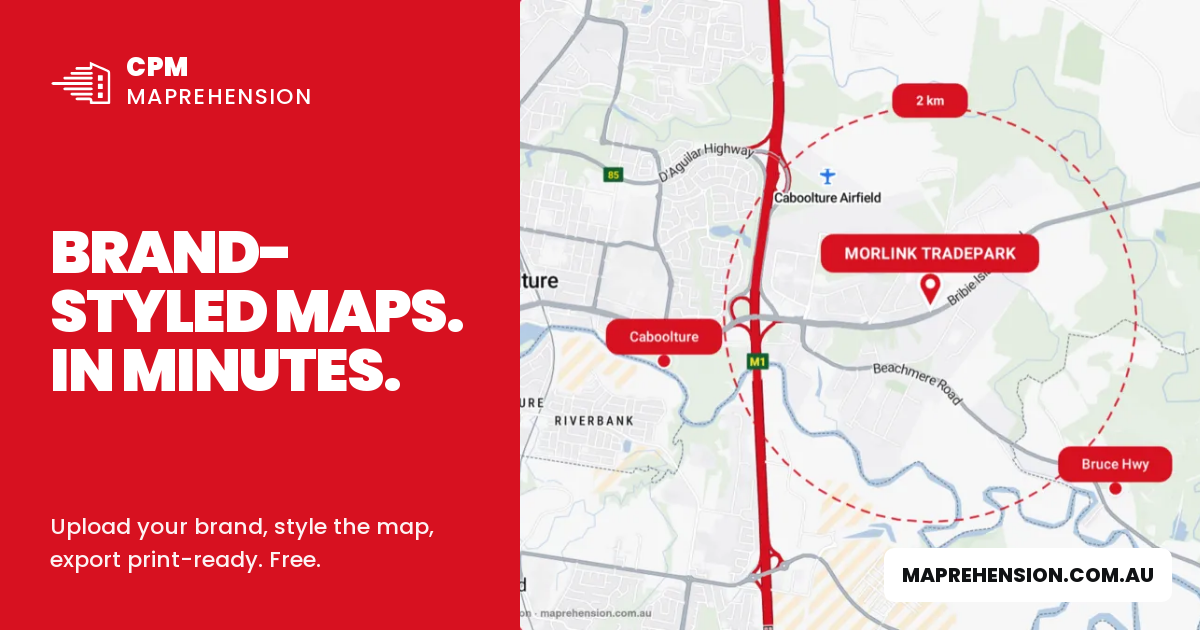
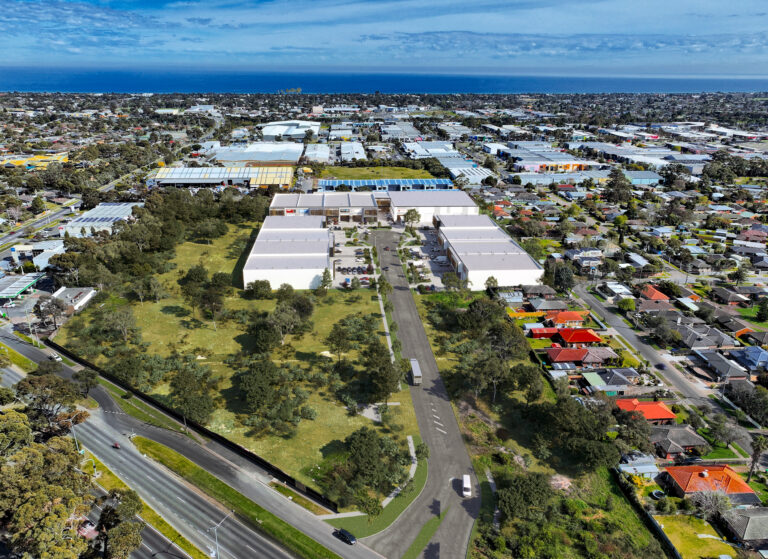
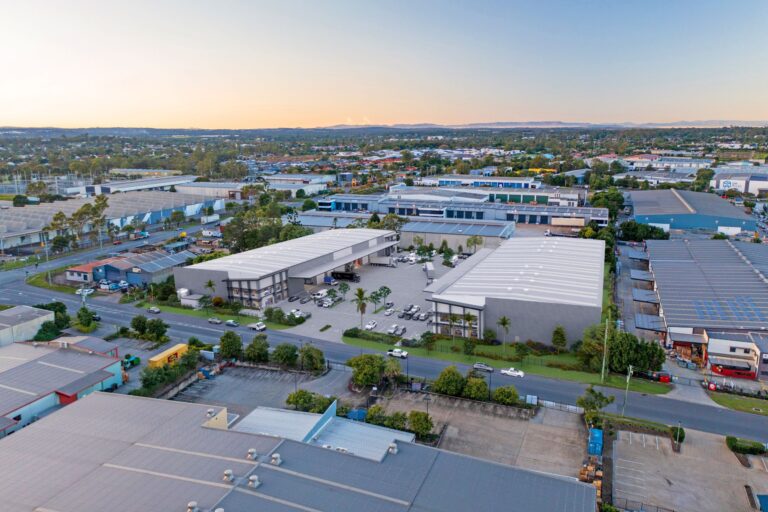
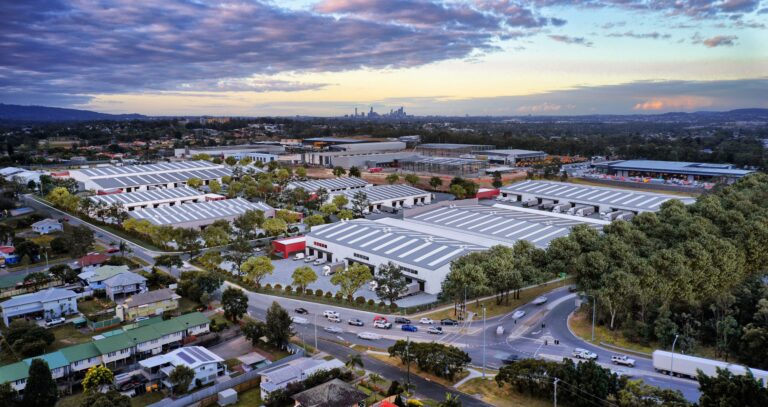
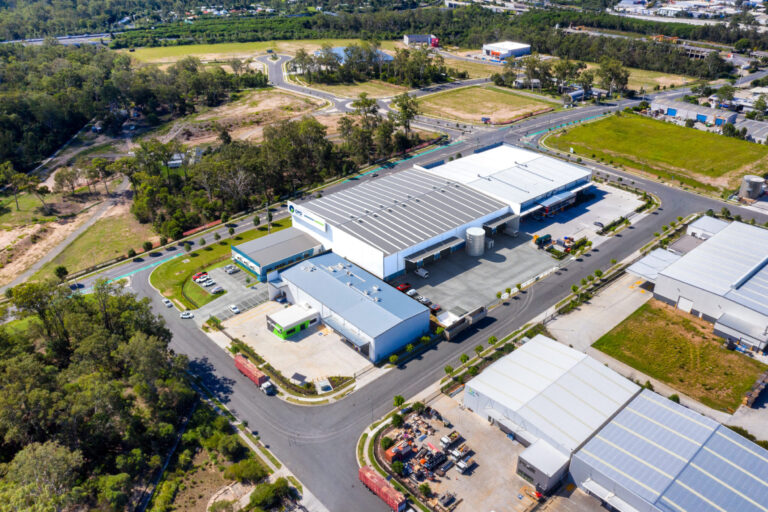
The estate or complex can add value through presentation, access, neighbouring occupiers and common areas.
Individual-unit marketing should therefore connect the specific warehouse to the wider project rather than treating it as a standalone box.
This should be treated as a project-control issue as much as a marketing issue. Decisions need an owner, a current source document and a process for communicating changes. Once the campaign is public, even a small inconsistency can spread through portals, PDFs, agent emails and saved buyer documents, making later corrections much harder than getting the source information right in the first place.
There is also a sequencing issue. The information most useful at first contact is not always the information needed at contract or lease stage. The public campaign should establish the commercial case quickly, while the deeper project pack supports the next step. Mixing those layers can make the first interaction unnecessarily dense and still leave serious prospects without the detail they need later.
Make finance and due diligence easier
Off-the-plan buyers often need information for lenders, accountants, solicitors and business partners.
Clean plans, specifications, project timing and agent contact details help the internal decision process continue after the initial enquiry.
The material also needs to be internally consistent. A lender, solicitor or adviser will often notice discrepancies that a first-time viewer overlooks. Clean documentation therefore supports not only marketing quality but the buyer's ability to obtain approval and proceed.
Developers should also decide which questions are best answered publicly and which are better handled by the appointed agent. Publishing everything can remove useful sales conversations, while publishing too little creates low-quality enquiries. The right balance depends on the complexity of the project, the sophistication of the target market and how much flexibility remains in the deal.
Show construction progress as risk reduces
The sales story changes as construction advances.
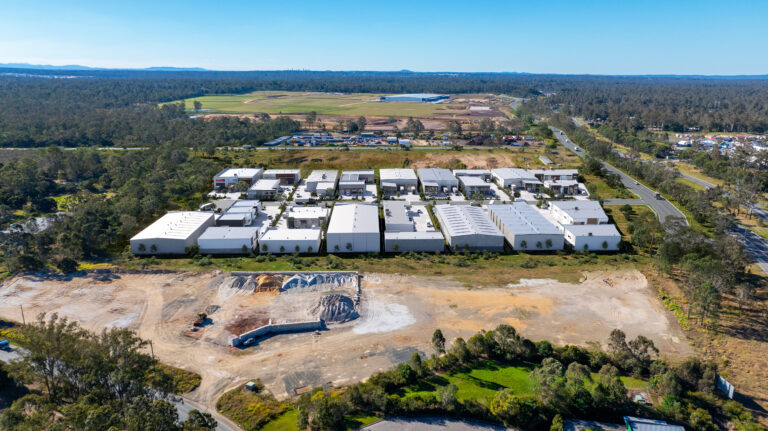
A buyer looking at structural steel and completed slabs perceives delivery risk differently from one looking at vacant land. Progress content should therefore become increasingly prominent.
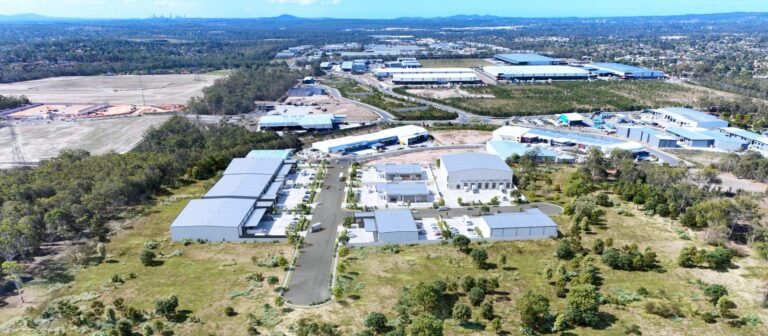
Construction content should be selective. A weekly photograph of minor site activity quickly becomes noise, while meaningful milestones change buyer perception. Civil commencement, slabs, steel, roofing, road completion and the first finished façades are useful because they demonstrate progress that can be understood immediately. The campaign should communicate movement, not simply prove that somebody visited the site with a camera.
The campaign should also be built with the likely life of the project in mind. A staged industrial development may remain active for years, through planning changes, construction cost movements, agent changes and new competing supply. Assets that are difficult to revise become expensive very quickly. Modularity and updateability are therefore strategic considerations, not just production preferences.
Handle price movements carefully
Off-the-plan projects can run across changing construction and finance conditions.
If pricing changes, make sure public material, agent schedules and direct campaign assets are updated together. Old prices circulating online create unnecessary disputes and mistrust.
Where pricing is intentionally withheld, the enquiry process needs to compensate. Agents should be ready with guidance, a clear qualification process and enough product information to make the conversation useful. Hiding price without improving the sales conversation simply adds another step between the buyer and a decision.
Conversely, if enquiries are consistently unqualified, the issue may be the campaign itself. Vague messaging often attracts everyone while helping nobody self-select. Clearer product definition can reduce enquiry volume while improving the commercial value of every lead that remains.
Keep sold stock from dominating the campaign
Sales momentum is useful evidence, but a website full of red SOLD overlays can make remaining units feel like residual product.
Use sold information strategically while keeping the current available opportunities visually important.
This should be treated as a project-control issue as much as a marketing issue. Decisions need an owner, a current source document and a process for communicating changes. Once the campaign is public, even a small inconsistency can spread through portals, PDFs, agent emails and saved buyer documents, making later corrections much harder than getting the source information right in the first place.
There is also a sequencing issue. The information most useful at first contact is not always the information needed at contract or lease stage. The public campaign should establish the commercial case quickly, while the deeper project pack supports the next step. Mixing those layers can make the first interaction unnecessarily dense and still leave serious prospects without the detail they need later.
Segment investors and owner-occupiers
An owner-occupier may tolerate different office ratios or lease assumptions from an investor.
Investors need to understand tenant appeal and flexibility, while owner-occupiers are often more interested in whether the warehouse solves an operational problem.
Segmentation is especially important when the project contains several unit sizes. Smaller trade units may attract private buyers and local businesses, while larger warehouses may require corporate occupiers, logistics users or investors. Media selection, copy depth and the amount of technical information should reflect those different decision processes.
That is why clarity is more valuable than cleverness in this category. A sophisticated audience will forgive a campaign for being restrained; it will not forgive inconsistent areas, vague delivery timing or imagery that conflicts with the plans. The material has to work as a decision-support system, not only as advertising.
Avoid exaggerated lifestyle language
Commercial warehouse buyers generally respond to clear commercial utility.
Strong design and professional presentation matter, but the campaign should remain grounded in access, function, specification, cost and future usefulness rather than residential-style emotional copy.
This should be treated as a project-control issue as much as a marketing issue. Decisions need an owner, a current source document and a process for communicating changes. Once the campaign is public, even a small inconsistency can spread through portals, PDFs, agent emails and saved buyer documents, making later corrections much harder than getting the source information right in the first place.
There is also a sequencing issue. The information most useful at first contact is not always the information needed at contract or lease stage. The public campaign should establish the commercial case quickly, while the deeper project pack supports the next step. Mixing those layers can make the first interaction unnecessarily dense and still leave serious prospects without the detail they need later.
Make the call to action commercially sensible
A buyer may not be ready to 'book now'. They may want the price schedule, contract information, plan pack or a conversation with the agent.
Give the next step enough seriousness to match the value of the transaction.
The commercial test is whether the information helps a qualified prospect make a better decision. If it does not improve understanding, comparison, confidence or the next step in the transaction, it probably does not deserve much space in the campaign.
Developers should also decide which questions are best answered publicly and which are better handled by the appointed agent. Publishing everything can remove useful sales conversations, while publishing too little creates low-quality enquiries. The right balance depends on the complexity of the project, the sophistication of the target market and how much flexibility remains in the deal.
What off-the-plan marketing is really doing
The job is to compress uncertainty.
Every useful plan, render, specification and project update reduces the number of unanswered questions standing between initial interest and a commercial decision.
The marketing plan should be checked against how an experienced buyer will interrogate it. Can they understand the entry, circulation, orientation and adjoining lots without opening the civil set? Can they reconcile unit numbers with the price schedule? Can an agent describe a specific opportunity while looking at the same document as the buyer? Those are practical tests of whether the plan is working as a sales instrument.
Small factual errors become disproportionately damaging in commercial property because the same information is repeated in many places. An incorrect area can appear in a render label, brochure, listing, EDM and price schedule before anybody notices. For that reason, source data should be treated almost like project documentation: controlled, dated and updated deliberately rather than copied casually between files.
Use the off-the-plan period to qualify the right buyers
The absence of a finished building can actually improve qualification if the campaign is structured well. A buyer who works through plans, specifications, delivery timing and contract information before construction is often demonstrating stronger intent than someone casually inspecting completed stock.
The marketing should therefore make serious evaluation easy without turning the process into an open data room. Give qualified prospects the information they need in stages and use agent conversations to understand whether the proposed unit genuinely fits their business or investment criteria.
The practical test is whether a buyer can move from the public campaign into a detailed conversation without discovering basic information for the first time. If key facts only emerge after several calls with the agent, the campaign is forcing the sales process to do work that should already have been handled by the project material.
Commercial Property Marketing produces off-the-plan industrial campaigns that combine accurate project information with visualisation and sales material built for real commercial property decisions.