A new industrial estate is rarely one product. It can contain different lot sizes, warehouse formats, stages, buyer groups and timing windows, all competing for attention inside the same campaign.
The marketing challenge is to create one strong estate identity without flattening those differences. Buyers should understand the wider project immediately, then be able to drill into the specific opportunity that suits them.
Start with the estate hierarchy
The campaign needs a clear hierarchy: estate, stage, lot or unit, then individual specifications.
When those levels are mixed together, buyers struggle to understand whether they are looking at the whole project or one release. That confusion becomes worse as more stages are added.
At project level, timing should be documented rather than left as an informal assumption between the developer, agent and consultants. If the campaign is being prepared while design is still moving, nominate the current issue set, record the decisions that are considered commercially fixed and identify the next consultant milestone that could materially change the offer. That gives the marketing team a controlled point of reference and avoids expensive rework every time a drawing is reissued.
There is also a sequencing issue. The information most useful at first contact is not always the information needed at contract or lease stage. The public campaign should establish the commercial case quickly, while the deeper project pack supports the next step. Mixing those layers can make the first interaction unnecessarily dense and still leave serious prospects without the detail they need later.
Position the estate against actual competition
The relevant competitor is not always the development next door. It may be established stock, another suburb, land with design-and-construct options or a cheaper estate with weaker access.
Positioning should therefore be based on how buyers are genuinely comparing the project, not on generic claims such as premium, connected or strategically located.
A strong proposition also needs hierarchy. A project can have excellent access, attractive pricing, good presentation and flexible units, but the campaign should still decide what leads. Experienced buyers will discover the secondary advantages during due diligence. The first job is to give them a clear reason to investigate this project rather than treating every feature as equally important.
Developers should also decide which questions are best answered publicly and which are better handled by the appointed agent. Publishing everything can remove useful sales conversations, while publishing too little creates low-quality enquiries. The right balance depends on the complexity of the project, the sophistication of the target market and how much flexibility remains in the deal.
Use the road and freight story properly
Industrial location should be explained in operational terms. Distance to motorways, ports, major population, suppliers and customers can matter more than suburb prestige.
Mapping should help buyers understand travel direction, major routes, truck access and surrounding employment areas without becoming a decorative map full of irrelevant points of interest.
Access should be considered at the scale of the actual user. A clean site plan may show a driveway, but an industrial occupier will think about approach direction, vehicle length, turning, shared circulation, loading conflicts and whether staff or customer vehicles interfere with freight movement. Where those issues matter, they should be explained visually rather than left to assumption.
There is also a sequencing issue. The information most useful at first contact is not always the information needed at contract or lease stage. The public campaign should establish the commercial case quickly, while the deeper project pack supports the next step. Mixing those layers can make the first interaction unnecessarily dense and still leave serious prospects without the detail they need later.
Make the masterplan the navigation system for the campaign
For a multi-unit or multi-lot estate, the masterplan should be the visual index to the whole project.
Unit numbers, lot areas, roads, entries, parking, staging and availability should be structured so that the same logic can be reused on the website, in the IM and by the agents.
Where design information is still fluid, the masterplan also becomes a version-control problem. Keep one current marketing issue and retire superseded PDFs deliberately. Once an old plan has been emailed to agents, uploaded to portals and saved by buyers, it can keep circulating for months. Clear revision discipline is therefore part of marketing, not merely a consultant administration task.
Where the project has several consultants, it is worth nominating which discipline owns each marketing fact. Architects may own areas, civil engineers access geometry, the developer pricing, and the agent availability. The marketing team can then coordinate the public version without becoming the authority for facts it does not control.
Create product families where the estate contains different offers
A project may contain small trade units, larger warehouses, showroom units and land lots. Treating all of them as one homogeneous product weakens the campaign.
Use a consistent estate brand, but give each product group enough distinction that the buyer can quickly self-select into the relevant part of the project.
This should be treated as a project-control issue as much as a marketing issue. Decisions need an owner, a current source document and a process for communicating changes. Once the campaign is public, even a small inconsistency can spread through portals, PDFs, agent emails and saved buyer documents, making later corrections much harder than getting the source information right in the first place.
There is also a sequencing issue. The information most useful at first contact is not always the information needed at contract or lease stage. The public campaign should establish the commercial case quickly, while the deeper project pack supports the next step. Mixing those layers can make the first interaction unnecessarily dense and still leave serious prospects without the detail they need later.
Use CGI to explain estate character, not just architecture
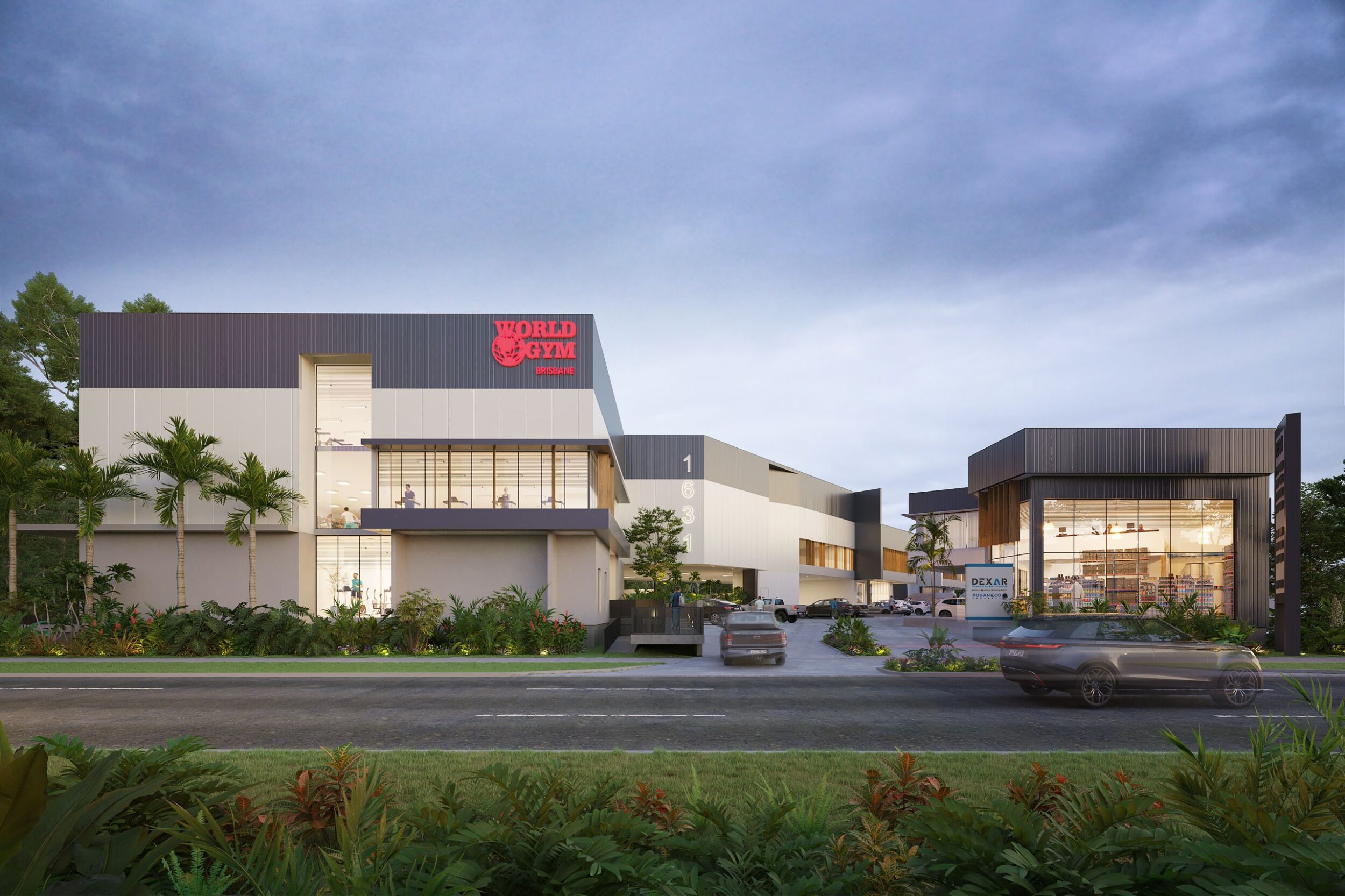
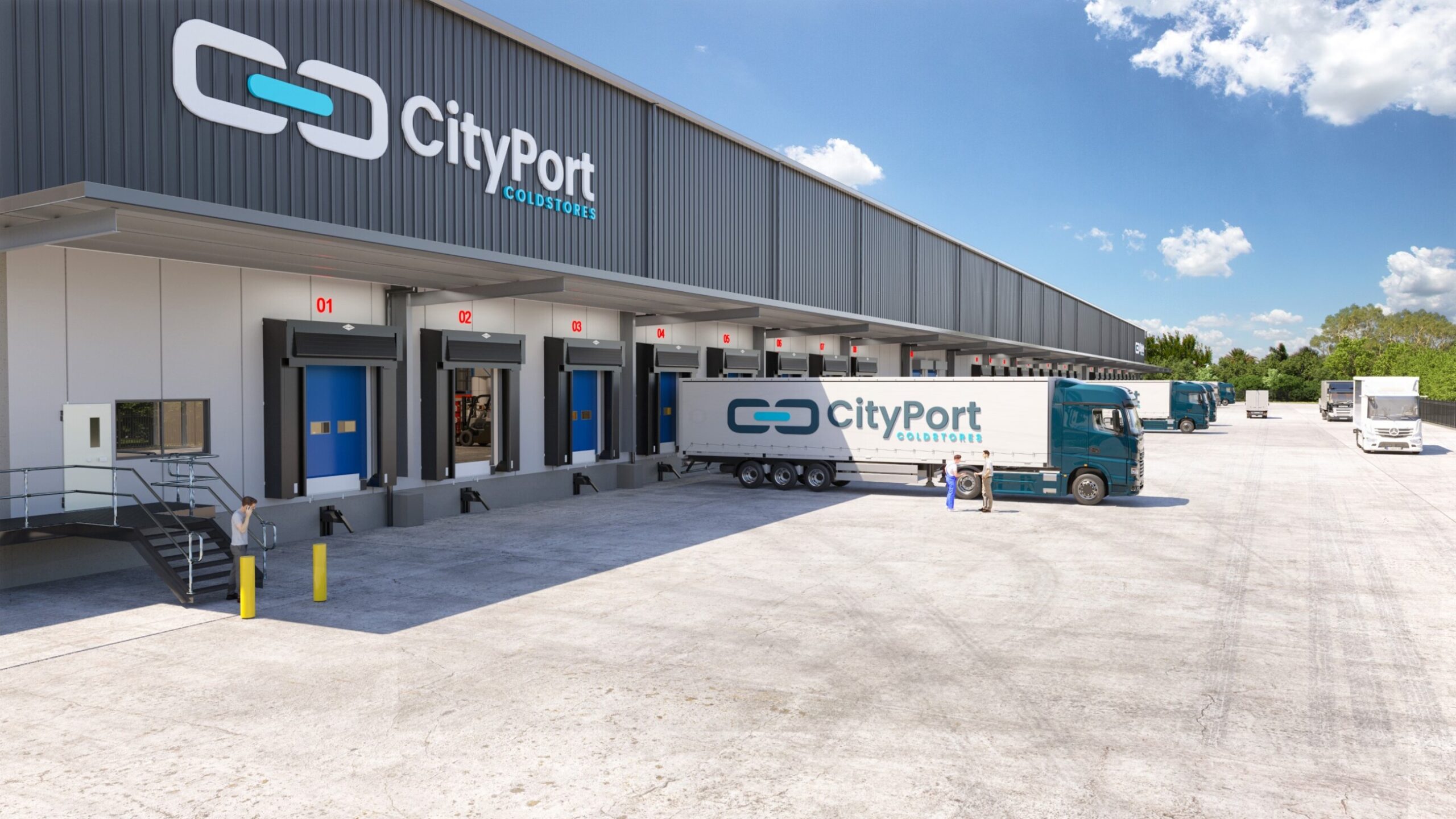
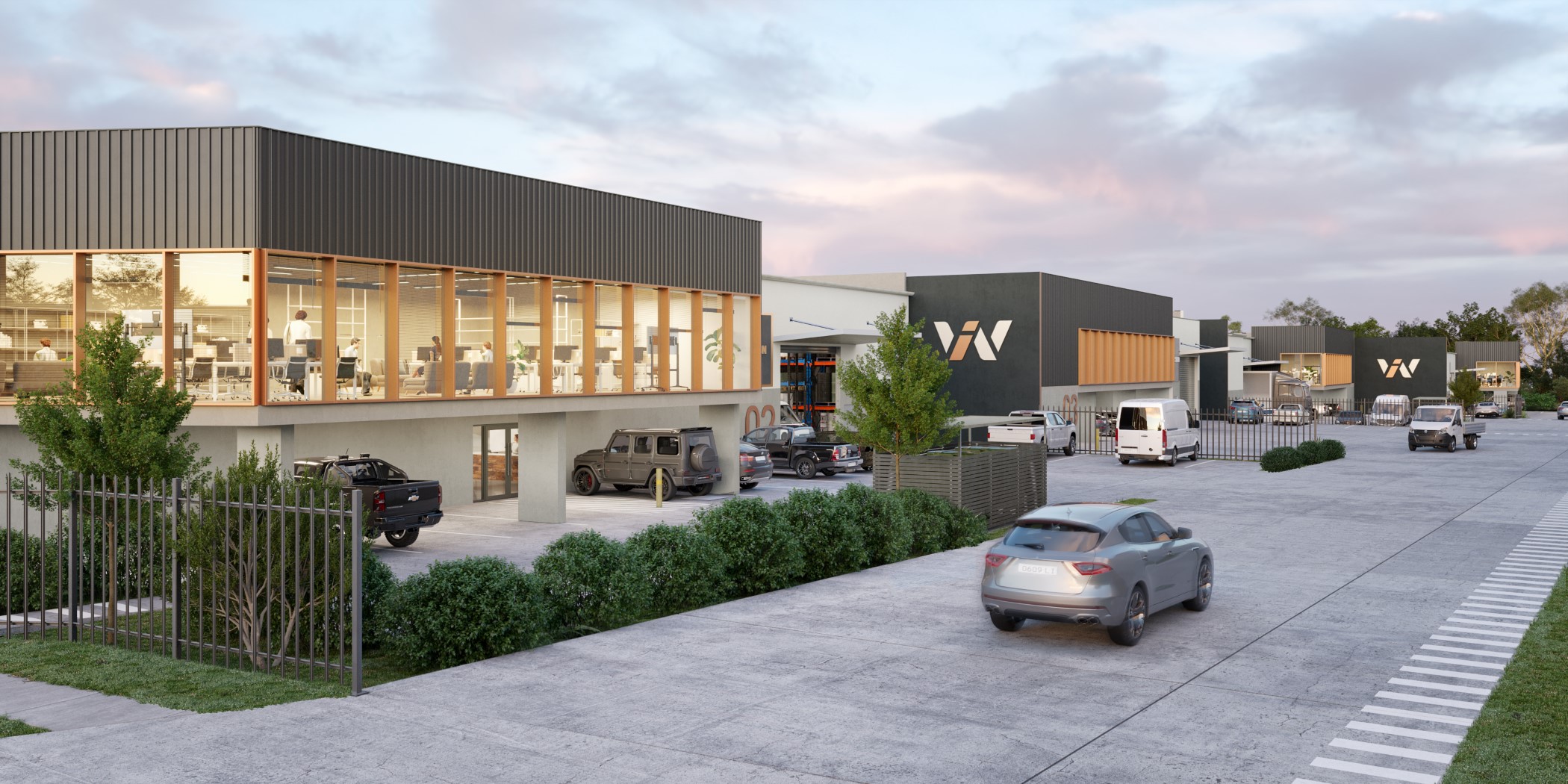
Industrial renders should show how the estate works: roads, landscaping, vehicle circulation, entries, loading, setbacks and the relationship between buildings.
Aerial views are especially important on larger estates because they make scale and staging comprehensible. Ground views then bring individual buildings and street presentation into focus.
It is also worth planning the CGI around future reuse. A model that can be updated as façades, stages or unit combinations change has more value than a single hero image built as a dead-end asset. On a long industrial campaign, the ability to revise one scene and produce new views can save considerable time as the project moves from pre-launch through construction.
Developers should also decide which questions are best answered publicly and which are better handled by the appointed agent. Publishing everything can remove useful sales conversations, while publishing too little creates low-quality enquiries. The right balance depends on the complexity of the project, the sophistication of the target market and how much flexibility remains in the deal.
Decide how much availability to expose
Some projects benefit from transparent live availability. Others prefer agents to control the conversation, particularly where pricing, combinations or negotiation strategy is fluid.
The website and campaign should support the chosen sales strategy rather than automatically publishing every data point because the technology can.
This should be treated as a project-control issue as much as a marketing issue. Decisions need an owner, a current source document and a process for communicating changes. Once the campaign is public, even a small inconsistency can spread through portals, PDFs, agent emails and saved buyer documents, making later corrections much harder than getting the source information right in the first place.
There is also a sequencing issue. The information most useful at first contact is not always the information needed at contract or lease stage. The public campaign should establish the commercial case quickly, while the deeper project pack supports the next step. Mixing those layers can make the first interaction unnecessarily dense and still leave serious prospects without the detail they need later.
Use scarcity carefully
Real sales momentum is powerful. Manufactured scarcity is easy for experienced buyers to detect.
If only three units genuinely remain in a release, say so. If the project is still negotiating on half the estate, avoid language that creates credibility problems when buyers compare notes with the agents.
The commercial test is whether the information helps a qualified prospect make a better decision. If it does not improve understanding, comparison, confidence or the next step in the transaction, it probably does not deserve much space in the campaign.
Developers should also decide which questions are best answered publicly and which are better handled by the appointed agent. Publishing everything can remove useful sales conversations, while publishing too little creates low-quality enquiries. The right balance depends on the complexity of the project, the sophistication of the target market and how much flexibility remains in the deal.
Give investors and owner-occupiers different reasons to care
Owner-occupiers usually focus on the operational advantage of the location and building. Investors often look harder at future tenant demand, product flexibility and how easy the asset will be to lease or resell.
The estate campaign should support both audiences without forcing them through identical messaging.
The same asset can be described differently without changing the underlying facts. An owner-occupier may see surplus parking as operational flexibility; an investor may see it as broad tenant appeal. A tenant may value proximity to customers; an investor may interpret the same location as lower reletting risk. Good campaign structure allows those arguments to coexist without turning the page into a list of generic benefits.
The buyer or tenant is rarely making the decision alone. Commercial property often involves directors, finance teams, lenders, solicitors, accountants, operations managers and sometimes investors. Marketing becomes more effective when the material can survive being forwarded to people who were not part of the original sales conversation and still make sense without a verbal explanation.
Plan the launch around the project program
The ideal launch date is rarely just the day the brochure is finished.
Consider DA timing, civil commencement, sales documentation, finance milestones, agent readiness and when there will be enough certainty for enquiries to progress beyond general interest.
Where design information is still fluid, the masterplan also becomes a version-control problem. Keep one current marketing issue and retire superseded PDFs deliberately. Once an old plan has been emailed to agents, uploaded to portals and saved by buyers, it can keep circulating for months. Clear revision discipline is therefore part of marketing, not merely a consultant administration task.
Where the project has several consultants, it is worth nominating which discipline owns each marketing fact. Architects may own areas, civil engineers access geometry, the developer pricing, and the agent availability. The marketing team can then coordinate the public version without becoming the authority for facts it does not control.
Keep agents inside one information system
Multi-agent campaigns can fragment quickly if each office is circulating different plans or availability.
Use a controlled source for current material and retire superseded documents deliberately. The project should look coordinated no matter which agent introduced the buyer.
The agent handover should be treated as an operational step, not simply an email containing finished artwork. Walk the agents through the current plans, product hierarchy, known design assumptions, availability process and where to find the latest files. That reduces the chance of different agents describing the same project differently and gives the marketing team early feedback on questions the campaign has not yet answered.
The campaign should also be built with the likely life of the project in mind. A staged industrial development may remain active for years, through planning changes, construction cost movements, agent changes and new competing supply. Assets that are difficult to revise become expensive very quickly. Modularity and updateability are therefore strategic considerations, not just production preferences.
Let the campaign evolve as the estate matures
An estate that was once a future concept eventually becomes a construction site, then a place with completed roads and occupied buildings.
The campaign should shift accordingly. Early messaging may focus on vision and access; later messaging can use completed buildings, occupiers, construction proof and visible momentum.
The commercial test is whether the information helps a qualified prospect make a better decision. If it does not improve understanding, comparison, confidence or the next step in the transaction, it probably does not deserve much space in the campaign.
Developers should also decide which questions are best answered publicly and which are better handled by the appointed agent. Publishing everything can remove useful sales conversations, while publishing too little creates low-quality enquiries. The right balance depends on the complexity of the project, the sophistication of the target market and how much flexibility remains in the deal.
Use enquiry quality as a diagnostic
A large number of poor-fit enquiries may indicate the campaign is too broad.
If trade users keep enquiring on units that cannot accommodate their operation, or investors are missing the investment proposition, the campaign needs sharper qualification rather than simply more reach.
Market response should be separated into awareness, qualification and conversion. High website traffic with weak enquiries suggests a different problem from strong enquiries that do not progress past pricing. Likewise, repeated interest in one unit size can reveal product demand that raw enquiry totals hide. Looking at the funnel properly prevents the development team from treating every slow period as a media problem.
Conversion should be considered separately from lead generation. If qualified prospects are requesting plans and speaking with agents but not progressing, the campaign may already have done its job. At that point the development team needs to inspect price, deal structure, timing, specification or product-market fit instead of assuming the answer is a larger advertising budget.
Do not let old stock weaken the estate
As a project sells down, the remaining opportunities need careful presentation.
Do not leave sold-out stages dominating the website while the current stock looks secondary. Rebalance the campaign so the remaining product still feels deliberate, not like leftover inventory.
The commercial test is whether the information helps a qualified prospect make a better decision. If it does not improve understanding, comparison, confidence or the next step in the transaction, it probably does not deserve much space in the campaign.
Developers should also decide which questions are best answered publicly and which are better handled by the appointed agent. Publishing everything can remove useful sales conversations, while publishing too little creates low-quality enquiries. The right balance depends on the complexity of the project, the sophistication of the target market and how much flexibility remains in the deal.
What a strong industrial estate campaign achieves
The objective is not just awareness. A strong campaign reduces the time agents spend explaining basics, improves the quality of enquiries and gives buyers enough confidence to move into due diligence.
For the developer, that means the marketing system is doing real commercial work rather than simply producing attractive collateral.
This should be treated as a project-control issue as much as a marketing issue. Decisions need an owner, a current source document and a process for communicating changes. Once the campaign is public, even a small inconsistency can spread through portals, PDFs, agent emails and saved buyer documents, making later corrections much harder than getting the source information right in the first place.
There is also a sequencing issue. The information most useful at first contact is not always the information needed at contract or lease stage. The public campaign should establish the commercial case quickly, while the deeper project pack supports the next step. Mixing those layers can make the first interaction unnecessarily dense and still leave serious prospects without the detail they need later.
Commercial Property Marketing builds industrial estate campaigns around that structure, from project positioning and visualisation through to masterplans, websites, IMs, signage and agent support.
More commercial property marketing resources
Explore Commercial Property Marketing, 3D Renders and Commercial Property Insights.


 EXPLORE THE WORK