Hobart’s commercial and industrial property market moved through August with one of the clearest themes in the country:
the city is running out of easily expandable industrial land in its established precincts, forcing more of Greater Hobart’s future logistics and industrial growth north toward Brighton and east toward Cambridge.
That shift is becoming increasingly visible.
Established precincts such as Moonah, Derwent Park and Glenorchy remain tightly held and continue to transact, but they are geographically constrained.
At the same time:
- Cambridge continues to strengthen around Hobart Airport
- Brighton is emerging as southern Tasmania’s principal freight and logistics growth precinct
- large-scale industrial land is being assembled and prepared for future development
- freight and port infrastructure investment is improving the broader commercial network
- major government and sports infrastructure projects are creating new employment nodes around Greater Hobart
The Hobart market remains much smaller and less liquid than mainland capitals.
But that scarcity itself is becoming an important part of the investment story.
Hobart industrial property remains structurally constrained
Industrial land around Hobart is not abundant.
The established market is concentrated heavily through:
- Derwent Park
- Moonah
- Glenorchy
- Cambridge
- Mornington
- Kingston
- Brighton
- Bridgewater
Each precinct plays a different role.
Moonah and Derwent Park provide central industrial and showroom property close to the city.
Cambridge provides airport-linked industrial land.
Brighton offers the scale and freight infrastructure required for future logistics expansion.
That means Greater Hobart increasingly has a two-tier industrial market:
scarce central industrial property and larger emerging outer industrial land.
Derwent Park remains one of Greater Hobart’s most tightly held industrial precincts
Derwent Park recorded one of August’s most significant industrial transactions.
233–235 Main Road, Derwent Park sold on 12 August 2026.
The property comprises approximately 967 sqm and is positioned on one of the northern suburbs’ highest-profile commercial corridors.
The sale reinforces the continuing importance of Main Road frontage.
Properties in this location can potentially appeal to:
- industrial occupiers
- showrooms
- trade retail
- automotive users
- investors
That broader range of potential users can materially increase underlying land value.
2–4 Pear Avenue provides another useful Derwent Park benchmark
Immediately before August, 2–4 Pear Avenue, Derwent Park sold on 31 July.
The property comprises approximately 2,175 sqm and was sold with a new 5 + 5 year lease to a long-standing tenant.
This is a substantial industrial holding by Hobart standards.
The sale highlights the investment appeal of established industrial property combining:
- secure income
- substantial building area
- central location
- constrained replacement supply
Large assets like this are particularly difficult to reproduce within Derwent Park.
Moonah scarcity remains a defining factor
Moonah sits immediately north of the Hobart CBD and has evolved into a broad mixed commercial and industrial precinct.
Its location makes it attractive to businesses that need to remain close to established customers.
A recent transaction at 22 Chesterman Street, Moonah provides a useful benchmark.
The approximately 432 sqm dual-tenanted industrial facility sold on 31 July for $920,000.
That equates to roughly $2,130 per sqm of building area, although the figure should be interpreted cautiously because tenancy structure, underlying land and building specification influence value.
Moonah is becoming less purely industrial
Moonah’s long-term story is not simply warehouse demand.
The precinct increasingly accommodates:
- retail
- food and beverage
- showrooms
- creative businesses
- offices
- automotive
- residential redevelopment
That creates competition for land.
Industrial property that disappears into higher-value uses is rarely replaced nearby.
Over time, that makes the remaining functional industrial stock more valuable to businesses that genuinely require it.
Cambridge continues to strengthen as Hobart’s airport industrial market
One of August’s strongest industrial sales occurred at 4/14 Kennedy Drive, Cambridge.
The approximately 335 sqm industrial property sold on 21 August 2026.
It was marketed with a new five-year lease and direct access to major transport routes.
Cambridge is becoming increasingly important because it offers something central Hobart cannot:
room to grow.
Its advantages include proximity to:
- Hobart Airport
- Tasman Highway
- Sorell
- eastern shore population growth
- freight routes
- new industrial estates
Hobart Airport is becoming a bigger commercial property catalyst
Hobart Airport’s terminal expansion continued progressing during August.
A new Marketplace food and beverage outlet opened during the month, following the opening of expanded baggage reclaim in July and new gates earlier in 2026.
The airport also has an approved Major Development Plan for the Cambridge Production Kitchen Project, approved by the Commonwealth in November 2025.
These projects matter because airports generate more than passenger traffic.
They create demand for:
- logistics
- catering
- food production
- car rental
- warehousing
- freight
- aviation services
- hotels
- commercial offices
Cambridge is therefore increasingly becoming a broader airport employment precinct.
Cambridge has a fundamentally different growth profile from Moonah
Moonah and Derwent Park benefit from scarcity.
Cambridge benefits from expansion.
That difference is important.
Cambridge can accommodate newer industrial estates with:
- wider roads
- better truck access
- modern buildings
- higher warehouse clearance
- larger sites
That makes it increasingly attractive to businesses that have outgrown older inner-Hobart industrial premises.
Brighton is emerging as southern Tasmania’s major logistics growth story
The biggest industrial land story in Greater Hobart is increasingly Brighton.
Brighton Council describes the Brighton Hub as southern Tasmania’s premier freight and logistics precinct, with direct road and rail access and industrial land available for future development.
The precinct already accommodates major freight operators including Toll and SRT.
Transport, postal and warehousing is now the municipality’s largest employment sector, with sector employment growing approximately 121% and exceeding 590 jobs.
That gives Brighton an economic base that already aligns strongly with industrial property growth.
A 76-hectare industrial opportunity could reshape the Brighton market
One of Greater Hobart’s biggest future industrial opportunities emerged during 2026.
A combined 76-hectare industrial landholding at Lot 2 Glenstone Road and 175 Cobbs Hill Road, Bridgewater was prepared for market with expectations around $60 million.
The property forms part of a much larger 192-hectare holding.
The 76-hectare portion was being offered subject to an active rezoning application.
The scale is significant.
For Hobart, this is not another industrial lot release.
It has the potential to create an entirely new logistics and industrial development precinct.
Brighton has the room Hobart’s established industrial areas no longer have
This is the fundamental northern corridor advantage.
Businesses requiring:
- major distribution centres
- transport depots
- large hardstand
- freight terminals
- manufacturing
- large-scale warehousing
will increasingly struggle to find appropriate sites in central Hobart.
Brighton can accommodate these uses.
Its direct road and rail freight infrastructure makes the location particularly suited to regional distribution.
Brighton sits on Tasmania’s most important freight corridor
The Burnie-to-Hobart Freight Corridor is the state’s most significant land freight network.
Approximately 70% of freight trips across Tasmania use the corridor for at least part of their journey.
The corridor connects Tasmania’s major northern ports with the southern region’s main intermodal hub at Brighton.
This is a major competitive advantage.
Industrial property follows freight infrastructure because transport cost is one of the largest operating expenses for many occupiers.
Brighton Hub planning is becoming more sophisticated
Brighton Council is preparing a dedicated Brighton Hub Structure Plan to guide growth through to 2046.
The work covers:
- industrial land uses
- subdivision staging
- lot sizes
- infrastructure
- services
- long-term development pattern
This is exactly the sort of planning Hobart needs if Brighton is to absorb a larger share of future industrial growth.
Without coordinated planning, industrial estates can become fragmented or infrastructure-constrained.
Brighton’s wider commercial story is also growing
Industrial property is not the only opportunity.
Brighton Council identifies significant unmet demand for:
- retail
- office
- commercial services
and notes that office demand already exceeds supply in Brighton and Bridgewater.
That makes sense.
Industrial employment creates secondary commercial demand.
Workers need:
- food
- retail
- medical
- childcare
- offices
- services
As the Hub grows, the surrounding commercial economy should expand with it.
Brighton and Pontville planning reached another milestone in August
Brighton Council formally endorsed the Brighton & Pontville Local Area Plan in August 2026.
The plan establishes long-term directions around:
- housing
- activity centres
- transport
- community infrastructure
- land use
- growth
This further strengthens the broader planning framework supporting development north of Hobart.
Hobart’s city fringe remains extremely scarce
Another useful August transaction occurred at 321–323 Liverpool Street, Hobart.
The property sold on 14 August 2026.
It comprises approximately:
- 839 sqm of improvements
- 948 sqm of land
- showroom/warehouse accommodation
- approximately 650 metres from the city centre
This is a fundamentally different property from a Cambridge or Brighton warehouse.
Its value lies heavily in location and redevelopment optionality.
City-fringe industrial property increasingly carries redevelopment value
Older warehouse or showroom property near Hobart CBD may potentially appeal to multiple buyer groups.
The site could continue functioning as:
- warehouse
- showroom
- commercial premises
or ultimately be repositioned for higher-value uses, subject to planning.
That flexibility creates value above conventional industrial fundamentals.
North Hobart records another commercial freehold transaction
64 Burnett Street, Hobart sold on 6 August 2026.
The approximately 404 sqm property sits within the tightly held North Hobart city-fringe precinct.
The transaction reinforces the continuing appetite for well-located freehold commercial assets immediately outside Hobart CBD.
North Hobart’s combination of:
- residential density
- restaurants
- offices
- medical
- retail
- commercial services
creates a deep pool of potential occupiers.
Franklin Wharf records a major waterfront transaction
11 Franklin Wharf, Hobart sold on 13 August 2026.
The approximately 1,200 sqm property occupies a major position within Sullivans Cove.
The asset was marketed within the hotel, motel, pub and leisure category rather than conventional industrial property.
Nevertheless, it is significant to Hobart’s broader commercial market because high-quality waterfront freeholds are exceptionally scarce.
Bought & Sold
August produced a useful mix of industrial, commercial and city-fringe transactions.
233–235 Main Road, Derwent Park
- Sold: 12 August 2026
- Building: approximately 967 sqm
- Industrial/showroom property
- High-profile Main Road location
- Established Derwent Park precinct
4/14 Kennedy Drive, Cambridge
- Sold: 21 August 2026
- Building: approximately 335 sqm
- New five-year lease
- Established Cambridge industrial location
- Strong transport access
321–323 Liverpool Street, Hobart
- Sold: 14 August 2026
- Building: approximately 839 sqm
- Land: approximately 948 sqm
- Showroom/warehouse
- Approximately 650 metres from Hobart CBD
64 Burnett Street, Hobart
- Sold: 6 August 2026
- Building: approximately 404 sqm
- City-fringe commercial freehold
- North Hobart location
11 Franklin Wharf, Hobart
- Sold: 13 August 2026
- Building: approximately 1,200 sqm
- Major Sullivans Cove waterfront asset
22 Chesterman Street, Moonah
- Sold: 31 July 2026
- Price: $920,000
- Building: approximately 432 sqm
- Dual-tenanted industrial property
- Useful immediate pre-August benchmark
2–4 Pear Avenue, Derwent Park
- Sold: 31 July 2026
- Building: approximately 2,175 sqm
- New 5 + 5 year lease
- Long-standing tenant
- Large established industrial holding
Hobart’s thin transaction market magnifies the importance of individual sales
Hobart does not produce the transaction volume of Sydney, Melbourne or Brisbane.
That means individual deals can carry more weight when determining:
- valuation evidence
- underlying land values
- yields
- owner-occupier pricing
There may be relatively few directly comparable assets.
As a result, buyers often need to consider:
- replacement cost
- land scarcity
- building quality
- tenancy
- location
- redevelopment potential
rather than simply relying on a large pool of comparable sales.
Industrial replacement cost remains an important support for existing assets
Tasmania has unique construction economics.
Freight, labour and material availability can increase development costs relative to some mainland markets.
A business deciding between buying an existing warehouse and constructing a new facility needs to consider:
- land
- civil works
- approvals
- construction
- servicing
- holding cost
- escalation
This can make functional existing industrial property surprisingly valuable.
Hobart’s industrial future is increasingly about decentralisation
Historically, Greater Hobart industrial activity clustered close to the established urban area.
That is changing.
The emerging pattern increasingly looks like:
Moonah / Derwent Park / Glenorchy
Central industrial, service businesses, showrooms and local distribution.
Cambridge
Airport-linked logistics, warehouse and modern industrial development.
Brighton / Bridgewater
Large-format logistics, freight, manufacturing and future industrial expansion.
Kingston
Southern service-industrial and commercial demand driven by population growth.
Each precinct serves a different role.
Kingston is becoming a larger commercial and employment market
Kingston continues growing rapidly as the major commercial centre south of Hobart.
A new 9,000 sqm Tasmania Football Club High Performance Centre is now progressing in Kingston.
Fairbrother was appointed as builder, with the approximately $105 million project expected to be completed in 2028.
The project includes:
- training facilities
- gymnasiums
- aquatic and rehabilitation areas
- sports science
- administration
This is not an industrial development, but it represents major employment and infrastructure investment in Greater Hobart’s southern growth corridor.
Large infrastructure projects create surrounding commercial demand
The High Performance Centre will create direct construction activity.
But over time, projects of this scale also support surrounding:
- hospitality
- accommodation
- medical
- allied health
- retail
- commercial services
Kingston is already one of Greater Hobart’s strongest residential growth locations.
Major employment infrastructure makes that growth more commercially balanced.
Tasmania’s infrastructure pipeline remains substantial
The 2026–27 Tasmanian Budget includes nearly $6 billion of investment through government businesses over the forward estimates.
That includes approximately $557.4 million in port investment alongside major rail and energy infrastructure programs.
For Hobart commercial and industrial property, this matters because statewide infrastructure affects:
- freight costs
- port access
- energy security
- logistics
- development feasibility
Commercial property markets do not operate independently of infrastructure.
Port investment strengthens Tasmania’s industrial economy
TasPorts investment includes upgrades to:
- Macquarie Wharves 4, 5 and 6
- Devonport
- Burnie
Macquarie Wharf is directly relevant to Hobart.
Port infrastructure supports industries involved in:
- freight
- construction
- tourism
- marine
- logistics
- bulk materials
Improved port capacity therefore strengthens demand throughout the supporting industrial network.
The Brighton freight hub becomes even more important as infrastructure improves
The logic is straightforward.
Better ports increase freight movement.
Freight needs road and rail.
Brighton sits directly within that system.
Its importance therefore extends far beyond the local municipality.
It is part of Tasmania’s statewide logistics network.
Development Applications, Approvals & Projects Progressing Through Planning
Several major projects and planning initiatives are worth watching.
Brighton Industrial Hub Structure Plan
- Long-term industrial planning through to 2046
- Covers land use
- lot sizes
- subdivision staging
- services
- infrastructure
- preferred structure plan already prepared
Bridgewater Industrial and Logistics Land Portfolio
- Approximately 76 hectares
- Lot 2 Glenstone Road and 175 Cobbs Hill Road
- Part of approximately 192 hectares
- Indicative market expectation around $60 million
- Active rezoning process
- Potentially Greater Hobart’s largest industrial development opportunity
Hobart Airport Terminal Expansion
- New Marketplace outlet opened August 2026
- Expanded baggage reclaim opened July
- new gates already operational
- broader terminal expansion continuing
Cambridge Production Kitchen
- Hobart Airport industrial/commercial project
- Major Development Plan approved by Commonwealth
- Approved November 2025
- Planning documentation remained publicly available during 2026
Kingston High Performance Centre
- Approximately 9,000 sqm
- Approximately $105 million investment
- builder appointed September 2026
- completion targeted for 2028
- major new southern employment and sports precinct catalyst
Greater Hobart’s industrial land strategy is becoming increasingly important
Tasmania has also been examining industrial land supply more broadly.
A statewide industrial land study has specifically identified Glenorchy as a major industrial area for southern Tasmania and sought industry input to guide future land-use decisions.
That work is important because Hobart’s industrial shortage cannot simply be solved through one new estate.
A long-term solution requires coordinated decisions about:
- which existing precincts remain industrial
- where new land is released
- how freight moves
- infrastructure capacity
- competing residential uses
Existing industrial areas need protection as well as expansion
There is often a temptation to convert older industrial sites into residential or mixed-use projects.
In some locations that makes sense.
But if too much industrial land disappears, local businesses are pushed progressively further from customers.
That increases:
- travel time
- freight costs
- congestion
- operating costs
Hobart’s limited geography makes this especially important.
Industrial land planning therefore needs to balance redevelopment with employment needs.
Central industrial property could become increasingly valuable
This is why Moonah and Derwent Park remain important.
Businesses servicing central Hobart cannot all relocate to Brighton.
A plumber, mechanic, food distributor or local trade supplier may need to remain within minutes of customers.
That creates a locational premium.
The same pattern is visible in much larger markets such as Sydney.
Cambridge benefits from both industrial growth and population movement east
Cambridge sits beside one of the fastest-evolving parts of Greater Hobart.
Residential and commercial growth through:
- Sorell
- Midway Point
- eastern shore
increases local business demand.
Meanwhile, airport investment strengthens regional connectivity.
That combination should continue supporting industrial development.
Industrial land at Brighton offers something fundamentally different
Brighton’s biggest advantage is not simply cheaper land.
It is scale.
A developer can potentially create:
- logistics estates
- distribution facilities
- transport depots
- manufacturing campuses
- industrial subdivisions
that would be virtually impossible to accommodate within established Hobart precincts.
That means Brighton is not necessarily competing directly with Moonah.
It is creating a different industrial product.
What developers and landowners should watch
Several themes look particularly important through the remainder of 2026.
Brighton
This is likely to remain the biggest future industrial land story in Greater Hobart.
Bridgewater industrial land
The 76-hectare development opportunity could materially expand the region’s industrial pipeline.
Cambridge
Airport expansion and industrial development continue strengthening the precinct.
Derwent Park
Large established industrial properties remain difficult to replace.
Moonah
Mixed-use pressure may continue reducing traditional industrial supply.
Freight infrastructure
Road, rail and port investment strengthen the northern logistics corridor.
Kingston
Population and major infrastructure investment continue expanding the southern commercial economy.
Industrial planning
Protecting existing employment land will become increasingly important as residential pressure grows.
The bigger Hobart commercial property story
Hobart’s commercial property market is increasingly being shaped by geography.
There is only so much central industrial land.
There are only so many major arterial corridors.
There are only a handful of locations capable of supporting large logistics facilities.
That scarcity creates value.
But it also forces the market to evolve.
Greater Hobart’s next generation of industrial growth increasingly looks likely to happen across:
- Brighton
- Bridgewater
- Cambridge
while Moonah and Derwent Park become progressively more valuable as constrained infill industrial markets.
That is a healthy evolution if infrastructure keeps pace.
The challenge will be ensuring sufficient serviced land is available before scarcity begins limiting business expansion.
What this means for Hobart property projects
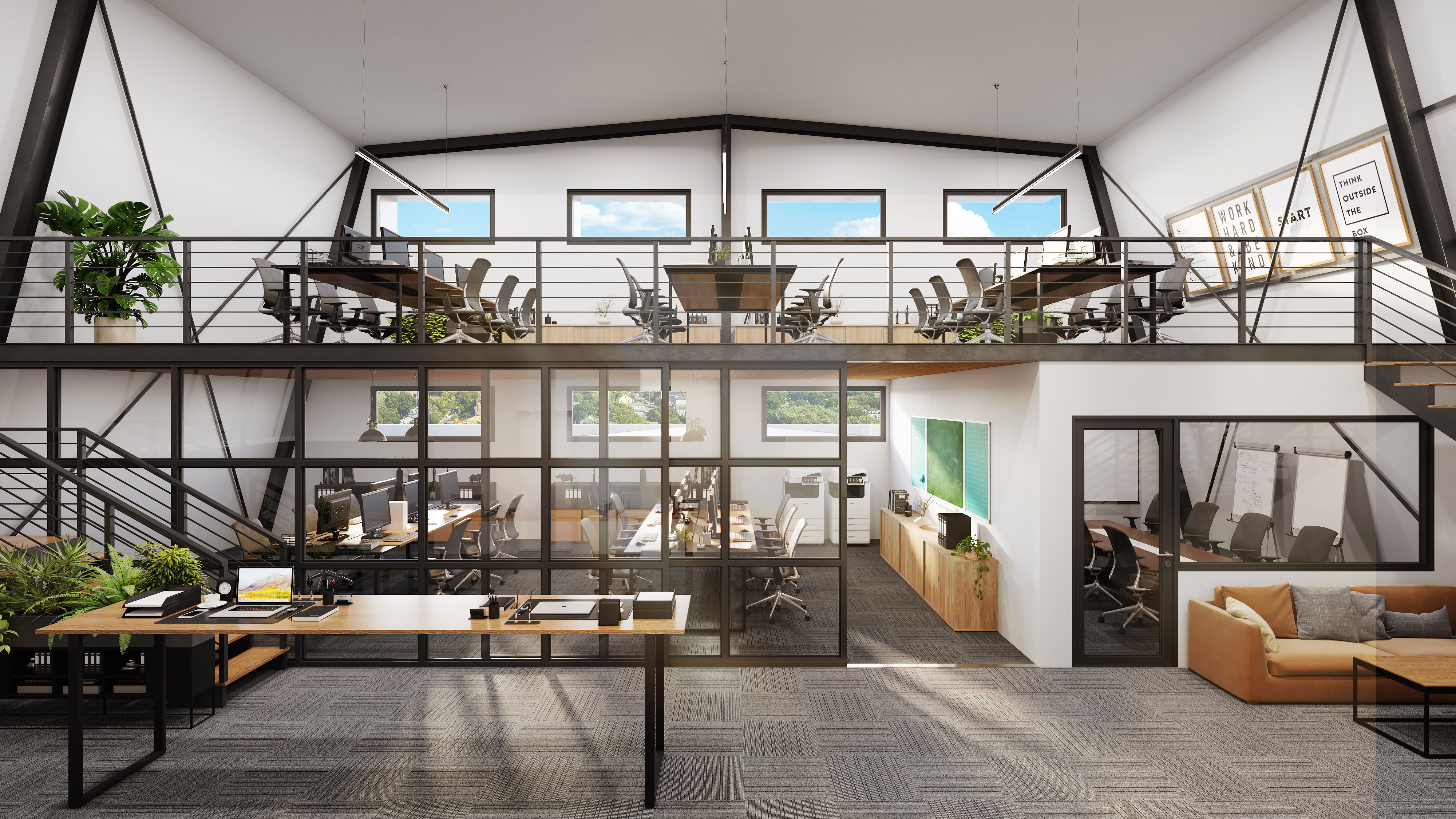
For developers and landowners, the opportunity lies in clearly demonstrating why a project’s location and infrastructure matter.
Strong project positioning can help:
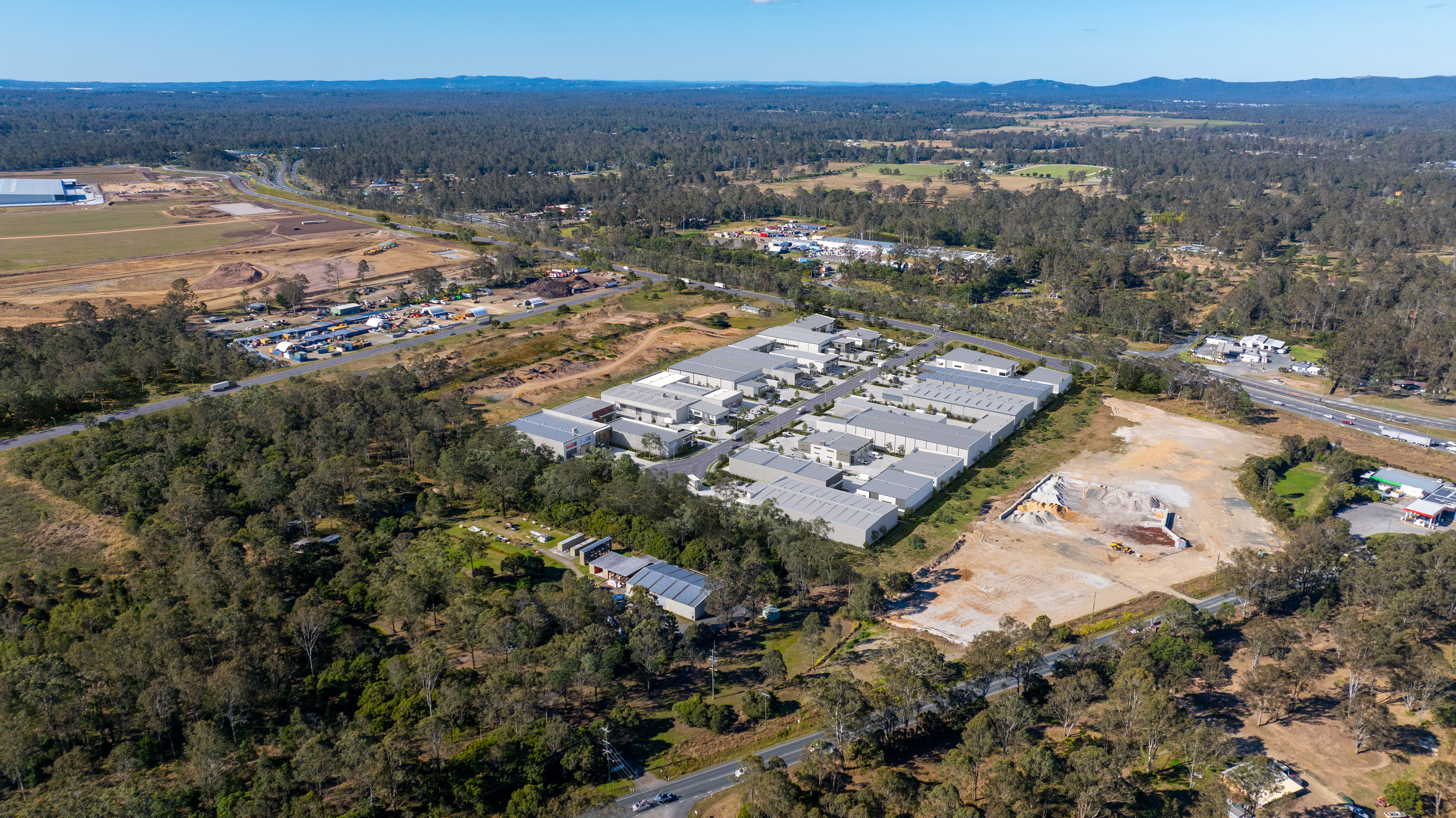
- demonstrate future industrial estates before construction
- increase perceived land value
- communicate freight and logistics access
- attract occupiers before completion
- support industrial land sales
- explain airport-related commercial development
- demonstrate large masterplanned sites
- communicate infrastructure connections
- secure owner-occupier buyers
- build investor confidence
- reduce uncertainty around future development
In a market where developable industrial land is limited, the ability to clearly show how a site connects into Hobart’s future freight, airport and employment network becomes a significant part of the project’s value.
Commercial Property Marketing works with commercial and industrial developers across Australia to turn land, plans and future developments into clear property opportunities for buyers, tenants, investors and stakeholders.


 EXPLORE THE WORK