Australia’s industrial property boom is colliding with a problem that cannot be solved quickly
Australia needs more warehouses, logistics facilities, manufacturing plants, data centres, workshops and employment precincts.
But across many of the country’s fastest-growing metropolitan markets, the supply of suitable industrial land is becoming increasingly constrained.
This is not simply a shortage of vacant paddocks.
The real shortage is serviced, appropriately zoned, infrastructure-connected industrial land that businesses can actually develop and occupy.
Population growth continues increasing freight and consumption. E-commerce requires distribution facilities. Data centres are competing for large power-enabled sites. Defence investment is creating demand for advanced manufacturing. Construction and infrastructure projects require enormous supply chains.
At the same time, industrial land continues competing with housing, environmental constraints and infrastructure requirements.
The result is one of the most important structural changes occurring in Australian commercial property.
As established industrial precincts fill up, development is being pushed outward.
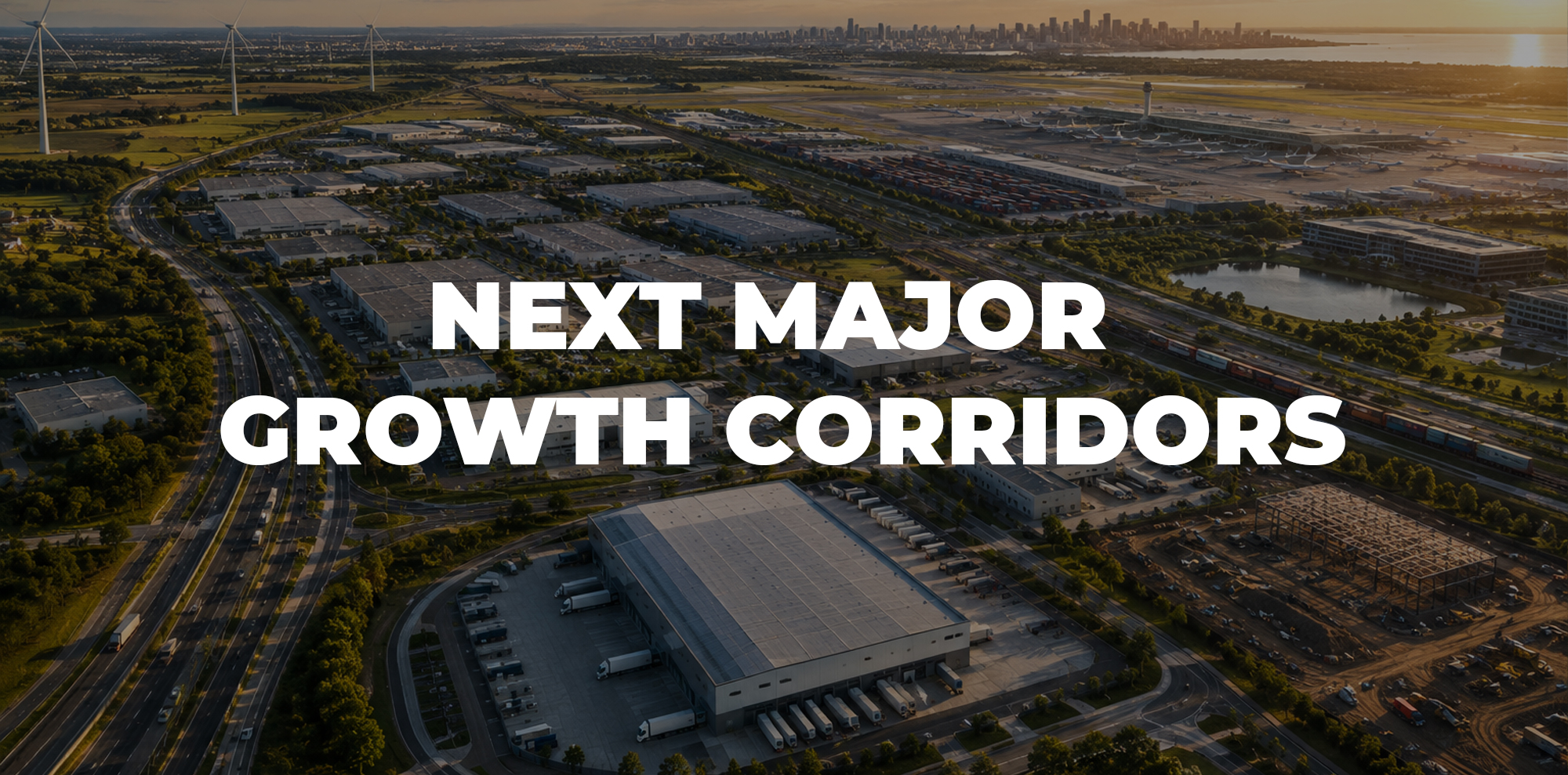
New employment corridors are emerging around airports, motorways, ports, intermodal terminals and major infrastructure projects.
For developers and landowners, identifying those corridors before they become established could represent one of the biggest commercial property opportunities of the next decade.
Australia’s industrial land market snapshot
Industrial land availability varies dramatically between cities, but several national trends are increasingly clear.
- Industrial vacancy remains historically tight across most Australian capitals.
- Serviced industrial land is substantially scarcer than raw zoned land.
- Infrastructure delivery is becoming a major constraint on new estates.
- Population growth continues increasing logistics requirements.
- Data centres are creating another major competitor for industrial sites.
- Power availability is becoming increasingly important.
- Institutional investors continue targeting large logistics estates.
- Owner-occupiers remain active across smaller industrial assets.
- Major infrastructure projects are creating entirely new employment corridors.
- Established inner and middle-ring industrial land continues being lost to higher-value uses.
- Development is increasingly shifting toward metropolitan fringes and regional satellite cities.
- Large strategic landholdings are becoming increasingly difficult to replicate.
Why Australia cannot simply create more industrial land
On a map, Australia’s cities appear surrounded by enormous quantities of undeveloped land.
That can make the idea of an industrial land shortage seem counterintuitive.
But industrial development requires much more than vacant land.
A viable employment precinct generally requires:
- Appropriate zoning.
- Sewer.
- Water.
- Electricity.
- Telecommunications.
- Flood management.
- Major road access.
- Heavy vehicle access.
- Suitable topography.
- Environmental approvals.
- Planning certainty.
Increasingly, developers also need to consider access to high-capacity power and fibre infrastructure.
Delivering all of this can take years.
A site may technically be zoned for employment purposes but remain commercially undevelopable because infrastructure has not arrived.
That distinction between zoned land and development-ready land is becoming critical.
Industrial land is being squeezed from both directions
Australia’s industrial land supply faces two simultaneous pressures.
At the metropolitan fringe, developers struggle to bring new land online quickly enough.
Closer to city centres, existing industrial land continues being converted to other uses.
Former industrial areas have increasingly transitioned toward:
- Apartments.
- Mixed-use development.
- Retail.
- Commercial offices.
- Entertainment.
- Urban renewal.
These projects can create enormous value.
But once industrial land disappears, it is extremely difficult to recreate.
Warehouses cannot simply relocate into residential neighbourhoods.
Freight facilities require space.
Manufacturing creates noise and truck movements.
Industrial businesses therefore become progressively concentrated into fewer employment precincts.
That increases the strategic importance of the land that remains.
Western Sydney is Australia’s largest industrial growth story
No Australian market demonstrates this transformation better than Western Sydney.
For decades, industrial development gradually migrated west as land closer to Sydney became increasingly expensive.
Now Western Sydney International Airport is accelerating that movement dramatically.
The airport is being surrounded by an entirely new economic ecosystem involving:
- Logistics.
- Freight.
- Advanced manufacturing.
- Aerospace.
- Defence.
- Technology.
- Data centres.
- Research.
- Hotels.
- Commercial services.
The scale is enormous.
Western Sydney is no longer simply Sydney’s industrial fringe.
It is becoming a major employment region in its own right.
Mamre Road has become one of Australia’s most important industrial precincts
The Mamre Road Precinct represents one of the most significant concentrations of future industrial development in Australia.
Its location provides access to:
- Western Sydney International Airport.
- M4 and M7 motorways.
- Future M12 Motorway.
- Western Sydney freight networks.
- Large population catchments.
- Major future infrastructure.
Institutional developers have accumulated substantial landholdings throughout the area.
The precinct is attracting:
- Logistics.
- Warehousing.
- Data centres.
- Advanced manufacturing.
- Large distribution facilities.
But this concentration of demand creates another issue.
Infrastructure must keep pace.
Roads, utilities and electricity connections are becoming just as important as planning approvals.
Burrah Park shows the scale of what is coming
The Burrah Park Industrial Estate immediately adjacent to Western Sydney International Airport received State Significant Development approval in July 2026.
The estate covers approximately 280 hectares and is controlled by UniSuper and IFM Investors.
Its scale illustrates how industrial development is changing.
This is not simply another warehouse estate.
Projects such as Burrah Park effectively create entire employment precincts.
Over time they can accommodate:
- Distribution centres.
- Manufacturing.
- Logistics.
- Technology.
- Commercial services.
- Supporting businesses.
The airport provides the catalyst.
But surrounding land captures much of the commercial property value.
The Aerotropolis will create multiple industrial markets
Western Sydney International Airport will not create one industrial precinct.
It will influence an entire network.
Locations likely to benefit include:
- Badgerys Creek.
- Kemps Creek.
- Mamre Road.
- Erskine Park.
- Eastern Creek.
- Luddenham.
- Bringelly.
- Wetherill Park.
Some are already established.
Others could undergo enormous transformation over the next decade.
For developers, the important question is not simply where industrial demand exists today.
It is where infrastructure will allow it to exist tomorrow.
South East Queensland faces a similar industrial land challenge
South East Queensland is Australia’s other major population-growth story.
The region stretches across an increasingly interconnected urban corridor from the Sunshine Coast through Brisbane, Logan and the Gold Coast.
Industrial demand is being generated by:
- Interstate migration.
- Population growth.
- Construction.
- E-commerce.
- Port activity.
- Airport activity.
- Infrastructure.
- Manufacturing.
- Data centres.
But Brisbane’s established industrial precincts cannot accommodate unlimited growth.
That is pushing development toward new corridors.
Brisbane TradeCoast remains irreplaceable
Australia TradeCoast remains one of the country’s most strategically important employment regions.
Pinkenba, Eagle Farm, Murarrie, Hemmant and surrounding precincts benefit from proximity to:
- Port of Brisbane.
- Brisbane Airport.
- Gateway Motorway.
- Major freight networks.
- Brisbane CBD.
That combination cannot easily be replicated.
As available land becomes increasingly scarce, existing industrial sites become more valuable.
Older properties may also become redevelopment opportunities where underlying land values justify intensification.
Logan is becoming one of Australia’s most important emerging industrial markets
South of Brisbane, Logan is experiencing enormous industrial development.
Established precincts including Crestmead and Berrinba have already demonstrated the strength of occupier demand.
But development is now pushing farther outward.
This brings locations such as:
- Park Ridge.
- Logan Reserve.
- North Maclean.
- Flagstone.
- Yarrabilba corridor.
into the longer-term employment discussion.
The driver is straightforward.
Brisbane needs more industrial land.
The Gold Coast needs more industrial land.
Logan sits between them.
North Maclean and Flagstone could become a major new employment corridor
The North Maclean / Greater Flagstone area is particularly interesting.
The wider region is expected to accommodate enormous residential population growth over coming decades.
That population will require employment.
It will also require:
- Warehousing.
- Construction suppliers.
- Trade services.
- Retail.
- Medical facilities.
- Logistics.
- Local manufacturing.
Large industrial landholdings combined with highway connectivity create the potential for a significant future employment precinct.
Unlike established industrial areas where developers are working around existing buildings, emerging corridors allow entire estates to be planned from the ground up.
That can support larger roads, modern warehouses, landscaping and infrastructure designed specifically for contemporary industrial users.
Yatala continues bridging Brisbane and the Gold Coast
Yatala has already demonstrated what happens when geography, infrastructure and population growth align.
Its position approximately midway between Brisbane and the Gold Coast gives businesses access to both markets.
The precinct benefits from the Pacific Motorway and a substantial surrounding workforce.
Yatala has attracted:
- Logistics.
- Manufacturing.
- Food production.
- Distribution.
- Construction suppliers.
- National businesses.
Large industrial estates have transformed what was once a peripheral location into one of South East Queensland’s most important employment precincts.
As Yatala fills, pressure will continue spreading into surrounding areas.
Gold Coast industrial land remains exceptionally constrained
The Gold Coast faces one of Australia’s clearest industrial land constraints.
The city is bounded by:
- The ocean.
- Mountains.
- Existing urban development.
- Environmental areas.
- The NSW border.
At the same time, the population continues growing rapidly.
This creates significant competition for industrial land.
Yatala, Stapylton, Ormeau, Molendinar, Arundel and Burleigh remain important employment areas.
But delivering large new industrial estates becomes progressively harder.
That scarcity is likely to remain a long-term driver of land values.
Sunshine Coast industrial development is moving outward
The Sunshine Coast faces a similar problem.
Traditional industrial areas around Kunda Park, Warana and Caloundra have limited expansion capacity.
Newer development is therefore increasingly concentrated around:
- Bells Creek.
- Caloundra South.
- Aura.
- Beerwah East.
- Bruce Highway corridors.
Population growth provides the demand.
Infrastructure determines where that demand can be accommodated.
The Sunshine Coast Airport and Bruce Highway remain major long-term economic assets.
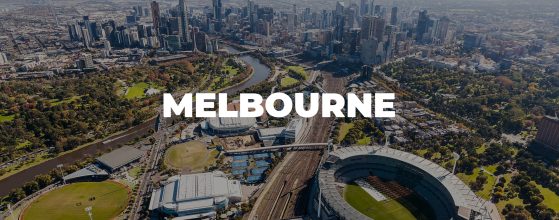
Melbourne has land — but infrastructure remains the challenge
Melbourne’s industrial market is different.
The city has historically had a much larger supply of developable industrial land than Sydney.
That allowed enormous logistics precincts to emerge across the west.
Locations including:
- Truganina.
- Derrimut.
- Laverton North.
- Ravenhall.
- Tarneit.
- Altona.
- Dandenong South.
have become some of Australia’s largest industrial markets.
But even Melbourne faces constraints.
The issue is increasingly not raw land availability.
It is infrastructure.
Truganina and Ravenhall continue expanding
Melbourne’s western industrial corridor benefits from:
- Port of Melbourne access.
- Western Ring Road.
- Western Freeway.
- Large landholdings.
- Major population growth.
This has attracted enormous institutional investment.
The west continues accommodating major national distribution centres because large facilities can still be delivered at scales difficult to achieve in Sydney.
But congestion and infrastructure delivery remain significant challenges.
As the population expands westward, industrial and residential development increasingly compete for roads and services.
Melbourne’s north could become increasingly important
Industrial development is also expanding north.
Locations including:
- Epping.
- Somerton.
- Craigieburn.
- Mickleham.
- Donnybrook.
are attracting greater attention.
The emergence of major data centre proposals around Mickleham demonstrates how infrastructure-led demand can create entirely new property markets.
Over time, Melbourne’s north could become a major employment corridor in its own right.
Perth’s industrial shortage is becoming increasingly apparent
Perth entered H2 2026 with one of Australia’s tightest industrial vacancy rates.
That alone tells an important story.
Demand from resources, logistics, manufacturing and population growth is competing for relatively limited available stock.
Established industrial precincts include:
- Welshpool.
- Kewdale.
- Canning Vale.
- Bibra Lake.
- Malaga.
- Hazelmere.
These areas remain highly sought after.
But future growth is increasingly shifting toward larger strategic precincts.
Kwinana and Henderson could become national industrial powerhouses
South of Perth, Kwinana and Henderson are emerging as some of Australia’s most strategically important industrial locations.
The region combines:
- Port infrastructure.
- Heavy industry.
- Defence.
- Energy.
- Manufacturing.
- Large landholdings.
The AUKUS submarine program and broader defence investment could dramatically increase demand for industrial property.
At the same time, the proposed Westport development could reshape Western Australia’s freight network.
This creates the potential for an enormous integrated industrial corridor extending south from Perth.
Adelaide’s north is being transformed by defence
Adelaide presents another infrastructure-driven industrial story.
Northern Adelaide already contains significant industrial and manufacturing activity.
Defence investment is adding another layer.
Key precincts include:
- Osborne.
- Edinburgh.
- Wingfield.
- Regency Park.
- Gillman.
- Direk.
AUKUS and naval shipbuilding will create long-term demand from contractors and suppliers.
The property impact extends far beyond the shipyard.
Businesses will require:
- Manufacturing facilities.
- Warehouses.
- Engineering workshops.
- Secure offices.
- Logistics facilities.
- Research space.
This could support industrial demand for decades.
Newcastle and the Hunter are creating a new industrial economy
Newcastle and the Hunter remain one of Australia’s most interesting regional industrial markets.
The region already possesses:
- Port infrastructure.
- Heavy industry.
- Manufacturing.
- Rail.
- Motorways.
- Large employment landholdings.
But the economic base is changing.
Renewable energy, defence, advanced manufacturing and logistics are creating new demand.
Tomago and Beresfield remain particularly important.
Their access to the Port of Newcastle, Pacific Highway and Hunter Expressway creates strong logistics fundamentals.
Darwin’s industrial land story is driven by strategy rather than population
Darwin operates differently.
Population is relatively small.
But its strategic importance is enormous.
Defence, energy, mining and logistics create demand for industrial land far beyond what population alone would suggest.
Key precincts include:
- East Arm.
- Berrimah.
- Winnellie.
- Pinelands.
East Arm is particularly important because of its relationship with the Port of Darwin and rail freight infrastructure.
As defence investment increases across Northern Australia, demand for secure warehouses, workshops and hardstand could strengthen significantly.
Hobart demonstrates the value of geographic scarcity
Hobart’s industrial market shows what happens when geography severely limits expansion.
The River Derwent, mountains and existing development constrain the supply of employment land close to the city.
Established precincts including:
- Moonah.
- Derwent Park.
- Glenorchy.
are therefore difficult to replicate.
Newer development is increasingly moving toward:
Cambridge benefits from airport access, while Brighton provides larger land opportunities and freight infrastructure.
Both are likely to become increasingly important.
Bought & Sold: strategic industrial land is becoming harder to replace
Industrial transactions across Australia increasingly demonstrate that buyers are not simply purchasing buildings.
They are purchasing land positions.
Institutional investors continue acquiring large logistics estates because they provide:
- Existing income.
- Expansion potential.
- Strategic land.
- Long-term redevelopment opportunities.
Owner-occupiers are doing the same thing at smaller scales.
A business purchasing a warehouse today may effectively be securing its operational land requirements for decades.
This helps explain why vacant-possession industrial assets continue attracting strong competition.
Development Applications, Approvals & Projects Progressing Through Planning
The development pipeline also shows where industrial demand is heading.
Major projects currently reshaping Australian employment land include:
Burrah Park – Western Sydney
Approximately 280 hectares adjacent to Western Sydney International Airport, approved in July 2026 for major industrial and logistics development.
Western Sydney Aerotropolis
Multiple employment precincts progressing around the new airport and Bradfield City Centre.
Mamre Road Precinct
Large-scale logistics and data centre investment continuing throughout one of Sydney’s most important emerging industrial corridors.
South East Queensland growth corridors
Major industrial estates continue progressing through Logan, Yatala and Brisbane’s southern employment areas.
Melbourne west and north
Large logistics estates continue expanding while new data centre and technology infrastructure emerges farther north.
Kwinana / Henderson
Defence, port and industrial infrastructure investment is strengthening the long-term development case.
These projects demonstrate a common theme.
Industrial property follows infrastructure.
Infrastructure creates industrial land value
A parcel of industrial land has limited value if businesses cannot efficiently access it.
The infrastructure that matters includes:
- Motorways.
- Ports.
- Airports.
- Rail freight.
- Intermodal terminals.
- Electricity.
- Water.
- Fibre.
Each new infrastructure project changes the relative attractiveness of surrounding land.
A motorway interchange can transform accessibility.
A port expansion can increase logistics demand.
A substation can create data centre potential.
An airport can create an entire employment city.
For developers, understanding infrastructure investment is therefore fundamental to understanding future land values.
Power is becoming a new constraint
The data centre boom adds another layer.
Historically, industrial developers focused primarily on transport infrastructure.
Now electricity is becoming equally important.
Advanced manufacturing, cold storage, automation, batteries and data centres can require substantial power.
Sites capable of securing high-capacity connections may therefore command premiums.
This could create a new hierarchy within industrial land markets.
Industrial land values increasingly reflect scarcity
Where developable land becomes scarce, values inevitably respond.
But rising land prices create a development challenge.
Higher land costs require:
- Higher rents.
- Higher sale prices.
- Greater development density.
That is encouraging developers to reconsider traditional industrial design.
Multi-level warehousing, already common in parts of Asia, may eventually become more viable in Australia’s most constrained markets.
Sydney is the obvious candidate.
Industrial strata provides another response
Smaller industrial strata developments are already helping intensify employment land.
Instead of one business occupying a large site, strata projects can accommodate dozens of businesses.
Demand comes from:
- Trades.
- Small businesses.
- Investors.
- SMSFs.
- Storage users.
- E-commerce operators.
This creates more employment density from limited land.
In highly constrained markets, strata industrial is likely to remain an important development model.
The biggest risk is losing employment land permanently
Cities need somewhere for businesses to operate.
Housing is essential.
But so are:
- Warehouses.
- Workshops.
- Food production.
- Construction suppliers.
- Logistics.
- Manufacturing.
Converting industrial land to residential can generate significant short-term value.
But the economic cost may only become apparent years later.
Businesses are forced farther from customers.
Freight distances increase.
Congestion increases.
Industrial rents rise.
Protecting strategic employment land therefore becomes an increasingly important planning issue.
Australia’s 15 industrial growth corridors to watch
Based on population growth, infrastructure and development activity, some of the strongest corridors to watch through 2026–27 include:
- Western Sydney Aerotropolis – NSW
- Mamre Road / Kemps Creek – NSW
- Beresfield / Tomago – Newcastle
- Brisbane TradeCoast – QLD
- Logan / North Maclean / Flagstone – QLD
- Yatala / Stapylton – QLD
- Bells Creek / Caloundra South – QLD
- Truganina / Ravenhall – VIC
- Mickleham / Melbourne North – VIC
- Kwinana / Henderson – WA
- Hazelmere / Perth East – WA
- Osborne / Edinburgh – SA
- East Arm / Berrimah – NT
- Cambridge – TAS
- Brighton – TAS
Each is being driven by a different combination of infrastructure, population and industry.
But the underlying principle is the same:
businesses follow infrastructure, and land follows businesses.
What developers should watch through 2026–27
Several factors will determine where Australia’s next industrial hotspots emerge.
- Industrial rezoning.
- Infrastructure funding.
- Sewer and water delivery.
- Grid capacity.
- New motorway interchanges.
- Port expansion.
- Airport development.
- Defence investment.
- Data centre demand.
- Population growth.
- Freight infrastructure.
- Construction costs.
- Environmental approvals.
The most valuable opportunities may exist where several of these factors overlap.
Australia’s industrial land shortage is really an infrastructure shortage
Australia is not literally running out of land.
It is running short of the right land in the right place with the right infrastructure.
That distinction matters.
There are enormous quantities of undeveloped land around Australian cities.
But businesses cannot wait ten years for infrastructure.
They need development-ready sites.
As population and industrial demand continue growing, the competition for those sites will intensify.
That means Australia’s next major industrial property opportunities are likely to emerge where governments and developers successfully unlock new infrastructure.
Western Sydney is already demonstrating this.
Logan could be next.
Kwinana and Henderson are strengthening.
Melbourne continues expanding outward.
Adelaide’s defence corridor is accelerating.
And regional markets including Newcastle are increasingly competing with capital cities for major industrial investment.
For developers and landowners, the opportunity is not simply to find vacant land.
It is to identify where Australia’s next employment economy is going to operate.
Positioning industrial land before the market catches up
The greatest uplift in industrial land value often occurs before an area becomes an established employment precinct.
Commercial Property Marketing works with developers, landowners and commercial agencies to communicate that future opportunity before the roads, warehouses and businesses physically exist.
The objective is to:
- Increase the perceived and realised value of industrial land.
- Communicate future infrastructure and connectivity clearly.
- Position emerging employment precincts ahead of competing estates.
- Accelerate industrial land sales.
- Secure tenants earlier in the development cycle.
- Demonstrate future estates before construction begins.
- Help buyers understand the scale of future growth.
- Give commercial agents stronger material to take to market.
- Improve investor and stakeholder confidence.
- Differentiate strategic land from generic development sites.
- Reduce the time between project launch and commercial commitment.
- Ultimately extract more value from commercial and industrial property.

 EXPLORE THE WORK