


Share
Menu
me
nu .
nu .
The Defence Property Boom: How Billions in Defence Spending Are Creating New Industrial Hotspots
Tags :
August, 2026
The Defence Property Boom: How Billions in Defence Spending Are Creating New Industrial Hotspots
Australia’s defence build-up is becoming one of the country’s biggest industrial property stories
Australia’s defence spending is entering a completely different phase.
The 2026 National Defence Strategy provides for approximately $425 billion of capability investment over the decade to 2035–36, with total Defence funding increasing from approximately $63.4 billion in 2026–27 to $112.1 billion in 2035–36. The latest strategy adds another $53 billion over the decade, taking additional investment announced through the 2024 and 2026 strategies to approximately $117 billion.
Those numbers are enormous.
But from a commercial property perspective, the important story is what happens outside the Defence bases.
Ships need to be built.
Submarines need to be sustained.
Aircraft need maintenance.
Equipment needs manufacturing.
Supply chains need warehouses.
Contractors need workshops.
Engineers need offices.
Parts need secure storage.
Thousands of workers need housing, services and infrastructure.
The result is the emergence of a new generation of specialised industrial precincts around Australia’s major defence investments.
From Henderson in Western Australia and Osborne in South Australia to Darwin, Newcastle and Western Sydney, defence spending is increasingly becoming an industrial property demand driver in its own right.
The defence property opportunity extends far beyond military land
When governments announce a $10 billion or $30 billion defence project, it is easy to think of the investment as occurring entirely behind the gates of a naval base, shipyard or airfield.
It doesn’t.
Major defence programs require enormous private-sector supply chains.
These include businesses involved in:
- Advanced manufacturing.
- Precision engineering.
- Shipbuilding.
- Aerospace.
- Electronics.
- Cybersecurity.
- Robotics.
- Fabrication.
- Maintenance.
- Logistics.
- Warehousing.
- Training.
- Research and development.
- Construction.
Many of these businesses operate from conventional commercial and industrial property.
That creates demand for everything from 500m² workshops to enormous manufacturing facilities and secure industrial campuses.
The property opportunity therefore sits around the defence infrastructure as much as within it.
Australia’s defence investment pipeline is enormous
The 2026 National Defence Strategy fundamentally increases the amount of capital flowing into Australia’s defence economy.
The government is investing an additional $14 billion over the next four years and approximately $53 billion over the decade under the 2026 strategy alone.
Capability investment across the decade is expected to total approximately $425 billion.
And that sits alongside several extraordinary individual infrastructure programs.
Two stand above almost everything else:
Osborne, South Australia
A nuclear-powered submarine construction yard ultimately expected to require approximately $30 billion of investment.
Henderson, Western Australia
An initial $12 billion federal commitment, with early planning indicating the broader precinct could require investment in the order of $25 billion over the decade.
Together, these projects alone have the potential to reshape the industrial geography of Adelaide and southern Perth.
Henderson has just become one of Australia’s biggest industrial property stories
Western Australia is particularly important right now.
On 24 August 2026, the Australian and Western Australian governments announced the selected site and boundary for the new Henderson Defence Precinct.
The precinct will support naval shipbuilding, sustainment and Australia’s future conventionally armed nuclear-powered submarines under AUKUS. It will also support construction of the Navy’s future general-purpose frigates and Army landing craft.
This moves Henderson beyond being a future concept.
The location of the precinct is now defined.
And that creates much greater certainty for surrounding industry.
$12 billion is only the beginning at Henderson
The Australian Government has already committed $12 billion toward delivering the Henderson Defence Precinct.
But early independent planning indicated the total investment required could be around $25 billion over the decade.
The government expects the broader program to support approximately 10,000 direct jobs over the next two decades.
Defence itself acknowledges that development at Henderson will generate demand beyond the precinct, including housing, schools, services, transport and utilities needed to support the workforce and surrounding communities.
That is exactly why this matters to property.
This isn’t simply a shipyard.
It is an economic anchor capable of supporting an entire industrial ecosystem.
Henderson and Kwinana could become one enormous industrial economy
Henderson already sits inside one of Western Australia’s most important industrial regions.
Nearby areas include:
- Australian Marine Complex.
- Henderson.
- Naval Base.
- Kwinana.
- Wattleup.
- Hope Valley.
- Bibra Lake.
- Cockburn.
The region already accommodates:
- Heavy industry.
- Engineering.
- Marine businesses.
- Logistics.
- Energy.
- Manufacturing.
- Fabrication.
Defence adds another enormous demand generator.
Businesses seeking to participate in future submarine, shipbuilding and sustainment programs will increasingly value proximity to Henderson.
That could increase demand for industrial land throughout Perth’s southern corridor.
The industrial requirements around Henderson will be different
Defence-related industrial demand is not identical to conventional logistics demand.
A distribution company may prioritise:
- Motorway access.
- Dock loading.
- Warehouse clearance.
- Yard space.
A defence contractor may need:
- Heavy-duty power.
- Gantry cranes.
- Secure compounds.
- High-clearance workshops.
- Specialised manufacturing areas.
- Restricted-access offices.
- Large hardstand.
- Heavy vehicle access.
- Cybersecurity infrastructure.
- Separation from incompatible uses.
This means some existing industrial properties may be poorly suited to defence occupiers.
Developers able to deliver specialised facilities could therefore command a premium.
Industrial land around Henderson could become increasingly strategic
This has implications for land values.
Large industrial sites close to the defence precinct may become attractive to businesses wanting to establish a long-term position within the supply chain.
For some companies, being located five minutes from the shipyard rather than 45 minutes away could have significant operational value.
That could influence demand across:
Henderson → Naval Base → Wattleup → Kwinana → Bibra Lake
It also adds another demand source to a Perth industrial market already experiencing limited vacancy and rising land values.
Osborne is undergoing an even larger transformation
On the other side of Australia, Adelaide’s Osborne Naval Shipyard is being transformed into the centre of Australia’s future nuclear-powered submarine construction industry.
The Australian Government announced a further $4.6 billion investment in July 2026 for development of the Nuclear-Powered Submarine Construction Yard.
That followed a $3.9 billion commitment announced in February.
Government investment committed to the construction yard has therefore reached approximately $8.5 billion during 2026 alone.
The ultimate investment is expected to be approximately $30 billion.
The scale of Osborne is difficult to overstate
The future submarine construction yard is expected to contain three major areas.
Approximately:
- $5 billion for fabrication facilities.
- $8 billion for outfitting facilities.
- More than $15 billion for consolidation, testing, launching and commissioning.
Additional enabling works are worth approximately $2 billion, while the Skills and Training Academy is expected to cost approximately $500 million.
The future submarine yard will reportedly be around 10 times the size of the existing Osborne shipyard used to construct Australia’s Hunter-class frigates.
This is industrial development at a scale rarely seen in Australia.
Osborne is already a working defence manufacturing precinct
Importantly, the defence economy isn’t waiting for submarines to arrive.
The Hunter-class frigate program is already creating significant industrial activity at Osborne.
This week, construction of the first Hunter-class frigate reached another major milestone with the laying of its keel.
More than 2,800 people are now involved in the program, including approximately 2,000 workers at Osborne, according to reporting around the milestone.
That workforce exists today.
The submarine program will add another layer of demand.
Nearly 10,000 South Australian jobs are expected from the submarine program
The federal government expects the broader nuclear-powered submarine program to create nearly 10,000 jobs in South Australia.
Those workers will not all work inside the shipyard.
Nor will every supplier operate from Osborne.
The supply chain will spread through Adelaide’s industrial market.
That is where the commercial property opportunity becomes particularly interesting.
Adelaide’s northern industrial corridor is positioned to benefit
The defence economy around Osborne connects into a much broader employment region.
Key locations include:
- Osborne.
- Gillman.
- Wingfield.
- Regency Park.
- Edinburgh.
- Port Adelaide.
- Gepps Cross.
- Direk.
These areas already accommodate logistics, manufacturing and industrial businesses.
Defence spending can deepen that existing industrial base.
A supplier may initially win a relatively small defence contract.
If that contract becomes part of a 20 or 30-year program, the business may need to:
- Employ more people.
- Buy equipment.
- Expand production.
- Lease more space.
- Purchase industrial land.
- Build a dedicated facility.
Multiply that across hundreds of suppliers and the property impact becomes substantial.
Defence contracts create unusually long property demand
This is one of the reasons defence can be particularly important for industrial property.
Many industries operate through relatively short business cycles.
Defence programs can run for decades.
Australia’s nuclear-powered submarine enterprise is expected to continue through multiple generations.
Henderson’s naval shipbuilding and sustainment activity is similarly intended to operate over decades.
That gives suppliers confidence to make longer-term property decisions.
Instead of leasing a workshop for three years, a business with a secure long-term defence pipeline may justify:
- Buying land.
- Building a headquarters.
- Installing specialised equipment.
- Developing purpose-built manufacturing space.
That creates much deeper industrial investment.
Darwin represents a completely different defence property opportunity
Darwin’s defence story is not primarily about shipbuilding.
It is about geography.
Northern Australia sits at the front of Australia’s strategic engagement with the Indo-Pacific.
Darwin already supports substantial Australian and allied defence activity.
That creates demand for:
- Logistics.
- Fuel.
- Maintenance.
- Warehousing.
- Secure storage.
- Construction.
- Transport.
- Accommodation.
- Equipment servicing.
Unlike Sydney or Melbourne, Darwin has a relatively small civilian population.
That means defence investment can have an outsized impact on its commercial and industrial property market.
East Arm is strategically positioned
East Arm combines several characteristics that are extremely difficult to replicate.
It provides access to:
- Port of Darwin.
- Rail freight.
- Large industrial landholdings.
- Heavy industry.
- Energy infrastructure.
- Major transport routes.
For defence-related logistics, these characteristics are highly valuable.
East Arm is therefore positioned not simply as a conventional industrial precinct but as strategic national infrastructure.
Nearby Berrimah also benefits from its central position between Darwin, Palmerston, the airport and East Arm.
Defence can support Darwin industrial demand without population growth
This is an important distinction.
Most industrial markets rely heavily on population growth.
More people create more consumption.
More consumption creates more warehousing.
Darwin can experience industrial demand for completely different reasons.
A defence logistics contract can suddenly require thousands of square metres of warehouse space.
A maintenance program can require a new workshop.
Infrastructure construction can require hardstand and equipment yards.
That creates commercial property demand even if the underlying population remains relatively stable.
Newcastle and Williamtown have the ingredients for another defence cluster
The Hunter region represents another major opportunity.
RAAF Base Williamtown provides a substantial defence anchor.
Newcastle also offers:
- Port infrastructure.
- Advanced manufacturing.
- Engineering expertise.
- Heavy industry.
- University research.
- Aerospace capability.
- Large industrial precincts.
Nearby employment areas such as Tomago and Beresfield provide the kind of industrial property required by defence contractors.
This combination of defence, manufacturing and logistics makes the Hunter particularly interesting.
Aerospace creates different property requirements again
Aircraft-related defence businesses often need specialised facilities.
These can include:
- Hangars.
- High-clearance workshops.
- Clean manufacturing environments.
- Electronics laboratories.
- Secure offices.
- Training facilities.
- Aircraft component storage.
That creates opportunities for developers capable of delivering highly specialised property rather than generic sheds.
Williamtown’s proximity to Newcastle Airport further strengthens the region’s aerospace credentials.
Western Sydney could become Australia’s defence technology corridor
Western Sydney’s defence opportunity is less obvious but potentially enormous.
Western Sydney International Airport and the Aerotropolis are creating a new economic region centred on:
- Aerospace.
- Advanced manufacturing.
- Logistics.
- Technology.
- Research.
These industries overlap heavily with defence supply chains.
A company manufacturing precision aerospace components can potentially service both civilian aviation and defence customers.
A robotics business can serve logistics and defence.
A cyber company can service government and private enterprise.
This crossover creates a broader commercial property market than a defence-only precinct.
Bradfield could become the white-collar side of the defence economy
Not every defence business needs an industrial warehouse.
Advanced defence increasingly involves:
- Software.
- Artificial intelligence.
- Autonomous systems.
- Cybersecurity.
- Sensors.
- Space technology.
- Engineering.
- Research.
These businesses require laboratories, offices and technology facilities.
That creates potential demand around Bradfield and the broader Aerotropolis for a new category of advanced employment property sitting somewhere between conventional industrial and commercial office space.
Canberra remains the centre of defence decision-making
Canberra’s role is different again.
The ACT is unlikely to become a major shipbuilding or heavy manufacturing centre.
But it remains central to:
- Defence administration.
- Procurement.
- Intelligence.
- Cybersecurity.
- Technology.
- Consulting.
- Research.
That creates demand for secure commercial offices and specialist technology facilities.
Defence therefore influences commercial property as well as industrial property.
Security itself can become a property feature
One of the interesting consequences of defence industry growth is that security can become part of the physical property specification.
Some defence contractors require:
- Controlled access.
- Secure perimeter fencing.
- CCTV.
- Restricted visitor access.
- Secure communications.
- Protected meeting rooms.
- Cybersecurity infrastructure.
That can make certain industrial estates more attractive than others.
A developer could eventually market a precinct specifically toward defence and advanced manufacturing occupiers by incorporating these requirements from the beginning.
Australia’s defence boom could create specialised industrial estates
This is where the development opportunity becomes particularly interesting.
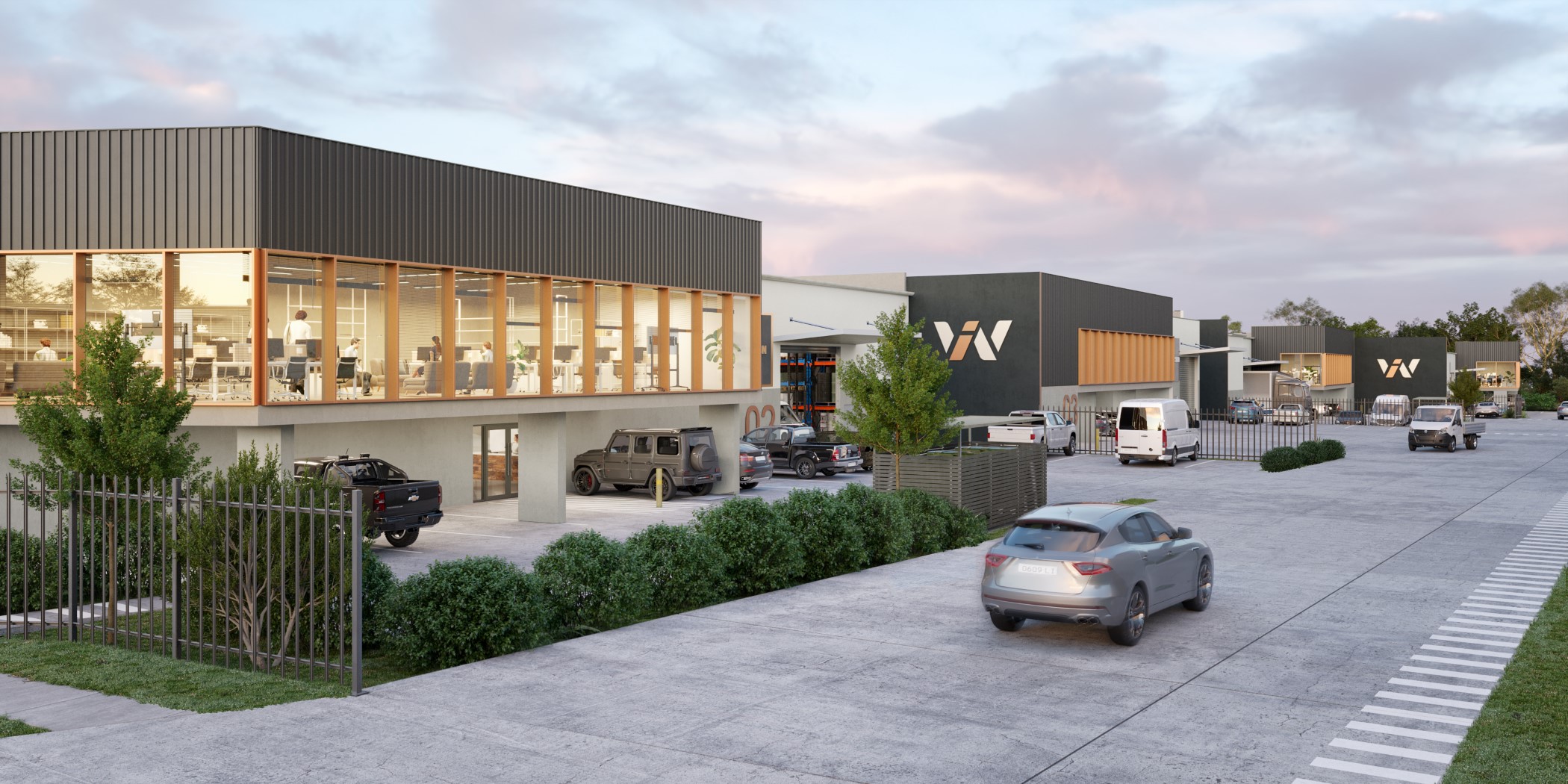
Rather than simply waiting for defence contractors to lease generic industrial property, developers could create dedicated defence-industry precincts.
These might include:
- High-security estates.
- Advanced manufacturing facilities.
- Heavy power.
- Large hardstand.
- Gantry-crane capability.
- Secure offices.
- Shared training facilities.
- Research space.
- Logistics infrastructure.
Location would be critical.
The strongest opportunities would likely sit close to major defence anchors.
Five defence-driven industrial hotspots to watch
Several Australian markets stand out.
1. Henderson / Kwinana, WA
The most immediate opportunity following the August 2026 site announcement.
The combination of AUKUS submarine sustainment, naval shipbuilding, landing craft, marine engineering and existing heavy industry creates an extremely strong long-term industrial story.
2. Osborne / Adelaide North, SA
Potentially Australia’s largest defence manufacturing transformation.
A $30 billion submarine construction yard combined with Hunter-class frigates creates decades of industrial activity.
3. Darwin / East Arm / Berrimah, NT
Strategic location, port access, logistics and increasing defence activity make Darwin fundamentally different from conventional population-driven industrial markets.
4. Newcastle / Williamtown / Tomago, NSW
Aerospace, engineering, advanced manufacturing and existing industrial capability create strong defence supply-chain potential.
5. Western Sydney Aerotropolis, NSW
The combination of aerospace, advanced manufacturing, technology, logistics and Australia’s newest international airport creates the potential for a major future defence-technology ecosystem.
Bought & Sold: defence exposure could become an investment premium
The defence property story is likely to increasingly appear in industrial transactions.
Investors traditionally value industrial assets according to:
- Lease length.
- Tenant covenant.
- Rent.
- Yield.
- Location.
- Land value.
Defence exposure introduces another consideration:
strategic industry demand.
An industrial estate located beside a 30-year defence program may have a fundamentally different long-term demand outlook from an otherwise comparable estate.
This does not mean every warehouse near a defence base automatically becomes more valuable.
But land capable of supporting the right suppliers could attract greater investor attention.
Long leases could make defence tenants particularly attractive
Defence contractors often make substantial investments in their facilities.
Moving sophisticated machinery is expensive.
Security accreditation can be complicated.
Specialised fitouts can cost millions.
Once established, these businesses may be reluctant to relocate.
That can produce long tenant retention periods.
For industrial investors, that can be extremely attractive.
Development Applications, Approvals & Major Projects Progressing
The scale of current defence infrastructure provides a clear picture of where future property demand may emerge.
Henderson Defence Precinct — WA
The federal and WA governments selected the site and precinct boundary on 24 August 2026.
The project carries an initial $12 billion federal funding commitment, with broader investment potentially reaching approximately $25 billion over the decade.
Osborne Nuclear-Powered Submarine Construction Yard — SA
A further $4.6 billion was committed in July, taking 2026 federal commitments to approximately $8.5 billion.
Ultimate investment is expected to be around $30 billion.
Hunter-class frigate program — Osborne
Construction is already underway, with the first vessel reaching its keel-laying milestone in August and thousands of workers involved in the program.
These are not speculative property narratives.
The infrastructure is being funded, designed and constructed now.
The biggest opportunity may be in the supply chain
Property developers do not need to win a Defence contract to benefit from defence spending.
They need to provide property to businesses that do.
Imagine a submarine program requiring hundreds of Australian suppliers.
One manufactures valves.
Another builds electrical systems.
Another fabricates steel components.
Another maintains machinery.
Another provides robotics.
Another manages logistics.
Each company needs somewhere to operate.
That is how government defence spending moves into private industrial property.
Small and medium industrial property could benefit as much as major warehouses
The defence boom isn’t only a large-format industrial story.
Many suppliers are SMEs.
They may require:
- 500m².
- 1,000m².
- 2,000m².
- 5,000m².
This creates potential demand for:
- Industrial strata.
- Small freestanding warehouses.
- Workshop developments.
- Business parks.
- Trade units.
A large defence program can therefore influence almost every layer of the industrial property market.
Skills shortages could influence where businesses locate
There is another factor developers should watch.
Defence businesses need highly skilled workers.
Engineers.
Welders.
Electricians.
Technicians.
Software developers.
Machinists.
Project managers.
Businesses therefore need access not only to industrial land but to labour.
This strengthens locations where governments are simultaneously investing in:
- Universities.
- TAFE.
- Training centres.
- Housing.
- Transport.
Defence itself says Henderson will require a substantial workforce pipeline and supporting housing and infrastructure over coming decades.
Industrial development and residential development will therefore become increasingly connected.
Infrastructure investment will spread beyond the defence precincts
A major industrial workforce requires:
- Roads.
- Public transport.
- Electricity.
- Water.
- Housing.
- Schools.
- Retail.
- Health services.
That creates secondary property opportunities.
The economic effect spreads outward from the original defence investment.
This is why projects such as Henderson and Osborne should be viewed as regional economic infrastructure, not simply military infrastructure.
What industrial developers should be looking for
Developers looking at defence-driven markets should consider sites with:
- Proximity to major defence infrastructure.
- Heavy vehicle access.
- Large power connections.
- Secure boundaries.
- Appropriate industrial zoning.
- Expansion capability.
- Large hardstand.
- High-clearance development potential.
- Crane capability.
- Fibre connectivity.
- Skilled workforce access.
Not every site will suit every defence occupier.
But sites capable of accommodating specialised requirements could become increasingly valuable.
What landowners should watch
Landowners around major defence precincts should pay close attention to supply-chain announcements.
The arrival of a major contractor can create secondary demand.
One large manufacturer might bring ten suppliers.
Those suppliers may bring additional service companies.
That creates clustering.
Once a cluster begins forming, businesses often want to locate near one another.
That can accelerate industrial land absorption.
Defence spending is creating industrial demand measured in decades
Perhaps the most important feature of Australia’s defence investment boom is its duration.
These are not two-year infrastructure projects.
The submarine enterprise will operate for generations.
Naval shipbuilding will continue for decades.
Aircraft sustainment is ongoing.
Cybersecurity demand will continue expanding.
Advanced manufacturing capability is being deliberately built domestically.
That gives industrial developers something extremely valuable:
long-term demand visibility.
What developers should watch through 2026–27
Several developments could materially influence defence-related property markets over the next 18 months:
- Detailed Henderson Defence Precinct master planning.
- Henderson land and infrastructure requirements.
- New defence contracts awarded to WA suppliers.
- Continued Osborne construction.
- Submarine supply-chain contracts.
- Hunter-class frigate milestones.
- Defence industry investment around Adelaide.
- Northern Australia infrastructure investment.
- Aerospace investment around Williamtown.
- Advanced manufacturing projects around Western Sydney.
- Defence-related industrial leasing.
- Land acquisitions by major contractors.
- Specialist industrial development applications.
- New training and workforce infrastructure.
The important point is to watch the businesses around the defence projects, not only the projects themselves.
Australia’s defence boom is becoming a property boom
The federal government may write the cheque.
But much of the economic activity ultimately occurs on commercial property.
Factories.
Warehouses.
Workshops.
Offices.
Research facilities.
Industrial estates.
Secure compounds.
Hardstand yards.
Australia’s massive increase in defence investment is therefore creating something much larger than new military capability.
It is creating new employment economies.
Henderson could reshape southern Perth.
Osborne is already transforming northern Adelaide.
Darwin’s strategic importance continues strengthening its industrial economy.
Williamtown provides a foundation for a larger Hunter aerospace cluster.
Western Sydney could combine defence, aerospace and advanced manufacturing into an entirely new technology economy.
For commercial property developers, investors and landowners, these markets deserve close attention.
Because when governments commit tens of billions of dollars to infrastructure that will operate for decades, the businesses servicing that infrastructure need somewhere to go.
And that is where the commercial property story begins.
Positioning industrial property for Australia’s defence investment cycle
The opportunity for developers and landowners is not simply to own property near a defence project.
It is to clearly demonstrate why that property is strategically positioned to support the industries growing around it.
Commercial Property Marketing works with developers, landowners and commercial agencies to communicate that future opportunity before the precinct is fully established.
The objective is to:
- Increase the perceived and realised value of strategic industrial land.
- Position projects for defence, engineering and advanced manufacturing occupiers.
- Communicate infrastructure and locational advantages clearly.
- Demonstrate future industrial estates before construction.
- Accelerate land sales and leasing.
- Help businesses understand expansion potential.
- Give agents stronger material to approach national occupiers.
- Build investor confidence around emerging employment precincts.
- Differentiate specialised industrial property from generic warehouse stock.
- Generate demand earlier in the development cycle.
- Reduce uncertainty around complex industrial projects.
- Ultimately extract more value from commercial and industrial property.
Australia’s defence investment cycle is only beginning.
Related content

Latest content






Accelerate your project
Whether you’re selling land, securing approvals, or launching a campaign — we’ll help you visualise it clearly and move faster to market. Fill out the form below and we’ll send through a free tailored quote for your next commercial or industrial development.




























01.