Construction costs continue to place significant pressure on commercial and industrial development across Australia, forcing developers to rethink feasibility, project design, and delivery strategies. While demand remains strong — particularly in the industrial sector — rising build costs, labour shortages, and financing constraints are reshaping how projects are structured and brought to market. In response, developers are adopting smarter, more flexible models to maintain viability and deliver projects successfully.
Why construction costs remain a major challenge
Despite some stabilisation in recent months, construction costs remain elevated compared to historical levels. This is impacting feasibility across a wide range of commercial projects, particularly those with tighter margins or speculative delivery models.
Key factors contributing to ongoing cost pressure include:
- Elevated material costs across steel, concrete, and key building components
- Labour shortages driving increased wages and extended project timelines
- Supply chain disruptions affecting availability and pricing
- Higher compliance and regulatory requirements adding to build complexity
- Financing costs compounding overall development expenses
These pressures are forcing developers to be more strategic in how they approach new projects.
The impact on project feasibility and delivery
Rising costs are directly influencing which projects proceed and how they are structured. Developers are becoming more selective, focusing on projects with strong fundamentals and clear demand drivers.
Key impacts on feasibility include:
- Narrower development margins requiring more disciplined project selection
- Increased reliance on pre-leasing or pre-sales to secure funding
- Delays or redesign of projects that no longer meet feasibility thresholds
- Greater emphasis on cost control and value engineering
- Shift toward staged development to manage risk and cash flow
This environment is favouring experienced developers who can adapt quickly to changing conditions.
Smarter development models emerging in response
To navigate these challenges, developers are adopting new approaches that improve efficiency, reduce risk, and align more closely with market demand. These smarter models are becoming increasingly common across industrial and commercial projects.
Key strategies being implemented include:
- Delivering smaller, more affordable units to match market demand
- Staging developments to align with absorption rates
- Using modular and prefabricated construction methods
- Designing flexible buildings that can accommodate multiple uses
- Focusing on high-demand sectors such as logistics and trade-based industries
These approaches help maintain project viability while still delivering strong outcomes.
The role of design and planning in cost management
Design is playing a critical role in managing construction costs and improving project feasibility. Efficient layouts, simplified structures, and thoughtful planning can significantly reduce build costs without compromising functionality.
Key design considerations include:
- Optimising building layouts to reduce material usage
- Simplifying structural systems to improve build efficiency
- Designing for flexibility to future-proof assets
- Minimising unnecessary complexity in building form
- Aligning design with target tenant or buyer requirements
Developers who prioritise smart design are better positioned to deliver cost-effective projects.
What this means for developers and landowners
The current environment presents both challenges and opportunities for developers and landowners. While cost pressures are real, those who can adapt their approach are still able to deliver successful projects and capture strong demand.
Key implications include:
- Greater importance placed on early-stage feasibility analysis
- Need for strong market positioning to justify pricing
- Increased collaboration between developers, builders, and consultants
- Opportunities to unlock value through smarter project structuring
- Continued demand for well-located, functional industrial assets
Success in this market comes down to balancing cost, design, and demand effectively.
Recent transactions shaping the market
Derrimut Industrial Development Site, VIC – $21 million sale
A development-ready site transacted to a group planning a staged industrial project, reflecting a strategic approach to managing feasibility and delivery risk.
Yatala Industrial Subdivision, QLD – Multi-stage release
A new industrial estate launched in stages to align with market demand, demonstrating how developers are adapting to cost pressures and absorption rates.
Forrestdale Industrial Project, WA – Pre-leased development
A warehouse project secured tenants prior to construction, enabling the developer to proceed despite elevated construction costs.
How Commercial Property Marketing can help
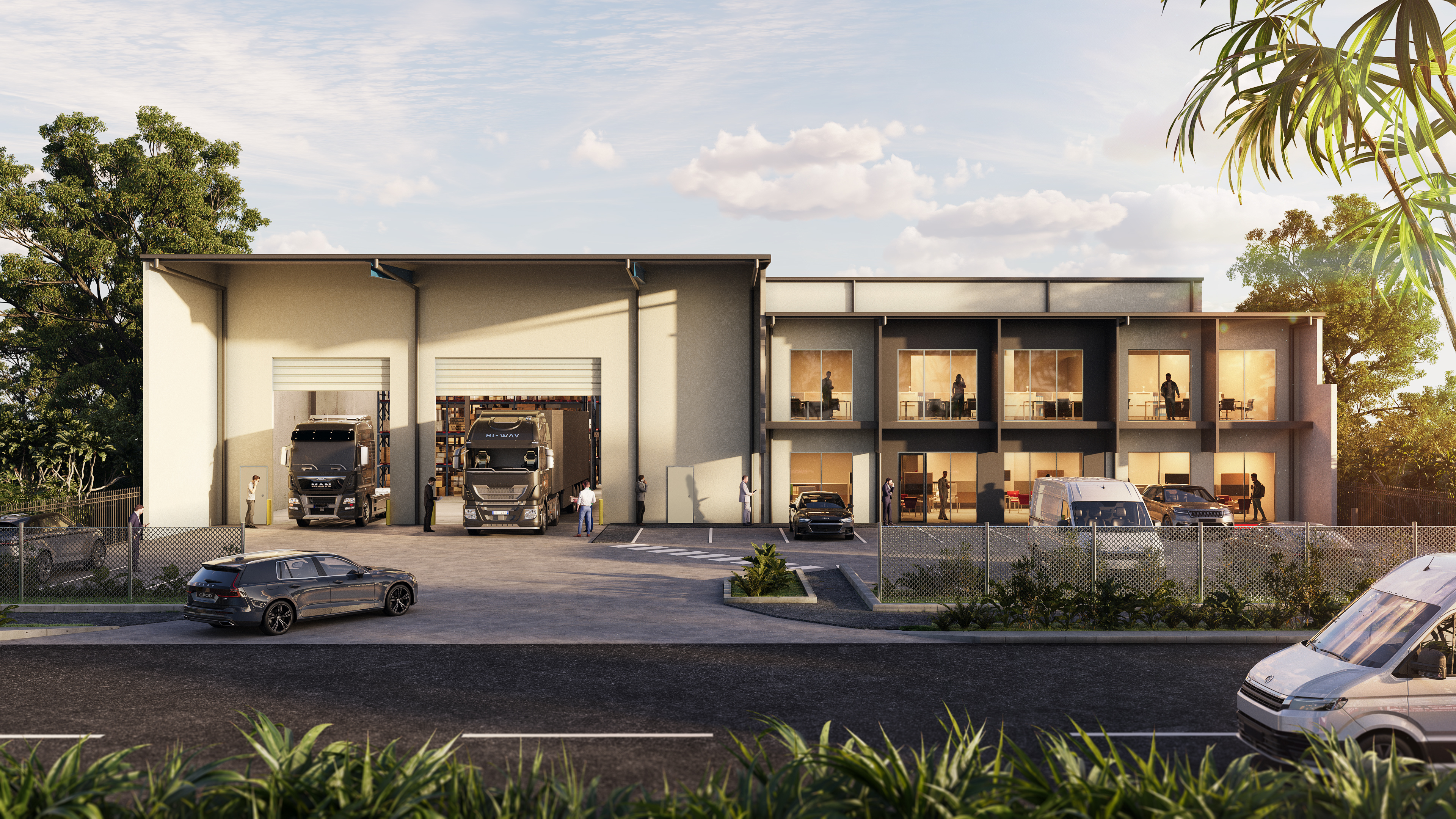
In a market where feasibility is under pressure, strong project positioning is more important than ever. We help developers communicate value clearly — using 3D visuals, masterplans, and full campaign strategies that drive early engagement, support pre-leasing, and improve project outcomes.

 EXPLORE THE WORK